For June, we’ve got Ireland, UK, Australia and friends giving us their biotech news. (Click to enlarge.)
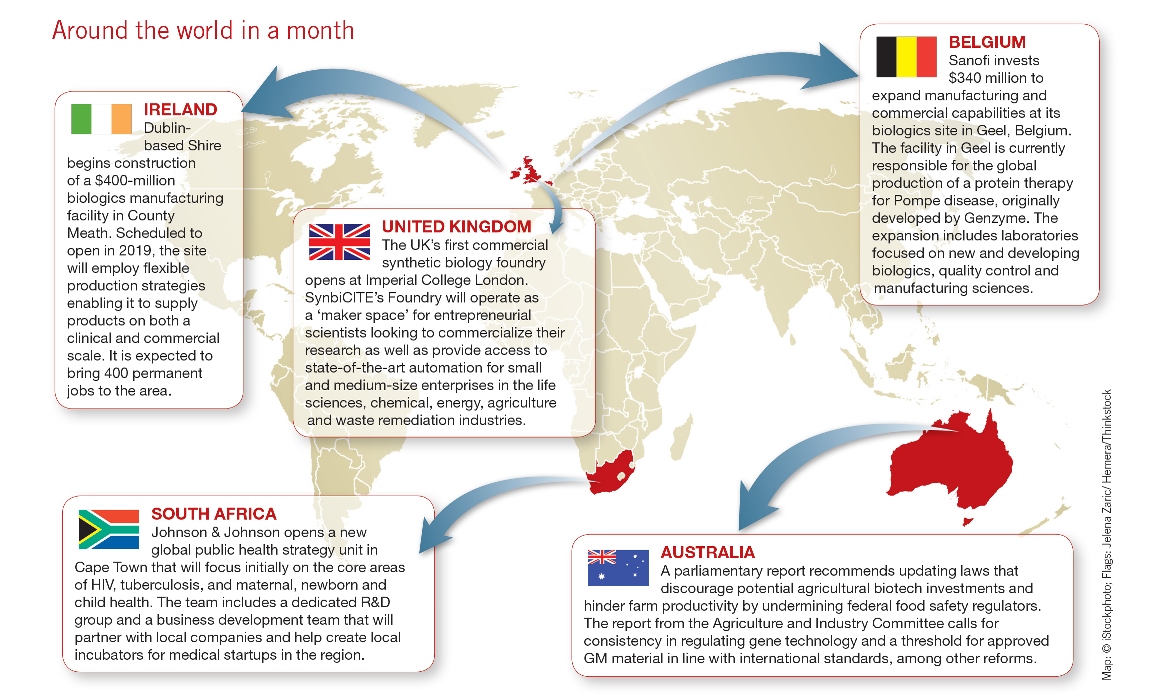

For June, we’ve got Ireland, UK, Australia and friends giving us their biotech news. (Click to enlarge.)
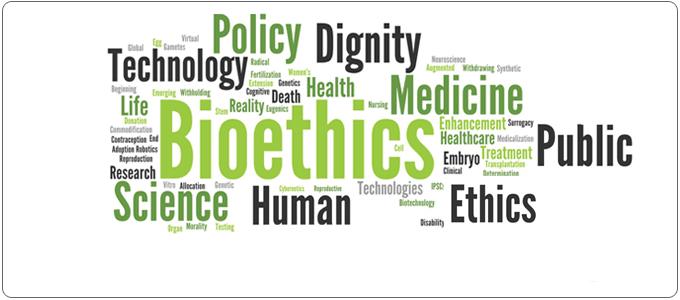
Source: The Center for Bioethics and Human Dignity
In a week when two state legislatures passed bills requiring drug companies to justify drug prices, a panel at the BIO convention Monday on the ethics of drug discovery drew perhaps 50 people – a stark contrast to the standing-room only sessions in which biotech company execs presented boilerplate PowerPoint presentations.
The rest of the attendees missed a timely discussion of the complex issues facing biotech, including how to price drugs so the interests of both companies and the patient population are best served, and what a biotech company can do – or should so – about the increasing calls for transparency.
BioCentury’s Washington Editor Steve Usdin has been hosting interactive panels for several years at BIO, structuring them as a mock board-of-directors meeting. These fictional board members debate a series of questions Usdin poses, and the audience weighs in by casting votes via smart phone app.
This year’s panelists brought together a variety of perspectives. J. Leighton Read, a partner at Alloy Ventures, served as CEO. Hank Greely, from Stanford’s Law School; Pamela Gavin, of the National Organization of Rare Disorders; and the FDA’s Richard Moscicki took on the roles of board members of a company called iCures. This pretend company has not one, but two potential leads for serious illnesses with unmet needs – Alzheimer’s and type 2 diabetes. The board debated how to allocate limited resources, how to price the therapy, and whether to in-license a drug and quadruple its price (simply because they could).
The board agreed on a few things, such as securing partnerships to finance their drugs. They debated the wisdom of keeping the price of a drug lower than it might receive in the open market, as a way of insuring greater uptake, which ultimately would bring greater rewards to the company (and would be a good PR play), although they mused over whether there were any good models for determining the kinetics of uptake for maximizing profits.
Yet the issue of transparency scored the highest cohesion – to a person, the board was against supporting legislation that requires it, though not entirely for the same reasons. The arguments included the unfairness of singling out one industry for scrutiny, although one board member pointed out that iPhones and drugs are quite different animals, as not everyone wants or needs an iPhone, but everyone at some time in their life will need healthcare. And there was the argument that the data might not make much sense to the public anyway, given the complexity of developing a drug and bringing it to market. And finally, quite apart from ethical considerations, there was the idea that it is just plain bad policy for the government to get involved with pricing drugs (although we might be the only industrialized nation that doesn’t allow it in some form or another.)
So it’s a pity that more people didn’t attend this panel. In general, it seems the emphasis on ethics has taken a back seat at BIO this year. There was a time when BIO had a robust ethics track, but here in San Francisco the offerings are paltry. Is this because there simply weren’t many submitted, or because BIO’s selection committee did not see fit to choose them? Either way, ethical issues are at the forefront for a public that already views drug makers unfavorably. The BIO convention needs more panels like this, and fewer sessions in which industry folks pat each other on the back for a job well done.

Diseased leaves from a potato late-blight field trial (source: Jonathan Jones).
Plant pathogens cause global crop losses of 15% every year, and are managed either by the use of resistant varieties or by pesticides. A trio of papers from The Sainsbury lab in the UK provides evidence that biotech approaches to engineering pathogen resistance could underpin sustainable genetic solutions to crop pests and pathogens. In one report, soybean is made resistant to Asian soybean rust using a gene cloned from the orphan legume pigeonpea. This finding is notable because Asian soybean rust resistance is absent from all commercially grown soybean lines. Plus, finding disease resistance genes that work in soybean in pigeonpea means that legumes could contain a reservoir of pathogen-resistance genes. In two accompanying reports, resistance genes for potato late-blight and wheat stem rust were identified by developing rapid resistance-gene cloning methods.
This research was funded in part by the 2Blades Foundation.

Cassava root from Uganda with necrotic brown lesions, characteristic of Cassava Brown Streak Disease.(source: Steve Rounsley, Dow AgriSciences)
Cassava is an important (but poorly performing) staple crop in Africa and other tropical countries. Although cassava can outcross, most cultivated cassava is clonally propagated, owing in part to long breeding cycles. Cassava is susceptible to disease, but the available germplasm is of limited diversity, so breeders need genomic sources of diversity to improve this vital crop. Daniel Rokhsar (University of California, Berkeley and DOE JGI), Steve Rounsley (Dow Agrosciences) and colleagues sequenced nearly 60 cultivated cassava and wild relatives and genotyped more than 250 African accessions to provide a Cassava genome resource that will support genome-enabled improvement. Their paper can be found here online, and in the coming May issue of Nature Biotechnology.

We list below the highest-cited papers focusing on bioengineering (metabolic engineering, synthetic biology and bioengineering) and agbiotech from the past 20 years. We recognize there are many more ways to assess the quality/impact of the research published in our pages than citations, but we hope our readers find this of interest. Do you see any higher citing papers we missed in each of these areas? Comments below, or tweet at us: @naturebiotech.

 Citation data from ISI Thomson Reuters Web of Science
We list below the highest cited papers focusing on applied microbiology and immunology from the past 20 years. We recognize there are many more ways to assess the quality/impact of the research published in our pages than citations, but we hope our readers find this of interest. Do you see any higher citing papers we missed in each of these areas? Comments below, or tweet at us: @naturebiotech

 Citation data from ISI Thomson Reuters Web of Science
Nature Biotechnology is 20! We list below the highest cited papers focusing on nanotechnology and cancer technologies from the past 20 years. We recognize there are many more ways to assess the quality/impact of the research published in our pages than citations, but we hope our readers find this of interest. Do you see any higher citing papers we missed in each of these areas? Comments below, or tweet at us: @naturebiotech

 Citation data from ISI Thomson Reuters Web of Science
Nature Biotechnology is 20! We list below the highest cited papers focusing on protein and genetic engineering from the past 20 years. We recognize there are many more ways to assess the quality/impact of the research published in our pages than citations, but we hope our readers find this of interest. Do you see any higher citing papers we missed in each of these areas? Comment below, or tweet at us: @naturebiotech.

 Citation data from ISI Thomson Reuters Web of Science
Nature Biotechnology is 20! We list below the highest cited papers focusing on biologics, nucleic acid therapies and drug delivery from the past 20 years. We recognize there are many more ways to assess the quality/impact of the research published in our pages than citations, but we hope our readers find this of interest. Do you see any higher citing papers we missed in each of these areas? Comments below, or tweet at us: @naturebiotech


 Citation data from ISI Thomson Reuters Web of Science
Nature Biotechnology is 20! We list below the highest cited papers focusing on regenerative medicine and biomaterials from the past 20 years. We recognize there are many more ways to assess the quality/impact of the research published in our pages than citations, but we hope our readers find this of interest. Do you see any higher citing papers we missed in each of these areas? Comments below, or tweet at us: @naturebiotech

 Citation data from ISI Thomson Reuters Web of Science