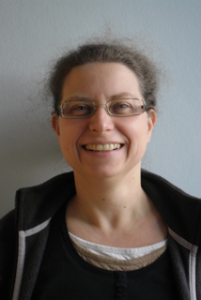
Interactions: Myfanwy Evans

Myfanwy Evans is an Emmy Noether Research Group Leader at the Institute for Mathematics, Technische Universität Berlin. Her research is in the field of geometry and topology in soft matter physics.
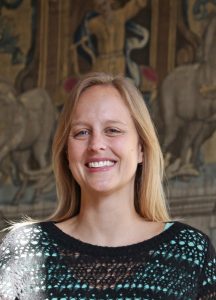
What did you train in? What are you working on now?

My undergraduate degree was in science, majoring in mathematics. My PhD was already in an interdisciplinary setting, officially part of “Physical Sciences”. It involved mathematics, physics, with some chemistry and biology on the side. Ever since my research has been swinging between mathematics and physics, depending on my collaborators and students at the time. My current research is focused on a theoretical framework to understand tangling in soft matter systems. It uses geometry and topology to investigate how filaments can tangle in a variety of settings, in the view of making a connection with protein and polymer physics.

Do you think of yourself as a mathematician or physicist?

Both and neither! Much of the content of my research is geometry, but the style in which I do it is more physics. However, I like to define my research via the problem that I am trying to solve rather than a specific discipline and I don’t like to be restricted by the methodology or traditions of a specific discipline.

What motivated you to move to this field of research?

I had already started in this general area as a PhD student, and it really grabbed me as an interesting topic. I finished my PhD with far more questions than answers, and this has snowballed into an array of research topics that I am still working on today. My motivation to continue in this direction is driven by my own curiosity, and a kind of religious belief that the results I am getting are so beautiful that they must be important.

What are the main challenges and the main advantages of working in an interdisciplinary team?

The main advantages are that everyone can bring something unique to the table, and the breadth of expertise opens really interesting research directions. I find that the students feel less constrained by their prior knowledge and disciplinary expertise, and are able to work on broad problems from many perspectives, learning a huge amount along the way. The main challenge is keeping the research also relevant to specific fields, in particular for PhD students who wish to stick to a more traditional discipline. Finding the right place to publish, that means reaching the right readership, is always a key problem too.

Do you find it particularly difficult to obtain funding? Or to get your research published?

I think that interdisciplinary research has become a big focus of many funding agencies, and in general I don’t find any major obstacles in obtaining funding from the standard sources. I find the same with scientific publications, where new interdisciplinary findings are often published. Of course, there are exceptions and I have a handful of examples of journals claiming that the research is “not physics” or “not mathematics”, without refereeing the scientific content. But these are few and far between.
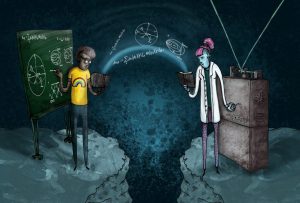
 

Behind the paper: A bridge between theory and experiment

On behalf of Marcus Huber

{credit}Christian Murzek 2018 murzek.com{/credit}

Supposedly, there are two very different species of physicists: theorists and experimentalists. This alleged division is the subject of numerous nerdy jokes, but is more seriously reflected in university curricula, academic positions, grants, papers and non-surprisingly, reviews. Our review is an attempt to bridge the apparent gap that often complicates communication, focussing on a specific area of quantum physics that has seen a close connection between theory and experiment.

The story behind this review starts well before it was conceived. After finishing my PhD in theoretical physics, I remember being approached by experimentalist colleagues, asking seemingly simple questions about quantifying high-dimensional entanglement. At first, I couldn’t comprehend their dissatisfaction with my writing down a self-adjoint operator—after all, this is what constitutes a ‘measurement’ according to the postulates of quantum mechanics. After being presented with a bunch of tangible tools that were screwed to an optical table and asked to explain how to realise that specific measurement, I realised how little I actually understood quantum experiments and how pointless all of my theorems seemed for answering the simplest of questions.

This initially painstaking interaction with the mysterious species of experimentalists eventually bore fruit and led to a series of collaborations with experimental groups. There was a recurrent theme in our interactions experienced also by many theorist colleagues—we were presented with final experimental data and asked to tell if it is possible to certify or even quantify entanglement. The answers would have always been easy had they done the experiment in a slightly different manner, but alas, what was done, was done. I then spent sleepless nights trying to understand what each particular setup meant and how one could construct theoretical tests of entanglement for each specific situation—a process that could have been much simpler had there been a comprehensive review bridging this divide.

At some point, one of my frequent experimental collaborators approached me with an interesting proposition: we could run experiments together. And indeed a short time later, Mehul Malik joined my group as a senior postdoc and we started exploring the intricacies of multipartite and high-dimensional entanglement of ‘twisted’ photons. The first ‘experimental’ papers with a majority of theory authors were born and slowly the entire group developed a common language. Two more senior postdocs of the group had reported very similar experiences in different experimental collaborations, with Giuseppe Vitagliano working on spin squeezing in cold atoms and Nicolai Friis analysing ion traps with 20 qubits. We had often talked and decided the field really needs a review that covers all aspects in a unifying language, but never found the time to actually materialise it.

When I was invited to write a review for Nature Reviews Physics, we knew this was the chance to finally realise that dictionary that should become a handbook for both theorists and experimentalists to talk to each other, while comprehensively showcasing the state-of-the-art of quantum technologies. Of course, our initial dream was a bit too ambitious, given that there are dozens of experimental platforms, each with their own techniques and whole books could be written just about the theory of entanglement. So while trying to remain as objective and comprehensive as possible, we naturally decided to focus on aspects that we found most exciting at the moment.

The time we were planning to write the review also coincided with the move of Mehul Malik to his new professorship in Edinburgh and overlapped with the parental leaves of both Nicolai Friis and Giuseppe Vitagliano. While all joyous occasions, it was hard to gather the crowd even in the same Skype conversation. Collectively editing, planning and writing a comprehensive review with strict length constraints seemed an insurmountable task under these circumstances. So we turned to collaborative online LaTeX editors and at different hours of day and night wrote and commented the present review. When Nature Reviews Physics approached us about whether we would be willing to try Overleaf for collaborating with the editorial team, we were already well acquainted with the workflow, and went through several rounds of excellent editorial feedback, without ever having to worry about version control or sending a single document via email.

Interactions: Anastasiia Novikova

Anastasiia Novikova will join Nature Reviews Physics in January after a PhD at Synchrotron SOLEIL and a postdoc at CEA Saclay in France.

What made you want to be a physicist? 

I was always curious to understand natural phenomena, and physics seemed to explain how almost everything worked in the Universe. Besides, I enjoyed the scientific approach used in physics: experiment and demonstration.

If you weren’t a physicist, what would you like to be (and why)?

If not a physicist, I would definitely be an artist. As a child, I was passionate about drawing and painting (and I still am). Shapes and colours of nature were always hypnotizing me.

Which historical figure would you most like to have dinner with — and why?

I have a whole list of historical figures but the one I would really like to meet is Richard Feynman. To me, he is a person remarkable for his manner of popularizing physics and capturing the audience. The first thing I would ask him: “What is your secret? “

Which is the development that you would really like to see in the next 10 years?

I would like to see the development of Artificial Intelligence in the domain of Genetics to help us understand such issues as genetic disorders.

What’s your favourite particle?

While studying the Physical Chemistry module at Pierre and Marie Curie University, I was fascinated with how the electronic structure of a compound could influence its colour. In this regard, my favourite particle is, definitely, the electron.

What would your dream conference be like?

The conference I dream of would be dedicated to the greatest discoveries of all time. And being imaginary, it would be organized by the pioneers, with, for example, Isaac Newton giving a Welcome speech.

Interactions: Zoe Budrikis

Zoe Budrikis joined Nature Reviews Physics after postdoctoral research at the ISI Foundation in Turin and at the Center for Complexity and Biosystems at the University of Milan and a PhD from the University of Western Australia.

What made you want to be a physicist?
In high school, I didn’t plan to study physics. I wanted to take Ancient History instead. But the timetable didn’t work out so I took physics classes and enjoyed them, and then I took some physics courses at university and enjoyed them so much I changed my degree. The rest, as they say, is history.

If you weren’t a physicist, what would you like to be (and why)?
It’s a cliché, but my backup plan/daydream is to open a bakery. I love seeing people enjoy food I’ve made, which is easy to do with cake! Plus, thinking about how to put unusual flavours and ingredients together is the kind of problem-solving I find relaxing. Of course, there’s a lot of physics involved in understanding how food works.

Which is the development that you would really like to see in the next 10 years?
Interdisciplinary science has really come to the fore in recent years, and I’m excited to see where that will take us. Especially because so many of the big problems in science and society – climate change springs to mind – require people with different backgrounds to work together to find a solution.

Which historical figure would you most like to have dinner with — and why?
I’d love to meet some of the everyday people of the past. Any era, really. Most of what I know about history is about big political figures, or famous authors/artists/inventors, and I think it would be fun to sit down with someone not at all famous and find out what their life was actually like.

What Sci-Fi technology would you most like to have (and why)?
I’d like everyone to have the Babel Fish from Hitchhiker’s Guide to the Galaxy.

What is your non-scientifically accurate guilty pleasure (could be film/series/book)?
I watched a lot of classic Dr Who as a teenager, and I retain a soft spot for alien planets that look remarkably like quarries.

Interactions: Giulia Pacchioni

Giulia Pacchioni played a big part in the launch of Nature Reviews Physics, but will return to Nature Reviews Materials next month. Still, she will always be part of the team.

What made you want to be a physicist? 
Feynman’s autobiography, Surely You’re Joking, Mr. Feynman! I read it as a teenager and it kicked off a long-lasting fascination for physics. For a while I also thought about becoming a mathematician, but then I was drawn by the richness of physics, a subject that stretches from the understanding of the origin of the universe to the conception of next-generation electronic devices. As many others I entered university thinking I wanted to be an astrophysicist, but after finding out more about the marvels of solid-state systems I ended up being a condensed matter physicist instead.

If you weren’t a physicist, what would you like to be (and why)?

I considered studying classics — I was particularly fascinated by the evolution of the Greek ancient language, as it gives insight on how languages developed. However, my secret plan has always been to open my own factory of soft toys. I would make fluffy versions of all the cutest animals, from the domestic to the rare. But I haven’t totally discarded the idea of owning a chocolate factory either.

Which historical figure would you most like to have dinner with — and why?

Dinner with Aristotle would be cool. He was such a great thinker I suspect there would be no shortage of topics to discuss, starting from his deep questions about the physical world. Maybe he could bring along his pupil Alexander the Great. He must have had a magnetic personality.

What would be your (physics) superpower?

Teleportation! I could pop in for lunch with friends in Paris, and chill on a beach in Sardinia in the afternoon. Coffee and cake on the Amalfi coast.

What’s your favourite (quasi-)particle?

Definitely skyrmions. They look so awesome with their arrangement of colourful spins. There is a lot of fascinating materials research going on to obtain smaller and more controllable skyrmions, and they have cool potential applications. Lately I’m getting into Majorana quasiparticles as well, as their observation requires top-notch condensed matter physics experiments and they might enable error-protected quantum computers. In preparation for when I will have my toy shop, I made a soft Majorana fermion that keeps me company in the office.

What Sci-Fi gadget / technology would you most like to have / see come true (and why)?

In Italy there is a comic-book character,  Eta Beta, who wears a little black skirt in which he can stock anything, a bit like in Mary Poppins’ bag, as objects become incredibly small (and hopefully light!) as they are stored in the pockets. I find such a garment would be practical, provided the storage is organized enough to find stuff speedily.

Interactions: Andrea Taroni

Andrea Taroni is the Chief Editor of Nature Physics.

What made you want to be a physicist? 

Being the enlightened souls that they were, my parents told me I could study anything I wanted, provided it was a science. So I chose chemistry, because it was somehow in the middle between biology (which I tended to like) and physics (which I tended to find quite boring, at least at school) – but long term I had no intention of staying in science. Anyway, as things went on I realised that I hadn’t quite appreciated that a) chemistry is only in the middle if you imagine the spectrum between the sciences to be on a logarithmic scale (that is, physics explains A LOT more than I had initially thought); b) physics research is a lot more interesting than physics lessons; and c) I wasn’t very good at chemistry to begin with. I was lucky to work with a chap called Steve Bramwell in my last year of university: thanks to the project I worked on with him, I realised I liked magnetism. And in order to study that, I had to get a better grasp of fundamental ideas rooted in statistical physics and, ultimately, symmetry. This struck is very deep and very beautiful and it had the effect of helping me to start thinking like a physicist.

If you weren’t a physicist, what would you like to be (and why)?

I’m now beyond the age where it is even possible for me to cling on to my dream of being a footballer, but that was, alas, my burning ambition when I was growing up. I enjoy what I am doing right now a lot, but compared to football it is a very distant plan B. Had a pro football career come off, I would be now be looking at investing my money in property on the Mediterranean coast…and I can’t say I would be too disappointed with that. But you ask what I would like to be, and “property developer” is not something I ever aspired to be. The people I admire the most these days are, for want of a better description, practitioners: people that have dedicated themselves with passion and discipline to a particular art or craft. You can just tell when you meet such people – they might be famous artists or simply very good teachers that don’t get as much recognition as they deserve – but measured over time their influence over the people around them is huge.

Which historical figure would you most like to have dinner with — and why?

I answered this question the last time I did this kind of Q&A, and I said Julius Cesar and Cleopatra. I’m going to stick with that.

What would be your (physics) superpower?

Without doubt it would be the power of flight. Am I aiming to low? Because that still strikes me as a cool thing to be able to do.

What’s your favourite (quasi-)particle?

Probably the magnon, as I worked with it while I was doing research. It’s a nice, simple quasi-particle with a distinguished history in the physics literature. And once you understand how they work, you understand how a lot of other quasiparticles work too.

Which physicist would you like to see interviewed on Interactions — and why?

If you could go back in time, I would suggest Ludwig Boltzmann. As you can’t, I’m going to say Philip Anderson.

Interactions: Beatriz Roldán Cuenya

Beatriz Roldán Cuenya is the Director of the Interface Science Department at the Fritz Haber Institute of the Max Planck Society, Berlin, Germany.

What did you train in? What are you working on now?

My undergraduate training was in Physics with a minor in Materials Science in Spain. Subsequently I did my PhD in Solid State Physics in Germany and from there I transitioned to a postdoctoral position at a Chemical Engineering Department in the United States. Currently, I am working at the interface between physics and chemistry investigating thermal and electro-catalytic processes taking place over nanostructured materials. My group’s research program takes advantage of in situ and operando microscopy and spectroscopic characterization methods (including synchrotron-based techniques) for the understanding of correlations between material properties such as chemical reactivity and specific structural, electronic and chemical characteristics of the system.

What did you find most difficult when you started working in an area out of your comfort zone?

Missing basic chemical concepts and nomenclature that a physicist does not acquire during his/her undergraduate training, but are essential for the understanding of chemical processes taking place at gas/liquid/solid interfaces. This motivated a slow literature review since I had to stop often to go back to basic undergraduate books before being able to dig deeper into the current literature. However, the strong mathematics background that is inherent part of a physicist’s training was very helpful when dealing with some of the topics in the department of Chemical Engineering I transferred to.

And what did you find most helpful to familiarize yourself with new concepts and jargon?

Reading the related literature, specifically review articles, while having side by side undergraduate chemistry books.

Tell us about your experience the first time you went to a conference outside the field you trained in.

It was exciting because there were a lot of new things to learn, but also somewhat frustrating since there were at times gaps of knowledge that prevented me from understanding a significant fraction of the content presented.

What are the main challenges and the main advantages of working in an interdisciplinary team?

The main challenge I found was to convince the scientific communities you are interacting with, in my case, physicists, chemists and chemical engineers, that you can contribute meaningful new research ideas and findings to their respective fields even without a formal undergraduate training in such field. It was also difficult to recruit students from the different disciplines, the physicists in my department were scared to join the group because I did “too much chemistry” and the chemists were concerned that they could not follow the math or that they did not have sufficient background in specific topics such as quantum mechanics or electrodynamics.

The advantage was that once you managed to build an interdisciplinary team, the boundaries soften and the student and postdocs end up working in a much richer environment where accelerated knowledge transfer is favoured. We managed to become a self-sufficient group by teaming up chemists that were in charge of sample synthesis and for example electrochemical characterization, chemical engineers contributing to our reactor design and thermal catalysis work, and physicists providing microscopy and spectroscopic tools for the characterization of our catalytic materials.

What would be your advice to a PI leading an interdisciplinary group?

To try to get joint appointments in the different departments of interest to foster student recruitment and the exchange of ideas with other faculty colleagues. If possible, this should include teaching some advanced courses or given some introductory presentation as guest lecturer in the partner department.

Do you find it particularly difficult to obtain funding? Or to get your research published?

Actually yes, this was the case at first. When I was an assistant professor in Physics in the United States it was difficult to convince the external reviewers in Chemistry or Chemical Engineering departments that even though my background was different, I still had the required expertise to bring to success a given interdisciplinary project. I found that chemists are more comfortable reviewing/funding chemists and same for physicists, especially when you attend mixed review panels at science foundations. However, as an assistant professor in Physics my first grant came from the American Chemical Society (Petroleum Research Fund) and the second, a CAREER award from the National Science Foundation, was granted by the Materials Research Division in the sub-area of Solid State Chemistry.

I faced the same difficulties when trying to publish in chemistry-oriented journals while submitting papers with a Physics Department affiliation. Nevertheless, with time and as visibility improved I managed to establish good connections in both communities and get invitations to present my work in both communities, which will in return facilitated publication in the top journals of both fields.

Is there any anecdote you would like to share?

I recall the frustration of being a female assistant professor in physics struggling to convince editors in chemistry-related fields to send out your work for external peer-review. I learned the hard way that when a more senior collaborator in the “correct” scientific disciple was added to the co-author list the paper would be easily sent out for review and subsequently published, while when similar quality work was submitted directly by myself it was almost never considered by the top journals. That is a serious issue since it might end up encouraging junior people with innovative ideas not to stand up on their own but seek for “strong senior supporters” to champion a given paper to get into the system (a given journal database) with the end result being that the real contribution of the junior person might be questioned.

Interactions: Cosima Schuster

Cosima Schuster is program director in the German Research Foundation (DFG) for the fields of statistical physics, soft matter, biological physics and nonlinear dynamics.

What did you train in? What are you working on now?

I trained in solid state physics as a theorist. Now I work in research administration as a program director in the field of condensed matter physics as well as  statistical and biological physics.

Do you think of yourself as a physicist or a funder?

I work for a self-governing organisation for science and research which funds excellent science without regard to extra-scientific factors, in a strict bottom-up competitive approach to ensure science-driven decisions. Hence, I consider myself not a funder, but an administrator who needs a good knowledge of physics.

What motivated you to move away from active research?

I feel more comfortable working on several topics with a broad range of interests than to work hard on specific questions.

What did you find most difficult when you first had contact with other disciplines?

You have to learn a new language with a lot of new definitions.

And what did you find most helpful to familiarize yourself with new concepts and jargon?

First, you need to be aware that there are different definitions and concepts. Second, you have to listen to the experts.

Tell us about your experience the first time you went to a conference outside the field you trained in.

I recall a conference in pure mathematics, where I understood nothing.

Interactions: Magdalena Skipper

Magdalena Skipper is the Editor in Chief of Nature. She has spent over 15 years working for Nature Research in various roles at Nature Reviews Genetics, Nature, the Nature Partner Journals and Nature Communications.

What did you train in? What areas have you handled for the Nature Research journals over the years?

My background is in genetics. Life sciences fascinated me from an early age, but once I discovered genetics at school I knew this specific discipline was something I wanted to delve into deeper. I studied genetics for my first degree (at the University of Nottingham, in the UK) and then went to do a PhD researching sex determination in a classic genetic model organism – a small round worm Caenorhabditis elegans. Throughout my PhD and postdoc years, I always found using genetics to help answer research questions to be the most elegant and satisfying approach. And it was genetics and genomics that were my core areas as an editor, but since genes and genomes are involved in all aspects of life sciences my focus broadened and I developed an understanding of most, if not all, life science disciplines. More recently, as I took on more senior editorial roles I also began to delve into the physical sciences.

You are the first editor of Nature not coming from a physical sciences background. Do you find this a challenge in championing physical sciences in the pages of Nature?

It is true that to date Nature has had at its helm editors trained mainly in the physical sciences. In my opinion, the most influential paper published by Nature during my predecessor’s tenure was the sequencing of the human genome. I hope that during my time we can publish the greatest and most important advances in any field. Learning is a life-long passion for me and so as I grow my knowledge and appreciation for the physical sciences I also develop a growing enthusiasm for this branch of science.

You led Nature Communications and now Nature. What has that taught you about multidisciplinary journals?

My time as Editor in Chief of Nature Communications has reaffirmed my conviction about the importance of multidisciplinary journals in modern research. It has also taught me to appreciate the challenges and needs of different scientific communities which are often shaped by their very discipline; these discipline-specific needs must be respected, but multidisciplinary journals find themselves in a unique and privileged position to share solutions developed within one field so that they may be adopted (and/or modified) by other fields.

How can we move from multidisciplinary to interdisciplinary?

This is a fascinating challenge and an important opportunity. While this transition need not be complete – in so far that some questions may always be answerable without reaching beyond one specific discipline – true interdisciplinary approaches open entirely new avenues of investigation. As so often is the case the transition needs to start with researcher training, and we have seen increasing trend in this direction in a number of academic establishments. We as editors have an important role to play too, by recognising potential in interdisciplinary submissions. Multidisciplinary journals can be perfect incubators, if you like, in which interdisciplinary papers can flourish.

What is your vision on interdisciplinary research in the pages of the Nature Research journals?

Our Nature Research portfolio of journals offers a fantastic environment for championing and disseminating interdisciplinary research. Our classic, discipline-specific journals are complemented by so-called thematic journals; for these multidisciplinarity and interdisciplinarity lies at the very heart of their editorial scope. And then of course there are the broad scope, multidisciplinary journals like Nature and Nature Communications. What excites me the most is that the breadth of our portfolio allows us to really delve into all aspects of contemporary research questions. Take climate change for example: one can think of research questions the answers to which require approaches from physics, material science, ecology, economics and social sciences, all at the same time. We can and should be increasingly considering more and more work along these lines.

Interactions: Conversation with Anil Ananthaswamy

After writing two successful books on neuroscience (“The man who wasn’t there”) and big instruments (“The edge of physics”), how did you choose quantum mechanics as the topic for your third book?

I’m drawn to such stories, whether there are about cosmology or the nature of the human self and consciousness, or in the case of the new book, the nature of quantum reality. While these topics seem disparate, I think they all address fundamental questions that deep down thrill us all: Who are we? What are we made of? What’s the fundamental stuff of the universe? Where do we come from? Where are we headed?

Given the scope of these questions, I feel lucky to have found ways to tackle them through stories that are grounded in everyday reality: in the telescopes and instruments we build in extreme places, or in the lived experience of people who are coping with their altered selves, or in the deceptively simple double-slit experiment and its many variants.

Why do you think physicists love the double-slit experiment to the extent that they voted it twice as the most beautiful experiment (both in Physics World and in Nature)? Could you try to define the aesthetic of the double-slit experiment?

Richard Feynman, in his paean to the experiment, said it best: he said that it contains the “central mystery” of quantum mechanics. Almost all of the conundrums and peculiarities of the quantum world can be understood using the double-slit experiment. In popular culture, the experiment is often used to highlight wave-particle duality and the apparent centrality of the observer in quantum mechanics: observe a photon going through the double-slit and it acts like a particle and it goes through one slit or the other; look the other way, and it behaves like a wave, seemingly going through both slits at once and interfering with itself. It’s obvious that such an account is enticing to a layperson—it opens a window to the mysterious world of the quantum, seemingly giving humans the power to create reality.

The actual story of the experiment is far more complex. Even hardened physicists are hard-pressed to explain just what is happening with the double-slit experiment. The simplicity of the experiment is obvious, an explanation feels palpable, but nonetheless, when physicists try and make intuitive, physical sense of it, they don’t quite succeed. There are mathematical ways of explaining the experiment, but when you try and interpret the mathematics to say something about physical reality, you stumble. Does a photon go through both slits at once? If yes, how can it do that? If not, does something else do so? If so, what is it? If nothing goes through both slits at once, how can you explain the interference pattern, which is a clear sign that something went through both slits at once? And so it goes, in circles.

And that’s the aesthetic allure of the double-slit experiment. How can something as simple as a photon going through two slits make us confront the very nature of reality? How can one experiment make us debate realism and anti-realism (whether or not reality exists independent of observers), locality and non-locality (whether or not there is instantaneous influence between two regions of space-time, defying special relativity), and determinism and non-determinism? And of course, the experiment raises questions about the role of measurement (observer) in collapsing quantum states to classical ones—and it’s nowhere near as settled an issue as lay accounts of quantum mechanics often suggest.

The experiment can even be used to explain the alternatives to the Copenhagen interpretation, including the Many Worlds interpretation, Bohmian mechanics (where reality is both wave and particle), and spontaneous collapse theories (where quantum systems in a superposition of states stochastically collapse to some classical state). The double-slit can thus be used to probe whether there is a divide between the quantum and classical worlds.

There is no other experiment quite like the double-slit in all of science.

Continue reading