Career paths are not always straightforward. Choosing a scientific vocation can involve challenging and unanticipated decisions, often with no tour guide to follow. Some scientists may hop from the lab bench into industry while others progress up the academic research ladder. Others decide to leave research behind and explore science communication, teaching, setting up their own business or working in technical roles outside of the lab.
While a love of science can lead to varied and fulfilling careers, it may be lonely trying to evaluate the next step to take. Recently, initiatives such as “This is what a scientist looks like” and the #IamScience discussions, have shone a bright light on scientific career trajectories. In our latest Soapbox Science series, we focus on some interesting examples of scientific career transitions. We will hear from different contributors, all of whom use their scientific background in their current jobs, asking each of them the same questions: how did you decide on your career path, what are your motivations, and what does the future hold?
In this post Dr Alan Whitmore talks about his transition from his role as a clinical scientist to becoming a CEO.
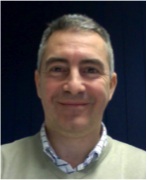 Alan Whitmore is a clinician scientist trained at the Universities of London and Oxford. He has over 20 years experience in biomedical research and clinical practice (ophthalmology and general medicine) obtained in Cambridge, Oxford, London, Newcastle and the USA. He was previously a Lecturer in Ophthalmology and Ophthalmic Pathology at the UCL Institute of Ophthalmology, additionally holding the post of Institute Medical Advisor; and prior to that an MRC Research Fellow at the UCL LMCB. His work is known internationally and includes peer-reviewed publications in Science, JCB and other high impact journals. It has encompassed electrophysiology, biochemistry, neural development, cell biology, neurodegenerative processes, ocular drug delivery and the application of computational approaches to biomedical research. Dr Whitmore is CEO of Lumemed Ltd, an honorary senior lecturer at the UCL School of Pharmacy, Director of Research at e-Therapeutics PLC and remains a practising physician.
Job Title:
CEO Lumemed Ltd; Director of Research, e-Therapeutics PLC; family doctor Northumberland.
What is your scientific background?
I started life as a neurobiologist working on the retina. After my PhD and a postdoc I got a grant from the MRC to carry on in that line of work at the Institute of Ophthalmology (IOO) but then had the bright idea of going to medical school so that I could become a clinician scientist. I wrote to the MRC asking if I could run my grant part time and to my amazement they agreed. So, in my late twenties I went back to college and began medical training while I carried on with research part time. After my medical degree I pursued higher training in ophthalmology but part way through I got the chance to spend 3 years as an MRC Fellow with Martin Raff at UCL, learning cell biology at the feet of a master. I didn’t hesitate and spent probably the most enjoyable time of my research career at the MRC Lab for Molecular Cell biology working on neurodegeneration. As that time came to an end (and Martin retired), I had to decide whether to go back and finish my ophthalmology training, or to carry on the momentum in academic research. The problem solved itself when I was head-hunted for an ocular pathology lectureship along with responsibility as Institute Medical Advisor back at what was now the UCL IOO.
Can you tell us about your current job and how you got there?
I thought that happy compromise would shape the remainder of my career – little did I know. After I’d been at the IOO for a couple of years, one evening out of the blue, I had the idea for a non-invasive, nanotechnology based intraocular drug delivery method. I took the idea to the then Institute director, Adam Sillito. He was enthusiastic and presented it to the internal IP panel who were supportive. Peng Khaw, a fellow ophthalmologist, was particularly taken with it. We took it to UCL Biomedica (the technology transfer/business office of UCL at the time) whose reaction was lukewarm. In the end they declined to support it with seed money but offered to let me have the IP in return for a small royalty if I wanted to develop it myself. I decided that I should try so I left UCL and with Peng Khaw’s support, Lumemed was born. I had to pay the bills while we looked for funding so I moved to the North of England and retrained as a GP while applying for seed capital.
Just as I finished my GP training we were awarded both a grant from ONE Northeast, the regional development agency and a Proof of Concept award from North Star Equity Investors. Armed with that finance I set up collaborations with the School of Pharmacy in London (now ironically part of UCL) and an excellent local synthetic chemistry company High Force Research and was able to show that the technique worked (whilst moonlighting as a family doctor by night to pay the bills). ONE Northeast and some other funding sources had indicated that they would continue to support us on the back of successful proof of concept and all looked rosy. Then the economy contracted and the regional development agencies were shut down. So Lumemed almost stalled, funded only by money that Peng and I could invest to keep the IP process and background business development ticking over. Despite that we managed to engage some eminent business and scientific expertise and pulled together a credible management team to seek further funding.
Meantime, at the suggestion of a mutual friend, I’d made contact with a colleague from my neurobiology days, Malcolm Young, a former academic and now CEO of e-Therapeutics, a network pharmacology drug discovery company. We’d explored collaboration between e-Therapeutics (a drug discovery company) and Lumemed (a drug delivery company) and had gone some way towards setting that up when Lumemed ran out of cash. At Malcolm’s invitation I became a consultant for them, working on projects in neurodegeneration, and subsequently becoming the Director for Research (while continuing part-time as a GP).
E-Therapeutics has been both a saviour and a distraction if I’m honest. Running the drug discovery program in such an innovative company has been both challenging and very interesting – network pharmacology is, without doubt, the future of drug discovery and to be working at the forefront of a new paradigm takes some beating. There is the not insignificant further advantage that (for the moment at least!) I get paid a salary. But my own offspring, Lumemed, has suffered from both the division of my attention and the dire lack of funding that besets the majority of biotechnology startups (not all are as far sighted as the backers that support e-Therapeutics). Despite major effort, funding has remained elusive. Initially, I think we were looking in the wrong places; most VCs (the only entities with enough cash to contemplate supporting biotech efforts) have chosen very short-term, risk-averse strategies but Lumemed’s technology requires the long view. Now there is light on the horizon. Some significant potential funders have shown interest and understanding of the proposition and there is a chance that Lumemed will survive and prosper.
“What have I learned from all this? That it was all definitely worth both the personal and financial risk.”
But it’s a roller coaster ride full of hopes dashed and promises broken, so I’m sanguine about how things may pan out. Time will tell. What have I learned from all this? That it was all definitely worth both the personal and financial risk. Despite the 70 or 80 hour 7 day a week non-stop working pattern, involving endless hours on the road, on planes, away from home, sleepless nights on call, heart-in mouth medical emergencies, hours negotiating deals, uncertainty, overdrafts, technical challenges, heart rending moments when you have to leave home yet again while your wife and children wave goodbye and countless other stresses; despite all that characterizes the reality of juggling a struggling startup, the challenges of being the Director of Research of a publicly listed company, the social, emotional, moral and regulatory demands of being a family doctor and those of having a young family, the freedom and creative opportunity are exhilarating. It seems that so far I can hack it.
“Creativity and enterprise are stifled by the current University model where people are expected to toe a corporate-style line without any of the advantages that should go with it.”
I don’t regret leaving academia and I like working in the biotechnology industry. There is an initial culture shock, and a fear that the business world will somehow prove to be an inferior intellectual challenge – but my experience so far suggests that the opposite is true – there are some incredibly smart people in biotechnology and the challenges are all the more daunting for needing to be both practical and commercially viable. Creativity and enterprise are stifled by the current University model where people are expected to toe a corporate-style line without any of the advantages that should go with it. Would I go back? Maybe. But the deal would have to be pretty impressive. If my biotech ventures fail it’s far more likely that I will go back to fulltime medicine.
So do I have any advice for those contemplating a move from academia into business?
“Humiliation never killed anyone and failure is part of entrepreneurship – most people who succeed failed several times along the way.”
Perhaps, although I’m aware that, notwithstanding the above, my experience is limited. However, if pressed I’d say (at the risk of sounding clichéd, but no less sincere for all that) – have the courage of your convictions, be persistent, be prepared to be criticized and dismissed by your colleagues, be prepared to be told you’re mad and should just get on with publishing, be imaginative, be prepared to compromise, be pragmatic when seeking funding and partners – a little bit of something fairly big is far better than 100% of nothing, engage with the finance and business side of things early, always have a plan B and a plan C; and don’t be scared – what’s the worst that can happen? Humiliation never killed anyone and failure is part of entrepreneurship – most people who succeed failed several times along the way. If you make it – remember how big a part luck plays in all of these endeavours – don’t let success go to your head. And, if one day I succeed – remind me that it was likely to be more down to luck than judgement!
For more career transitions, check out Ian Mulvany’s post, Paige Brown’s post, Alom Shaha’s post, Rebecca Caygill’s post and Asha Tanna’s post. You can also follow the conversation online using the #Transitions hashtag.


