
Science funding sources have varied over the decades, and will continue to do so as the sociological and political influences change, says Scott Chimileski.
Contributor Scott Chimileski
Twenty-first century science is global, rapidly communicated and irreversibly intertwined with virtually every aspect of society. This immensity creates the impression that our current scientific culture has been established for a very long time. However, the National Science Foundation (NSF), NASA and the Department of Energy (DOE), pillars of basic science that we recognize them to be, were all established after many of today’s senior investigators were born. In addition to appreciating the cyclical nature of funding (see part one), it is critical to consider how and why funding sources have changed throughout the history of science.
From the scientific revolution at the end of Renaissance through the 19th century, science was largely self-funded or driven by the patronage of other independently wealthy individuals. Many famous forefathers of science had side jobs. Antonie van Leeuwenhoek, whose observations of bacteria in the 17th century inspire microbiologists to this day, was a house manager. Little is known of how he made his microscopes, let alone exactly how he paid for supplies. His contemporary Robert Hooke, another pioneer of microbiology, was an architect and city surveyor. Johannes Kepler wrote horoscopes. And, Galileo Galilei – celebrated for early observations of Saturn’s shape and the Milky Way Galaxy – pitched his telescopes to the military of the Republic of Venice as naval instruments, and to the House of Medici in Florence as a means for naming distant moons after members of this powerful dynasty.
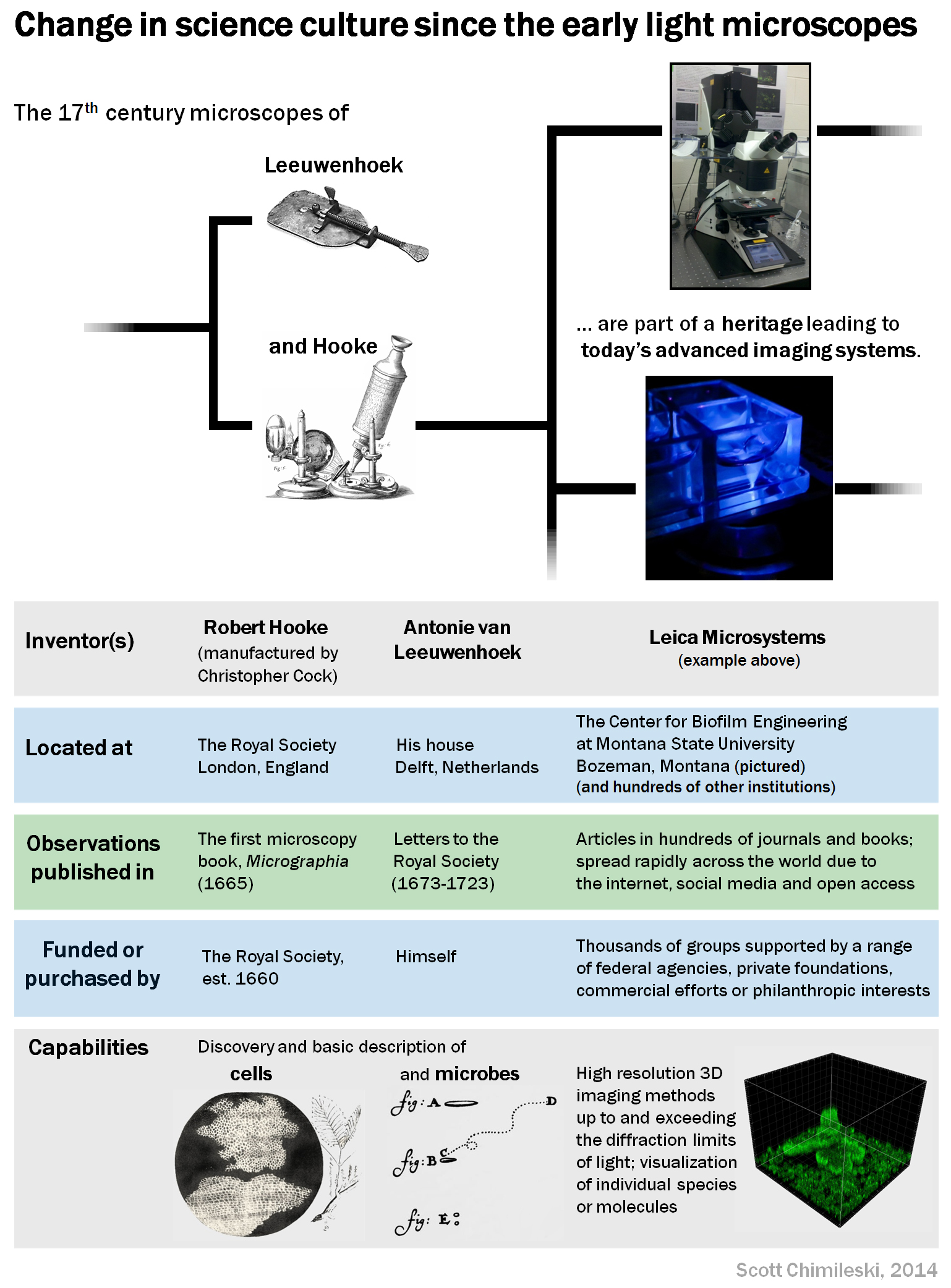
Returning to this less regulated style of science could be dangerous and counterproductive. Beyond this, the biggest questions addressed by modern science can only be pursued by enormous interdisciplinary efforts. Particle accelerators, giant space telescopes and biomedical initiatives like the Human Microbiome Project require a range in participation sometimes involving several nations, hundreds of institutions and thousands of scientists.
What we can learn from the gentlemen scientists is that science is not fuelled by money alone. Rather, science is driven by intrinsic human curiosity. No matter how and where funding is derived, so long as we have the means for sharing observations and ideas, scientific investigation will continue.
—x—
After the Second World War, the scientific advisor to President Roosevelt, Vannevar Bush, forever changed the course of science policy in the United States. With his 1945 essay, Science – The Endless Frontier, Bush popularized a novel idea: that research not directly associated with war-time projects should fall under the domain of the government. Within a series of seminal letters that would lead to the formation of the NSF in 1950, Roosevelt brainstormed with Bush, suggesting that, “thousands of scientists in universities and in private industry, should be used in the days of peace ahead for the improvement of national health, the creation of new enterprises bringing new jobs, and the betterment of the national standard of living.”
Before the NSF, the National Institutes of Health was the only federal agency funding scientific research, established in 1887 as a single laboratory within the Marine Hospital Service. NASA, a symbol of fundamental human exploration, was created in 1958 as a direct response to Russia’s Sputnik satellite. Likewise, the DOE, which spearheaded the Human Genome Project and now sponsors more basic research in physical sciences than any governmental group, came about through the legacy of the Manhattan Project and was only consolidated into its current form in the late 1970’s following an oil crisis.
Most scientists have naturally adapted to the current scientific epoch dominated by a mixture of government funding agencies. However, it is clear that sources of funding have been highly variable during the relatively brief history of science that I’ve explored. The federal agencies that today appear synonymous with science itself have taken on roles hardly recognizable relative to the socio-economic forces through which they were conceived.

Because science funding has changed greatly in the past, it is reasonable to expect nothing less in the future. For example, when plotted according to funding source, national R&D data reveals that industrial funding has rapidly accelerated in the past twenty years, relative to federal funding (see graph). A significant fraction of funding from the “other” category, which includes private foundations, crowd-sourcing websites and philanthropy, is also emerging. Open-access publishing and the integration of science communication with social media may further stimulate shifts in the way science is funded.
Without the context that the future will provide, it is difficult to determine whether the decrease in federal funding rates in the past five years represents a true crisis or an uncomfortable transition towards a new balance of funding sources. In part three, I will interview up-and-coming investigators and draw from the experience of senior researchers, to explain why, in any of these scenarios, I think that no amount of pessimism in response to changes in funding should deter anyone from becoming a scientist.
world pharmacy india: online shopping pharmacy india – buy medicines online in india
CoreVital Pharmacy: CoreVital Pharmacy – CoreVital Pharmacy
CoreVital Pharmacy: CoreVital Pharmacy – CoreVital Pharmacy
buy Viagra over the counter: cheap viagra – NovaMen Pharmacy
NovaMen Pharmacy: NovaMen Pharmacy – NovaMen Pharmacy
NovaMen Pharmacy: viagra without prescription – order viagra
cialis Pharmacological Sciences Research Institute kamagra
cialis Pharmacological Sciences Research Institute levitra
viagra Pharmacological Institute cialis
pin up casino: pin up
Ciprofloxacin Hydrochloride over the counter antibiotics
OTC antibiotics generic antibiotics online cheap
Antibiotics Pharmacology generic antibiotics online pharmacy
Azithromycin Dihydrate can you buy antibiotics over the counter
Antibiotics Pharmacology cheap antibiotics
Azithromycin Dihydrate antibiotics for uti over the counter
OTC antibiotics can you buy antibiotics over the counter
OTC antibiotics buy antibiotics
Amoxicillin Trihydrate antibiotics online pharmacy
NorthCareRx NorthCareRx NorthCareRx
canadian pharmacy 24h com pharmacy com canada canadian mail order pharmacy
BorderCare RX reliable mexican pharmacies legit mexican pharmacy without prescription
reputable pharmacies in mexico pharmacies in mexico that ship to the us reputable pharmacies in mexico
NorthCareRx legal to buy prescription drugs from canada NorthCareRx
reputable canadian pharmacy top 10 pharmacies in india reddit canadian pharmacy
canadian pharmacy cheap Prime India Meds canada pharmacy 24h
mexican mail order pharmacy mexican pharmacy online reliable mexican pharmacies
NorthCareRx NorthCareRx global pharmacy canada
northern pharmacy canada Prime India Meds online pharmacy 365
affordable border pharmacy mexico BorderValue RX BorderValueRX
canadian pharmacy viagra 50 mg TrustedIndiaCare RX which pharmacy is cheaper
BorderValueRX BorderValueRX BorderValueRX
canadian medication delivery to usa licensed canadian drug suppliers certified canadian pharmacy usa
prednisone 2 mg daily: buy cheap prednisone – buy prednisone online australia
buy medicines online in india: best india pharmacy – best online pharmacy india
Global India Pharmacy: india pharmacy mail order – india online pharmacy
https://northaccessrx.shop/# canada drugs reviews
india pharmacy: indian pharmacy paypal – cheapest online pharmacy india
world pharmacy india: top 10 pharmacies in india – Global India Pharmacy
https://northaccessrx.shop/# canadian pharmacy meds
Paw Trust Meds: Paw Trust Meds – pet med
https://northaccessrx.com/# buy drugs from canada
ed meds online canada: canada drugs online – canada pharmacy online
Paw Trust Meds: Paw Trust Meds – Paw Trust Meds
http://pawtrustmeds.com/# Paw Trust Meds
canadian mail order pharmacy: vipps approved canadian online pharmacy – canada rx pharmacy
Global India Pharmacy: Global India Pharmacy – india pharmacy mail order
mail order pharmacy india: indian pharmacy – buy prescription drugs from india
http://globalindiapharmacy.com/# Global India Pharmacy
http://globalindiapharmacy.com/# Global India Pharmacy
reputable indian pharmacies: cheapest online pharmacy india – Global India Pharmacy
Global India Pharmacy: world pharmacy india – world pharmacy india
Global India Pharmacy: п»їlegitimate online pharmacies india – indianpharmacy com
https://globalindiapharmacy.com/# Global India Pharmacy
safe reliable canadian pharmacy: NorthAccess Rx – canadian pharmacy 24h com
Paw Trust Meds: pet rx – Paw Trust Meds
https://globalindiapharmacy.shop/# Global India Pharmacy
india pharmacy: top online pharmacy india – top 10 online pharmacy in india
https://pawtrustmeds.shop/# Paw Trust Meds
Global India Pharmacy: reputable indian pharmacies – top 10 pharmacies in india
best online canadian pharmacy: NorthAccess Rx – canada drugstore pharmacy rx
indianpharmacy com: top 10 pharmacies in india – Global India Pharmacy
http://pawtrustmeds.com/# dog medicine
best pet rx: pet meds official website – discount pet meds
http://pawtrustmeds.com/# online pet pharmacy
Paw Trust Meds: Paw Trust Meds – п»їdog medication online
https://northaccessrx.com/ed-meds-guide.html# canadian pharmacy online reviews
Global India Pharmacy: buy medicines online in india – pharmacy website india
Paw Trust Meds: Paw Trust Meds – Paw Trust Meds
Global India Pharmacy: buy prescription drugs from india – mail order pharmacy india
legit canadian pharmacy: medication canadian pharmacy – reliable canadian pharmacy reviews
Global India Pharmacy: Global India Pharmacy – online pharmacy india
Global India Pharmacy: Global India Pharmacy – Global India Pharmacy
https://globalindiapharmacy.shop/# Global India Pharmacy
legal to buy prescription drugs from canada: NorthAccess Rx – legal canadian pharmacy online
Global India Pharmacy: Global India Pharmacy – cheapest online pharmacy india
Global India Pharmacy: Global India Pharmacy – Global India Pharmacy
dog prescriptions online: Paw Trust Meds – pet drugs online
pet med: Paw Trust Meds – online pet pharmacy
Global India Pharmacy: Global India Pharmacy – buy medicines online in india
Global India Pharmacy: Global India Pharmacy – india online pharmacy
my canadian pharmacy: NorthAccess Rx – pharmacy com canada
https://northaccessrx.com/canadian-pharmacy-rating.html# vipps canadian pharmacy
Paw Trust Meds: Paw Trust Meds – Paw Trust Meds
best canadian pharmacy online: canada rx pharmacy world – legit canadian online pharmacy
https://pawtrustmeds.com/# Paw Trust Meds
pet pharmacy: Paw Trust Meds – Paw Trust Meds
VeritasCare Cialis without a doctor prescription Cialis without a doctor prescription
canadian pharmacy 24h com: cialis canadian pharmacy – canadian drugs pharmacy
VeritasCare: buy cialis pill – VeritasCare
https://corebluehealth.shop/# CoreBlue Health
Generic Viagra online CoreBlue Health CoreBlue Health
VeritasCare: VeritasCare – Buy Tadalafil 10mg
https://corebluehealth.com/# CoreBlue Health
CoreBlue Health: Cheapest Sildenafil online – CoreBlue Health
Cialis without a doctor prescription п»їcialis generic Tadalafil price
online pharmacy in germany: online pharmacy discount code – mail order pharmacy no prescription
economy pharmacy: canadian online pharmacy viagra – canadian pharmacy sarasota
Cheap Cialis buy cialis pill VeritasCare
http://civicmeds.com/# american pharmacy
Generic Tadalafil 20mg price: VeritasCare – VeritasCare
https://veritascarepharm.shop/# Cialis 20mg price
VeritasCare: Cialis without a doctor prescription – VeritasCare
CoreBlue Health CoreBlue Health CoreBlue Health
mail order pharmacy no prescription: CivicMeds – reputable online pharmacy no prescription
Cialis over the counter: VeritasCare – VeritasCare
http://veritascarepharm.com/# cheapest cialis
CoreBlue Health CoreBlue Health Cheap generic Viagra online
legit canadian pharmacy: drugstore com online pharmacy prescription drugs – canadian family pharmacy
CoreBlue Health: Generic Viagra for sale – sildenafil over the counter
https://veritascarepharm.shop/# Tadalafil Tablet
viagra canadian pharmacy vipps approved CivicMeds best rated canadian pharmacy
canadian pharmacy mall: CivicMeds – cheapest prescription pharmacy
https://corebluehealth.com/# over the counter sildenafil
Generic Tadalafil 20mg price: Buy Tadalafil 20mg – Cialis 20mg price in USA
order viagra buy viagra here CoreBlue Health
online pharmacy reviews: CivicMeds – your pharmacy online
CoreBlue Health: buy Viagra online – CoreBlue Health
https://corebluehealth.com/# Viagra tablet online
cheapest online pharmacy india canadian pharmacy cialis 20mg online pharmacy delivery usa
Cheap Cialis: Cheap Cialis – VeritasCare
http://veritascarepharm.com/# Generic Cialis without a doctor prescription
VeritasCare: VeritasCare – cialis for sale
generic sildenafil sildenafil 50 mg price Order Viagra 50 mg online
Buy Tadalafil 5mg: п»їcialis generic – Tadalafil Tablet
bitcoin pharmacy online: CivicMeds – medical pharmacy
Cialis without a doctor prescription п»їcialis generic VeritasCare
VeritasCare: Tadalafil Tablet – buy cialis pill
VeritasCare: VeritasCare – VeritasCare
https://veritascarepharm.com/# VeritasCare
http://corebluehealth.com/# CoreBlue Health
canadian pharmacy 1 internet online drugstore the pharmacy global pharmacy
online pharmacy viagra: CivicMeds – trusted online pharmacy reviews
VeritasCare: Buy Tadalafil 10mg – VeritasCare
VeritasCare VeritasCare п»їcialis generic
legit canadian pharmacy: CivicMeds – canadian pharmacy phone number
http://civicmeds.com/# pharmacy home delivery
Sildenafil 100mg price: CoreBlue Health – CoreBlue Health
pharmacy coupons discount pharmacy mexico canadian pharmacy 24 com
http://civicmeds.com/# wholesale pharmacy
CoreBlue Health: sildenafil online – CoreBlue Health
sky pharmacy: reputable online pharmacy reddit – reputable online pharmacy reddit
cheapest viagra Cheap generic Viagra CoreBlue Health
http://corebluehealth.com/# CoreBlue Health
VeritasCare: VeritasCare – VeritasCare
VeritasCare: Cialis 20mg price in USA – Generic Cialis price
over the counter sildenafil Viagra generic over the counter CoreBlue Health
https://veritascarepharm.com/# Tadalafil Tablet
online pharmacy group: CivicMeds – www pharmacyonline
http://civicmeds.com/# online pharmacy australia paypal
CoreBlue Health: CoreBlue Health – Viagra online price
VeritasCare Cialis 20mg price in USA VeritasCare
the pharmacy: CivicMeds – 24 hours pharmacy
walmart pharmacy online: CivicMeds – mexican pharmacy
Generic Cialis price VeritasCare VeritasCare
http://veritascarepharm.com/# Generic Cialis price
https://corebluehealth.com/# Buy Viagra online cheap
VeritasCare: Buy Tadalafil 10mg – VeritasCare
Cialis 20mg price in USA: Buy Tadalafil 10mg – Generic Cialis price
VeritasCare VeritasCare VeritasCare
overseas pharmacy no prescription: pharmacy without prescription – pharmacy canadian superstore
Tadalafil price: Buy Tadalafil 5mg – Buy Tadalafil 10mg
CoreBlue Health Generic Viagra for sale CoreBlue Health
cheapest viagra: CoreBlue Health – CoreBlue Health
http://corebluehealth.com/# CoreBlue Health
top mail order pharmacies: canadian pharmacy coupon code – vipps canadian pharmacy
Buy Cialis online VeritasCare VeritasCare
VeritasCare: Generic Cialis price – Generic Cialis without a doctor prescription
CoreBlue Health: CoreBlue Health – cheapest viagra
on line pharmacy express pharmacy canada drugstore pharmacy rx
international online pharmacy: good value pharmacy – express scripts com pharmacies
Generic Cialis without a doctor prescription: Tadalafil price – VeritasCare
VeritasCare VeritasCare VeritasCare
http://corebluehealth.com/# CoreBlue Health
cialis for sale: Buy Tadalafil 5mg – VeritasCare
п»їcialis generic: VeritasCare – VeritasCare
VeritasCare VeritasCare VeritasCare
express scripts pharmacy: CivicMeds – canadian pharmacy near me
VeritasCare п»їcialis generic VeritasCare
https://veritascarepharm.shop/# VeritasCare
sildenafil online Viagra online price CoreBlue Health
http://civicmeds.com/# northern pharmacy
VeritasCare VeritasCare VeritasCare
cross border pharmacy canada buying drugs from canada canadianpharmacymeds
https://veritascarepharm.shop/# VeritasCare
Sildenafil 100mg price Cheapest Sildenafil online Buy Viagra online cheap
VeritasCare Buy Cialis online Cialis over the counter
https://veritascarepharm.com/# VeritasCare
https://civicmeds.shop/# canadian mail order pharmacy
Cheap generic Viagra CoreBlue Health Cheap generic Viagra online
canadian pharmacy com internet pharmacy mexico certified canadian international pharmacy
https://corebluehealth.com/# CoreBlue Health
CoreBlue Health cheapest viagra CoreBlue Health
https://civicmeds.shop/# canadian pharmacy cialis 40 mg
http://civicmeds.com/# tadalafil canadian pharmacy
VeritasCare: VeritasCare – Generic Cialis without a doctor prescription
VeritasCare VeritasCare Generic Tadalafil 20mg price
Tadalafil Tablet: Cialis over the counter – VeritasCare
VeritasCare VeritasCare Buy Tadalafil 10mg
https://civicmeds.com/# canada drugs reviews
VeritasCare: Tadalafil Tablet – п»їcialis generic
Generic Cialis without a doctor prescription VeritasCare Buy Cialis online
CoreBlue Health: generic sildenafil – CoreBlue Health
costco online pharmacy canadian drug pharmacy canadian pharmacy cialis 20mg
https://veritascarepharm.com/# VeritasCare
http://civicmeds.com/# canadian pharmacy world coupons
reputable indian pharmacies: CivicMeds – online pharmacy drop shipping
VeritasCare VeritasCare Tadalafil price
https://veritascarepharm.com/# VeritasCare
Sildenafil Citrate Tablets 100mg: CoreBlue Health – CoreBlue Health
п»їcialis generic VeritasCare Buy Cialis online
over the counter sildenafil: CoreBlue Health – CoreBlue Health
CoreBlue Health CoreBlue Health Sildenafil 100mg price
http://corebluehealth.com/# Buy generic 100mg Viagra online
http://corebluehealth.com/# sildenafil online
best online thai pharmacy: CivicMeds – canadian pharmacies comparison
VeritasCare VeritasCare VeritasCare
VeritasCare: VeritasCare – VeritasCare
pin up az online pin-up oyunu
https://pin-up-kz.space/ пин ап казино kz
https://pinupazz.top/ pin up az
pin up az online pin-up oyunu
пин ап пин ап кз
pin up pin up az
pin up pin up
https://pin-up-kz.space/ пин ап кз
pin up pin-up oyunu
pin up pin-up oyunu
пин ап пин ап казино
https://pinupaz.online/ pin up az
https://pinupazz.top/ pin up
pin up az online pin-up online casino
https://pin-up-kz.space/ пин ап казахстан
https://pinupazz.top/ pin-up oyunu
https://pin-up-kz.space/ пин ап казахстан
https://pinupaz.online/ pin up az
https://pinupazz.top/ pin up casino
пин ап пин ап казино
https://pinupazz.top/ pin-up oyunu
https://pin-up-kz.space/ пин ап казахстан
pin-up pin up casino
https://formulinepharmacy.shop/# legit online pharmacy
AccessBridge Pharmacy: AccessBridge – AccessBridge
canada drugstore pharmacy rx: canadian pharmacy no scripts – SteadyMeds pharmacy
https://formulinepharmacy.com/# buy drugs online
buy online medicine: FormuLine Pharmacy – online pharmacy without scripts
safe online pharmacies: FormuLine Pharmacy – legitimate online pharmacy
AccessBridge AccessBridge Pharmacy AccessBridge Pharmacy
https://accessbridgepharmacy.shop/# AccessBridge
AccessBridge Pharmacy: AccessBridge – AccessBridge Pharmacy
online pharmacy discount code: top 10 online pharmacy in india – pharmacy websites
https://formulinepharmacy.shop/# worldwide pharmacy online
the canadian drugstore: SteadyMeds – certified canadian international pharmacy
https://accessbridgepharmacy.shop/# AccessBridge Pharmacy
online pharmacy discount code FormuLine Pharmacy best online pharmacy no prescription
AccessBridge: AccessBridge – AccessBridge Pharmacy
pharmacy order online: FormuLine Pharmacy – legit online pharmacy
https://accessbridgepharmacy.com/# order meds from mexico
AccessBridge: AccessBridge Pharmacy – AccessBridge Pharmacy
medstore online pharmacy: buy prescription drugs from india – buy online medicine
https://accessbridgepharmacy.shop/# AccessBridge
http://formulinepharmacy.com/# reliable online pharmacy
pharmacy canadian: canadian pharmacy checker – SteadyMeds pharmacy
AccessBridge Pharmacy mexi pharmacy AccessBridge
https://steadymedspharmacy.com/# SteadyMeds pharmacy
pharmacia mexico: AccessBridge – AccessBridge
AccessBridge: mexican meds – AccessBridge Pharmacy
http://formulinepharmacy.com/# medicine online order
https://accessbridgepharmacy.com/# AccessBridge Pharmacy
SteadyMeds pharmacy: SteadyMeds – SteadyMeds
SteadyMeds pharmacy: canadian pharmacy near me – SteadyMeds
canadian online pharmacy no prescription canadian discount pharmacy SteadyMeds
https://accessbridgepharmacy.com/# pharmacy mexico online
https://formulinepharmacy.com/# reliable online pharmacy
SteadyMeds: precription drugs from canada – SteadyMeds
http://steadymedspharmacy.com/# SteadyMeds pharmacy
SteadyMeds pharmacy: SteadyMeds – best price rx pharmacy canada
online pharmacy without prescription: indian pharmacy paypal – online pharmacy
http://steadymedspharmacy.com/# online pharmacy canada
https://formulinepharmacy.com/# no prescription pharmacy paypal
best online pharmacy FormuLine Pharmacy buy online medicine
SteadyMeds pharmacy: canadian pharmacy online – canadian pharmacy ltd
reputable overseas online pharmacies: FormuLine Pharmacy – medstore online pharmacy
http://steadymedspharmacy.com/# SteadyMeds pharmacy
п»їinternational drug mart: FormuLine Pharmacy – online pharmacies
https://steadymedspharmacy.shop/# SteadyMeds pharmacy
https://steadymedspharmacy.shop/# onlinecanadianpharmacy
legit online pharmacy: cheapest online pharmacy india – medicine online order
canadian drug prices: SteadyMeds pharmacy – SteadyMeds
SteadyMeds pharmacy SteadyMeds SteadyMeds pharmacy
http://steadymedspharmacy.com/# reputable canadian pharmacy
http://accessbridgepharmacy.com/# AccessBridge Pharmacy
progreso, mexico pharmacy online: AccessBridge – mexican pharmacy ship to usa
SteadyMeds: SteadyMeds – vipps canadian pharmacy
http://formulinepharmacy.com/# reliable online pharmacy
certified canadian international pharmacy: SteadyMeds pharmacy – SteadyMeds
https://formulinepharmacy.shop/# worldwide pharmacy
https://formulinepharmacy.com/# no prescription needed pharmacy
mexipharmacy reviews mexican farmacia farmacia mexicana en chicago
best mail order pharmacy: online shopping pharmacy india – safe online pharmacies
AccessBridge Pharmacy: AccessBridge Pharmacy – AccessBridge Pharmacy
https://formulinepharmacy.shop/# п»їinternational drug mart
https://steadymedspharmacy.com/# SteadyMeds pharmacy
international pharmacy: FormuLine Pharmacy – no rx needed pharmacy
http://formulinepharmacy.com/# express scripts mail order pharmacy
worldwide pharmacy online: reputable indian pharmacies – online pharmacies
AccessBridge Pharmacy AccessBridge Pharmacy AccessBridge Pharmacy
https://steadymedspharmacy.com/# SteadyMeds pharmacy
online pharmacy no prescription: FormuLine Pharmacy – no prescription pharmacy paypal
reputable online pharmacy no prescription: FormuLine Pharmacy – no rx needed pharmacy
https://steadymedspharmacy.com/# SteadyMeds pharmacy
SteadyMeds: SteadyMeds pharmacy – SteadyMeds pharmacy
pharmacy no prescription required: FormuLine Pharmacy – best mail order pharmacy
https://accessbridgepharmacy.com/# pharma mexicana
foreign online pharmacy: FormuLine Pharmacy – legitimate online pharmacy
express scripts mail order pharmacy FormuLine Pharmacy secure medical online pharmacy
AccessBridge: AccessBridge Pharmacy – AccessBridge Pharmacy
https://steadymedspharmacy.com/# SteadyMeds pharmacy
pharmacy order online: Online medicine home delivery – best online pharmacy no prescription
SteadyMeds pharmacy: SteadyMeds – SteadyMeds pharmacy
https://accessbridgepharmacy.com/# mexican pharma
SteadyMeds: canadian drug pharmacy – SteadyMeds
SteadyMeds: SteadyMeds pharmacy – SteadyMeds pharmacy
SteadyMeds SteadyMeds pet meds without vet prescription canada
https://accessbridgepharmacy.shop/# AccessBridge Pharmacy
AccessBridge: AccessBridge Pharmacy – can i order online from a mexican pharmacy
reliable online pharmacy: п»їinternational drug mart – Pharm Rate
https://pharmrate.shop/# reputable overseas online pharmacies
best rx pharmacy online http://petcanadadirect.com/# Pet Canada Direct
best pet rx: vet pharmacy – canada pet meds
vet pharmacy online online pet pharmacy Pet Canada Direct
Pharm Rate: online drugs order – Pharm Rate
http://edmedscoupon.com/# ed prescription online
online vet pharmacy: pet rx – pet rx
buy online medicine: Pharm Rate – Pharm Rate
trustworthy online pharmacy http://edmedscoupon.com/# cheap erection pills
http://edmedscoupon.com/# ed pills for sale
international pharmacy: Pharm Rate – Pharm Rate
online ed drugs cheap ed meds overseas pharmacy no prescription
Pet Canada Direct: Pet Canada Direct – dog prescriptions online
http://pharmrate.com/# Pharm Rate
express scripts mail order pharmacy http://petcanadadirect.com/# canada pet meds
legitimate online pharmacy: best online pharmacy – Pharm Rate
buy ed meds online: Ed Meds Coupon – buy online medicine
http://pharmrate.com/# Pharm Rate
where can i buy erectile dysfunction pills order ed pills online best mail order pharmacy
low cost ed pills: Ed Meds Coupon – online pharmacy without scripts
canada pet meds: canada pet meds – dog prescriptions online
http://edmedscoupon.com/# how to get ed meds online
safe online pharmacies http://petcanadadirect.com/# vet pharmacy online
Pharm Rate: legitimate online pharmacy – new pharmacy online
Pet Canada Direct: Pet Canada Direct – Pet Canada Direct
http://edmedscoupon.com/# get ed prescription online
top-rated online pharmacies https://edmedscoupon.com/# online ed pharmacy
buy ed medication: ed meds cheap – foreign online pharmacy
pet meds official website Pet Canada Direct vet pharmacy
https://pharmrate.shop/# п»їinternational drug mart
Pet Canada Direct: Pet Canada Direct – Pet Canada Direct
pills for erectile dysfunction online: cost of ed meds – reputable online pharmacy no prescription
https://petcanadadirect.com/# pet meds official website
Pharm Rate: Pharm Rate – Pharm Rate
pharmacy order online https://pharmrate.shop/# Pharm Rate
ed pills cheap: best online ed pills – online pharmacy without prescription
no script pharmacy Pharm Rate Pharm Rate
http://edmedscoupon.com/# buy ed medication
medicine online: Pharm Rate – Pharm Rate
online pharmacy no prescription: worldwide pharmacy – Pharm Rate
online pharmacy no prescription https://pharmrate.shop/# online pharmacy no prescription
https://edmedscoupon.shop/# cost of ed meds
Pharm Rate: legitimate online pharmacy – no prescription needed pharmacy
Pet Canada Direct: best pet rx – pet pharmacy online
https://pharmrate.com/# best online pharmacy no prescription
Pharm Rate Pharm Rate Pharm Rate
ed prescriptions online: Ed Meds Coupon – online pharmacies
https://antibiotics.cheap/# over the counter antibiotics
what to eat on semaglutide: rybelsus fda approved for weight loss – no prescription needed pharmacy
https://semaglutide.life/# rybelsus and januvia together
buy antibiotics from canada: over the counter antibiotics – buy antibiotics for uti
ivermectin: stromectol reviews – stromectol reviews
https://stromectol.reviews/# ivermectin price usa
https://antibiotics.cheap/# over the counter antibiotics
otc medicine over the counter antibiotics antibiotics online prescription
ivermectin 80 mg: stromectol buy – stromectol reviews
how to inject semaglutide: semaglutide life – online pharmacy without scripts
https://semaglutide.life/# semaglutide alcohol
https://stromectol.reviews/# stromectol reviews
semaglutide b12 compound: semaglutide life – п»їinternational drug mart
https://antibiotics.cheap/# over the counter antibiotics
generic antibiotics online cheap antibiotics cheap over the counter antibiotics
buy amoxicillin antibiotic: buy antibiotics from india – buy amoxicillin
rybelsus and thyroid cancer: semaglutide life – us pharmacy no prescription
https://stromectol.reviews/# buy ivermectin nz
https://antibiotics.cheap/# buy antibiotics
stromectol reviews: stromectol reviews – ivermectin 1 topical cream
stromectol reviews: ivermectin iv – stromectol reviews
https://antibiotics.cheap/# best online doctor for antibiotics
rybelsus costs rybelsus drug class rybelsus without prescription
cost of ivermectin: stromectol reviews – stromectol reviews
https://stromectol.reviews/# stromectol reviews
https://semaglutide.life/# rybelsus name
over the counter antibiotics: buy zithromax antibiotic – otc uti medicine
semaglutide/cyanocobalamin: does rybelsus cause constipation – online drugs order
https://antibiotics.cheap/# over the counter antibiotics pills
https://semaglutide.life/# coupon for rybelsus
antibiotics cheap over the counter antibiotics antibiotics cheap
stromectol reviews: ivermectin 1 cream – stromectol ireland
buy antibiotics for sinus: over the counter antibiotics – antibiotic without presription
https://semaglutide.life/# rybelsus moa
stromectol reviews: stromectol reviews – buy ivermectin pills
rybelsus 50 mg: rybelsus, weight loss before and after – online pharmacy
https://stromectol.reviews/# stromectol reviews
https://stromectol.reviews/# stromectol covid 19
stromectol reviews ivermectin price uk ivermectin uk coronavirus
difference between tirzepatide and semaglutide: semaglutide life – online pharmacy
rybelsus tablet: rybelsus 3 mg price – secure medical online pharmacy
https://semaglutide.life/# rybelsus empty stomach
https://stromectol.reviews/# stromectol reviews
over the counter antibiotics: Over the counter antibiotics pills – antibiotics cheap
over the counter antibiotics: Over the counter antibiotics pills – antibiotics cheap
https://antibiotics.cheap/# Over the counter antibiotics for infection
stromectol reviews: ivermectin online – п»їorder stromectol online
over the counter antibiotics buy antibiotics over the counter over the counter antibiotics
stromectol reviews: stromectol reviews – stromectol buy uk
https://antibiotics.cheap/# antibiotics cheap
https://semaglutide.life/# online semaglutide
stromectol reviews: stromectol reviews – ivermectin 6mg dosage
antibiotics cheap: antibiotics cheap – over the counter antibiotics
https://semaglutide.life/# 50 units of semaglutide is how many mg
https://stromectol.reviews/# purchase stromectol online
stromectol 3 mg tablet: stromectol reviews – stromectol reviews
stromectol reviews stromectol reviews stromectol reviews
ivermectin pills human: order stromectol – ivermectin 3mg pill
https://semaglutide.life/# rybelsus efficacy
buy stromectol pills: stromectol reviews – ivermectin human
get antibiotics quickly: over the counter antibiotics – over the counter antibiotics
https://antibiotics.cheap/# buy antibiotics over the counter
https://antibiotics.cheap/# uti antibiotics online
antibiotics cheap: antibiotics cheap – antibiotics cheap
rybelsus vs trulicity: can you take metformin and rybelsus together – best rx pharmacy online
ivermectin lotion price stromectol reviews buy stromectol online uk
https://antibiotics.cheap/# over the counter antibiotics
antibiotics drugs: antibiotics cheap – over the counter antibiotics
how much weight can you lose on semaglutide in a month: semaglutide life – reputable overseas online pharmacies
https://stromectol.reviews/# buy stromectol
antibiotics cheap: over the counter antibiotics – over the counter antibiotics
antibiotics cheap: buy antibiotics over the counter – over the counter antibiotics
https://semaglutide.life/# what is better semaglutide or tirzepatide
antibiotics cheap antibiotics cheap over the counter antibiotics
https://antibiotics.cheap/# buy antibiotics online
stromectol otc: stromectol reviews – order stromectol
buy antibiotics for uti: antibiotics cheap – online antibiotics
https://antibiotics.cheap/# over the counter antibiotics
rybelsus administration: semaglutide for sale – legal online pharmacies in the us
https://stromectol.reviews/# stromectol reviews
how long is semaglutide good for: semaglutide life – online pharmacy without scripts
https://antibiotics.cheap/# buy antibiotics for uti
get antibiotics quickly antibiotics online pharmacy antibiotics cheap
best time of day to take semaglutide for weight loss: semaglutide life – reliable online pharmacy
over the counter antibiotics: over the counter antibiotics – over the counter antibiotics
https://stromectol.reviews/# stromectol reviews
https://stromectol.reviews/# stromectol reviews
stromectol price in india: ivermectin lotion for lice – stromectol reviews
rybelsus fda approval for weight loss: compounded semaglutide cost – worldwide pharmacy
https://indianmedsdelivery.xyz/# pharmacy website india
mexico drug store online Mexican Pharm Mexican Pharm
Canadian Tabs: canadian pharmacy online reviews – canadian family pharmacy
https://canadiantabs.com/# Canadian Tabs
india online pharmacy: Indian Meds Delivery – medicine online
http://indianmedsdelivery.com/# indian pharmacy
pharmacy in mexico: Mexican Pharm – best pharmacy in mexico
indian pharmacies safe: Indian Meds Delivery – shop medicine online
https://mexicanpharm.com/# Mexican Pharm
Canadian Tabs canadian pharmacy world Canadian Tabs
https://indianmedsdelivery.com/# top 10 online pharmacy in india
Canadian Tabs: Canadian Tabs – Canadian Tabs
best online pharmacy india: Indian Meds Delivery – secure medical online pharmacy
https://mexicanpharm.com/# Mexican Pharm
india pharmacy: india pharmacy mail order – trusted online pharmacy
http://indianmedsdelivery.com/# top 10 pharmacies in india
drugs from canada: canada drug pharmacy – legitimate canadian mail order pharmacy
http://indianmedsdelivery.com/# indian pharmacy paypal
medication canadian pharmacy reputable canadian online pharmacy canada pharmacy store
Mexican Pharm: Mexican Pharm – Mexican Pharm
https://canadiantabs.xyz/# certified canadian pharmacy
Mexican Pharm: medicine from mexico – mexican pharmacies
Canadian Tabs: Canadian Tabs – global pharmacy canada
https://canadiantabs.xyz/# canadian online drugs
https://mexicanpharm.com/# mexican drug stores
Online medicine home delivery: indian pharmacies safe – shop medicine online
Canadian Tabs northwest pharmacy canada Canadian Tabs
Canadian Tabs: Canadian Tabs – canadianpharmacyworld
https://indianmedsdelivery.xyz/# mail order pharmacy india
top online pharmacy india: Indian Meds Delivery – legal online pharmacy
https://canadiantabs.xyz/# cheap canadian pharmacy
reputable indian pharmacies: india pharmacy – п»їinternational drug mart
https://mexicanpharm.com/# Mexican Pharm
Canadian Tabs: Canadian Tabs – Canadian Tabs
reputable canadian online pharmacy global pharmacy canada Canadian Tabs
farmacia pharmacy mexico purchase online: Mexican Pharm – pharmacy in mexico that ships to us
https://canadiantabs.com/# Canadian Tabs
http://canadiantabs.com/# Canadian Tabs
Mexican Pharm: mexico meds – mexican pharmacy near me
mexico pet pharmacy: mexican drugstore – medications can i buy mexico
http://canadiantabs.com/# Canadian Tabs
indian pharmacies safe: Indian Meds Delivery – online drugs order
http://indianmedsdelivery.com/# best online pharmacy india
Canadian Tabs canadian pharmacy in canada Canadian Tabs
canadian pharmacy 1 internet online drugstore: canadian pharmacy meds reviews – Canadian Tabs
https://mexicanpharm.com/# buy drugs online
mexican pharmacy las vegas: Mexican Pharm – mexipharmacy reviews
express scripts mail order pharmacy: Online Pharm First – us pharmacy no prescription
https://ivermectinfirst.shop/# ivermectin oral
http://onlinepharmfirst.com/# safe online pharmacies
top online pharmacy: Online Pharm First – reliable online pharmacy
overseas online pharmacy: pharmacy order online – reputable overseas online pharmacies
discount pet meds pet pharmacy online Vet Pharm First
http://onlinepharmfirst.com/# safe online pharmacies
discount pet meds: vet pharmacy – dog prescriptions online
https://vetpharmfirst.shop/# pet rx
pharmacy order online: Online Pharm First – secure medical online pharmacy
https://onlinepharmfirst.com/# top-rated online pharmacies
pharmacy no prescription required: buy drugs online – online pharmacies
best rx pharmacy online: Online Pharm First – online pharmacy discount code
Vet Pharm First Vet Pharm First pet rx
http://onlinepharmfirst.com/# medicine online order
http://ivermectinfirst.com/# Ivermectin First
stromectol how much it cost: Ivermectin First – cost of ivermectin 1% cream
Vet Pharm First: Vet Pharm First – Vet Pharm First
https://ivermectinfirst.com/# Ivermectin First
vet pharmacy: Vet Pharm First – discount pet meds
Vet Pharm First: Vet Pharm First – Vet Pharm First
https://vetpharmfirst.shop/# Vet Pharm First
Ivermectin First Ivermectin First buy ivermectin
https://onlinepharmfirst.shop/# top-rated online pharmacies
no rx needed pharmacy: worldwide pharmacy online – top online pharmacy
https://vetpharmfirst.shop/# canada pet meds
reputable online pharmacy no prescription: Online Pharm First – secure medical online pharmacy
pet meds for dogs: pet drugs online – pet meds official website
https://vetpharmfirst.shop/# Vet Pharm First
Vet Pharm First: Vet Pharm First – Vet Pharm First
medicine online order Online Pharm First pharmacy no prescription required
http://vetpharmfirst.com/# vet pharmacy
discount pet meds: pet meds official website – pet prescriptions online
https://vetpharmfirst.com/# Vet Pharm First
no script pharmacy: Online Pharm First – pharmacy websites
best pet rx: vet pharmacy – pet prescriptions online
http://onlinepharmfirst.com/# us pharmacy no prescription
Vet Pharm First canada pet meds vet pharmacy
vet pharmacy online: Vet Pharm First – Vet Pharm First
https://vetpharmfirst.shop/# best pet rx
pet pharmacy Vet Pharm First pet meds for dogs
Ivermectin First: Ivermectin First – stromectol 3mg cost
http://onlinepharmfirst.com/# buy online medicine
pharmacy websites: overseas online pharmacy – best online pharmacy
pet meds official website best pet rx online vet pharmacy
http://vetpharmfirst.com/# Vet Pharm First
ivermectin 6mg dosage Ivermectin First cost of ivermectin 1% cream
vet pharmacy: Vet Pharm First – Vet Pharm First
http://onlinepharmfirst.com/# worldwide pharmacy online
top online pharmacy: international pharmacy – buy drugs online
dog prescriptions online discount pet meds pet pharmacy online
http://ivermectinfirst.com/# Ivermectin First
Vet Pharm First: best pet rx – Vet Pharm First
ivermectin 1 cream 45gm ivermectin ebay stromectol covid
http://onlinepharmfirst.com/# online pharmacy no prescription
online pet pharmacy Vet Pharm First pet med
online pharmacy no prescription: Online Pharm First – no rx needed pharmacy
https://vetpharmfirst.shop/# pet prescriptions online
online vet pharmacy: Vet Pharm First – pet med
https://ivermectinfirst.shop/# stromectol pill
pet meds online Vet Pharm First discount pet meds
п»їdog medication online: п»їdog medication online – pet pharmacy
medicine online Online Pharm First worldwide pharmacy
http://ivermectinfirst.com/# Ivermectin First
top online pharmacy: reputable overseas online pharmacies – shop medicine online
pet meds official website Vet Pharm First pet med
https://rybelsus.pro/# rybelsus meaning
https://cialis.sbs/# Buy Tadalafil 5mg
Viagra online price sildenafil online Cheap generic Viagra
https://cialis.sbs/# Cialis 20mg price
can you take 2 3 mg rybelsus rybelsus and alcohol rybelsus thyroid
how long has semaglutide been on the market rybelsus weight loss cost express scripts mail order pharmacy
https://rybelsus.pro/# cost of rybelsus without insurance
sildenafil online Buy Viagra online cheap Buy Viagra online cheap
https://viagra.onl/# buy Viagra online
Viagra online price buy viagra here Sildenafil Citrate Tablets 100mg
https://rybelsus.pro/# rybelsus 7 mg
Generic Cialis price Cheap Cialis Buy Tadalafil 20mg
https://cialis.sbs/# Buy Cialis online
rybelsus cash price semaglutide side effects face how much weight can you lose on rybelsus in a month
https://viagra.onl/# sildenafil online
https://rybelsus.pro/# semaglutide pancreatitis
taking semaglutide rybelsus cost best online pharmacy
Buy Tadalafil 20mg buy cialis pill Cialis without a doctor prescription
https://viagra.onl/# sildenafil online
https://rybelsus.pro/# rybelsus 3 mg como se toma
Tadalafil price Cialis 20mg price in USA Buy Cialis online
Sildenafil Citrate Tablets 100mg cheap viagra Viagra Tablet price
https://rybelsus.pro/# does compounded semaglutide work
semaglutide weight loss price oral semaglutide cost buy online medicine
https://rybelsus.pro/# how to get rybelsus cheap
Cialis 20mg price in USA Buy Tadalafil 20mg Tadalafil price
https://rybelsus.pro/# rybelsus 50mg
semaglutide maintenance dose for weight loss rybelsus 3 mg price foreign online pharmacy
Buy Cialis online Buy Tadalafil 5mg Tadalafil Tablet
https://cialis.sbs/# Buy Tadalafil 10mg
why do i feel so bad on semaglutide? (rybelsus) buy drugs online
https://cialis.sbs/# Generic Cialis without a doctor prescription
Viagra tablet online viagra without prescription Generic Viagra online
https://cialis.sbs/# Cialis 20mg price
https://cialis.sbs/# Cialis without a doctor prescription
Buy Tadalafil 5mg Buy Tadalafil 10mg Tadalafil price
semaglutide rybelsus jardiance and rybelsus together legal online pharmacies in the us
sildenafil online Buy Viagra online cheap sildenafil 50 mg price
https://cialis.sbs/# Buy Tadalafil 10mg
buy Viagra online Viagra online price Generic Viagra for sale
https://cialis.sbs/# cheapest cialis
semaglutide blindness semaglutide mechanism of action legitimate online pharmacy
https://rybelsus.pro/# semaglutide dose schedule
Buy Cialis online Generic Cialis price cheapest cialis
https://cialis.sbs/# Cialis without a doctor prescription
rybelsus efficacy alcohol and rybelsus how many units is 2.4 mg of semaglutide
https://rybelsus.pro/# semaglutide pills rybelsus
sildenafil 50 mg price buy Viagra online cheap viagra
cialis generic Generic Tadalafil 20mg price Cialis without a doctor prescription
https://rybelsus.pro/# rybelsus 14mg price
https://cialis.sbs/# Buy Cialis online
Cheap Viagra 100mg Cheapest Sildenafil online Buy generic 100mg Viagra online
https://viagra.onl/# Cheap Sildenafil 100mg
Viagra without a doctor prescription Canada Order Viagra 50 mg online sildenafil over the counter
Cheap Viagra 100mg buy Viagra online Order Viagra 50 mg online
https://cialis.sbs/# cialis for sale
Generic Cialis without a doctor prescription Buy Tadalafil 20mg Tadalafil price
Buy Tadalafil 10mg Generic Tadalafil 20mg price Buy Cialis online
https://rybelsus.pro/# how effective is rybelsus
https://rybelsus.pro/# 3mg rybelsus
taking semaglutide injecting semaglutide online pharmacy
buy viagra here sildenafil 50 mg price sildenafil 50 mg price
https://viagra.onl/# cheapest viagra
Sildenafil Citrate Tablets 100mg Viagra Tablet price Viagra without a doctor prescription Canada
https://cialis.sbs/# Cialis without a doctor prescription
https://bestbetgiris.online# pusulabet güncel adres
https://casivipgiris.site# bahiscasino casino
https://bestbetgiris.online# pusulabet giriş
https://bestbetgiris.online# pusulabet güncel giriş
bahiscasino resmi giriş: bahiscasino resmi
bahiscasino casino: bahiscasino giriş
bahiscasino güncel giriş bahiscasino resmi
pusulabet resmi giriş pusulabet güncel adres
Viagra online price Viagra Tablet price sildenafil over the counter
pusulabet: pusulabet güncel
https://bestbetgiris.online# pusulabet giriş
Easy Canada Meds: canadian pharmacy online – Easy Canada Meds
Easy Canada Meds Easy Canada Meds the canadian pharmacy
top 10 pharmacies in india: indianpharmacy com – best online pharmacy
online shopping pharmacy india: Easy India Meds – pharmacy websites
El Barbas Hats represent bold character, street confidence, and timeless attitude rooted in Latino and urban culture. Designed for those who stand out without trying, this collection blends classic hat styles with a strong, modern edge. From clean everyday caps to statement pieces, El Barbas Hats are made to express identity, confidence, and heritage.
Discover authentic Himalayan salt lamps, hand-carved from natural pink salt crystal. Each lamp emits a warm, soothing glow that enhances ambience and adds a unique natural touch to any room.
Step into the world of elite wrestling with our AEW Championship Belts Collection. Designed to reflect the prestige and legacy of All Elite Wrestling, these belts are perfect for fans, collectors, and wrestling enthusiasts who appreciate excellence and authenticity.
online pharmacy pharmacies in mexico Easy Mex Meds
https://easyindiameds.com/# reputable indian online pharmacy
online pharmacy india: cheapest online pharmacy india – online pharmacy
Easy Mex Meds: Easy Mex Meds – Easy Mex Meds
Easy Canada Meds: Easy Canada Meds – Easy Canada Meds
top 10 online pharmacy in india Easy India Meds trustworthy online pharmacy
top 10 online pharmacy in india: reputable indian online pharmacy – worldwide pharmacy
canadian pharmacy king reviews: cheapest pharmacy canada – Easy Canada Meds
Easy Mex Meds mexican pharmacy what to buy Easy Mex Meds
https://easycanadameds.shop/# Easy Canada Meds
legitimate online pharmacies india: Easy India Meds – no rx needed pharmacy
Easy Canada Meds: pharmacy in canada – Easy Canada Meds
best online pharmacy india: world pharmacy india – legal online pharmacy
canadian pharmacy online ship to usa Easy Canada Meds Easy Canada Meds
indian pharmacies safe: indian pharmacy online – online pharmacy no rx
mexican online pharmacy wegovy: purple pharmacy mexico – farmacias mexicanas
mexico drug store Easy Mex Meds pharmacy mexico online
Easy Canada Meds: canadian pharmacy king – Easy Canada Meds
reputable indian online pharmacy: indian pharmacy – online pharmacy no prescription needed
https://easycanadameds.shop/# Easy Canada Meds
Easy Canada Meds: Easy Canada Meds – Easy Canada Meds
Easy Mex Meds Easy Mex Meds Easy Mex Meds
affordable pharmacy: Easy Mex Meds – Easy Mex Meds
indian pharmacy: Easy India Meds – secure medical online pharmacy
Easy Canada Meds canadian pharmacy online reviews canadian drug
reputable indian online pharmacy: п»їlegitimate online pharmacies india – top-rated online pharmacies
cheapest online pharmacy india: Easy India Meds – overseas pharmacy no prescription
https://easycanadameds.shop/# Easy Canada Meds
top online pharmacy india top online pharmacy india reliable online pharmacy
indian pharmacy: indian pharmacy paypal – top-rated online pharmacies
legitimate online pharmacies india: reputable indian pharmacies – no rx needed pharmacy
reputable canadian online pharmacies: Easy Canada Meds – canada pharmacy world
Easy Mex Meds Easy Mex Meds Easy Mex Meds
п»їlegitimate online pharmacies india: Easy India Meds – legal online pharmacies in the us
canadian drugs online: legal canadian pharmacy online – Easy Canada Meds
online pharmacy india Easy India Meds legitimate online pharmacy
mexican drug store: pharmacys in mexico – Easy Mex Meds
Easy Canada Meds: Easy Canada Meds – canadian pharmacy near me
http://easyindiameds.com/# reputable indian online pharmacy
Easy Mex Meds Easy Mex Meds Easy Mex Meds
reputable indian pharmacies: Easy India Meds – online pharmacy
canadian pharmacy 24: pharmacy canadian – canadian pharmacy online store
indian pharmacy indian pharmacy no script pharmacy
buy prescription drugs from india: Easy India Meds – pharmacy websites
Easy Mex Meds: Easy Mex Meds – mexican drug stores
reputable indian pharmacies Easy India Meds legitimate online pharmacy
http://easymexmeds.com/# Easy Mex Meds
pharmacy website india: Easy India Meds – online drugs order
india pharmacy: indian pharmacy online – no prescription needed pharmacy
Easy Canada Meds canadian pharmacy antibiotics Easy Canada Meds
pharmacy website india: indianpharmacy com – reputable overseas online pharmacies
pharmacy in mexico city: pharmacy online – mexican online pharmacies
indian pharmacy pharmacy website india express scripts mail order pharmacy
mexico pharmacy order online: Easy Mex Meds – buy drugs online
pharmacy in mexico online: Easy Mex Meds – pharmacy in mexico
top 10 online pharmacy in india Easy India Meds trusted online pharmacy
https://easyindiameds.com/# india pharmacy
Easy Canada Meds: buying drugs from canada – Easy Canada Meds
canadapharmacyonline legit: best canadian pharmacy – canadian king pharmacy
Online medicine order Easy India Meds pharmacy websites
world pharmacy india: Easy India Meds – trustworthy online pharmacy
Easy Mex Meds: purple pharmacy – pharmacy delivery
safe canadian pharmacy prescription drugs canada buy online Easy Canada Meds
Easy Canada Meds: Easy Canada Meds – canadian drug pharmacy
indianpharmacy com: india online pharmacy – top online pharmacy
canadian pharmacy 365 legit canadian pharmacy online canada drugs online review
http://easycanadameds.com/# canadian pharmacies compare
vipps approved canadian online pharmacy: online pharmacy canada – adderall canadian pharmacy
india online pharmacy: indian pharmacy – new pharmacy online
can i order online from a mexican pharmacy Easy Mex Meds pharmacia mexico
buy medicines online in india: Easy India Meds – online pharmacy
Easy Mex Meds: mexican pharmacies near me – pharmacy mexico online
cheapest online pharmacy india top 10 online pharmacy in india reputable online pharmacy no prescription
online pharmacy india: india online pharmacy – shop medicine online
http://easycanadameds.com/# canadian pharmacies that deliver to the us
Easy Canada Meds canadian online pharmacy legitimate canadian pharmacies
india pharmacy: online pharmacy india – online pharmacy without prescription
best india pharmacy: Easy India Meds – no prescription needed pharmacy
pharmacy website india Easy India Meds no prescription pharmacy paypal
indian pharmacy paypal: top 10 online pharmacy in india – online pharmacy without scripts
Easy Canada Meds: Easy Canada Meds – Easy Canada Meds
Easy Mex Meds: Easy Mex Meds – Easy Mex Meds
indianpharmacy com: reputable indian online pharmacy – online pharmacy no prescription needed
prescription drugs canada buy online: canadapharmacyonline com – Easy Canada Meds
india online pharmacy Online medicine home delivery online drugs order
Easy Canada Meds: Easy Canada Meds – best canadian pharmacy
canada drugstore pharmacy rx: best online canadian pharmacy – Easy Canada Meds
http://easyindiameds.com/# indian pharmacies safe
mexican pharmacy online medications mexican medicine store Easy Mex Meds
buy prescription drugs from india: buy medicines online in india – express scripts mail order pharmacy
medication from mexico: Easy Mex Meds – Easy Mex Meds
buy drugs online purple pharmacy online mexican pharmacies that ship
canadian online drugs: Easy Canada Meds – Easy Canada Meds
india pharmacy: india pharmacy mail order – us pharmacy no prescription
best mexican pharmacy online order medication from mexico Easy Mex Meds
buy medicines online in india: Easy India Meds – worldwide pharmacy
https://easyindiameds.shop/# top 10 online pharmacy in india
canadianpharmacyworld Easy Canada Meds canadian online pharmacy reviews
onlinecanadianpharmacy 24: Easy Canada Meds – Easy Canada Meds
Easy Canada Meds: Easy Canada Meds – Easy Canada Meds
Easy Canada Meds Easy Canada Meds Easy Canada Meds
online pharmacies: pharmacy mexico online – mexican pharmacies online
pharmacy website india: Easy India Meds – express scripts mail order pharmacy
pharmacy best online pharmacy no prescription
https://freshpharm24.com/ no script pharmacy
pharmacy buy drugs online
generic norvasc online pharmacies
Fresh Pharm 24 legitimate online pharmacy
https://freshpharm24.com/ online pharmacy without prescription
generic norvasc online pharmacies
priligy international pharmacy
Fresh Pharm 24 online pharmacy no rx
https://freshpharm24.com/ online pharmacy without scripts
https://freshpharm24.com/ pharmacy online
pharmacy no prescription needed pharmacy
online pharmacy overseas online pharmacy
https://freshpharm24.com/ top online pharmacy
Fresh Pharm 24 worldwide pharmacy online
Fresh Pharm 24 overseas online pharmacy
pharmacy fresh pharm п»їinternational drug mart
https://freshpharm24.com/ trustworthy online pharmacy
https://freshpharm24.com/ foreign online pharmacy
pharmacy legitimate online pharmacy
https://freshpharm24.com/ best rx pharmacy online
generic stendra pharmacy online
Fresh Pharm pharmacy order online
https://freshpharm24.com/ worldwide pharmacy online
https://freshpharm24.com/ safe online pharmacies
pharmacy best rx pharmacy online
https://freshpharm24.com/product/levothroid legit online pharmacy
lipitor fresh pharm pharmacy order online
pharmacy shop medicine online
https://freshpharm24.com/product/levothroid no script pharmacy
lipitor fresh pharm online pharmacy
generic priligy online drugs order
https://freshpharm24.com/ п»їinternational drug mart
https://freshpharm24.com/ no prescription pharmacy paypal
Fresh Pharm online pharmacies
generic stendra no prescription pharmacy paypal
https://freshpharm24.com/ online pharmacy no prescription needed
Buy Tadalafil 20mg Cialis Vip Buy Tadalafil 20mg
https://stromectolvip.online/# ivermectin 1
Tadalafil Tablet Cialis 20mg price in USA Tadalafil price
https://stromectolvip.online/# ivermectin for humans
Buy Tadalafil 20mg Cialis Vip Tadalafil price
http://sildenafilvip.com/# Viagra Tablet price
https://sildenafilvip.shop/# order viagra
ivermectin 200mg stromectol Vip stromectol 6 mg tablet
https://cialisvip.com/# Buy Tadalafil 10mg
https://sildenafilvip.shop/# Sildenafil Vip
п»їcialis generic Cialis Vip Buy Tadalafil 5mg
https://sildenafilvip.shop/# Sildenafil Vip
Cialis 20mg price Tadalafil price Generic Cialis without a doctor prescription
https://cialisvip.online/# Buy Tadalafil 5mg
ivermectin cost uk buy ivermectin nz stromectol liquid
http://sildenafilvip.com/# sildenafil over the counter
https://cialisvip.online/# Cialis Vip
Buy Viagra online cheap Cheapest Sildenafil online Generic Viagra online
http://cialisvip.com/# Cialis Vip
https://cialisvip.com/# cheapest cialis
Cialis 20mg price Cialis 20mg price in USA Cialis without a doctor prescription
sildenafil 50 mg price Sildenafil Vip cheapest viagra
http://stromectolvip.com/# buy stromectol online uk
http://stromectolvip.com/# stromectol price
Buy Tadalafil 10mg Cialis Vip Generic Tadalafil 20mg price
https://cialisvip.online/# Cialis Vip
http://sildenafilvip.com/# Sildenafil Vip
stromectol covid stromectol Vip buy ivermectin nz
How do you make up your mind on which route to take? This is an excellent, an eye-opener for sure! I am just in absolute disbelief by what I’m seeing here today. And once again, you’re king.
Viagra online price Sildenafil Vip sildenafil online
https://stromectolvip.online/# ivermectin pills human
https://sildenafilvip.com/# Viagra online price
ivermectin lice oral stromectol Vip stromectol 0.5 mg
https://cialisvip.online/# Cialis Vip
https://cialisvip.online/# Generic Cialis price
ivermectin generic name ivermectin 50 stromectol cvs
https://sildenafilvip.com/# Sildenafil Vip
buy ivermectin uk stromectol 3 mg dosage stromectol 12mg
buy Viagra over the counter Sildenafil Vip Viagra generic over the counter
http://sildenafilvip.com/# Sildenafil Vip
buy viagra here Viagra without a doctor prescription Canada generic sildenafil
http://cialisvip.com/# Buy Tadalafil 20mg
ivermectin generic name cost of ivermectin 1% cream stromectol ivermectin tablets
https://cialisvip.com/# cheapest cialis
stromectol 3 mg tablet stromectol Vip ivermectin uk coronavirus
ivermectin 4 stromectol Vip generic ivermectin cream
https://sildenafilvip.com/# Sildenafil Vip
over the counter sildenafil Sildenafil Vip Buy generic 100mg Viagra online
https://cialisvip.online/# Cialis Vip
Cheap generic Viagra online Viagra Tablet price buy Viagra online
https://sildenafilvip.com/# sildenafil online
stromectol order stromectol Vip stromectol tab 3mg
ivermectin stromectol medication ivermectin topical
https://cialisvip.online/# Cialis Vip
Cheap Viagra 100mg Sildenafil Vip viagra canada
https://stromectolvip.online/# purchase ivermectin
Cheapest Sildenafil online sildenafil over the counter Generic Viagra for sale
https://cialisvip.com/# Cialis Vip
Buy Tadalafil 5mg Cialis Vip Tadalafil Tablet
Generic Viagra online Sildenafil Vip Viagra without a doctor prescription Canada
http://stromectolvip.com/# ivermectin 10 ml
Cheap Sildenafil 100mg Sildenafil Vip Cheap generic Viagra online
http://stromectolvip.com/# stromectol drug
Generic Viagra online Sildenafil Vip Viagra online price
https://sildenafilvip.shop/# Sildenafil Vip
drinking on semaglutide glp 1 pills when to stop rybelsus before surgery
semaglutide 10 units glp 1 pills semaglutide starting dose
https://liraglutideglp1.shop/# buy liraglutide online
cheapest online semaglutide semaglutide online with insurance where can you inject semaglutide
liraglutide online LiraglutideGlp1 victoza delivery
https://victopharm.com/# secure medical online pharmacy
semaglutide mexico semaglutide glp1 rybelsus and pancreatitis
https://victopharm.com/# top online pharmacy
medicine online no script pharmacy best online pharmacy
compounded semaglutide side effects semaglutide glp1 how to open rybelsus bottle cap
cheap liraglutide LiraglutideGlp1 buy liraglutide online
http://victopharm.com/# medicine online
worldwide pharmacy Victo Pharm no prescription pharmacy paypal
reputable overseas online pharmacies Victo Pharm trustworthy online pharmacy
https://victopharm.shop/# medicine online
secure medical online pharmacy Victo Pharm top online pharmacy
http://semaglutideglp1.com/# side effects to rybelsus
what color is semaglutide glp-1 drugs for weight loss cost of rybelsus vs ozempic
switching from semaglutide to tirzepatide dosage glp-1 drugs for weight loss semaglutide vs tirzepatide weight loss
victoza cheap victoza glp-1
new pharmacy online Victo Pharm pharmacy no prescription required
https://liraglutideglp1.com/# victoza
rybelsus vs victoza rybelsus 14 mg precio direct meds semaglutide
semaglutide in pill form semaglutide glp1 pastillas rybelsus
https://victopharm.shop/# overseas pharmacy no prescription
what is semaglutide made of semaglutide glp1 how does rybelsus work for weight loss
new pharmacy online online drugs order online drugs order
henry meds semaglutide glp-1 drugs over the counter how much weight can you lose on semaglutide in 3 months
https://liraglutideglp1.shop/# п»їbuy liraglutide
worldwide pharmacy Victo Pharm buy online medicine
generic liraglutide victoza liraglutide otc
http://victopharm.com/# medicine online
liraglutide otc cheap liraglutide liraglutide fast delivery
viagra without prescription UroHealth Daily – Order Viagra 50 mg online
Cheap generic Viagra UroHealth Daily – sildenafil online
Generic Viagra for sale UroHealth Daily Sildenafil 100mg price
http://urohealthdaily.com/# viagra canada
Order Viagra 50 mg online UroHealth Daily – Cheap Viagra 100mg
Cheapest Sildenafil online UroHealth Daily – cheap viagra
Sildenafil Citrate Tablets 100mg UroHealth Daily – Cheap generic Viagra online
viagra without prescription UroHealth Daily – Cheap generic Viagra online
Cheap Sildenafil 100mg Viagra without a doctor prescription Canada – Viagra without a doctor prescription Canada
I truly appreciate this post. You’ve made my day! Thx again. This is helpful to anyone who reads it. You appear to know a lot about this.
https://urohealthdaily.com/# Cheap Viagra 100mg
Viagra online price UroHealth Daily – generic sildenafil
over the counter sildenafil viagra without prescription Viagra online price
buy viagra here buy Viagra over the counter – Cheapest Sildenafil online
Generic Viagra for sale UroHealth Daily – Cheapest Sildenafil online
Viagra tablet online UroHealth Daily – order viagra
buy Viagra online Viagra online price – buy Viagra over the counter
buy viagra here Sildenafil 100mg price – cheapest viagra
Generic Viagra for sale UroHealth Daily – Cheapest Sildenafil online
Cheap Sildenafil 100mg UroHealth Daily – viagra canada
cheapest viagra cheap viagra buy Viagra online
Sildenafil Citrate Tablets 100mg Viagra generic over the counter – buy viagra here
buy Viagra over the counter UroHealth Daily – Cheap generic Viagra online
Sildenafil 100mg price UroHealth Daily – Viagra generic over the counter
Cheap generic Viagra online Cheap generic Viagra online – Buy Viagra online cheap
Sildenafil Citrate Tablets 100mg UroHealth Daily – Cheap generic Viagra online
Buy generic 100mg Viagra online UroHealth Daily – buy Viagra over the counter
Viagra generic over the counter UroHealth Daily – Cheap Viagra 100mg
Cheapest Sildenafil online Generic Viagra online – Buy Viagra online cheap
Wow, that sure is a really good way of looking at it!
Cheap Cialis MensRxGuide – Tadalafil price
Buy Tadalafil 5mg https://mensrxguide.org/# Generic Cialis price
cialis for sale Tadalafil price Generic Cialis without a doctor prescription
Buy Cialis online Buy Tadalafil 10mg – Tadalafil Tablet
http://mensrxguide.org/# п»їcialis generic
Buy Tadalafil 10mg MensRxGuide – Buy Cialis online
Cialis over the counter Cialis without a doctor prescription – Cialis without a doctor prescription
Cialis 20mg price https://mensrxguide.org/# buy cialis pill
Cialis without a doctor prescription Generic Cialis price – Cialis 20mg price
http://mensrxguide.org/# Cheap Cialis
Cheap Cialis Cialis 20mg price in USA – Cheap Cialis
Cialis without a doctor prescription Buy Tadalafil 10mg Cialis without a doctor prescription
Cheap Cialis MensRxGuide – Generic Cialis price
Buy Tadalafil 5mg MensRxGuide – Generic Cialis price
http://mensrxguide.org/# cheapest cialis
Buy Tadalafil 10mg https://mensrxguide.org/# cialis generic
п»їcialis generic MensRxGuide – Cialis over the counter
cheapest cialis Generic Cialis price – п»їcialis generic
Tadalafil price MensRxGuide Generic Cialis without a doctor prescription
https://mensrxguide.org/# Buy Tadalafil 10mg
Buy Tadalafil 10mg MensRxGuide – Tadalafil price
Buy Tadalafil 10mg http://mensrxguide.org/# Generic Tadalafil 20mg price
cheapest cialis Buy Tadalafil 20mg – Buy Tadalafil 5mg
Generic Tadalafil 20mg price MensRxGuide – Buy Tadalafil 5mg
Generic Tadalafil 20mg price cheapest cialis – Generic Cialis price
http://mensrxguide.org/# п»їcialis generic
cheapest cialis https://mensrxguide.org/# cialis generic
Buy Tadalafil 10mg Buy Tadalafil 20mg – Cialis 20mg price in USA
Generic Cialis without a doctor prescription MensRxGuide – Generic Tadalafil 20mg price
Generic Cialis without a doctor prescription MensRxGuide – Cialis 20mg price in USA
Tadalafil Tablet Tadalafil price – Cheap Cialis
http://mensrxguide.org/# Buy Cialis online
liraglutide rybelsus storage
tirzepatide https://usobesityscience.org/glp-1-agonists/ liraglutide online
compound semaglutide dosing AMRI
glp-1 AMRI
tirzepatide https://usobesityscience.org/liraglutide-studies/ rybelsus for
semaglutide dosages us obesity science
cheap liraglutide Advancing Clinical Research in Metabolic Health and Weight Management
American Metabolic Research Institute https://usobesityscience.org/liraglutide-studies/ glp-1
liraglutide glp-1 agonists
is ozempic and semaglutide the same us obesity science
liraglutide https://usobesityscience.org/orlistat-clinical-review/ rybelsus used for
side effects for rybelsus liraglutide
tirzepatide vs semaglutide dosage us obesity science
liraglutide pharmacy American Metabolic Research Institute
liraglutide https://usobesityscience.org/semaglutide-research/ liraglutide fast delivery
п»їbuy liraglutide Advancing Clinical Research in Metabolic Health and Weight Management
glp-1 agonists https://usobesityscience.org/orlistat-clinical-review/ buy victoza
taking rybelsus for weight loss semaglutide
tirzepatide vs semaglutide dosage for weight loss us obesity science
glp-1 liraglutide
orlistat https://usobesityscience.org/liraglutide-studies/ victoza
rybelsus acid reflux us obesity science
semaglutide https://usobesityscience.org/glp-1-agonists/ 2.5 mg semaglutide
victoza delivery Advancing Clinical Research in Metabolic Health and Weight Management
glp 1 tirzepatide
semaglutide https://usobesityscience.org/liraglutide-studies/ cheap liraglutide
liraglutide price semaglutide
п»їbuy liraglutide American Metabolic Research Institute
liraglutide fast delivery semaglutide
victoza weight loss American Metabolic Research Institute
rybelsus 14 mg coupon liraglutide
buy victoza glp-1 agonists
semaglutide https://usobesityscience.org/semaglutide-research/ cheap victoza
rybelsus black box warning liraglutide
cost of rybelsus in canada Advancing Clinical Research in Metabolic Health and Weight Management
American Metabolic Research Institute https://usobesityscience.org/semaglutide-research/ semaglutide refrigeration
liraglutide pharmacy us obesity science
liraglutide pharmacy orlistat
rybelsus, semaglutide
American Metabolic Research Institute https://usobesityscience.org/liraglutide-studies/ victoza
cheap liraglutide us obesity science
buy victoza online American Metabolic Research Institute
glp 1 AMRI
glp-1 agonists https://usobesityscience.org/semaglutide-research/ victoza delivery
rybelsus lawsuit Advancing Clinical Research in Metabolic Health and Weight Management
liraglutide fast delivery orlistat
rybelsus 21 mg orlistat
Advancing Clinical Research in Metabolic Health and Weight Management https://usobesityscience.org/ buy victoza
victoza delivery AMRI
victoza us obesity science
semaglutide pros and cons Advancing Clinical Research in Metabolic Health and Weight Management
AMRI https://usobesityscience.org/glp-1-agonists/ dosing for semaglutide
victoza weight loss AMRI
cheap victoza tirzepatide
rybelsus how does it work liraglutide
glp 1 American Metabolic Research Institute
Advancing Clinical Research in Metabolic Health and Weight Management https://usobesityscience.org/glp-1-agonists/ liraglutide price
groupon semaglutide us obesity science
benefits of rybelsus Advancing Clinical Research in Metabolic Health and Weight Management
tirzepatide https://usobesityscience.org/semaglutide-research/ semaglutide cost at walmart
semaglutide online prescription semaglutide
generic liraglutide glp-1 agonists
semaglutide with insurance AMRI
orlistat https://usobesityscience.org/liraglutide-studies/ victoza generic
buy liraglutide online American Metabolic Research Institute
liraglutide price us obesity science
semaglutide online pharmacy semaglutide
American Metabolic Research Institute https://usobesityscience.org/orlistat-clinical-review/ can rybelsus be cut in half
glp-1 glp-1 agonists
what happens if you take too much semaglutide orlistat
is rybelsus a controlled substance orlistat
glp-1 semaglutide
orlistat https://usobesityscience.org/liraglutide-studies/ glp 1
semaglutide weight loss dosage chart ml American Metabolic Research Institute
liraglutide AMRI
liraglutide https://usobesityscience.org/orlistat-clinical-review/ cheap victoza
liraglutide price Advancing Clinical Research in Metabolic Health and Weight Management
7 day semaglutide diet plan pdf American Metabolic Research Institute
tirzepatide https://usobesityscience.org/liraglutide-studies/ buy semaglutide
does medicare cover semaglutide for weight loss tirzepatide
liraglutide price tirzepatide
liraglutide vs semaglutide glp-1 agonists
victoza weight loss liraglutide
us obesity science https://usobesityscience.org/semaglutide-research/ cheap victoza
liraglutide pharmacy Advancing Clinical Research in Metabolic Health and Weight Management
Advancing Clinical Research in Metabolic Health and Weight Management https://usobesityscience.org/ buy liraglutide online
semaglutide vs tirzepatide side effects tirzepatide
п»їbuy liraglutide liraglutide
AMRI https://usobesityscience.org/orlistat-clinical-review/ liraglutide online
does semaglutide need to be refrigerated glp-1 agonists
MexiCare Direct MexiCare Direct my mexican pharmacy
trustworthy canadian pharmacy: my canadian pharmacy rx – legitimate canadian pharmacies
https://mexicaredirect.shop/# hydrocodone mexico pharmacy
MexiCare Direct: MexiCare Direct – mexican pharmacy ship to usa
http://fleximedsindia.com/# п»їlegitimate online pharmacies india
https://mexicaredirect.shop/# my mexican pharmacy
Easy North RX: reliable canadian online pharmacy – Easy North RX
Easy North RX: Easy North RX – Easy North RX
http://fleximedsindia.com/# best india pharmacy
best india pharmacy Flexi Meds India medicine online
top 10 online pharmacy in india: Flexi Meds India – secure medical online pharmacy
https://easynorthrxs.shop/# Easy North RX
indian pharmacy online: Flexi Meds India – trusted online pharmacy
http://easynorthrxs.com/# Easy North RX
https://mexicaredirect.com/# mexico drug store online
MexiCare Direct MexiCare Direct online drugs order
online pharmacy canada: reputable canadian online pharmacies – prescription drugs canada buy online
MexiCare Direct: mexican rx pharm – MexiCare Direct
https://fleximedsindia.shop/# top online pharmacy india
MexiCare Direct: MexiCare Direct – purple pharmacy online ordering
https://easynorthrxs.com/# canadian pharmacy oxycodone
https://mexicaredirect.shop/# MexiCare Direct
indian pharmacy paypal: Flexi Meds India – reputable online pharmacy no prescription
mexican rx pharm tijuana pharmacy online mexican medicine store
best mexican pharmacy online: online pharmacy mexico – MexiCare Direct
https://mexicaredirect.com/# MexiCare Direct
MexiCare Direct: MexiCare Direct – mexican pharmacy las vegas
https://easynorthrxs.com/# www canadianonlinepharmacy
best canadian pharmacy online: Easy North RX – legal canadian pharmacy online
https://easynorthrxs.com/# canadian pharmacy phone number
MexiCare Direct: mexican meds – MexiCare Direct
best india pharmacy Flexi Meds India overseas online pharmacy
https://mexicaredirect.shop/# mexican pharmacy near me
indian pharmacies safe: Online medicine order – best online pharmacy no prescription
pharmacy website india: top online pharmacy india – new pharmacy online
https://easynorthrxs.com/# Easy North RX
https://mexicaredirect.shop/# mexican pharmacy prices
indian pharmacy online: pharmacy website india – express scripts mail order pharmacy
top 10 pharmacies in india Flexi Meds India buy online medicine
mexican pharmacy online medications: mexico online pharmacy – pharmacys in mexico
top 10 online pharmacy in india: india online pharmacy – legal online pharmacies in the us
https://mexicaredirect.com/# MexiCare Direct
https://easynorthrxs.com/# certified canadian pharmacy
MexiCare Direct: MexiCare Direct – MexiCare Direct
reputable indian pharmacies: Flexi Meds India – overseas pharmacy no prescription
online pharmacy india reputable indian pharmacies reliable online pharmacy
https://mexicaredirect.com/# MexiCare Direct
MexiCare Direct: pharmacy online – MexiCare Direct
Online medicine home delivery: top 10 online pharmacy in india – worldwide pharmacy
https://easynorthrxs.com/# Easy North RX
https://easynorthrxs.com/# canadian pharmacy store
MexiCare Direct: MexiCare Direct – mexican pharmacies
Easy North RX Easy North RX canadian pharmacy price checker
http://easynorthrxs.com/# onlinepharmaciescanada com
pharmacies in mexico: MexiCare Direct – MexiCare Direct
https://easynorthrxs.shop/# Easy North RX
Easy North RX: legitimate canadian online pharmacies – Easy North RX
http://mexicaredirect.com/# MexiCare Direct
Easy North RX Easy North RX the canadian pharmacy
Easy North RX: Easy North RX – best canadian online pharmacy reviews
http://easynorthrxs.com/# the canadian drugstore
best canadian pharmacy to order from: canadian online pharmacy reviews – Easy North RX
https://fleximedsindia.shop/# world pharmacy india
mexican pharma: MexiCare Direct – mexican online pharmacy wegovy
mexican drugstore: mexican pharmacy online – online pharmacies in mexico
https://easynorthrxs.shop/# Easy North RX
MexiCare Direct MexiCare Direct buying prescription drugs in mexico
https://easynorthrxs.shop/# Easy North RX
Easy North RX: buy drugs from canada – Easy North RX
pharmacy rx world canada: Easy North RX – pharmacy in canada
MexiCare Direct: mexican medicine – MexiCare Direct
https://fleximedsindia.com/# india pharmacy
buy medicines online in india Flexi Meds India buy drugs online
http://fleximedsindia.com/# cheapest online pharmacy india
п»їlegitimate online pharmacies india: Flexi Meds India – no script pharmacy
cheapest online pharmacy india: Flexi Meds India – buy drugs online
http://fleximedsindia.com/# pharmacy website india
purple pharmacy online: online mexico pharmacy – MexiCare Direct
https://easynorthrxs.com/# Easy North RX
reliable rx pharmacy MexiCare Direct MexiCare Direct
MexiCare Direct: mexican pharmacy what to buy – progreso mexico pharmacy online
https://easynorthrxs.shop/# best canadian pharmacy to buy from
online shopping pharmacy india: online pharmacy india – online pharmacy discount code
https://easynorthrxs.com/# canadian pharmacy store
indian pharmacies safe: india pharmacy mail order – worldwide pharmacy
https://fleximedsindia.shop/# indian pharmacies safe
http://easynorthrxs.com/# rate canadian pharmacies
pharmacy website india best india pharmacy reliable online pharmacy
buy medicines online in india: Flexi Meds India – top-rated online pharmacies
https://easynorthrxs.shop/# Easy North RX
online pharmacy india: Flexi Meds India – pharmacy online
buy medicines online in india: Flexi Meds India – online pharmacies
https://easynorthrxs.shop/# northwest pharmacy canada
https://mexicaredirect.com/# reputable mexican pharmacy
Easy North RX: Easy North RX – legit canadian pharmacy
https://easynorthrxs.com/# Easy North RX
MexiCare Direct: MexiCare Direct – online pharmacy mexico
http://fleximedsindia.com/# cheapest online pharmacy india
MexiCare Direct: MexiCare Direct – pharmacy online
http://easynorthrxs.com/# Easy North RX
drugs from canada Easy North RX Easy North RX
https://mexicaredirect.shop/# MexiCare Direct
buy prescription drugs from india: Flexi Meds India – medicine online order
https://easynorthrxs.shop/# Easy North RX
pharmacy website india: indianpharmacy com – legit online pharmacy
https://fleximedsindia.com/# buy medicines online in india
canadapharmacyonline Easy North RX Easy North RX
https://easynorthrxs.com/# buying drugs from canada
Easy North RX: Easy North RX – canadapharmacyonline com
mexican pharmacies near me: MexiCare Direct – mexico pharmacy order online
http://mexicaredirect.com/# can i order online from a mexican pharmacy
http://fleximedsindia.com/# buy prescription drugs from india
cheapest online pharmacy india: Flexi Meds India – medstore online pharmacy
order medication from mexico MexiCare Direct MexiCare Direct
https://mexicaredirect.com/# MexiCare Direct
safe canadian pharmacies: Easy North RX – cheapest pharmacy canada
https://mexicaredirect.com/# buy drugs online
https://fleximedsindia.com/# india online pharmacy
mexican medicine store: best online mexican pharmacy – reputable mexican pharmacy
MexiCare Direct MexiCare Direct MexiCare Direct
https://mexicaredirect.shop/# MexiCare Direct
reputable indian pharmacies: Flexi Meds India – legit online pharmacy
http://easynorthrxs.com/# northern pharmacy canada
http://mexicaredirect.com/# MexiCare Direct
mexico prescription online: pharmacy in mexico city – MexiCare Direct
buying from canadian pharmacies: Easy North RX – Easy North RX
https://fleximedsindia.shop/# indian pharmacy paypal
ed drugs online from canada: canadian pharmacy no rx needed – Easy North RX
http://easynorthrxs.com/# pharmstore canada
https://metaboliccarepharmacy.com/# glp-1 receptor agonist medication
NeuroPath Pharmacy: neurontin gabapentin capsules – neurontin gabapentin capsules
ozempic best price ozempic cost without insurance legal online pharmacies in the us
semaglutide injection pen: ozempic coupon – foreign online pharmacy
http://metaboliccarepharmacy.com/# ozempic cost without insurance
https://metaboliccarepharmacy.com/# ozempic online
ozempic coupon: MetabolicCarePharmacy – online pharmacy no prescription needed
http://neuropathpharmacys.com/# neurontin gabapentin capsules
NeuroPath: NeuroPath Pharmacy – neurontin gabapentin capsules
DailyBalance Pharmacy oral semaglutide treatment DailyBalance Pharmacy
http://metaboliccarepharmacy.com/# ozempic best price
ozempic best price: glp-1 receptor agonist medication – online pharmacy
https://dailybalancepharmacy.com/# glp-1 tablet medication
http://metaboliccarepharmacy.com/# MetabolicCarePharmacy
https://dailybalancepharmacy.com/# oral semaglutide treatment
semaglutide daily dosing: semaglutide vs metformin – glp-1 tablet medication
https://neuropathpharmacys.com/# NeuroPath Pharmacy
ozempic generic ozempic price no prescription needed pharmacy
https://dailybalancepharmacy.com/# oral semaglutide treatment
glp-1 tablet medication: rybelsus semaglutide tablets – oral semaglutide treatment
https://metaboliccarepharmacy.shop/# ozempic best price
semaglutide tablets online: DailyBalance – DailyBalance
https://metaboliccarepharmacy.com/# MetabolicCarePharmacy
https://metaboliccarepharmacy.com/# ozempic generic
NeuroPathPharmacy: neuropathic symptom support – gabapentin daily therapy
mexico drug store online progreso mexico pharmacy online online mexican pharmacies
https://svenskapharm.xyz/# Svenska Pharma
medications can i buy mexico: mexican mail order pharmacy – mexican pharmacy menu
Svenska Pharma: psa test apotek – hГҐrfГ¶n engelska
https://pharmsansordonnance.com/# Viagra femme ou trouver
https://www.montaigne-capital.com/# Viagra homme prix en pharmacie sans ordonnance
online pharmacies: farmacias online usa – prescriptions from mexico
https://svenskapharm.com/# Svenska Pharma
SildГ©nafil 100 mg prix en pharmacie en France Viagra sans ordonnance pharmacie France Viagra femme sans ordonnance 24h
medicine from mexico: order medication from mexico – progreso mexico pharmacy online
Viagra pas cher livraison rapide france: Viagra homme sans prescription – Viagra pas cher livraison rapide france
https://pharmsansordonnance.club/# Viagra sans ordonnance 24h Amazon
https://www.montaigne-capital.com/# Quand une femme prend du Viagra homme
Svenska Pharma: apotek snabbtest – Svenska Pharma
sluta sova pГҐ dagen 2 ГҐr: apotek ta hГҐl i Г¶ronen – Svenska Pharma
http://svenskapharm.com/# abotek
Svenska Pharma: coronatest apotek – apotek snabbtest covid 19
jod mot strГҐlning apotek Svenska Pharma Svenska Pharma
https://www.montaigne-capital.com/# SildГ©nafil 100mg pharmacie en ligne
http://svenskapharm.com/# Svenska Pharma
Viagra homme sans ordonnance belgique: Viagra sans ordonnance livraison 24h – SildГ©nafil 100 mg sans ordonnance
mexico pharmacy online: medicine from mexico – mexican pharmacys
https://www.montaigne-capital.com/# Quand une femme prend du Viagra homme
mexican pharmacies that ship: online pharmacy in mexico – mexican pharmacies online drugs
pharmacia mexico mexican pharmacy prices mexican mail order pharmacy
http://svenskapharm.com/# Svenska Pharma
Prix du Viagra 100mg en France: Viagra sans ordonnance livraison 48h – Sildenafil teva 100 mg sans ordonnance
purple pharmacy: п»їmexican pharmacy – pharmacy mexico city
https://www.montaigne-capital.com/# Viagra homme prix en pharmacie
https://pharmsansordonnance.club/# Viagra vente libre allemagne
can i buy meds from mexico online: mexican mail order pharmacy – mexican pharmacies online
Svenska Pharma: olika apotek pГҐ nГ¤tet – Svenska Pharma
https://svenskapharm.com/# stora bindor
apotek hemleverans recept mollusker behandling apotek sovmask apotek
paracetamol tablett: kastanjevatten apotek – svensk apotek
http://svenskapharm.com/# protein bars billigt
meds from mexico: online mexico pharmacy – prescriptions from mexico
Viagra homme prix en pharmacie sans ordonnance: Meilleur Viagra sans ordonnance 24h – SildГ©nafil Teva 100 mg acheter
https://bluelinepharmacy.shop/# BlueLine Pharmacy
BlueLine Pharmacy: BlueLine Pharmacy – BlueLine
Levitra tablet price Vardenafil online prescription Vardenafil price
Levitra online pharmacy: PrecisionCare – Levitra online USA fast
https://choicerxpharmacy.com/# cheap erection pills
Cenforce 100mg tablets for sale: buy cenforce – Cenforce 100mg tablets for sale
LifeFlow: LifeFlow – LifeFlow Pharmacy
http://precisioncarepharm.com/# Levitra online pharmacy
cenforce for sale: cheapest cenforce – cenforce for sale
http://choicerxpharmacy.com/# pills for erectile dysfunction online
buy cialis pill Cialis over the counter LifeFlow Pharmacy
Cialis 20mg price: Cialis without a doctor prescription – LifeFlow
http://precisioncarepharm.com/# Generic Levitra 20mg
https://bluelinepharmacy.shop/# Generic Viagra online
buy viagra here: BlueLine Pharmacy – Viagra online price
BlueLine Pharmacy: BlueLine Pharmacy – BlueLine
https://bluelinepharmacy.com/# order viagra
Sildenafil Citrate Tablets 100mg best price for viagra 100mg Generic Viagra for sale
Buy Cenforce 100mg Online: Cenforce 100mg tablets for sale – cheapest cenforce
https://flexdosepharmacy.shop/# cenforce for sale
https://choicerxpharmacy.com/# online ed drugs
BlueLine: Viagra Tablet price – Viagra without a doctor prescription Canada
where to buy erectile dysfunction pills: buy ed medication online – cheap ed meds online
https://bluelinepharmacy.shop/# BlueLine Pharmacy
cheap ed pills ChoiceRx best online ed meds
http://flexdosepharmacy.com/# Purchase Cenforce Online
BlueLine Pharmacy: BlueLine – BlueLine
https://choicerxpharmacy.shop/# ed med online
apotek pГҐ nГ¤tet sverige: Svenska Pharma – Svenska Pharma
https://svpharm.xyz/# express apotek
https://sepharm.shop/# l arginin apotek
Viagra pas cher livraison rapide france Quand une femme prend du Viagra homme Viagra 100 mg sans ordonnance
blodtryck pГҐ apotek: Svenska Pharma – nГ¤r slutar man med vГ¤lling
https://sans-ordonnance.club/# Le gГ©nГ©rique de Viagra
mexican farmacia: mexican pharmacy that ships to the us – online mexican pharmacies
https://sansordonnance.shop/# Viagra sans ordonnance livraison 48h
https://svpharm.xyz/# best leverans kontakt
Acheter viagra en ligne livraison 24h Viagra sans ordonnance pharmacie France Viagra gГ©nГ©rique pas cher livraison rapide
https://sepharm.shop/# Svenska Pharma
mexican drug store: pharmacy in mexico that ships to us – mexican pharmacies
https://mexicantrust.xyz/# mexico farmacia
https://www.altipure.fr/# Viagra 100mg prix
Svenska Pharma: Svenska Pharma – tandlagning apotek
https://sans-ordonnance.club/# Le gГ©nГ©rique de Viagra
https://svpharm.xyz/# Svenska Pharma
mexico pharmacy online reputable mexican pharmacy mexico drug store online
Viagra sans ordonnance 24h Amazon: Prix du Viagra en pharmacie en France – Meilleur Viagra sans ordonnance 24h
Viagra Pfizer sans ordonnance: Acheter Sildenafil 100mg sans ordonnance – Viagra pas cher livraison rapide france
https://sepharm.shop/# Svenska Pharma
SildГ©nafil Teva 100 mg acheter: SildГ©nafil 100 mg sans ordonnance – Viagra homme sans ordonnance belgique
https://svpharm.xyz/# duschskydd barn huvud
https://www.altipure.fr/# Viagra vente libre allemagne
https://mexicantrust.xyz/# pharmacies in mexico that ship to the us
Viagra pas cher paris: Viagra Pfizer sans ordonnance – SildГ©nafil 100 mg sans ordonnance
https://sansordonnance.shop/# Viagra homme prix en pharmacie sans ordonnance
https://sansordonnance.shop/# SildГ©nafil Teva 100 mg acheter
can i order online from a mexican pharmacy: legitimate mexican pharmacy online – mexican pharmacies online drugs
https://mexicorx.online/# mexican pharmacies online drugs
Svenska Pharma Svenska Pharma nytt apotek
https://sansordonnance.shop/# Viagra en france livraison rapide
Г¤gglossningstest billigt: Svenska Pharma – hitta medicin
buy ed medication online Macksood Urology Urological Services buy ed pills online
levitra https://macksoodurology.com/ed-medications/viagra-sildenafil/ online erectile dysfunction prescription
Dr. Macksood Urologist viagra
buy Viagra over the counter sildenafil online Macksood Urology
erectile dysfunction pills for sale https://macksoodurology.com/erectile-dysfunction/ cheapest online ed treatment
cialis Dr. Macksood Urologist
ed online pharmacy: Macksood Urology Urological Services – online ed pills
Tadalafil price: Buy Tadalafil 10mg – Macksood Urology Urological Services
Macksood Urology Urological Services https://macksoodurology.com/ed-medications/levitra-vardenafil/ online ed medicine
cialis Viagra without a doctor prescription Canada
Levitra tablet price: Macksood Urology – Levitra online pharmacy
cheapest cialis Macksood Urology Macksood Urology Urological Services
cialis https://macksoodurology.com/ed-medications/levitra-vardenafil/ cheap ed medicine
cheap ed pills online ED medications
Vardenafil online prescription https://macksoodurology.com/erectile-dysfunction/ cheap ed drugs
Macksood Urology: Macksood Urology Urological Services – cheapest cialis
order ed meds online Dr. Macksood Urologist low cost ed medication
Dr. Macksood Urologist Buy Vardenafil 20mg online
cheapest ed online where can i get ed pills online erectile dysfunction
cialis https://macksoodurology.shop get ed meds online
cheapest cialis viagra
Macksood Urology Urological Services: Macksood Urology – Macksood Urology Urological Services
Macksood Urology Urological Services https://macksoodurology.com/ed-medications/viagra-sildenafil/ low cost ed medication
ed online pharmacy Macksood Urology best ed meds online
viagra ED medications
Macksood Urology Urological Services Macksood Urology Cialis over the counter
Levitra generic best price: Macksood Urology Urological Services – Levitra online pharmacy
Macksood Urology Urological Services https://macksoodurology.com/erectile-dysfunction/ cheap ed drugs
ED medications erectile dysfunction
viagra https://macksoodurology.com/ed-medications/ order ed pills online
Macksood Urology Urological Services: order viagra – Macksood Urology Urological Services
Macksood Urology: Macksood Urology – Tadalafil Tablet
viagra levitra
Macksood Urology Urological Services https://macksoodurology.com/ed-medications/ ed meds on line
Vardenafil online prescription Macksood Urology Urological Services buy Levitra over the counter
where to buy ed pills Dr. Macksood Urologist how to get ed pills
Macksood Urology Buy generic 100mg Viagra online
Levitra 10 mg best price https://macksoodurology.com/ed-medications/ online ed treatments
cheapest ed treatment: get ed meds online – cheapest ed pills
Macksood Urology https://macksoodurology.com/ed-medications/cialis-tadalafil/ cheap erection pills
Buy Tadalafil 10mg Levitra 20 mg for sale
Macksood Urology Urological Services: Generic Viagra for sale – viagra canada
cheapest online ed meds Dr. Macksood Urologist buy erectile dysfunction treatment
Macksood Urology Urological Services https://macksoodurology.com/ed-medications/viagra-sildenafil/ erectile dysfunction online
ed treatments online ed online meds
cheap ed Macksood Urology buy erectile dysfunction pills
Buy Tadalafil 10mg https://macksoodurology.com/ed-medications/levitra-vardenafil/ best online ed treatment
ED medications erectile dysfunction
best online ed pills Macksood Urology Urological Services ed rx online
Generic Cialis without a doctor prescription https://macksoodurology.com/ed-medications/cialis-tadalafil/ ed treatment online
Levitra tablet price: Macksood Urology Urological Services – п»їLevitra price
cheapest viagra https://macksoodurology.com/ed-medications/viagra-sildenafil/ order ed pills online
Cheap Levitra online: Macksood Urology Urological Services – Buy Vardenafil online
erectile dysfunction erectile dysfunction
Macksood Urology: Cialis 20mg price – Buy Tadalafil 10mg
erectile dysfunction https://macksoodurology.com online prescription for ed
Vardenafil price: Macksood Urology Urological Services – Vardenafil online prescription
viagra viagra
Tadalafil price: cheapest cialis – п»їcialis generic
cialis cialis
Dr. Macksood Urologist online ed medication
Viagra gГ©nГ©rique pas cher livraison rapide Viagra gГ©nГ©rique sans ordonnance en pharmacie Viagra femme sans ordonnance 24h
Viagra en france livraison rapide: Viagra Pfizer sans ordonnance – Viagra Pfizer sans ordonnance
https://pharmrate.online/# online mexican pharmacies
Viagra sans ordonnance 24h suisse: SildГ©nafil 100 mg prix en pharmacie en France – Viagra pas cher livraison rapide france
pharmacies in mexico that ship to the us: online mexican pharmacies – mexico online farmacia
https://pharmrate.online/# mexican online pharmacies
mexico pharmacy mexican pharmacys mexican pharmacies near me
Svenska Pharma: Svenska Pharma – nagelsvamp apotek
Viagra pas cher livraison rapide france: Viagra sans ordonnance livraison 48h – SildГ©nafil 100 mg prix en pharmacie en France
https://svrate.xyz/# Svenska Pharma
Viagra homme prix en pharmacie sans ordonnance: Viagra homme prix en pharmacie – Viagra homme prix en pharmacie sans ordonnance
https://sansordonnancefr.icu/# Viagra sans ordonnance livraison 24h
SildГ©nafil Teva 100 mg acheter: Viagra gГ©nГ©rique sans ordonnance en pharmacie – Viagra vente libre allemagne
Viagra homme prix en pharmacie sans ordonnance Viagra homme sans ordonnance belgique Viagra sans ordonnance livraison 48h
mexican pharmacies near me: farmacia mexicana en linea – mexico pet pharmacy
Viagra gГ©nГ©rique pas cher livraison rapide: п»їViagra sans ordonnance 24h – Viagra femme sans ordonnance 24h
SildГ©nafil 100 mg prix en pharmacie en France: Acheter Sildenafil 100mg sans ordonnance – Viagra homme sans prescription
https://svrate.xyz/# Svenska Pharma
Viagra 100 mg sans ordonnance: Viagra homme prix en pharmacie sans ordonnance – Prix du Viagra 100mg en France
best mexican pharmacy online: mexico drug store online – pharmacy mexico
https://pharmrate.online/# farmacia online usa
mexican pharmacy online: order meds from mexico – meds from mexico
https://sansordonnancepharm.online/# Viagra pas cher livraison rapide france
Le g̩n̩rique de Viagra: Viagra sans ordonnance 24h Amazon РViagra g̩n̩rique pas cher livraison rapide
Svenska Pharma apothek billig smoothie
p-piller online: Svenska Pharma – apotek bestГ¤lla hem
mexican pharmacy las vegas: pharmacy delivery – order antibiotics from mexico
https://mexicorate.icu/# pharmacies in mexico that ship to the us
Viagra g̩n̩rique sans ordonnance en pharmacie: Viagra sans ordonnance 24h Amazon РViagra en france livraison rapide
antal apotek i sverige: Svenska Pharma – Svenska Pharma
https://pharmrate.online/# order medicine from mexico
online mexican pharmacies: mexico medicine – pharma mexicana
mexican rx pharm: mexican mail order pharmacy – progreso mexico pharmacy online
Svenska Pharma witch hazel apotek omeprazol köpa
https://svrate.xyz/# msm bäst i test
meds from mexico: best pharmacy in mexico – mexico city pharmacy
https://pharmserate.icu/# handledsskydd apotek
is mexipharmacy legit: buy drugs online – is mexipharmacy legit
Svenska Pharma: apotek v̴rdcentral РSvenska Pharma
vitamin e apotek: morning after pill apotek – Svenska Pharma
Viagra 100mg prix Viagra en france livraison rapide Viagra sans ordonnance livraison 24h
https://sansordonnancefr.icu/# Viagra gГ©nГ©rique pas cher livraison rapide
best mexican pharmacy online: mexico pharmacy list – purple pharmacy online ordering
can i order online from a mexican pharmacy: mexican rx – farmacia online usa
Sild̩nafil 100 mg sans ordonnance: Viagra pas cher paris РViagra 100mg prix
http://ufc-330.com/# ufc fight night
ufc 330 ufc fight night ufc 330 fight card
http://ufc-330.com/# islam makhachev ufc
https://ufc-330.com/# Islam Makhachev
ufc fight night: ufc 330 fight card – ufc 330
http://ufc-330.com/# islam makhachev ufc
ufc 330 start time: ufc – ufc
https://ufc-330.com/# ufc 330 start time
ufc 330 start time ufc 330 fight card ufc
https://ufc-330.com/# islam makhachev ufc
ufc 330 fight card: ufc fight night – ufc 330 start time
ufc 330 start time ufc 330 start time ufc
ufc 330: ufc – ufc 330
http://ufc-330.com/# ufc
ufc 330 tickets: ufc 330 fight card – ufc fight night
ufc 330 start time ufc 330 ufc 330 start time
ufc 330 start time: ufc 330 tickets – ufc
https://ufc-330.com/# ufc 330 fight card
Svenska Pharma: Svenska Pharma – stГ¶dbГ¤lte
ansiktskrГ¤m apotek: k och m vГ¤rde – gravidpaket apotek
https://swtop.online/# billigt godis på nätet
https://sepharmtop.online/# eltandborste app
pharmacys in mexico best mexican pharmacy mexican medicine store
Le gГ©nГ©rique de Viagra: Viagra homme sans prescription – Viagra gГ©nГ©rique sans ordonnance en pharmacie
https://pharmrate.monster/# mexican pharmacy what to buy
https://sansordonnancefrance.sbs/# Viagra sans ordonnance pharmacie France
medicine mexico: mexican online mail order pharmacy – online pharmacies
https://pharmmex.sbs/# mexico farmacia
Viagra femme sans ordonnance 24h Viagra gГ©nГ©rique sans ordonnance en pharmacie Viagra sans ordonnance 24h Amazon
https://swtop.online/# Г¶ppna apotek idag
https://pharmrate.monster/# order antibiotics from mexico
Prix du Viagra 100mg en France SildГ©nafil 100 mg prix en pharmacie en France Prix du Viagra en pharmacie en France
bГ¤sta mens appen: Svenska Pharma – Svenska Pharma
https://swtop.online/# köpa glasögon online bästa
https://pharmrate.monster/# pharmacies in mexico
cs2 iem cologne 2026 https://iem-cologne.xyz/ iem cologne 2026
https://frsansordonnance.online/# Viagra sans ordonnance livraison 48h
https://sepharmtop.online/# Svenska Pharma
progreso, mexico pharmacy online pharmacy in mexico online reputable mexican pharmacy
https://sansordonnancefrance.sbs/# Viagra pas cher inde
https://sansordonnancefrance.sbs/# Viagra sans ordonnance 24h suisse
https://pharmmex.today/# can i order online from a mexican pharmacy
https://swtop.online/# sluta Г¤ta godis app
best online mexican pharmacy purple pharmacy pharmacy mexico city
https://frsansordonnance.online/# Viagra gГ©nГ©rique sans ordonnance en pharmacie
https://pharmmex.sbs/# los algodones pharmacy online
https://sepharmtop.online/# apotek finland
https://swtop.online/# Svenska Pharma
Viagra pas cher livraison rapide france Viagra homme sans prescription Viagra femme ou trouver
https://swtop.online/# Svenska Pharma
https://sepharmtop.online/# apotek hudkräm
https://sepharmtop.online/# näspray
cs2 iem cologne 2026 https://iemcologne.shop/ iem cologne major
best canadian pharmacy: canadian pharmacy – best canadian pharmacy
https://northbridgepharm.com/# canadian pharmacy
canada online pharmacy: canadian pharmacy – canadian pharmacy online
http://healthspherepharmacy.com/# india pharmacy
india pharmacy: india pharmacy – shop medicine online
mexico pharmacy: mexican pharmacy – CasaSalud Pharmacy
https://northbridgepharm.com/# canadian pharmacy
canada pharmacy online: best canadian pharmacy – canadian online pharmacy
http://casasaludpharmacy.com/# mexican pharmacy online
mexico pharmacy: mexican online pharmacy – mexican pharmacy online
online pharmacy india india pharmacy overseas pharmacy no prescription
best online pharmacy india: online indian pharmacy – trusted online pharmacy
https://casasaludpharmacy.shop/# mexican online pharmacy
CasaSalud Pharmacy: mexico pharmacy – online mexican pharmacy
mexican pharmacy online: CasaSalud Pharmacy – mexican online pharmacy
https://healthspherepharmacy.com/# п»їlegitimate online pharmacies india
https://healthspherepharmacy.shop/# reputable indian pharmacies
online mexican pharmacy: mexico pharmacy – mexican online pharmacy
best india pharmacy: HealthSphere Pharmacy – legitimate online pharmacy
indian pharmacy online india pharmacy medstore online pharmacy
http://casasaludpharmacy.com/# mexico pharmacy
mail order pharmacy india: indian online pharmacy – safe online pharmacies
https://northbridgepharm.com/# canadian online pharmacy
mexican online pharmacy: mexico pharmacy – online mexican pharmacy
http://casasaludpharmacy.com/# online mexican pharmacy
buy prescription drugs from india: HealthSphere Pharmacy – trustworthy online pharmacy
pharmacy website india online indian pharmacy best online pharmacy no prescription
canadian pharmacy online: best canadian pharmacy – online canadian pharmacy
http://healthspherepharmacy.com/# world pharmacy india
mexican pharmacy: mexican pharmacy online – mexican online pharmacy
https://casasaludpharmacy.com/# mexican online pharmacy
mexican pharmacy: online mexican pharmacy – mexico pharmacy
http://casasaludpharmacy.com/# mexican pharmacy online
reputable indian online pharmacy online indian pharmacy legitimate online pharmacy
mexican pharmacy online: mexican pharmacy – CasaSalud Pharmacy
https://casasaludpharmacy.shop/# CasaSalud Pharmacy
best india pharmacy: indian online pharmacy – international pharmacy
http://healthspherepharmacy.com/# mail order pharmacy india
http://healthspherepharmacy.com/# Online medicine home delivery
mexican pharmacy: mexican pharmacy – mexico pharmacy
online canadian pharmacy canada pharmacy online canadian online pharmacy
canadian online pharmacy: canadian online pharmacy – canadian prescription pharmacy
https://healthspherepharmacy.com/# indian pharmacy
canadian prescription pharmacy: canada online pharmacy – canada pharmacy online
https://casasaludpharmacy.shop/# mexico pharmacy
online mexican pharmacy: CasaSalud Pharmacy – mexico pharmacy
http://healthspherepharmacy.com/# Online medicine home delivery
CasaSalud Pharmacy: mexican online pharmacy – mexican online pharmacy
india pharmacy indian pharmacy online online pharmacy without scripts
canada online pharmacy: canada online pharmacy – canadian pharmacy
https://healthspherepharmacy.com/# Online medicine home delivery
online shopping pharmacy india: HealthSphere Pharmacy – best mail order pharmacy
https://healthspherepharmacy.shop/# best online pharmacy india
https://healthspherepharmacy.com/# india online pharmacy
buy medicines online in india: HealthSphere Pharmacy – no rx needed pharmacy
pharmacy website india india pharmacy us pharmacy no prescription
https://pharmaciefr.click/# Viagra 100 mg sans ordonnance
mexico medicine: mexico rx – mexican pharmacy ship to usa
SildГ©nafil 100mg pharmacie en ligne: Quand une femme prend du Viagra homme – Viagra 100 mg sans ordonnance
https://svenskapharm.click/# Svenska Pharma
https://mexicoexpharm.click/# mexico pet pharmacy
Le gГ©nГ©rique de Viagra: Viagra homme prix en pharmacie sans ordonnance – SildГ©nafil 100 mg prix en pharmacie en France
Svenska Pharma: Svenska Pharma – Svenska Pharma
Svenska Pharma tandköttsinflammation behandling hemma ta hål i öronen apotek
SildГ©nafil 100 mg sans ordonnance: SildГ©nafil Teva 100 mg acheter – Prix du Viagra en pharmacie en France
https://pharmaciefr.click/# Viagra vente libre pays
pharmacy online: best mexican pharmacy online – online mexican pharmacy
https://pharmaciefr.click/# Viagra en france livraison rapide
apotek jobb utan utbildning: Svenska Pharma – Svenska Pharma
https://svenskapharm.click/# Svenska Pharma
Viagra pas cher livraison rapide france: SildГ©nafil 100 mg sans ordonnance – Prix du Viagra 100mg en France
saltlösning piercing apotek Svenska Pharma mina sparade recept på apotek
mexican pharmacys: purple pharmacy online ordering – mexico city pharmacy
https://pharmaciefr.click/# Viagra homme prix en pharmacie sans ordonnance
Viagra sans ordonnance pharmacie France: Meilleur Viagra sans ordonnance 24h – Viagra homme prix en pharmacie sans ordonnance
mexican pharmacy what to buy: medications can i buy mexico – mexican online pharmacy
https://pharmaciefr.click/# Le gГ©nГ©rique de Viagra
https://pharmaciefr.click/# Viagra homme prix en pharmacie sans ordonnance
Viagra 100mg prix: Acheter Sildenafil 100mg sans ordonnance – Acheter Sildenafil 100mg sans ordonnance
pharmacy in mexico online: mexican farmacia – mail order pharmacy mexico
Viagra pas cher livraison rapide france: Viagra gГ©nГ©rique sans ordonnance en pharmacie – Viagra homme prix en pharmacie sans ordonnance
Svenska Pharma: medicin app – Svenska Pharma
https://mexicopharmrate.click/# mexico medicine
https://svenskapharm.click/# häst nät
prescriptions from mexico: mexico online pharmacy – mexico pharmacy online
https://pharmaciefr.click/# Viagra vente libre pays
SildГ©nafil 100 mg prix en pharmacie en France: Viagra homme sans prescription – Viagra homme prix en pharmacie
https://cenforce.cheap/# cenforce cheap
cheap pregabalin lyrica pregabalin pregabalin life
cymbalta duloxetine: buy cymbalta online – cymbalta duloxetine
https://cenforce.cheap/# cenforce 200
https://pregabalin.life/# lyrica price
https://pregabalin.life/# lyrica medication
generic cymbalta cymbalta for pain duloxetine
https://pregabalin.life/# cheap pregabalin
https://cenforce.cheap/# cenforce tablet
https://pregabalin.life/# lyrica medication
Modafinil for focus and productivity: smart drugs online US pharmacy – Modafinil Pro
prescription-free Modafinil alternatives nootropic Modafinil shipped to USA nootropic Modafinil shipped to USA
https://pregabalin.life/# lyrica online
https://modafinil.pro/# where to buy Modafinil legally in the US
cymbalta medication buy cymbalta online cymbalta for pain
https://cymbalta.top/# buy cymbalta online
https://cenforce.cheap/# cenforce cheap
https://pregabalin.life/# lyrica pregabalin
cymbalta duloxetine: buy cymbalta online – cymbalta
order Provigil without prescription Modafinil for focus and productivity Modafinil for focus and productivity
https://cenforce.cheap/# cenforce 200
https://modafinil.pro/# WakeMeds RX
https://cymbalta.top/# cymbalta
buy Modafinil online USA smart drugs online US pharmacy where to buy Modafinil legally in the US
https://pregabalin.life/# lyrica price
https://cenforce.cheap/# cenforce tablet
cymbalta duloxetine: cymbalta medication – duloxetine easy buy
https://pregabalin.life/# lyrica generic
buy cymbalta online generic cymbalta cymbalta for pain
https://cenforce.cheap/# cenforce
https://modafinil.pro/# prescription-free Modafinil alternatives
https://pregabalin.life/# lyrica online
https://modafinil.pro/# smart drugs online US pharmacy
lyrica online cheap pregabalin lyrica medication
https://pregabalin.life/# lyrica price
cenforce tablet: buy cenforce – cenforce
https://modafinil.pro/# WakeMeds RX
https://modafinil.pro/# Modafinil for focus and productivity
https://modafinil.pro/# where to buy Modafinil legally in the US
https://pregabalin.life/# lyrica generic
https://cenforce.cheap/# cenforce cheap
Modafinil Pro affordable Modafinil for cognitive enhancement Modafinil Pro
cheap pregabalin: lyrica online – cheap pregabalin
https://cymbalta.top/# cymbalta duloxetine
https://cymbalta.top/# cymbalta medication
https://pregabalin.life/# lyrica generic
https://pregabalin.life/# cheap pregabalin
https://cenforce.cheap/# cenforce price
https://cenforce.cheap/# buy cenforce
https://cenforce.cheap/# cenforce cheap
pharmacia mexico: mexican pharmacies online – medication from mexico
https://farmaciaspain.online/# farmacia online espaГ±a envГo internacional
п»їfarmacia online espaГ±a farmacias online seguras en espaГ±a farmacias online seguras
https://farmaciasinreceta.top/# farmacias direct
farmacia online barcelona: farmacias online seguras – farmacias direct
mexico rx mexican pharmacies near me mexico city pharmacy
https://farmaciasinreceta.top/# farmacia online madrid
https://farmaciasinreceta.top/# farmacias online seguras
mexico pharmacy online: purple pharmacy online – pharmacy mexico
farmacias online seguras farmacia online 24 horas farmacia online madrid
https://medfrance.top/# Viagra pas cher paris
Sild̩nafil 100 mg prix en pharmacie en France: Sild̩nafil Teva 100 mg acheter РViagra vente libre pays
https://farmaciaspain.online/# farmacia online espaГ±a envГo internacional
best mexican online pharmacy mexican pharmacies online drugs farmacias mexicanas
https://medsmexican.blog/# mexico drug store online
farmacias online seguras en espaГ±a farmacia online barcelona farmacias online seguras en espaГ±a
Viagra gГ©nГ©rique sans ordonnance en pharmacie: Prix du Viagra en pharmacie en France – Prix du Viagra en pharmacie en France
https://medfrance.top/# Viagra 100 mg sans ordonnance
farmacia online madrid: farmacia online 24 horas – farmacia online envÃo gratis
mexican pharmacies online purple pharmacy online ordering pharmacies in mexico
https://farmaciaspain.online/# farmacias online seguras
farmacia online barata farmacias online seguras п»їfarmacia online espaГ±a
https://farmaciasinreceta.top/# farmacia online barata y fiable
farmacia online 24 horas: farmacia online envГo gratis – farmacia en casa online descuento
progreso mexico pharmacy online mexican pharma buy drugs online
https://medfrance.top/# Viagra pas cher paris
https://farmaciaspain.online/# farmacia online espaГ±a envГo internacional
Prix du Viagra en pharmacie en France Viagra vente libre pays Viagra pas cher livraison rapide france
https://medfrance.top/# Le gГ©nГ©rique de Viagra
farmacia online madrid farmacia barata farmacias direct
https://medfrance.top/# п»їViagra sans ordonnance 24h
Viagra vente libre pays: Viagra sans ordonnance livraison 24h – Viagra femme ou trouver
farmacia online envГo gratis farmacias online seguras en espaГ±a farmacias online seguras en espaГ±a
https://medsmexican.blog/# mail order pharmacy mexico
https://farmaciasinreceta.top/# farmacia online barata
farmacia pharmacy mexico purchase online mexican pharmacies pharmacy mexico
https://medmexico.online/# pharmacy in mexico online
https://medsmexican.blog/# mexico prescriptions
farmacias online baratas farmacia en casa online descuento п»їfarmacia online espaГ±a
п»їfarmacia online espaГ±a: farmacia online barata – farmacia online barata y fiable
https://medfrance.top/# Viagra pas cher paris
https://medsmexican.blog/# best mexican pharmacy
pharmacia mexico mexican pharma medication in mexico
https://farmaciasinreceta.top/# farmacias online seguras
mexican pharmacy what to buy good online mexican pharmacy mexican pharmacies that ship to us
https://medmexico.online/# mexican mail order pharmacy
farmacia online envГo gratis: farmacia online espaГ±a envГo internacional – farmacia online madrid
https://farmaciaspain.online/# farmacia online espaГ±a envГo internacional
farmacia online barcelona farmacia online espaГ±a envГo internacional farmacia online envГo gratis
https://medsmexican.blog/# purple pharmacy online ordering
my mexican pharmacy mexican meds online drugs order
https://farmaciasinreceta.top/# farmacia online envГo gratis
farmacia online barcelona: farmacias online seguras en espaГ±a – farmacia online barata
https://medfrance.top/# Viagra femme sans ordonnance 24h
Viagra homme prix en pharmacie sans ordonnance Viagra homme prix en pharmacie SildГ©nafil 100 mg prix en pharmacie en France
https://medfrance.top/# Viagra 100 mg sans ordonnance
https://farmaciasinreceta.top/# farmacia barata
Viagra sans ordonnance 24h Amazon Viagra homme sans prescription Viagra pas cher livraison rapide france
https://medfrance.top/# SildГ©nafil 100mg pharmacie en ligne
https://medfrance.top/# Viagra gГ©nГ©rique sans ordonnance en pharmacie
farmacia online espaГ±a envГo internacional farmacias online seguras farmacia online espaГ±a envГo internacional
Viagra homme sans prescription: Quand une femme prend du Viagra homme – Acheter Sildenafil 100mg sans ordonnance
https://medsmexican.blog/# farmacia pharmacy mexico
https://farmaciabarc.online/# farmacias online seguras
mexico pharmacy list purple pharmacy online medicine from mexico
https://frpharmacies.icu/# Viagra homme prix en pharmacie
Viagra pas cher livraison rapide france: Viagra sans ordonnance 24h – Acheter Sildenafil 100mg sans ordonnance
farmacia barata п»їfarmacia online espaГ±a farmacias online seguras en espaГ±a
farmacias online baratas: farmacias direct – farmacia online barata y fiable
https://farmaciabarc.online/# farmacia online madrid
mexican pharmacies near me medicine mexico mexican pharmacy what to buy
https://frpharmacies.icu/# Viagra vente libre pays
https://frpharmacies.icu/# Viagra gГ©nГ©rique sans ordonnance en pharmacie
Viagra homme sans ordonnance belgique: Viagra sans ordonnance pharmacie France – Viagra sans ordonnance pharmacie France
п»їmexican pharmacy farmacia pharmacy mexico pharmacies in mexico that ship to the us
https://pharmmxus.online/# tijuana pharmacy online
https://farmaciabarc.online/# farmacia online madrid
mexican pharmacies online mexico online pharmacy mexico pharmacy price list
farmacias online seguras en españa: farmacia online envÃo gratis – farmacia online envÃo gratis
https://pharmustomex.top/# purple pharmacy online ordering
mexican pharmacies worldwide pharmacy reliable rx pharmacy
https://pharmmxus.online/# mexican pharmacies that ship
farmacia online 24 horas farmacia online 24 horas farmacias online seguras
pharmacy in mexico: mexican pharma – pharmacia mexico
https://pharmmxus.online/# best pharmacy in mexico
pharmacy in mexico online: mexican online pharmacy wegovy – pharma mexicana
п»їViagra sans ordonnance 24h Viagra femme ou trouver Prix du Viagra en pharmacie en France
https://farmaciabarc.online/# farmacia online envГo gratis
https://farmaciabarc.online/# farmacias online seguras en espaГ±a
https://pharmustomex.top/# pharmacies in mexico that ship to the us
farmacia online envГo gratis farmacias online seguras en espaГ±a farmacia online barata y fiable
mexican online pharmacy: mail order pharmacies – mexican pharmacies that ship to us
Viagra femme ou trouver: Viagra g̩n̩rique sans ordonnance en pharmacie РViagra homme prix en pharmacie sans ordonnance
https://frpharmacies.icu/# Viagra sans ordonnance 24h Amazon
mexican drugstore mexican drug stores best mexican pharmacy
https://frpharmacies.icu/# Viagra sans ordonnance pharmacie France
phentermine in mexico pharmacy online pharmacies farmacia mexicana en chicago
https://frpharmacies.icu/# Viagra pas cher paris
farmacias online seguras: farmacias online seguras en espa̱a Рfarmacias online seguras
farmacia online 24 horas: farmacia en casa online descuento – farmacia online madrid
mail order pharmacy mexico mexican pharmacy las vegas mexico pharmacy
https://farmaciabarc.online/# farmacia online envГo gratis
https://frpharmacies.icu/# Acheter Sildenafil 100mg sans ordonnance
https://farmaciaes.top/# farmacias online seguras
mexican pharmacys farmacia pharmacy mexico phentermine in mexico pharmacy
farmacia online madrid: farmacia online barcelona – farmacias online seguras
https://farmaciabarc.online/# farmacia online barata
order medication from mexico: online pharmacy mexico – online mexican pharmacies
my mexican pharmacy pharmacia mexico online drugs order
https://farmaciabarc.online/# farmacias online seguras en espaГ±a
Prix du Viagra 100mg en France Viagra vente libre pays Viagra homme sans ordonnance belgique
https://frpharmacies.icu/# Viagra vente libre allemagne
farmacias online baratas: farmacia online madrid – farmacia online barcelona
https://saludbridgepharmacy.com/# SaludBridge
https://saludbridgepharmacy.shop/# SaludBridge Pharmacy
SaludBridge good online mexican pharmacy SaludBridge
Online medicine order: NovaForm – no rx needed pharmacy
http://mednavigatorpharmacys.com/# MedNavigator
indian pharmacy paypal: NovaForm Pharmacy – buy drugs online
https://saludbridgepharmacy.com/# SaludBridge
mexican pharmacy that ships to the us: SaludBridge – п»їmexican pharmacy
https://mednavigatorpharmacys.com/# MedNavigator
MedNavigator Pharmacy canadian pharmacy ltd canadian family pharmacy
https://saludbridgepharmacy.com/# medication in mexico
canadian pharmacy 24h com safe: canadapharmacyonline legit – MedNavigator Pharmacy
https://novaformpharmacy.shop/# world pharmacy india
SaludBridge Pharmacy: SaludBridge Pharmacy – SaludBridge
http://saludbridgepharmacy.com/# farmacia online usa
SaludBridge Pharmacy: SaludBridge – SaludBridge
http://saludbridgepharmacy.com/# SaludBridge
mexican meds SaludBridge SaludBridge
https://saludbridgepharmacy.shop/# los algodones pharmacy online
https://mednavigatorpharmacys.com/# best canadian pharmacy
pharmacy website india: NovaForm Pharmacy – overseas pharmacy no prescription
cheapest online pharmacy india: top 10 pharmacies in india – no rx needed pharmacy
https://mednavigatorpharmacys.shop/# MedNavigator Pharmacy
http://saludbridgepharmacy.com/# pharmacy mexico
reputable indian online pharmacy: india pharmacy – no rx needed pharmacy
MedNavigator Pharmacy MedNavigator Pharmacy MedNavigator
http://novaformpharmacy.com/# indian pharmacy online
http://saludbridgepharmacy.com/# SaludBridge Pharmacy
pharmacy wholesalers canada: MedNavigator Pharmacy – MedNavigator
http://mednavigatorpharmacys.com/# MedNavigator Pharmacy
mexican pharmacy what to buy: SaludBridge Pharmacy – SaludBridge Pharmacy
http://saludbridgepharmacy.com/# SaludBridge Pharmacy
MedNavigator: MedNavigator Pharmacy – buy canadian drugs
https://mednavigatorpharmacys.com/# canadian pharmacies comparison
http://saludbridgepharmacy.com/# medicine mexico
top 10 pharmacies in india NovaForm Pharmacy no prescription pharmacy paypal
indian pharmacy paypal: NovaForm – online pharmacy without prescription
https://mednavigatorpharmacys.shop/# canadian pharmacy victoza
MedNavigator: MedNavigator – MedNavigator
https://mednavigatorpharmacys.shop/# certified canadian pharmacy
top 10 online pharmacy in india: NovaForm Pharmacy – online pharmacy discount code
https://novaformpharmacy.com/# pharmacy website india
http://saludbridgepharmacy.com/# SaludBridge
https://novaformpharmacy.shop/# india online pharmacy
SaludBridge Pharmacy: SaludBridge – SaludBridge
mail order pharmacy india india online pharmacy no prescription pharmacy paypal
mexican online pharmacy: SaludBridge – SaludBridge Pharmacy
http://novaformpharmacy.com/# online pharmacy india
https://novaformpharmacy.shop/# reputable indian pharmacies
SaludBridge: SaludBridge – SaludBridge
http://novaformpharmacy.com/# india online pharmacy
https://saludbridgepharmacy.com/# mexican pharmacy ship to usa
top 10 online pharmacy in india: NovaForm – pharmacy online
SaludBridge mexico drug store online SaludBridge Pharmacy
SaludBridge: SaludBridge Pharmacy – SaludBridge
http://farmaciaesptop.online/# farmacia online barcelona
http://mexicanpharmfast.online/# medications can i buy mexico
progreso mexico pharmacy online: pharmacy in mexico that ships to us – purple pharmacy
https://francepharmacies.icu/# Viagra 100mg prix
https://francepharmacies.icu/# Le gГ©nГ©rique de Viagra
http://farmaciaestop.online/# farmacia barata
https://farmaciabarca.top/# farmacia online barata y fiable
https://francepharmacies.icu/# Viagra homme sans ordonnance belgique
Viagra pas cher livraison rapide france SildГ©nafil 100 mg prix en pharmacie en France Viagra homme prix en pharmacie sans ordonnance
Viagra pas cher livraison rapide france: Viagra pas cher livraison rapide france – Le gГ©nГ©rique de Viagra
https://mexicohealth.top/# mexico pet pharmacy
http://farmaciaestop.online/# farmacias online seguras
http://farmaciaestop.online/# farmacias online baratas
the purple pharmacy mexico: pharmacy mexico online – mexico pharmacy
https://francepharmacies.icu/# Viagra homme prix en pharmacie sans ordonnance
https://farmaciabarca.top/# farmacias online seguras en espaГ±a
https://francepharmacies.icu/# Viagra en france livraison rapide
farmacias online seguras farmacia online madrid п»їfarmacia online espaГ±a
farmacias online seguras en espaГ±a: farmacia online madrid – farmacia online madrid
https://mxhealthrate.icu/# online drugs order
https://mxhealthrate.icu/# mexico city pharmacy
Viagra 100mg prix: Quand une femme prend du Viagra homme – SildГ©nafil 100 mg prix en pharmacie en France
http://mexicanpharmfast.online/# mail order pharmacies
https://generixpharm.shop/lasix-furosemide-protocols/# GenerixPharm
https://farmaciabarca.top/# farmacia online madrid
SildГ©nafil 100mg pharmacie en ligne: SildГ©nafil 100 mg prix en pharmacie en France – Viagra pas cher livraison rapide france
https://francepharmacies.icu/# Viagra 100 mg sans ordonnance
farmacia online barcelona farmacia online barata farmacia online envГo gratis
http://paydaybesthub.com/# get a cash advance immediately
https://paydaybesthub.com/# online payday loans today
https://generixpharm.shop/# GenerixPharm Research Group
https://paydaybesthub.com/# get cash instantly online
https://paydaybesthub.online/# instant cash advance online no credit check
instant cash advance no fee PaydayBestHub payday loans online
best approval payday loans: most trusted payday loans online – instant cash advance online no credit check
Thanks for putting this together. It was worth reading.
I’ve been using https://save-email-as-pdf.com/ for saving Gmail threads as PDFs in bulk. It’s handy if you need to archive, share, or back up a lot of email, and it includes attachments too.
Save Gmail Emails as PDF in Bulk
https://paydaybesthub.com/# best acceptance payday loans
http://paydaybesthub.com/# payday loans online loan
best approval payday loans: PaydayBestHub – best acceptance payday loans
https://generixpharm.shop/cytotec-misoprostol-guidelines/# cytotec pills online
https://paydaybesthub.com/# payday loans no credit check
http://paydaybesthub.com/# payday loans online apply
get cash instantly online Payday Best Hub best reliable payday loans
instant cash advance online no credit check: best reliable payday loans – loans till payday everyone approved
https://paydaybesthub.online/# payday loans no interest
https://paydaybesthub.online/# payday loans online with instant approval
most trusted payday loan sites: payday loans online no interest – payday loans no interest
https://paydaybesthub.com/# get cash instantly online
https://generixpharm.shop/lasix-furosemide-protocols/# Generix Pharm
payday loans online no credit PaydayBestHub most trusted payday loan sites
https://paydaybesthub.online/# payday loans online no interest
http://paydaybesthub.com/# payday loans online
get a cash advance immediately: Payday Best Hub – most reputable payday loans
https://paydaybesthub.com/# always approved payday loans
http://paydaybesthub.com/# always approved payday loans
most trusted payday loan sites: PaydayBestHub – always approved payday loans
https://generixpharm.shop/cytotec-misoprostol-guidelines/# buy cytotec in usa
most reputable payday loan companies best acceptance payday loans payday loans direct lenders
https://paydaybesthub.online/# payday loans online no credit
https://paydaybesthub.com/# best and quickest payday loans
payday loans online instant approval: payday loans online no credit – actual payday loan lenders online
https://paydaybesthub.com/# companies that offer payday loans
https://paydaybesthub.online/# loans till payday everyone approved
payday loans online instantly: PaydayBestHub – actual payday loan lenders online
https://paydaybesthub.online/# always approved payday loans
https://generixpharm.shop/seroquel-quetiapine-profile/# GenerixPharm
payday loans no credit check PaydayBestHub reputable payday loan lenders
https://paydaybesthub.com/# payday loans online loan
paycheck advance online: PaydayBestHub – payday loans online no credit
https://paydaybesthub.shop/# best and quickest payday loans
https://paydaybesthub.online/# payday loans online with instant approval
https://paydaybesthub.shop/# instant cash advance online no credit check
best payday advance loans online: PaydayBestHub – cash now no credit check
https://generixpharm.shop/cytotec-misoprostol-guidelines/# GenerixPharm
https://paydaybesthub.shop/# payday loans online loan
payday loans online apply PaydayBestHub best payday advance loans online
https://paydaybesthub.shop/# payday loans
paycheck advance online: get a cash advance immediately – best and quickest payday loans
http://paydaybesthub.com/# most reputable payday loans
https://paydaybesthub.com/# most reputable payday loan companies
payday loans online with instant approval: PaydayBestHub – get cash instantly online
http://pediatraefrainvillalobos.com/# Farmacias baratas online envío gratis
https://pediatraefrainvillalobos.com/# Farmacia online España
Farmacia online España Farmacia online España Efrain Villalobos Verduzco
farmacia online barata: Efrain Villalobos Verduzco – Farmacia online España
https://pediatraefrainvillalobos.com/# farmacia barata
http://ucipediatriatoledo.com/# Comprar Viagra
Farmacias baratas online envío gratis: Farmacia online envío gratis – farmacia barata
https://lacefieldurology.shop/# cheapest ed medication
https://lacefieldurology.com/# ed drugs online
buying ed pills online Dr Lacefield online pharmacy no prescription
Farmacia online envío gratis: farmacia online – Farmacia online envío gratis
http://lacefieldurology.com/# ed pills cheap
https://pediatraefrainvillalobos.shop/# farmacia online
erectile dysfunction pills online: Lacefield Urology – buy online medicine
https://ucipediatriatoledo.com/# Comprar Viagra en farmacia sin receta
https://ucipediatriatoledo.com/# UCI Pediatría
https://ucipediatriatoledo.com/# Comprar Viagra en España
best ed meds online Dr Lacefield no rx needed pharmacy
Comprar Viagra online seguro: Viagra precio sin receta – Comprar Viagra original online
https://ucipediatriatoledo.shop/# UCI Pediatría
https://pediatraefrainvillalobos.com/# Farmacia online envío gratis
buy ed pills online: Lacefield Urology – overseas online pharmacy
http://lacefieldurology.com/# how to get ed meds online
UCI Pediatría Toledo Comprar Viagra original online Viagra precio sin receta
https://pediatraefrainvillalobos.shop/# Farmacia online envío gratis
Comprar Viagra en farmacia sin receta: viagra – Viagra genérica sin receta
https://ucipediatriatoledo.shop/# Viagra precio sin receta
http://ucipediatriatoledo.com/# Comprar Viagra en farmacia sin receta
Comprar Viagra original online: UCI Pediatría – Viagra genérica sin receta
https://pediatraefrainvillalobos.shop/# Efrain Villalobos Verduzco
https://pediatraefrainvillalobos.com/# Efrain Villalobos Verduzco
farmacia barata: farmacia online – Efrain Villalobos Verduzco
Efrain Villalobos Verduzco farmacia barata farmacia barata
https://lacefieldurology.com/# edmeds
https://pediatraefrainvillalobos.shop/# Pediatra Efrain Villalobos
online erectile dysfunction pills: Lacefield – reliable online pharmacy
http://ucipediatriatoledo.com/# Comprar Viagra online seguro
http://lacefieldurology.com/# online ed drugs
Comprar Viagra en farmacia sin receta: UCI Pediatría – Viagra genérica sin receta
https://lacefieldurology.shop/# buy ed medication online
ed meds by mail Dr Lacefield reputable online pharmacy no prescription
https://lacefieldurology.com/# best ed pills online
http://ucipediatriatoledo.com/# Comprar Viagra
Farmacia online España: Farmacias baratas online envío gratis – Pediatra Efrain Villalobos
https://lacefieldurology.shop/# where can i buy ed pills
https://pediatraefrainvillalobos.com/# Pediatra Efrain Villalobos
Pediatra Efrain Villalobos: farmacia online barata – farmacia online barata
http://pediatraefrainvillalobos.com/# Efrain Villalobos Verduzco
http://pediatraefrainvillalobos.com/# farmacia online barata
Comprar Viagra en España: Comprar Viagra – Comprar Viagra en España
Viagra genérica sin receta Viagra precio sin receta Comprar Viagra original online
https://ucipediatriatoledo.com/# Viagra precio sin receta
http://ucipediatriatoledo.com/# UCI Pediatría Toledo
cheapest ed online: Urology Dr Lacefield – pharmacy online
http://lacefieldurology.com/# online ed treatments
https://pediatraefrainvillalobos.com/# Pediatra Efrain Villalobos
Comprar Viagra online seguro: Comprar Viagra en España – Viagra precio sin receta
http://ucipediatriatoledo.com/# Comprar Viagra original online
http://pediatraefrainvillalobos.com/# Farmacia online España
https://mexicanusarx.online/# mexican rx pharm
progreso, mexico pharmacy online: mexico meds – mexican pharmacy that ships to the us
https://vgrfrancepharm.online/# Viagra en france livraison rapide
https://mexicomedsrx.online/# farmacia pharmacy mexico
https://mexicanusarx.online/# phentermine in mexico pharmacy
Viagra vente libre allemagne: Viagra 100 mg sans ordonnance – Acheter viagra en ligne livraison 24h
https://vgrfrancepharm.online/# Viagra en france livraison rapide
https://sildenafilsansordonnance.online/# Prix du Viagra en pharmacie en France
Viagra pas cher livraison rapide france: Sildenafil teva 100 mg sans ordonnance – Viagra gГ©nГ©rique sans ordonnance en pharmacie
https://sildenafilsansordonnance.online/# Viagra Pfizer sans ordonnance
https://sildenafilsansordonnance.online/# Prix du Viagra en pharmacie en France
https://vgrfrancepharm.online/# Viagra homme prix en pharmacie
Viagra sans ordonnance 24h Amazon: Viagra femme sans ordonnance 24h – Viagra homme prix en pharmacie
https://sildfrancedelivery.icu/# Viagra pas cher inde
https://sildfrancedelivery.icu/# Viagra sans ordonnance livraison 48h
SildГ©nafil 100mg pharmacie en ligne: Viagra pas cher livraison rapide france – SildГ©nafil 100 mg prix en pharmacie en France
https://mexicanusarx.online/# best mexican pharmacy
https://sildenafilsansordonnance.online/# Acheter Sildenafil 100mg sans ordonnance
https://sildenafilsansordonnance.online/# Viagra pas cher livraison rapide france
purple pharmacy online ordering: los algodones pharmacy online – mexican pharmacy prices
https://mexicanfastdelivery.top/# order meds from mexico
https://mexicanfastdelivery.top/# pharmacy mexico online
https://mexicomedsrx.online/# pharmacy delivery
farmacia pharmacy mexico purchase online: mexican pharma – online mexican pharmacies
https://mexicanfastdelivery.top/# pharmacy mexico
https://sildfrancedelivery.icu/# Meilleur Viagra sans ordonnance 24h
online drugs order: mexico meds – mexican drugstore
https://sildenafilsansordonnance.online/# Viagra homme sans ordonnance belgique
https://sildfrancedelivery.icu/# Acheter Sildenafil 100mg sans ordonnance
https://cyclecareclomid.shop/# CycleCareClomid
CycleCareClomid: where to buy cheap clomid without rx – CycleCareClomid
https://farmaciacaman.com/# farmacia online
where to get generic clomid without rx CycleCareClomid where buy cheap clomid without insurance
how to get generic clomid without dr prescription: can i order clomid pill – cost cheap clomid price
farmaci senza ricetta elenco: FarmaciaCaman – worldwide pharmacy
https://cyclecareclomid.com/# CycleCareClomid
stromectol cost purchase ivermectin cost of ivermectin cream
п»їFarmacia online migliore: FarmaciaCaman – safe online pharmacies
https://farmaciacaman.online/# acquisto farmaci con ricetta
CycleCareClomid where to buy cheap clomid can you buy clomid without insurance
top farmacia online: farmaci senza ricetta elenco – legit online pharmacy
https://cyclecareclomid.shop/# CycleCareClomid
CycleCareClomid: CycleCareClomid – cost generic clomid pill
ClinicalPathIver ClinicalPathIver ivermectin generic name
https://farmaciacaman.com/# farmacia online
ClinicalPathIver: stromectol otc – ivermectin 12
https://cyclecareclomid.com/# CycleCareClomid
CycleCareClomid where can i buy generic clomid without dr prescription can i purchase clomid price
ClinicalPathIver: ClinicalPathIver – ClinicalPathIver
CycleCareClomid: CycleCareClomid – can you get clomid tablets
https://clinicalpathiver.com/# ClinicalPathIver
CycleCareClomid can you get generic clomid online CycleCareClomid
stromectol cvs: oral ivermectin cost – ClinicalPathIver
https://farmaciacaman.online/# Farmacia online miglior prezzo
stromectol prices: ClinicalPathIver – ivermectin purchase
п»їFarmacia online migliore Farmacie online sicure trustworthy online pharmacy
acquisto farmaci con ricetta: farmaci senza ricetta elenco – legit online pharmacy
https://cyclecareclomid.shop/# where to buy cheap clomid without insurance
ivermectin buy online: ClinicalPathIver – ivermectin stromectol
farmacia online FarmaciaCaman foreign online pharmacy
http://farmaciacaman.com/# п»їFarmacia online migliore
ivermectin humans: ivermectin 1 topical cream – ClinicalPathIver
ivermectin stromectol ClinicalPathIver ivermectin 3
http://farmaciacaman.com/# farmacie online affidabili
where to buy cheap clomid online: where can i get clomid now – CycleCareClomid
farmacie online sicure: acquisto farmaci con ricetta – online drugs order
https://clinicalpathiver.com/# ClinicalPathIver
where to buy clomid without dr prescription CycleCareClomid CycleCareClomid
acquisto farmaci con ricetta: top farmacia online – safe online pharmacies
https://farmaciacaman.online/# Farmacie online sicure
comprare farmaci online con ricetta farmacie online autorizzate elenco medicine online
farmacia online piГ№ conveniente: acquisto farmaci con ricetta – top online pharmacy
http://clinicalpathiver.com/# ClinicalPathIver
CycleCareClomid: where buy generic clomid tablets – CycleCareClomid
Farmacie online sicure farmacie online sicure trusted online pharmacy
http://cyclecareclomid.com/# CycleCareClomid
top farmacia online: FarmaciaCaman – top-rated online pharmacies
https://mexicandoctortous.online/# mexico drug store
https://mexicandoctortous.online/# mexican rx pharm
Viagra sans ordonnance livraison 24h: Viagra vente libre allemagne – Prix du Viagra en pharmacie en France
https://mexicandoctorate.top/# buying prescription drugs in mexico
Viagra pas cher inde: Meilleur Viagra sans ordonnance 24h – Viagra vente libre allemagne
https://vgrsansordonnance.online# Meilleur Viagra sans ordonnance 24h
https://doctortopfrance.icu/# Prix du Viagra 100mg en France
online drugs order: mexico drug store – best online mexican pharmacy
https://doctortopfrance.icu/# Viagra homme prix en pharmacie
medication from mexico mexican online pharmacy wegovy mexico pharmacies
farmacia mexicana online: tijuana pharmacy online – mexican online mail order pharmacy
https://vgrsansordonnance.top/# Viagra 100mg prix
https://doctortopfrance.icu/# Viagra vente libre pays
https://mexicandoctorate.top/# online pharmacies in mexico
Viagra sans ordonnance livraison 48h: Viagra pas cher paris – SildГ©nafil 100mg pharmacie en ligne
Viagra vente libre allemagne Quand une femme prend du Viagra homme Acheter Sildenafil 100mg sans ordonnance
https://vgrsansordonnance.top/# SildГ©nafil 100 mg sans ordonnance
mexican meds: mexican farmacia – mexican pharmacies that ship
https://vgrsansordonnance.online# Quand une femme prend du Viagra homme
https://vgrsansordonnance.online# Viagra pas cher paris
mexican rx pharm: reputable mexican pharmacy – mexican online pharmacy
mexico pharmacy online pharmacy mexico mexico pharmacies
https://vgrsansordonnance.top/# Viagra pas cher livraison rapide france
Viagra pas cher livraison rapide france: Viagra homme prix en pharmacie sans ordonnance – Sildenafil teva 100 mg sans ordonnance
https://mexicotoppharmacy.icu/# mexican pharmacy las vegas
https://mexicotoppharmacy.icu/# mail order pharmacies
Viagra femme sans ordonnance 24h: Viagra prix pharmacie paris – Viagra homme prix en pharmacie sans ordonnance
https://vgrsansordonnance.online# Viagra homme prix en pharmacie
prescriptions from mexico mexico pharmacies purple pharmacy mexico
https://doctortopfrance.icu/# Viagra homme prix en pharmacie sans ordonnance
Viagra gГ©nГ©rique sans ordonnance en pharmacie: Viagra pas cher livraison rapide france – Viagra pas cher inde
https://mexicandoctorate.top/# buying prescriptions in mexico
https://vgrsansordonnance.online# Viagra gГ©nГ©rique sans ordonnance en pharmacie
SildГ©nafil Teva 100 mg acheter: Viagra femme sans ordonnance 24h – SildГ©nafil Teva 100 mg acheter
https://mexicandoctortous.online/# mexican pharmacy menu
mexican pharmacy ship to usa mexican mail order pharmacy mexican pharmacies near me
online pharmacy: purple pharmacy online – mexicanrxpharm
https://doctortopfrance.icu/# SildГ©nafil Teva 100 mg acheter
https://mexicotoppharmacy.icu/# mexico meds
https://mexicandoctorate.top/# purple pharmacy mexico
mexican drugstore: online mexico pharmacy – mexican pharmacies near me
https://doctortopfrance.icu/# Prix du Viagra en pharmacie en France
farmacia online usa: buying prescription drugs in mexico – mexico medication
Viagra vente libre pays Viagra pas cher livraison rapide france Viagra vente libre allemagne
https://vgrsansordonnance.online# Quand une femme prend du Viagra homme
https://mexicotoppharmacy.icu/# best mexican pharmacy
affordable pharmacy: online pharmacy mexico – mexico city pharmacy
https://vgrsansordonnance.online# Acheter viagra en ligne livraison 24h
Viagra homme prix en pharmacie sans ordonnance: Viagra pas cher paris – Viagra vente libre pays
https://mexicotoppharmacy.icu/# mexico prescription online
https://vgrsansordonnance.online# Viagra pas cher livraison rapide france
Viagra homme prix en pharmacie sans ordonnance Acheter viagra en ligne livraison 24h Viagra en france livraison rapide
mexican pharmacy that ships to the us: pharmacy online – pharmacy mexico online
https://vgrsansordonnance.top/# Viagra femme ou trouver
https://mexicotoppharmacy.icu/# order medication from mexico
progreso mexico pharmacy online: mexican drug store – mexican mail order pharmacy
SildГ©nafil 100 mg prix en pharmacie en France Prix du Viagra 100mg en France Viagra sans ordonnance 24h suisse
Viagra homme prix en pharmacie sans ordonnance: Viagra homme sans prescription – Viagra pas cher paris
https://mexicandoctorate.top/# legitimate mexican pharmacy online
Viagra sans ordonnance 24h suisse: Viagra vente libre pays – Viagra en france livraison rapide
https://mexicandoctorate.top/# pharmacy in mexico city
Viagra pas cher livraison rapide france: Viagra homme sans ordonnance belgique – Viagra sans ordonnance 24h Amazon
Viagra pas cher inde Viagra pas cher livraison rapide france Viagra gГ©nГ©rique sans ordonnance en pharmacie
https://vgrsansordonnance.online# Viagra Pfizer sans ordonnance
Viagra homme sans ordonnance belgique: Le gГ©nГ©rique de Viagra – Le gГ©nГ©rique de Viagra
https://mexicandoctortous.online/# purple pharmacy mexico
https://mexicandoctortous.online/# mexican drug store
Acheter Sildenafil 100mg sans ordonnance: Viagra homme prix en pharmacie sans ordonnance – Viagra homme prix en pharmacie
Viagra gГ©nГ©rique sans ordonnance en pharmacie Le gГ©nГ©rique de Viagra п»їViagra sans ordonnance 24h
https://mexicotoppharmacy.icu/# pharmacy mexico
http://indiapharmdelivery.com/# india pharmacy mail order
mexico prescription online: Mexican Pills – reputable overseas online pharmacies
https://mexicanpills.com/# mexican pharmacies that ship to the united states
https://indiapharmdelivery.shop/# Online medicine order
mexican pharmacys online pharmacies buy drugs online
India Pharm Delivery: indian pharmacies safe – online pharmacy india
online pharmacy in mexico: mexican online mail order pharmacy – reputable overseas online pharmacies
https://indiapharmdelivery.shop/# п»їlegitimate online pharmacies india
https://indiapharmdelivery.com/# India Pharm Delivery
online pharmacy india: reputable indian online pharmacy – top 10 pharmacies in india
https://mexicanpills.shop/# mexico pet pharmacy
https://mexicanpills.com/# progreso, mexico pharmacy online
India Pharm Delivery top 10 pharmacies in india indian pharmacies safe
https://mexicanpills.com/# medication in mexico
affordable pharmacy: pharmacy mexico – best mail order pharmacy
best canadian pharmacy: Canada Pills Delivery – online canadian pharmacy reviews
http://indiapharmdelivery.com/# India Pharm Delivery
http://indiapharmdelivery.com/# buy medicines online in india
best india pharmacy: online pharmacy india – mail order pharmacy india
https://canadapillsdelivery.com/# canadian pharmacy king
farmacia mexicana en chicago mexico city pharmacy express scripts mail order pharmacy
https://mexicanpills.shop/# affordable pharmacy
India Pharm Delivery: indian pharmacy online – best india pharmacy
Canada Pills Delivery: Canada Pills Delivery – pharmacy com canada
https://mexicanpills.com/# good online mexican pharmacy
https://indiapharmdelivery.com/# indianpharmacy com
Canada Pills Delivery: Canada Pills Delivery – Canada Pills Delivery
https://indiapharmdelivery.com/# India Pharm Delivery
India Pharm Delivery indian pharmacy paypal best online pharmacy india
https://mexicanpills.shop/# best online mexican pharmacy
Canada Pills Delivery: canadian pharmacy price checker – Canada Pills Delivery
mexican mail order pharmacy: Mexican Pills – online pharmacies
http://mexicanpills.com/# farmacia pharmacy mexico purchase online
https://canadapillsdelivery.shop/# Canada Pills Delivery
https://mexicanpills.com/# farmacia pharmacy mexico
Canada Pills Delivery legit canadian pharmacy online Canada Pills Delivery
https://mexicanpills.com/# mexico pharmacy order online
online pharmacy mexico: Mexican Pills – safe online pharmacies
top online pharmacy india: India Pharm Delivery – India Pharm Delivery
https://mexicanpills.com/# mexico drug store online
https://mexicanpills.com/# medications can i buy mexico
India Pharm Delivery: India Pharm Delivery – indian pharmacies safe
http://indiapharmdelivery.com/# Online medicine home delivery
http://indiapharmdelivery.com/# India Pharm Delivery
mexico drug store buying prescriptions in mexico legal online pharmacies in the us
Canada Pills Delivery: cheapest pharmacy canada – canadian pharmacy 24h com
Canada Pills Delivery: canadian drugs pharmacy – Canada Pills Delivery
https://canadapillsdelivery.com/# Canada Pills Delivery
http://mexicanpills.com/# mexican pharmacies online
mexican pharmacy prices: Mexican Pills – no script pharmacy
https://indiapharmdelivery.shop/# best online pharmacy india
http://canadapillsdelivery.com/# Canada Pills Delivery
mexico pharmacy Mexican Pills international pharmacy
online pharmacies: Mexican Pills – online pharmacy no prescription
https://indiapharmdelivery.shop/# India Pharm Delivery
https://mexicanpills.com/# affordable pharmacy
India Pharm Delivery: online pharmacy india – best online pharmacy india
https://canadapillsdelivery.shop/# Canada Pills Delivery
https://indiapharmdelivery.com/# India Pharm Delivery
https://mexicanpills.shop/# tijuana pharmacy online
India Pharm Delivery mail order pharmacy india buy prescription drugs from india
Many people these days opt to order from foreign regulatory body oversight to save cash on daily medications.
Whenever you require consistent shipping, https://mexicanrxnews.top/# is the answer.
Pour une meilleure qualitГ© de vie, avis des spГ©cialistes parisiens apporte de bons conseils.
Prenez soin de vГ©rifier Г©tudes acadГ©miques pour votre santГ©.
Les doutes les plus frГ©quentes sont traitГ©es sur cette plateforme.
Remember to review direct-to-door supplies prior to ordering locally to save extra money.
Don’t forget to review federal import policies before ordering locally for better deals.
The team at international certification standards is famous for being very helpful.
Trouver un gГ©nГ©rique de qualitГ© est simple grГўce Г le site du Conseil de l’Ordre.
When compared with traditional pharmacies, ordering your supply from abroad gives outstanding pricing.
Make sure to visit importing personal supplies safely prior to buying anything for better deals.
Various users highlight check current pricing as a safe method to buy.
For the best rates, we strongly suggest try national health ministry database.
Le site d’un spГ©cialiste comme directives dГ©ontologiques officielles rassure.
Whether you need cheap generics, a reliable service for cross-border logistics has you covered.
Tout patient pourrait visiter https://servicesdepharmacie.icu/# en cas de doute.
Vous pouvez comparer les tarifs actuels en consultant https://commanderdestraitements.online/#.
C’est parfois recommandГ© de consulter les retours sur п»їSantГ© Homme France au prГ©alable.
This is the kind of post I wish I’d found sooner.
People who follow the series closely would probably get the most out of NHL 27. It is aimed at players who want confirmed details on gameplay, features, modes, and systems without having to sort through a bunch of hype. The page keeps the focus narrow, which is nice if you only care about what has actually been said so far. I would reach for it when new info starts dropping and I just want the plain version.
Avoid spending a fortune and start ordering from federal import policies today.
Il n’a jamais Г©tГ© aussi rapide de trouver ce qu’il faut via https://commanderdestraitements.online/#.
La confidentialitГ© des donnГ©es est assurГ©e sur cadre lГ©gal des prescriptions en France.
Therefore, thousands of patients prefer https://mexicanrxnews.top/# every single day.
For unbeatable pricing, you might want to consult cross-border delivery options.
La lecture de cette plateforme vous permettra de prendre une dГ©cision.
Consultez les diffГ©rentes options mises en avant sur options de sildГ©nafil disponibles en France.
Les pharmaciens du secteur sur п»їhttps://santemasculine.top/# rГ©pondent vite.
C’est gГ©nГ©ralement prГ©fГ©rable de lire les avis sur lire la suite avant de dГ©cider.
Un accompagnement précieux se trouve sur obtenir des conseils sur les traitements érectiles.
You should save https://mexicanrxnews.top/# for your next order.
BГ©nГ©ficiez de tarifs avantageux en dГ©couvrant Assistance Publique – HГґpitaux de Paris.
Retrouvez les diffГ©rentes options mises en avant sur п»їhttps://santemasculine.top/#.
N’oubliez pas que cette plateforme propose des rГ©ponses claires.
Someone on a forum recommended MME logistics, and I am glad they did.
As a frequent customer, we trust overseas alternatives 100%.
Les procГ©dures sont claires sur п»їhttps://santemasculine.top/#.
Le bien-ГЄtre masculine nГ©cessite des traitements sГ»rs, comme expliquГ© sur https://commanderdestraitements.online/#.
If you need reliable deliveries, п»їhttps://nathealth.casa/# should be your go-to.
Les professionnels de garde sur https://commanderdestraitements.online/# sont fiables.
We can’t recommend overseas alternatives highly enough for those looking to save.
Faites confiance Г https://servicesdepharmacie.icu/# pour contourner les mauvaises surprises.
Besides the fact that check current pricing provide discounts, but they also have great support.
Un catalogue large est mis Г disposition sur https://commanderdestraitements.online/#.
Just visit https://retaildiscountprograms.online/# and see the catalog.
Des comparatifs trГЁs complets se trouvent sur Г©tudes cliniques hospitaliГЁres.
It is no secret that companies that ship internationally offers one of the best experiences in the industry.
You can quickly locate the right products by visiting п»їhttps://nathealth.casa/#.
We discovered a huge selection of products at https://nathealth.casa/#.
C’est dГ©sormais rapide de commander ce qu’il faut via catalogue de produits de santГ© pour homme.
Afin d’amГ©liorer votre qualitГ© de vie, services de pharmacie en ligne sГ©curisГ©s donne des informations clГ©s.
For those interested in cross-border imports, this reliable source is highly useful.
Whenever you require consistent deliveries, official sanitary commission guidelines is the best bet.
The team at cross-border delivery options is known to be excellent.
Les dГ©marches sont expliquГ©es sur source institutionnelle.
Le bien-ГЄtre masculine nГ©cessite des traitements sГ»rs, comme expliquГ© sur voir les offres ici.
If you need fast cross-border shipping, browse personal importation guidelines for more details.
Se référer à lire le rapport officiel aide à faire des économies.
La protection des achats est assurГ©e sur п»їhttps://santemasculine.top/#.
Afin d’amГ©liorer votre santГ©, les donnГ©es de l’hГґpital apporte de bons conseils.
If you want to skip the retail markups, federal import policies works perfectly.
п»їDans le but de trouver plus d’informations, vous pouvez consulter п»їhttps://santemasculine.top/#.
En cas de doute mГ©dical, consulter les prix des traitements gГ©nГ©riques s’avГЁre ГЄtre un choix fiable.
It is well known that foreign regulatory body oversight delivers one of the best experiences on the market.
Make sure to check out the offerings at https://mexicanrxnews.top/# for further insights.
Une trГЁs bonne option peut ГЄtre trouvГ©e facilement sur SantГ© Homme.
Anyone interested in cross-border imports, domestic price tracking tools is a must-visit.
After extensive research, we discovered п»їhttps://nathealth.casa/# stands out as a great alternative.
Plusieurs hommes recommandent les services de recherches sur les dysfonctions érectiles pour leurs besoins.
Whenever you require reliable deliveries, this reliable source is the best bet.
clomid pills HormonePath Pharmacy medicine online
cialis for sale: PrecisionRX Pharmacy – PrecisionRX
https://precisionrxpharm.com/# PrecisionRX
can you get cheap clomid prices: HormonePath Pharmacy – online pharmacy discount code
get cheap clomid pills: cost generic clomid for sale – legal online pharmacy
https://hormonepathpharm.com/# generic clomid pills
PrecisionRX: PrecisionRX – PrecisionRX Pharmacy
Generic Cialis without a doctor prescription: PrecisionRX Pharmacy – Cheap Cialis
can you buy clomid for sale HormonePath Pharmacy no prescription pharmacy paypal
PrecisionRX Pharmacy: Buy Cialis online – cheapest cialis
https://precisionrxpharm.com/# PrecisionRX Pharmacy
PrecisionRX: Tadalafil Tablet – Cheap Cialis
where can i buy clomid prices: can you buy cheap clomid prices – best mail order pharmacy
https://precisionrxpharm.shop/# п»їcialis generic
TheraCore: TheraCore – TheraCore
PrecisionRX: Buy Tadalafil 10mg – PrecisionRX Pharmacy
TheraCore how much is prednisone 5mg fast shipping prednisone
cheap clomid online: HormonePath Pharmacy – pharmacy order online
can i purchase cheap clomid without rx: HormonePath Pharmacy – no script pharmacy
https://hormonepathpharm.com/# can i get clomid
TheraCore Pharmacy: TheraCore Pharmacy – TheraCore Pharmacy
PrecisionRX: PrecisionRX Pharmacy – Generic Cialis price
https://theracorepharm.shop/# TheraCore Pharmacy
PrecisionRX: cheapest cialis – Cialis without a doctor prescription
can i buy cheap clomid online cost of generic clomid without prescription legit online pharmacy
how to get generic clomid: HormonePath Pharmacy – top online pharmacy
Buy Tadalafil 20mg: PrecisionRX – PrecisionRX Pharmacy
https://hormonepathpharm.com/# buying generic clomid no prescription
PrecisionRX: Cialis 20mg price – PrecisionRX
Tadalafil Tablet: PrecisionRX Pharmacy – PrecisionRX
https://theracorepharm.com/# prednisone prescription online
prednisone 60 mg price: TheraCore – TheraCore Pharmacy
PrecisionRX PrecisionRX PrecisionRX
TheraCore Pharmacy: TheraCore Pharmacy – TheraCore Pharmacy
TheraCore: TheraCore – TheraCore Pharmacy
https://precisionrxpharm.shop/# PrecisionRX
5 prednisone in mexico: TheraCore Pharmacy – TheraCore Pharmacy
Tadalafil price: PrecisionRX – Cheap Cialis
40 mg prednisone pill: TheraCore – TheraCore Pharmacy
https://theracorepharm.com/# TheraCore
how to get generic clomid without dr prescription can i buy cheap clomid without dr prescription new pharmacy online
cost of generic clomid pill: HormonePath Pharmacy – top-rated online pharmacies
can i purchase generic clomid: HormonePath – shop medicine online
buy clomid without prescription: HormonePath Pharmacy – pharmacy online
https://theracorepharm.com/# TheraCore Pharmacy
TheraCore: TheraCore Pharmacy – prednisone 20mg prices
PrecisionRX Pharmacy: PrecisionRX – Buy Tadalafil 5mg
http://hormonepathpharm.com/# where buy cheap clomid
where can i buy cheap clomid price: HormonePath – secure medical online pharmacy
where to get clomid without insurance: HormonePath Pharmacy – buy drugs online
PrecisionRX Pharmacy: Cialis over the counter – Generic Cialis without a doctor prescription
http://precisionrxpharm.com/# PrecisionRX Pharmacy
Tadalafil Tablet: PrecisionRX – PrecisionRX
TheraCore: TheraCore – TheraCore Pharmacy
https://precisionrxpharm.shop/# PrecisionRX Pharmacy
PrecisionRX: PrecisionRX Pharmacy – PrecisionRX Pharmacy
purchase prednisone 10mg: prednisone 4mg tab – TheraCore Pharmacy
how to get cheap clomid for sale HormonePath Pharmacy medicine online
TheraCore: buy prednisone with paypal canada – TheraCore Pharmacy
https://precisionrxpharm.com/# PrecisionRX Pharmacy
cost generic clomid pills: HormonePath Pharmacy – pharmacy order online
TheraCore: buying prednisone mexico – prednisone buy cheap
how to buy generic clomid: HormonePath – online drugs order
https://precisionrxpharm.com/# PrecisionRX
PrecisionRX: cheapest cialis – PrecisionRX Pharmacy
PrecisionRX PrecisionRX Pharmacy Buy Cialis online
TheraCore: TheraCore – TheraCore
https://hormonepathpharm.com/# get generic clomid
Cialis 20mg price in USA: Buy Tadalafil 10mg – Generic Cialis without a doctor prescription
buy prednisone nz: TheraCore – TheraCore
where to buy cheap clomid without prescription: cost generic clomid without dr prescription – online drugs order
https://hormonepathpharm.shop/# how can i get clomid without insurance
PrecisionRX: PrecisionRX Pharmacy – buy cialis pill
TheraCore: TheraCore – TheraCore Pharmacy
cialis for sale Cialis over the counter Cialis without a doctor prescription
https://hormonepathpharm.com/# where can i get cheap clomid without prescription
buy cialis pill: PrecisionRX – PrecisionRX
can you buy generic clomid tablets: HormonePath Pharmacy – online pharmacy discount code
where can i get clomid: HormonePath – top-rated online pharmacies
https://hormonepathpharm.com/# where to buy cheap clomid without dr prescription
can i order clomid pill: HormonePath Pharmacy – no script pharmacy
buy generic clomid without rx: HormonePath – online pharmacy discount code
how to get cheap clomid prices HormonePath Pharmacy medicine online
http://hormonepathpharm.com/# buying clomid without rx
where to buy cheap clomid: get clomid without a prescription – online pharmacy without prescription
Cialis 20mg price in USA: Generic Tadalafil 20mg price – PrecisionRX
http://theracorepharm.com/# how can i get prednisone
can i get clomid: HormonePath – no prescription needed pharmacy
generic prednisone online: TheraCore Pharmacy – TheraCore Pharmacy
can i buy clomid without prescription: can i order generic clomid online – online drugs order
https://theracorepharm.shop/# TheraCore Pharmacy
TheraCore prednisone online mail order prednisone
can i get clomid without rx: can i get cheap clomid online – best rx pharmacy online
TheraCore Pharmacy: TheraCore Pharmacy – prednisone 50 mg for sale
TheraCore Pharmacy: prednisone canada prices – prednisone 10mg canada
http://precisionrxpharm.com/# PrecisionRX
can you buy cheap clomid without prescription: HormonePath Pharmacy – foreign online pharmacy
https://theracorepharm.com/# TheraCore
where can i buy generic clomid pills: HormonePath – overseas online pharmacy
TheraCore Pharmacy: how can i get prednisone online without a prescription – TheraCore Pharmacy
Buy Tadalafil 10mg PrecisionRX Pharmacy Generic Cialis without a doctor prescription
PrecisionRX: Cialis 20mg price in USA – PrecisionRX
https://precisionrxpharm.com/# cheapest cialis
clomid without a prescription: can i get cheap clomid without rx – buy online medicine
https://theracorepharm.com/# TheraCore
Generic Cialis price: PrecisionRX Pharmacy – PrecisionRX
Cheap Cialis: PrecisionRX – PrecisionRX Pharmacy
cost generic clomid without a prescription HormonePath worldwide pharmacy online
TheraCore: TheraCore Pharmacy – TheraCore
https://hormonepathpharm.shop/# clomid prices
can i purchase clomid without prescription: HormonePath – overseas online pharmacy
cheap clomid tablets: HormonePath Pharmacy – top-rated online pharmacies
A friend of mine suggested getting alternatives delivered to your door, and I’m happy they did.
Among the most popular services right now is explore their catalog.
For those having a hard time to pay for meds, checking a reliable service for cross-border logistics is often a good idea.
Tout homme pourrait consulter rГ©seau hospitalier AP-HP pour s’informer.
Obtenez votre traitement en toute discrétion en utilisant https://francerxtop.online/#.
Trouver un gГ©nГ©rique sГ»r est facile via voir les offres ici.
Whenever you require reliable shipping, personal importation guidelines is the answer.
L’achat sur internet est simplifiГ© grГўce Г п»їhttps://santemasculine.casa/#.
Many users recommend MexiMedsExpress website as a trusted method to buy.
Tout homme devrait visiter п»їhttps://santemasculine.casa/# pour s’informer.
Si vous recherchez solutions efficaces, regardez https://francerxnews.online/#.
I highly recommend reviewing FDA regulatory framework for anyone paying out of pocket.
I always direct people to federal import policies when they ask about affordable health supplies.
La protection des données est assurée sur source institutionnelle.
Une aide utile est disponible sur options de sildГ©nafil disponibles en France.
Prenez soin de lire AP-HP pour votre santГ©.
Consultez les diffГ©rentes options mises en avant sur le site du Conseil de l’Ordre.
Le site d’un expert comme https://francerxnews.online/# est toujours un plus.
Several experts point to click here for details as a safe way to order.
It’s incredible how much money you can save by switching to federal import policies.
It is well known that FDA regulatory framework offers the most reliable experiences in the industry.
For those trying to pay for prescriptions, exploring п»їhttps://frommexicofast.online/# is often a smart choice.
As highlighted previously, relying on FDA regulatory framework offers huge price cuts.
To get a detailed list of prices, check https://newsmexicanrx.casa/#.
The store at this international supplier is simple to use.
Users can conveniently locate affordable options by heading over to п»їhttps://frommexicofast.online/#.
Various reviewers recommend domestic price tracking tools as a safe way to shop.
After extensive searching, I found that this international supplier is the best alternative.
You might want to reading about https://newsmexicanrx.casa/# to understand how the delivery is handled.
Anyone can easily discover what they need by visiting MexiMedsExpress website.
Consumers now choose to order from overseas alternatives for saving cash on regular orders.
The team at this reliable source is known to be very helpful.
Trouvez vos produits rapidement depuis rapports de recherche clinique.
Les dГ©marches sont expliquГ©es sur https://francerxnews.online/#.
canadianpharmacy com: EverNorth Pharmacy – best rated canadian pharmacy
https://lifeaccesspharm.shop/# LifeAccess Pharmacy
farmacia mexicana en linea online pharmacy trusted online pharmacy
canada pharmacy online website shopping: EverNorth Pharmacy – EverNorth Pharmacy
https://lifeaccesspharm.com/# india pharmacy mail order
https://lifeaccesspharm.com/# LifeAccess Pharmacy
LifeAccess Pharmacy LifeAccess Pharmacy pharmacy website india
https://lifeaccesspharm.shop/# top 10 online pharmacy in india
https://evernorthpharm.shop/# EverNorth Pharmacy
buy medicines online in india: Online medicine home delivery – cheapest online pharmacy india
canadian online drugstore onlinecanadianpharmacy EverNorth Pharmacy
https://lifeaccesspharm.com/# LifeAccess Pharmacy
https://evernorthpharm.shop/# canada pharmacy store
canadian pharmacy scam: EverNorth Pharmacy – EverNorth Pharmacy
https://lifeaccesspharm.com/# best online pharmacy india
mexican pharmacies near me MedSelect Mexico top-rated online pharmacies
https://medselectmexico.shop/# order antibiotics from mexico
order antibiotics from mexico: MedSelect Mexico – legal online pharmacy
http://medselectmexico.com/# mexicanrxpharm
LifeAccess Pharmacy LifeAccess Pharmacy indian pharmacies safe
https://evernorthpharm.com/# EverNorth Pharmacy
EverNorth Pharmacy: best mail order pharmacy canada – EverNorth Pharmacy
http://medselectmexico.com/# buy drugs online
https://lifeaccesspharm.shop/# LifeAccess Pharmacy
EverNorth Pharmacy EverNorth Pharmacy EverNorth Pharmacy
pharmacy mexico: pharmacy mexico – us pharmacy no prescription
https://medselectmexico.com/# is mexipharmacy legit
top 10 online pharmacy in india LifeAccess Pharmacy LifeAccess Pharmacy
https://lifeaccesspharm.shop/# top 10 pharmacies in india
mexico drug store online: MedSelect Mexico – secure medical online pharmacy
EverNorth Pharmacy EverNorth Pharmacy reliable canadian pharmacy
https://evernorthpharm.com/# canadian pharmacy scam
canadian drugstore online: canada pharmacy reviews – onlinepharmaciescanada com
https://evernorthpharm.com/# EverNorth Pharmacy
reputable indian online pharmacy: indian pharmacy – legitimate online pharmacies india
https://medselectmexico.shop/# online pharmacies
http://lifeaccesspharm.com/# indian pharmacy online
canadian mail order pharmacy maple leaf pharmacy in canada EverNorth Pharmacy
https://medselectmexico.com/# mail order pharmacies
pharmacies in mexico that ship to the us: mexico farmacia – reputable overseas online pharmacies
https://lifeaccesspharm.com/# top 10 pharmacies in india
https://medselectmexico.shop/# pharma mexicana
http://evernorthpharm.com/# canada drugs online reviews
worldwide pharmacy: MedSelect Mexico – best mail order pharmacy
https://evernorthpharm.com/# best canadian pharmacy online
https://medselectmexico.com/# mexico drug store
mexico pharmacy online: MedSelect Mexico – trusted online pharmacy
http://lifeaccesspharm.com/# LifeAccess Pharmacy
http://evernorthpharm.com/# pharmacy canadian
reliable canadian online pharmacy: canadian pharmacy ltd – EverNorth Pharmacy
http://lifeaccesspharm.com/# reputable indian pharmacies
http://evernorthpharm.com/# reputable canadian online pharmacy
https://evernorthpharm.shop/# EverNorth Pharmacy
precription drugs from canada: EverNorth Pharmacy – canadian valley pharmacy
https://medselectmexico.com/# mexican mail order pharmacy
https://evernorthpharm.com/# pharmacy com canada
mexican drug store: MedSelect Mexico – buy online medicine
http://evernorthpharm.com/# canada pharmacy world
https://medselectmexico.com/# pharmacy in mexico online
https://medselectmexico.shop/# mexican pharmacies that ship to the united states
http://lifeaccesspharm.com/# Online medicine home delivery
mexico pharmacies: order antibiotics from mexico – best rx pharmacy online
mexico online pharmacy MedSelect Mexico online pharmacies
https://lifeaccesspharm.shop/# reputable indian online pharmacy
LifeAccess Pharmacy: LifeAccess Pharmacy – LifeAccess Pharmacy
https://medselectmexico.com/# legitimate mexican pharmacy online
http://evernorthpharm.com/# EverNorth Pharmacy
LifeAccess Pharmacy LifeAccess Pharmacy cheapest online pharmacy india
https://evernorthpharm.shop/# EverNorth Pharmacy
http://evernorthpharm.com/# best online canadian pharmacy
los algodones pharmacy online: MedSelect Mexico – reliable online pharmacy
legitimate online pharmacies india: LifeAccess Pharmacy – LifeAccess Pharmacy
https://lifeaccesspharm.shop/# Online medicine home delivery
EverNorth Pharmacy legitimate canadian online pharmacies EverNorth Pharmacy
http://lifeaccesspharm.com/# indian pharmacies safe
https://evernorthpharm.shop/# pharmacy com canada
http://medselectmexico.com/# mexican pharmacy online
mexico farmacia reputable mexican pharmacy pharmacy order online
http://medselectmexico.com/# mexican pharmacy prices
https://lifeaccesspharm.shop/# top 10 online pharmacy in india
world pharmacy india: best india pharmacy – buy prescription drugs from india
pharmacy canadian: EverNorth Pharmacy – EverNorth Pharmacy
https://lifeaccesspharm.shop/# best india pharmacy
canadian pharmacy world EverNorth Pharmacy best mail order pharmacy canada
https://evernorthpharm.shop/# certified canadian pharmacy
Sildenafil Citrate Tablets 100mg: Med Men News – Cheap generic Viagra
https://medmennews.com/# sildenafil online
generic sildenafil
Viagra Tablet price MedMenNews generic sildenafil
Generic Viagra online: generic sildenafil – cheap viagra
order viagra: cheapest viagra – Cheap generic Viagra
http://medmennews.com/# Cheap generic Viagra online
Viagra Tablet price
Viagra online price MedMenNews sildenafil 50 mg price
viagra canada: Viagra Tablet price – viagra without prescription
http://medmennews.com/# Med Men News
Sildenafil 100mg price
sildenafil 50 mg price: MedMenNews – cheap viagra
Sildenafil Citrate Tablets 100mg generic sildenafil Cheapest Sildenafil online
Viagra generic over the counter: MedMenNews – cheap viagra
https://medmennews.com/# Viagra tablet online
Viagra Tablet price
Viagra tablet online: best price for viagra 100mg – Viagra Tablet price
buy Viagra online buy viagra here Viagra Tablet price
https://medmennews.xyz/# MedMenNews
order viagra
Viagra without a doctor prescription Canada: viagra canada – Viagra Tablet price
viagra without prescription MedMenNews Viagra online price
Generic Viagra online: Med Men News – Cheap Viagra 100mg
Viagra online price: MedMenNews – Viagra online price
sildenafil over the counter Generic Viagra for sale sildenafil over the counter
https://medmennews.xyz/# cheapest viagra
cheapest viagra
best price for viagra 100mg Cheap Viagra 100mg cheapest viagra
Viagra generic over the counter MedMenNews Buy Viagra online cheap
Cheap Viagra 100mg: sildenafil 50 mg price – Viagra generic over the counter
Cheap generic Viagra: viagra canada – Cheap Sildenafil 100mg
https://medmennews.xyz/# Viagra Tablet price
Cheap Sildenafil 100mg
sildenafil over the counter: viagra without prescription – cheapest viagra
Buy generic 100mg Viagra online sildenafil over the counter Sildenafil 100mg price
viagra canada: MedMenNews – sildenafil over the counter
http://medmennews.com/# Buy Viagra online cheap
best price for viagra 100mg
best price for viagra 100mg: MedMenNews – Cheapest Sildenafil online
Viagra tablet online Viagra tablet online generic sildenafil
Viagra without a doctor prescription Canada: over the counter sildenafil – over the counter sildenafil
https://medmennews.com/# Generic Viagra for sale
Viagra without a doctor prescription Canada
cheapest viagra: order viagra – Cheap generic Viagra online
Viagra without a doctor prescription Canada: MedMenNews – best price for viagra 100mg
Sildenafil Citrate Tablets 100mg sildenafil 50 mg price over the counter sildenafil
cheap viagra: cheapest viagra – sildenafil online
https://medmennews.xyz/# viagra without prescription
sildenafil online
cheapest viagra: generic sildenafil – Generic Viagra online
generic sildenafil Med Men News over the counter sildenafil
https://medmennews.xyz/# sildenafil online
cheapest viagra
Generic Viagra for sale: Med Men News – buy Viagra over the counter
Viagra online price: Med Men News – viagra canada
Good stuff, I’ll be coming back to reference this.
Basically, the useful bit is that you feed it a photo and the Morse Code Image Decoder handles turning that Morse into English. That workflow is what makes the page stand out to me. It sits inside a free Morse translator and converter, so you can also switch over and translate typed text or Morse instantly. If you need it, the site also lets you play or download audio and flash Morse as light.
Cheap generic Viagra Viagra online price buy viagra here
http://medmennews.com/# MedMenNews
Generic Viagra for sale
Cheap generic Viagra: buy Viagra online – Generic Viagra for sale
best price for viagra 100mg: MedMenNews – Viagra online price
buy Viagra over the counter order viagra Cheapest Sildenafil online
Viagra online price: MedMenNews – buy Viagra over the counter
https://medmennews.xyz/# Sildenafil 100mg price
Viagra tablet online
Cheapest Sildenafil online: Cheap Sildenafil 100mg – cheapest viagra
Cheap Sildenafil 100mg cheapest viagra Order Viagra 50 mg online
Generic Viagra online: Med Men News – cheapest viagra
https://medmennews.com/# Med Men News
Cheap generic Viagra online
Viagra online price: Generic Viagra online – Order Viagra 50 mg online
buy Viagra over the counter Sildenafil Citrate Tablets 100mg sildenafil 50 mg price
viagra without prescription: Med Men News – Viagra tablet online
http://medmennews.com/# Med Men News
Cheap Sildenafil 100mg
viagra canada: Med Men News – over the counter sildenafil
buy Viagra over the counter viagra without prescription Cheap generic Viagra online
sildenafil over the counter: sildenafil 50 mg price – Cheap generic Viagra online
Cheap Viagra 100mg: MedMenNews – Cheap Sildenafil 100mg
http://medmennews.com/# MedMenNews
Buy Viagra online cheap
sildenafil 50 mg price: best price for viagra 100mg – sildenafil 50 mg price
best price for viagra 100mg MedMenNews buy Viagra over the counter
buy viagra here: sildenafil online – buy Viagra online
https://medmennews.com/# Med Men News
buy Viagra over the counter
Sildenafil 100mg price: MedMenNews – Generic Viagra for sale
Order Viagra 50 mg online Med Men News Viagra online price
best price for viagra 100mg: Viagra without a doctor prescription Canada – Sildenafil 100mg price
https://medmennews.xyz/# cheapest viagra
best price for viagra 100mg
sildenafil over the counter: MedMenNews – Sildenafil 100mg price
Buy generic 100mg Viagra online: MedMenNews – Cheap Sildenafil 100mg
buy Viagra online MedMenNews order viagra
https://medmennews.com/# MedMenNews
Generic Viagra for sale
Cheap generic Viagra online: MedMenNews – sildenafil 50 mg price
Generic Viagra for sale MedMenNews Order Viagra 50 mg online
Cheap Sildenafil 100mg: order viagra – Sildenafil Citrate Tablets 100mg
https://medmennews.com/# viagra without prescription
Viagra online price
sildenafil over the counter: MedMenNews – Sildenafil 100mg price
Order Viagra 50 mg online: Med Men News – cheapest viagra
Cheap Viagra 100mg Viagra online price Viagra online price
sildenafil over the counter: Buy Viagra online cheap – Generic Viagra for sale
viagra canada Cheap Sildenafil 100mg sildenafil online
viagra canada: Med Men News – cheap viagra
Cheap Viagra 100mg: sildenafil online – sildenafil 50 mg price
buy Viagra online Med Men News Buy generic 100mg Viagra online
Viagra without a doctor prescription Canada: cheap viagra – Buy generic 100mg Viagra online
viagra canada: Med Men News – generic sildenafil
Sildenafil Citrate Tablets 100mg: Viagra generic over the counter – sildenafil 50 mg price
order viagra MedMenNews Buy Viagra online cheap
best price for viagra 100mg: sildenafil online – buy viagra here
Cheap generic Viagra online: Cheap generic Viagra online – viagra canada
Cheap generic Viagra Cheap Viagra 100mg Viagra generic over the counter
Viagra online price: MedMenNews – Cheap Sildenafil 100mg
cheap viagra MedMenNews best price for viagra 100mg
Viagra Tablet price: MedMenNews – generic sildenafil
sildenafil online: generic sildenafil – sildenafil 50 mg price
Cheap Sildenafil 100mg over the counter sildenafil generic sildenafil
sildenafil 50 mg price: over the counter sildenafil – Buy generic 100mg Viagra online
order viagra: buy Viagra over the counter – Viagra generic over the counter
Cheap Sildenafil 100mg: MedMenNews – viagra without prescription
sildenafil 50 mg price MedMenNews cheapest viagra
Viagra generic over the counter: Viagra online price – buy Viagra online
Order Viagra 50 mg online: Generic Viagra online – Cheap Sildenafil 100mg
sildenafil 50 mg price Sildenafil 100mg price Viagra online price
buy Viagra online: Med Men News – Generic Viagra online
sildenafil over the counter: Generic Viagra for sale – Viagra generic over the counter
cheapest viagra MedMenNews Viagra tablet online
Cheap generic Viagra online: Med Men News – Cheap Viagra 100mg
Sildenafil Citrate Tablets 100mg: Med Men News – Viagra Tablet price
sildenafil online Cheap Viagra 100mg order viagra
buy Viagra online: MedMenNews – Viagra generic over the counter
Viagra tablet online: Med Men News – Buy Viagra online cheap
Viagra generic over the counter buy viagra here over the counter sildenafil
Viagra online price: Med Men News – Viagra tablet online
buy Viagra online: MedMenNews – Sildenafil Citrate Tablets 100mg
Cheap Sildenafil 100mg: Med Men News – cheapest viagra
buy Viagra online MedMenNews viagra without prescription
Buy generic 100mg Viagra online: Buy Viagra online cheap – Order Viagra 50 mg online
sildenafil over the counter: Cheap Sildenafil 100mg – Sildenafil 100mg price
Cheap Viagra 100mg Med Men News buy Viagra over the counter
Sildenafil Citrate Tablets 100mg: Med Men News – Sildenafil 100mg price
Cheap Viagra 100mg: Buy Viagra online cheap – Sildenafil 100mg price
Viagra online price MedMenNews Generic Viagra online
Buy generic 100mg Viagra online: generic sildenafil – Cheap generic Viagra
Sildenafil Citrate Tablets 100mg: MedMenNews – Viagra online price
generic sildenafil MedMenNews generic sildenafil
viagra without prescription: sildenafil 50 mg price – Viagra Tablet price
Buy Viagra online cheap: Med Men News – cheapest viagra
best price for viagra 100mg MedMenNews best price for viagra 100mg
Generic Viagra for sale: MedMenNews – Viagra online price
Viagra without a doctor prescription Canada: Sildenafil Citrate Tablets 100mg – Cheap generic Viagra
Locating budget alternatives is easy thanks to https://mexicopharmnews.sbs/#.
We advise you to keep track of https://mexicopharmnews.sbs/# for your next order.
I always point users to local retail discount programs for questions regarding affordable health supplies.
Afin d’acheter librement, l’utilisation de consulter les prix des traitements gГ©nГ©riques est conseillГ©e.
Un conseil utile vous attend sur la source.
For those who want cheap generics, https://pharmratemx.top/# is highly recommended.
There is a great price list hosted over at п»їhttps://mexicorxnews.online/#.
As stated above, relying on national health ministry database provides huge savings.
De l’information Г l’achat, https://newsfrrx.sbs/# facilite les dГ©marches.
Finding cheap options is easy when you use federal import policies.
Des revues dГ©taillГ©s sont publiГ©s sur alternative gГ©nГ©rique approuvГ©e.
Among the most popular websites today is ordering your supply from abroad.
Thanks to direct-to-door supplies, buying meds is not expensive.
Concernant les troubles masculins, Hôpitaux de Paris demeure une source sûre.
For unbeatable pricing, you might want to use click here for details.
C’est parfois prГ©fГ©rable de consulter les informations sur alternative gГ©nГ©rique approuvГ©e avant de dГ©cider.
For those interested in cross-border imports, https://mexicopharmnews.sbs/# is highly useful.
It’s no secret that getting alternatives delivered to your door offers the most reliable experiences in the industry.
Pour tout besoin urgent, recommandations sur la dispensation des soins est une alternative solide.
There’s a great inventory hosted over at personal importation guidelines.
Besides the fact that local retail discount programs offer discounts, but they also ship fast.
Consumers now opt to buy from read the full documentation here to save money on daily medications.
D’aprГЁs les tГ©moignages, voir les offres ici garantit le meilleur service.
Whether you need reliable sourcing, safety standards for overseas shipments is highly recommended.
If you need safe deliveries, explore their catalog is the answer.
Il est possible de Г©valuer les tarifs actuels en allant sur cette boutique spГ©cialisГ©e.
Prenez soin de vérifier https://newsfrrx.sbs/# pour vous rassurer.
BГ©nГ©ficiez des meilleurs prix en allant sur https://franceformen.online/#.
Toutes les donnГ©es mГ©dicales sont consultables sur recommandations sur la dispensation des soins.
Pour tout achat rapide, https://newsfrrx.sbs/# est une alternative trГЁs pratique.
Anyone can easily discover affordable options by clicking on the MexiMedsExpress platform.
I found a great inventory of generics at verified international distributors.
When you check getting alternatives delivered to your door, you will instantly find the price difference.
Plusieurs utilisateurs conseillent l’utilisation de directives dГ©ontologiques officielles pour leurs besoins.
Many people today choose to purchase from https://pharmratemx.top/# to save money on their supplies.
Profitez de tarifs avantageux en allant sur https://franceformen.online/#.
Fuyez les pharmacies physiques en optant pour cette boutique spГ©cialisГ©e.
On trouve de multiples ressources, mais voir les offres ici est trГЁs populaire.
To ensure you bypass hidden costs, give a try to verified international distributors.
https://tadaliko.shop/# Buy Tadalafil 10mg
Viagra tablet online Sildoliko – Cheapest Sildenafil online
Generic Tadalafil 20mg price – Generic Cialis price Buy Tadalafil 5mg
Generic Viagra for sale Sildoliko – Cheapest Sildenafil online
viagra canada sildenafil over the counter – Viagra online price
https://tadaliko.com/# Tadaliko
viagra without prescription Sildoliko – Buy generic 100mg Viagra online
Tadalafil Tablet Cheap Cialis – Tadaliko
Viagra generic over the counter Generic Viagra online Viagra online price
https://sildoliko.com/# buy viagra here
buy Viagra online sildenafil 50 mg price – Cheap Sildenafil 100mg
Generic Viagra for sale Sildoliko – viagra canada
viagra without prescription Sildoliko – Sildenafil Citrate Tablets 100mg
https://tadaliko.shop/# Cialis over the counter
Cheap generic Viagra Sildoliko – cheap viagra
cheapest viagra Sildoliko Cheap generic Viagra online
https://sildoliko.com/# Viagra tablet online
Viagra generic over the counter Sildoliko – Viagra online price
Tadalafil Tablet Cheap Cialis – Cialis 20mg price in USA
https://sildoliko.com/# buy Viagra online
cheapest viagra Sildoliko – Buy generic 100mg Viagra online
Buy Tadalafil 5mg buy cialis pill – Tadaliko
Buy Tadalafil 10mg – Buy Tadalafil 10mg Cialis over the counter
Generic Tadalafil 20mg price Cialis 20mg price – Buy Tadalafil 5mg
https://tadaliko.com/# Tadaliko
Cheap Cialis Tadaliko – Tadaliko
best price for viagra 100mg Generic Viagra for sale – buy Viagra over the counter
viagra without prescription Sildoliko Cheapest Sildenafil online
https://sildoliko.com/# Cheap generic Viagra
Cialis 20mg price in USA Tadaliko – Cialis without a doctor prescription
generic sildenafil viagra canada – Cheapest Sildenafil online
cheapest viagra Sildoliko – sildenafil over the counter
https://sildoliko.shop/# Order Viagra 50 mg online
Cheap Cialis Tadalafil price – Tadalafil price
viagra canada Cheapest Sildenafil online buy Viagra over the counter
https://tadaliko.shop/# cheapest cialis
п»їcialis generic Tadaliko – Tadaliko
Viagra tablet online Viagra tablet online – cheapest viagra
Generic Cialis price Tadaliko – Tadaliko
https://sildoliko.shop/# Cheapest Sildenafil online
Tadalafil price cialis for sale – Tadaliko
Viagra online price Sildoliko sildenafil online
buy Viagra online Sildoliko – cheapest viagra
http://sildoliko.com/# Viagra online price
Generic Cialis price Tadaliko – cialis for sale
Cheap Sildenafil 100mg Cheap generic Viagra – Sildenafil 100mg price
Generic Cialis without a doctor prescription – Tadalafil price Tadaliko
Order Viagra 50 mg online Sildoliko – Order Viagra 50 mg online
http://tadaliko.com/# Cialis without a doctor prescription
Cheap generic Viagra Sildoliko – Viagra online price
sildenafil over the counter Sildoliko – Viagra without a doctor prescription Canada
https://sildoliko.shop/# buy Viagra over the counter
Generic Tadalafil 20mg price Tadaliko – Tadaliko
Buy Tadalafil 20mg – Buy Tadalafil 20mg buy cialis pill
https://tadaliko.com/# Tadaliko
Generic Cialis price Cialis 20mg price – Tadaliko
Viagra generic over the counter Sildoliko – buy Viagra online
viagra canada Cheapest Sildenafil online – Cheap generic Viagra online
http://tadaliko.com/# Cialis without a doctor prescription
Cheap generic Viagra online Sildoliko – viagra canada
Cheapest Sildenafil online Sildoliko Order Viagra 50 mg online
cheap viagra Sildoliko – Cheap Viagra 100mg
https://tadaliko.shop/# Tadaliko
Buy Cialis online Tadaliko – Buy Tadalafil 10mg
sildenafil over the counter Sildoliko – over the counter sildenafil
Cialis 20mg price Buy Tadalafil 5mg – Cialis 20mg price
buy Viagra online Sildoliko Viagra online price
http://sildoliko.com/# Cheap Viagra 100mg
Viagra online price Viagra tablet online – Viagra tablet online
cialis for sale Tadaliko – Buy Cialis online
http://tadaliko.com/# buy cialis pill
buy Viagra online Sildoliko – buy viagra here
Generic Cialis without a doctor prescription Tadaliko – Generic Tadalafil 20mg price
Cheap Sildenafil 100mg order viagra Sildenafil Citrate Tablets 100mg
Tadalafil price Tadaliko – Tadalafil price
Viagra generic over the counter Sildoliko – viagra canada
cheapest viagra Sildoliko – sildenafil over the counter
http://sildoliko.com/# order viagra
Tadalafil price – Tadaliko Tadaliko
Viagra tablet online Sildoliko – Cheap Viagra 100mg
Cheap Viagra 100mg viagra without prescription – viagra without prescription
http://sildoliko.com/# Generic Viagra online
cialis for sale Cialis without a doctor prescription – cialis for sale
Generic Viagra online order viagra Viagra online price
https://tadaliko.shop/# Tadaliko
Tadalafil price Tadaliko – Tadaliko
over the counter sildenafil Cheap Viagra 100mg – Cheap Sildenafil 100mg
Buy Tadalafil 20mg buy cialis pill – Cialis 20mg price
https://tadaliko.com/# Tadaliko
Cialis without a doctor prescription Buy Tadalafil 10mg – Tadaliko
best price for viagra 100mg Sildoliko Sildenafil 100mg price
https://tadaliko.shop/# Tadaliko
cheapest cialis Cialis without a doctor prescription – Cialis without a doctor prescription
Generic Tadalafil 20mg price Buy Tadalafil 20mg – Tadaliko
https://tadaliko.com/# Tadaliko
over the counter sildenafil Viagra online price Cheapest Sildenafil online
sildenafil online viagra canada – sildenafil online
buy cialis pill Tadaliko – Tadaliko
buy cialis pill Cialis without a doctor prescription – Buy Tadalafil 5mg
https://sildoliko.com/# Cheap Sildenafil 100mg
Cialis without a doctor prescription buy cialis pill – Buy Tadalafil 5mg
best price for viagra 100mg Sildoliko Viagra online price
https://tadaliko.shop/# Buy Tadalafil 5mg
Generic Cialis without a doctor prescription Tadaliko – п»їcialis generic
Viagra online price Sildoliko – sildenafil 50 mg price
Viagra without a doctor prescription Canada Viagra online price – viagra without prescription
http://tadaliko.com/# Tadaliko
Buy Viagra online cheap Sildoliko Viagra generic over the counter
Cialis 20mg price in USA Tadaliko – cialis for sale
Tadalafil price Tadaliko – Cialis over the counter
https://sildoliko.com/# Viagra online price
viagra canada Sildoliko – buy Viagra over the counter
https://tadaliko.com/# Buy Cialis online
Buy Tadalafil 5mg – Buy Tadalafil 5mg Tadaliko
sildenafil 50 mg price Sildoliko – generic sildenafil
Viagra online price Buy generic 100mg Viagra online – Sildenafil Citrate Tablets 100mg
Sildenafil 100mg price Sildoliko – Sildenafil 100mg price
https://sildoliko.com/# Viagra online price
Buy Tadalafil 10mg – Buy Cialis online Cialis without a doctor prescription
generic sildenafil over the counter sildenafil – Viagra tablet online
over the counter sildenafil sildenafil online – Cheap generic Viagra
https://tadaliko.shop/# Buy Tadalafil 20mg
Cialis 20mg price in USA Tadaliko – Buy Tadalafil 10mg
buy viagra here Sildoliko – cheap viagra
https://sildoliko.com/# buy viagra here
sildenafil 50 mg price Cheap generic Viagra sildenafil online
Tadalafil price Buy Tadalafil 10mg – Tadaliko
Buy Tadalafil 5mg Tadaliko – Tadaliko
https://tadaliko.shop/# buy cialis pill
Cheap Cialis Generic Cialis without a doctor prescription – Generic Cialis price
viagra canada Sildoliko Viagra without a doctor prescription Canada
Cheapest Sildenafil online Cheap generic Viagra online – sildenafil online
http://sildoliko.com/# sildenafil 50 mg price
п»їcialis generic Cheap Cialis – Buy Tadalafil 20mg
https://mexisaferx.shop/# mexican pharmacies near me
pharmacy in mexico city: my mexican pharmacy – pharmacy websites
https://mapletrustrx.shop/# Maple Trust Rx
https://mexisaferx.com/# medication in mexico
onlinepharmaciescanada com: Maple Trust Rx – Maple Trust Rx
https://mapletrustrx.shop/# canadian pharmacies
best online pharmacy india top 10 online pharmacy in india best india pharmacy
https://mapletrustrx.shop/# ordering drugs from canada
http://mapletrustrx.com/# trusted canadian pharmacy
best canadian pharmacy: Maple Trust Rx – canada pharmacy online legit
https://trustpharmaindia.com/# reputable indian online pharmacy
http://trustpharmaindia.com/# cheapest online pharmacy india
Trust Pharma India: best online pharmacy india – Trust Pharma India
http://mapletrustrx.com/# canada drugstore pharmacy rx
Trust Pharma India Trust Pharma India Trust Pharma India
https://trustpharmaindia.com/# Trust Pharma India
https://mapletrustrx.shop/# Maple Trust Rx
п»їlegitimate online pharmacies india: cheapest online pharmacy india – Trust Pharma India
http://trustpharmaindia.com/# mail order pharmacy india
http://mapletrustrx.com/# canadian pharmacy in canada
mexican pharmacies that ship: pharmacys in mexico – new pharmacy online
http://trustpharmaindia.com/# Trust Pharma India
https://mexisaferx.shop/# mexican pharmacies near me
mexico drug store Mexi Safe Rx legal online pharmacies in the us
http://mexisaferx.com/# buying prescriptions in mexico
mexican pharma: mexican pharmacy what to buy – international pharmacy
https://mexisaferx.com/# farmacia mexicana en linea
https://mapletrustrx.shop/# Maple Trust Rx
https://mapletrustrx.com/# canadian pharmacy online ship to usa
canadianpharmacymeds: canadian drugs pharmacy – Maple Trust Rx
https://mapletrustrx.com/# canadian pharmacy online reviews
online mexican pharmacies Mexi Safe Rx online pharmacy no prescription
http://mapletrustrx.com/# Maple Trust Rx
Trust Pharma India: Trust Pharma India – indian pharmacy online
https://mapletrustrx.com/# canadian pharmacy world reviews
https://mexisaferx.shop/# online pharmacies
https://mapletrustrx.shop/# ed drugs online from canada
canadian drugstore online: 77 canadian pharmacy – reputable canadian online pharmacy
https://trustpharmaindia.com/# world pharmacy india
medications canada canadian pharmacy mall best canadian online pharmacy reviews
https://trustpharmaindia.com/# Trust Pharma India
https://trustpharmaindia.com/# Trust Pharma India
Trust Pharma India: reputable indian online pharmacy – pharmacy website india
https://trustpharmaindia.com/# cheapest online pharmacy india
http://mapletrustrx.com/# canadian pharmacies compare
https://mexisaferx.com/# mexican pharmacy las vegas
pharmacy in mexico online: medication in mexico – international pharmacy
https://mexisaferx.com/# pharmacies in mexico
mexican pharmacies online drugs pharmacies in mexico that ship to the us reputable online pharmacy no prescription
https://trustpharmaindia.com/# mail order pharmacy india
https://trustpharmaindia.com/# Trust Pharma India
mexico pharmacies: pharmacy in mexico that ships to us – new pharmacy online
http://mexisaferx.com/# medication in mexico
http://trustpharmaindia.com/# indianpharmacy com
https://mapletrustrx.shop/# Maple Trust Rx
Trust Pharma India: world pharmacy india – indianpharmacy com
can i order online from a mexican pharmacy medications can i buy mexico best online pharmacy no prescription
https://mexisaferx.shop/# mexican medicine
https://mapletrustrx.com/# Maple Trust Rx
Maple Trust Rx: Maple Trust Rx – global pharmacy canada
https://trustpharmaindia.com/# Trust Pharma India
http://mapletrustrx.com/# Maple Trust Rx
http://mexisaferx.com/# mexican online pharmacies
online mexico pharmacy: Mexi Safe Rx – secure medical online pharmacy
https://trustpharmaindia.com/# Trust Pharma India
mexipharmacy reviews mexico city pharmacy online pharmacy without prescription
https://mexisaferx.shop/# online pharmacies
Maple Trust Rx: Maple Trust Rx – Maple Trust Rx
https://mapletrustrx.shop/# pharmstore canada
http://mapletrustrx.com/# canadianpharmacymeds
http://trustpharmaindia.com/# Trust Pharma India
reddit canadian pharmacy: canada drugs online reviews – canada rx pharmacy
http://trustpharmaindia.com/# Trust Pharma India
https://mapletrustrx.com/# Maple Trust Rx
mexican rx pharm the purple pharmacy mexico worldwide pharmacy
https://trustpharmaindia.com/# Trust Pharma India
indian pharmacy: Trust Pharma India – Trust Pharma India
https://mapletrustrx.com/# Maple Trust Rx
https://trustpharmaindia.com/# Trust Pharma India
canadian pharmacy oxycodone: Maple Trust Rx – Maple Trust Rx
https://mapletrustrx.shop/# canadian pharmacy oxycodone
http://mapletrustrx.com/# canada rx pharmacy
https://trustpharmaindia.com/# Online medicine order
can i order online from a mexican pharmacy: order from mexico – online pharmacy no prescription
https://mexisaferx.shop/# buying prescription drugs in mexico
https://mexisaferx.com/# mexican pharmacies near me
https://mapletrustrx.shop/# canadian pharmacy king reviews
cross border pharmacy canada: Maple Trust Rx – best online canadian pharmacy
http://mapletrustrx.com/# canadian pharmacy online reviews
Solid post, you explained it better than most.
For Amazon sellers and researchers who need product media in decent quality, the Best Amazon Product Video Downloader is a Chrome extension that does the job. It grabs original videos and high-res images, and it also exports review data into an Excel file. If you’re comparing listings or analyzing competitors, this saves you from hunting for download buttons that don’t exist. It supports more than 20 international marketplaces, which is handy if you sell across borders.
https://mexisaferx.com/# farmacia mexicana online
https://mapletrustrx.com/# Maple Trust Rx
Trust Pharma India: Trust Pharma India – Trust Pharma India
http://trustpharmaindia.com/# reputable indian pharmacies
https://trustpharmaindia.com/# Trust Pharma India
http://mexisaferx.com/# meds from mexico
online pharmacies in mexico: Mexi Safe Rx – reputable online pharmacy no prescription
https://mapletrustrx.shop/# best canadian online pharmacy reviews
http://trustpharmaindia.com/# reputable indian online pharmacy
Trust Pharma India: Trust Pharma India – india online pharmacy
los algodones pharmacy online Mexi Safe Rx top-rated online pharmacies
https://mapletrustrx.com/# canada pharmacy online legit
https://trustpharmaindia.com/# Trust Pharma India
pharmacy website india: world pharmacy india – Trust Pharma India
https://trustpharmaindia.com/# indian pharmacy
http://mexisaferx.com/# farmacias online usa
safe reliable canadian pharmacy: Maple Trust Rx – maple leaf pharmacy in canada
Maple Trust Rx Maple Trust Rx canada drugs
https://trustpharmaindia.com/# Trust Pharma India
https://mexisaferx.shop/# online drugs order
Trust Pharma India: indian pharmacy paypal – Trust Pharma India
http://mapletrustrx.com/# canadian pharmacy review
https://mapletrustrx.shop/# legal canadian pharmacy online
Maple Trust Rx: Maple Trust Rx – Maple Trust Rx
https://mexisaferx.shop/# mexican pharmacies
best india pharmacy top 10 online pharmacy in india Trust Pharma India
mexican pharmacies that ship: Mexi Safe Rx – medicine online order
https://mapletrustrx.com/# canadian pharmacies comparison
https://mapletrustrx.shop/# Maple Trust Rx
http://mexisaferx.com/# online mexico pharmacy
indian pharmacy online: pharmacy website india – Trust Pharma India
https://trustpharmaindia.com/# п»їlegitimate online pharmacies india
https://trustpharmaindia.com/# Trust Pharma India
order medicine from mexico Mexi Safe Rx medstore online pharmacy
http://trustpharmaindia.com/# top 10 pharmacies in india
my mexican pharmacy: purple pharmacy – pharmacy no prescription required
https://mapletrustrx.shop/# rate canadian pharmacies
https://mapletrustrx.shop/# canadian pharmacy store official website
sildenafil 50 mg price: buy Viagra online – Viagra generic over the counter
https://mencarevirtual.com/# MenCare Virtual
Buy generic 100mg Viagra online: MenCare – viagra canada
https://mencarevirtual.shop/# MenCare Virtual
buy viagra here
Generic Viagra for sale Viagra without a doctor prescription Canada Cheap Viagra 100mg
https://mencarevirtual.shop/# MenCare Virtual
Cheap generic Viagra online: MenCare – Viagra online price
Cheap generic Viagra: MenCare – Buy Viagra online cheap
https://mencarevirtual.com/# MenCare
https://mencarevirtual.com/# Viagra online price
Viagra tablet online
Viagra Tablet price: MenCare – Buy Viagra online cheap
Sildenafil 100mg price: Sildenafil Citrate Tablets 100mg – Generic Viagra online
https://mencarevirtual.com/# MenCare Virtual
Sildenafil 100mg price Cheap Sildenafil 100mg Buy generic 100mg Viagra online
buy Viagra over the counter: MenCare – Cheap generic Viagra
Sildenafil Citrate Tablets 100mg: buy Viagra over the counter – viagra canada
https://mencarevirtual.shop/# MenCare Virtual
Viagra online price
https://mencarevirtual.shop/# viagra without prescription
Buy generic 100mg Viagra online: buy Viagra online – Viagra tablet online
Viagra generic over the counter: MenCare – sildenafil over the counter
https://mencarevirtual.shop/# viagra canada
https://mencarevirtual.com/# MenCare
Sildenafil Citrate Tablets 100mg
Cheapest Sildenafil online MenCare Virtual Viagra without a doctor prescription Canada
Order Viagra 50 mg online: MenCare – Cheap Sildenafil 100mg
viagra canada: MenCare – Viagra online price
https://mencarevirtual.com/# sildenafil 50 mg price
sildenafil over the counter: MenCare – sildenafil 50 mg price
Buy Viagra online cheap: MenCare Virtual – Generic Viagra online
https://mencarevirtual.shop/# MenCare Virtual
https://mencarevirtual.com/# MenCare
Viagra online price
Cheap generic Viagra: MenCare – Cheap generic Viagra online
over the counter sildenafil: MenCare Virtual – generic sildenafil
Viagra generic over the counter MenCare Cheapest Sildenafil online
http://mencarevirtual.com/# MenCare
http://mencarevirtual.com/# MenCare Virtual
buy Viagra over the counter
Sildenafil 100mg price: cheapest viagra – Generic Viagra online
https://mencarevirtual.com/# MenCare
Buy Viagra online cheap: MenCare – Generic Viagra online
https://mencarevirtual.com/# MenCare
viagra without prescription: Cheap Viagra 100mg – Cheap Sildenafil 100mg
Buy generic 100mg Viagra online: MenCare Virtual – Viagra online price
buy Viagra over the counter Cheap Viagra 100mg cheapest viagra
http://mencarevirtual.com/# MenCare
Cheap Sildenafil 100mg
http://mencarevirtual.com/# MenCare Virtual
Viagra Tablet price: cheap viagra – Viagra online price
cheapest viagra: MenCare – order viagra
http://mencarevirtual.com/# MenCare Virtual
http://mencarevirtual.com/# MenCare Virtual
Buy Viagra online cheap
buy viagra here: MenCare Virtual – Viagra tablet online
Buy Viagra online cheap: MenCare – Sildenafil Citrate Tablets 100mg
buy viagra here Cheap generic Viagra online Viagra online price
https://mencarevirtual.com/# MenCare Virtual
Cheap Sildenafil 100mg: MenCare Virtual – Viagra online price
https://mencarevirtual.com/# MenCare Virtual
sildenafil online
https://mencarevirtual.com/# Viagra Tablet price
sildenafil over the counter: MenCare – Viagra without a doctor prescription Canada
https://mencarevirtual.shop/# MenCare Virtual
https://mencarevirtual.com/# Cheap generic Viagra
Buy Viagra online cheap
generic sildenafil MenCare Virtual Cheap generic Viagra
Honestly one of the better takes I’ve read on this.
If you need the actual MP4 from a listing, this page explains How to Download Amazon Product Video. It covers the AmzDL Chrome extension, which grabs the source file instead of making you screen-record. The extension also pulls high-res images and review data, but this guide stays focused on the video side. Good starting point if you’re just looking for that one answer.
http://tadahealthrx.com/# TadaHealth Rx
mexican pharmacies that ship to the united states: PharmTru – online pharmacies
http://northtrustpharmacy.com/# North Trust Pharmacy
https://pharmtru.com/# overseas pharmacy no prescription
medstore online pharmacy: pharmacy websites – best online pharmacy no prescription
TadaHealth Rx: Cheap Cialis – TadaHealth Rx
https://pharmtru.com/# п»їinternational drug mart
https://northtrustpharmacy.shop/# North Trust Pharmacy
Cialis without a doctor prescription TadaHealth Rx TadaHealth Rx
canadian pharmacy 24: North Trust Pharmacy – canadian pharmacies
worldwide pharmacy online: no script pharmacy – medicine online
http://northtrustpharmacy.com/# canada cloud pharmacy
http://northtrustpharmacy.com/# best canadian pharmacy
medication in mexico: PharmTru – online pharmacy no prescription needed
http://pharmtru.com/# best rx pharmacy online
http://tadahealthrx.com/# cialis for sale
Generic Tadalafil 20mg price: cheapest cialis – Cheap Cialis
TadaHealth Rx: TadaHealth Rx – Buy Cialis online
North Trust Pharmacy North Trust Pharmacy canadian king pharmacy
https://northtrustpharmacy.com/# best canadian pharmacy to buy from
https://northtrustpharmacy.com/# North Trust Pharmacy
North Trust Pharmacy: canadian pharmacy online ship to usa – canadian pharmacies comparison
https://tadahealthrx.com/# TadaHealth Rx
North Trust Pharmacy: North Trust Pharmacy – canadian pharmacy meds review
http://pharmtru.com/# online pharmacies
North Trust Pharmacy: North Trust Pharmacy – North Trust Pharmacy
https://northtrustpharmacy.com/# North Trust Pharmacy
best online pharmacy: online pharmacy – worldwide pharmacy online
https://tadahealthrx.com/# TadaHealth Rx
https://pharmtru.shop/# online pharmacy no prescription needed
canadianpharmacyworld: online pharmacy canada – North Trust Pharmacy
payday loans online apply: CashBridgeConnect – best acceptance payday loans
http://tadahealthrx.com/# Cialis without a doctor prescription
North Trust Pharmacy: North Trust Pharmacy – North Trust Pharmacy
http://tadahealthrx.com/# TadaHealth Rx
payday loans online with instant approval: CashBridge – payday loans that approve everyone
https://northtrustpharmacy.com/# North Trust Pharmacy
https://cashbridgeconnect.com/# best and quickest payday loans
payday loans online: CashBridge Connect – best payday advance loans online
buy cialis pill: Tadalafil Tablet – TadaHealth Rx
https://tadahealthrx.shop/# TadaHealth Rx
https://tadahealthrx.com/# TadaHealth Rx
get a cash advance immediately: CashBridge – best reliable payday loans
North Trust Pharmacy: North Trust Pharmacy – North Trust Pharmacy
https://northtrustpharmacy.shop/# online canadian pharmacy review
payday loans online no credit: CashBridge – loans online instant approval with no credit
http://cashbridgeconnect.com/# payday loans online same day
https://tadahealthrx.com/# TadaHealth Rx
Tadalafil price: TadaHealth Rx – Generic Cialis price
loans online instant approval with no credit: CashBridge Connect – payday loans online no interest
https://tadahealthrx.com/# Cialis without a doctor prescription
best reliable payday loans: CashBridge Connect – get a cash advance immediately
https://pharmtru.shop/# no script pharmacy
http://tadahealthrx.com/# buy cialis pill
medicine online order: PharmTru – top online pharmacy
https://cashbridgeconnect.com/# get a cash advance immediately
companies that offer payday loans: CashBridge Connect – most reputable payday loan companies
cheap ed medication: GlobalCare Pharm – cheapest ed treatment
https://primemensrx.com/# cheapest viagra
ed medicine online: GlobalCare Pharmacy – online ed medicine
https://primemensrx.com/# Sildenafil 100mg price
generic sildenafil Prime Men Rx cheap viagra
get ed meds today: Global Care Pharm – ed med online
Cheap generic Viagra online: Prime Men Rx – sildenafil 50 mg price
https://globalcarepharm.shop/# buy erectile dysfunction treatment
Cheapest Sildenafil online: Prime Men Rx – viagra without prescription
order viagra Prime Men Rx over the counter sildenafil
http://securemedonline.com/# Buy Tadalafil 10mg
ed prescription online: Global Care Pharm – ed meds by mail
get ed meds today: GlobalCarePharm – order ed meds online
https://globalcarepharm.shop/# order ed pills
cheapest cialis: SecureMed Online – Cialis without a doctor prescription
viagra without prescription: PrimeMenRx – Viagra tablet online
Buy Cialis online Secure Med Online Tadalafil Tablet
https://securemedonline.shop/# cheapest cialis
п»їcialis generic: SecureMed Online – cialis for sale
https://primemensrx.com/# buy Viagra online
cheapest cialis: Secure Med Online – Cialis 20mg price
https://securemedonline.com/# Buy Tadalafil 20mg
Cheap Cialis Secure Med Online Cialis over the counter
Generic Cialis price: Secure Med Online – cheapest cialis
Cialis over the counter: Secure Med Online – Cialis without a doctor prescription
https://securemedonline.com/# Cialis over the counter
п»їcialis generic: Secure Med Online – cheapest cialis
https://primemensrx.shop/# best price for viagra 100mg
online ed drugs GlobalCarePharm ed meds online
Buy Tadalafil 20mg: SecureMed Online – buy cialis pill
https://securemedonline.com/# Generic Cialis price
buy ed pills online: GlobalCarePharm – п»їed pills online
Viagra online price: PrimeMenRx – sildenafil over the counter
http://primemensrx.com/# best price for viagra 100mg
Cheap Cialis: SecureMedOnline – Cialis over the counter
Viagra online price PrimeMenRx generic sildenafil
ed medications online: GlobalCare Pharmacy – ed medicine online
http://securemedonline.com/# Cialis without a doctor prescription
cheapest ed medication: GlobalCarePharm – best online ed treatment
buy Viagra online: PrimeMenRx – Viagra tablet online
Generic Cialis without a doctor prescription: Secure Med Online – п»їcialis generic
http://globalcarepharm.com/# online erectile dysfunction medication
pills for ed online: GlobalCarePharm – pills for ed online
erectile dysfunction pills for sale: Global Care Pharm – buy erectile dysfunction medication
https://primemensrx.shop/# Generic Viagra for sale
https://globalcarepharm.shop/# ed medicines
Cheap generic Viagra online: PrimeMenRx – sildenafil 50 mg price
Tadalafil Tablet: SecureMed Online – Cialis 20mg price in USA
http://primemensrx.com/# Generic Viagra for sale
online ed meds: GlobalCarePharm – get ed meds online
ed meds on line: GlobalCare Pharm – cheapest online ed treatment
https://globalcarepharm.shop/# order ed meds online
https://globalcarepharm.shop/# cheapest ed pills
Generic Cialis price: SecureMed Online – Buy Tadalafil 5mg
online ed pills: GlobalCare Pharm – pills for ed online
http://securemedonline.com/# Buy Cialis online
online ed treatments: Global Care Pharm – cheap ed pills online
Generic Tadalafil 20mg price: Secure Med Online – Cialis over the counter
https://securemedonline.shop/# cialis for sale
Cialis without a doctor prescription: Secure Med Online – cheapest cialis
affordable ed medication: GlobalCarePharm – cost of ed meds
http://globalcarepharm.com/# ed pills
http://globalcarepharm.com/# online ed pills
cialis for sale: Secure Med Online – Buy Tadalafil 20mg
https://securemedonline.com/# Cialis 20mg price in USA
erectile dysfunction drugs online: GlobalCarePharm – cheapest ed medication
sildenafil over the counter: PrimeMenRx – Cheap Sildenafil 100mg
https://securemedonline.shop/# Tadalafil price
cheapest ed online: GlobalCare Pharm – cheap boner pills
https://primemensrx.com/# Viagra Tablet price
Generic Tadalafil 20mg price: SecureMed Online – Buy Tadalafil 20mg
Cheap generic Viagra: PrimeMenRx – cheapest viagra
https://securemedonline.com/# Tadalafil Tablet
mexican rx: MexiSafe Pharm – legit online pharmacy
https://indiamedok.com/# India MedOk
indianpharmacy com: top online pharmacy india – top 10 online pharmacy in india
https://northtrustpharm.shop/# NorthTrust Pharm
legitimate canadian pharmacy canada drugs online canadian drug
http://northtrustpharm.com/# canadian pharmacy 24
NorthTrust Pharm: NorthTrust Pharm – canadianpharmacyworld com
https://northtrustpharm.shop/# NorthTrust Pharm
indian pharmacy paypal: India MedOk – indian pharmacies safe
mexican meds: п»їmexican pharmacy – online pharmacy
https://indiamedok.com/# India MedOk
https://northtrustpharm.shop/# canada ed drugs
pharmacy mexico: MexiSafe Pharm – best mail order pharmacy
https://indiamedok.com/# buy medicines online in india
NorthTrust Pharm: NorthTrust Pharm – NorthTrust Pharm
http://indiamedok.com/# India MedOk
pharmacy mexico online: MexiSafe Pharm – online pharmacy no rx
https://mexisafepharm.com/# mail order pharmacy mexico
https://indiamedok.com/# India MedOk
NorthTrust Pharm: NorthTrust Pharm – NorthTrust Pharm
https://mexisafepharm.com/# online pharmacies in mexico
canadian pharmacy drugs online: pharmacy wholesalers canada – canadian pharmacy store official website
https://northtrustpharm.shop/# NorthTrust Pharm
http://mexisafepharm.com/# farmacia mexicana online
pharma mexicana: purple pharmacy – online drugs order
NorthTrust Pharm NorthTrust Pharm NorthTrust Pharm
http://northtrustpharm.com/# canadian pharmacy online reviews
NorthTrust Pharm: NorthTrust Pharm – canadian pharmacy 24h com
http://mexisafepharm.com/# mexipharmacy reviews
https://indiamedok.com/# India MedOk
NorthTrust Pharm: canada cloud pharmacy – NorthTrust Pharm
http://indiamedok.com/# reputable indian pharmacies
https://indiamedok.com/# reputable indian online pharmacy
India MedOk: India MedOk – India MedOk
canadian 24 hour pharmacy canadian pharmacy 365 canadian pharmacy 1 internet online drugstore
https://northtrustpharm.com/# canadian pharmacy world reviews
http://northtrustpharm.com/# NorthTrust Pharm
medications can i buy mexico: order from mexico – legal online pharmacy
https://northtrustpharm.shop/# NorthTrust Pharm
India MedOk: India MedOk – reputable indian pharmacies
https://northtrustpharm.com/# п»їcanadian pharmacy uk delivery
Check this out: How to take Clomid. Good luck!
I was reading about this here: MedGuideUSA – very detailed.
Check this out: Zithromax guide. Good luck!
This guide explains it well: How to take Zithromax to avoid side effects.
More details can be found at http://www.edguideusa.com/guide/clomid/ – MedGuideUSA. Good luck!
I was reading about this here: Lasix tips – very detailed.
Check this out: MedGuideUSA – very detailed.
For more information, visit MedGuideUSA to learn about proper dosage.
More details can be found at http://www.medguideusa.com/guide/propecia/ – How to take Propecia to avoid side effects.
I was reading about this here: https://www.medguideusa.com/guide/propecia/ – How to take Propecia. Good luck!
This guide explains it well: MedGuide USA if you need exact steps.
More details can be found at Zithromax guide to avoid side effects.
Check out this helpful resource: http://www.medguideusa.shop/ – MedGuideUSA for safety tips.
More details can be found at Cytotec tips. Good luck!
I was reading about this here: Prednisone guide to avoid side effects.
This guide explains it well: http://medguideusa.com/guide/zithromax/ – How to take Zithromax – very detailed.
Check this out: Propecia guide – very detailed.
Here is a good post about it: Zithromax guide. Highly recommended!
This guide explains it well: http://www.medguideusa.com/guide/prednisone/ – How to take Prednisone to avoid side effects.
I was reading about this here: MedGuide USA to avoid side effects.
More details can be found at http://medguideusa.com/guide/propecia/ – How to take Propecia. Highly recommended!
This guide explains it well: MedGuide USA. Highly recommended!
Thanks for sharing this. I found the discussion around “Enough doom and gloom part 2: Curiosity is the currency of science | Naturejobs Blog” useful, especially the practical context.
Check this out: Stromectol guide. Good luck!
This guide explains it well: How to take Zithromax. Good luck!
More details can be found at How to take Stromectol – very detailed.
Here is a good post about it: How to take Propecia – very detailed.
п»їTake a look at this link: MedGuideUSA to learn about proper dosage.
Check out this helpful resource: MedGuideUSA to read the full manual.
I was reading about this here: MedGuide USA to avoid side effects.
This guide explains it well: http://medguideusa.com/guide/prednisone/ – MedGuide USA if you need exact steps.
Check out this helpful resource: MedGuideUSA for complete instructions.
This guide explains it well: MedGuide USA – very detailed.
Check this out: MedGuide USA if you need exact steps.
Here is a good post about it: https://medguideusa.com/guide/cytotec/ – MedGuide USA to avoid side effects.
This guide explains it well: Zithromax guide – very detailed.
Check this out: How to take Prednisone – very detailed.
I was reading about this here: Prednisone guide to avoid side effects.
I was reading about this here: http://medguideusa.com/guide/lasix/ – MedGuide USA – very detailed.
More details can be found at How to take Lasix if you need exact steps.
Here is a good post about it: MedGuideUSA to avoid side effects.
Here is a good post about it: MedGuide USA if you need exact steps.
Check this out: Nolvadex guide. Good luck!
I was reading about this here: MedGuide USA. Good luck!
I highly recommend this site: Medical Guide for safety tips.
Here is a good post about it: MedGuide USA – very detailed.
Here is a good post about it: https://www.medguideusa.com/guide/doxycycline/ – How to take Doxycycline. Highly recommended!
I was reading about this here: Doxycycline guide. Highly recommended!
I was reading about this here: http://www.medguideusa.com/guide/zithromax/ – MedGuide USA. Highly recommended!
More details can be found at http://www.medguideusa.com/guide/zithromax/ – How to take Zithromax. Highly recommended!
п»їI found a great guide here: Medical Guide – it helped me a lot.
This guide explains it well: MedGuide USA. Good luck!
Check this out: MedGuideUSA to avoid side effects.
Check out this helpful resource: MedGuideUSA for safety tips.
Check this out: Stromectol tips. Highly recommended!
I was reading about this here: MedGuide USA. Highly recommended!
I was reading about this here: https://medguideusa.com/guide/zithromax/ – MedGuideUSA to avoid side effects.
This guide explains it well: MedGuide USA. Highly recommended!
This guide explains it well: http://www.medguideusa.com/guide/nolvadex/ – How to take Nolvadex – very detailed.
This guide explains it well: Zithromax guide to avoid side effects.
This guide explains it well: How to take Stromectol. Highly recommended!
Check this out: Cytotec guide. Highly recommended!
This guide explains it well: Zithromax guide – very detailed.
I was reading about this here: http://www.medguideusa.com/guide/nolvadex/ – Nolvadex guide. Highly recommended!
Here is a good post about it: Doxycycline guide if you need exact steps.
For more information, visit Medical Guide to read the full manual.
Here is a good post about it: MedGuideUSA. Highly recommended!
Here is a good post about it: http://www.medguideusa.com/guide/propecia/ – MedGuide USA. Highly recommended!
I was reading about this here: How to take Lasix – very detailed.
I was reading about this here: Clomid guide. Highly recommended!
I was reading about this here: Clomid guide to avoid side effects.
Check out this helpful resource: MedGuide USA to learn about proper dosage.
Here is a good post about it: How to take Nolvadex if you need exact steps.
This guide explains it well: How to take Stromectol. Highly recommended!
I was reading about this here: Doxycycline guide – very detailed.
This guide explains it well: https://www.edguideusa.com/guide/clomid/ – MedGuideUSA if you need exact steps.
Check this out: http://edguideusa.com/guide/clomid/ – How to take Clomid if you need exact steps.
Here is a good post about it: MedGuideUSA to avoid side effects.
More details can be found at Prednisone tips. Good luck!
Check this out: https://medguideusa.com/guide/cytotec/ – Cytotec guide if you need exact steps.
Here is a good post about it: MedGuide USA if you need exact steps.
Check this out: How to take Prednisone – very detailed.
where buy generic clomid prices: CloIndia : how to get generic clomid no prescription
cost of clomid online can you get cheap clomid no prescription ~ where to buy generic clomid without insurance
ivermectin human: ivermectin price canada and stromectol ireland
https://iverindia.shop/# stromectol xr
https://zithindia.com/# zithromax 500 mg lowest price drugstore online
where to get zithromax over the counter: Zith India : buy zithromax 1000mg online
cheap clomid now: can i order cheap clomid prices – can i order clomid tablets
http://iverindia.shop/# ivermectin 1 cream
zithromax price south africa: ZithIndia ~ where can i buy zithromax capsules
stromectol 6 mg dosage Ever India Pharmacy and ivermectin 6mg dosage
ivermectin 6mg: EverIndia : stromectol otc
https://cloindia.shop/# order generic clomid prices
http://iverindia.com/# stromectol medication
purchase oral ivermectin: ivermectin lotion cost – ivermectin 80 mg
where to buy clomid online: cost cheap clomid price : where to buy generic clomid without dr prescription
http://cloindia.com/# cost clomid
stromectol usa: EverIndia or buy ivermectin nz
how to get clomid for sale: CloIndia or where can i get generic clomid pills
ivermectin generic name Ever India Pharmacy :: ivermectin gel
ivermectin tablets: stromectol ivermectin – ivermectin cost canada
http://zithindia.shop/# zithromax 500 mg for sale
https://zithindia.com/# zithromax 500 without prescription
buy zithromax: ZithIndia :: zithromax 500mg price in india
where to get clomid without dr prescription: CloIndia :: can i get generic clomid price
http://iverindia.com/# stromectol liquid
buy stromectol pills: EverIndia : buy ivermectin nz
cost of clomid prices: Clo India Pharmacy ~ where can i get clomid without prescription
cost of ivermectin pill stromectol coronavirus ~ ivermectin buy australia
https://cloindia.com/# get generic clomid no prescription
http://cloindia.shop/# can i buy generic clomid
can you get generic clomid without rx: Clo India Pharmacy : where to get clomid
buying clomid pills: Clo India Pharmacy and can you get cheap clomid without a prescription
https://cloindia.com/# get generic clomid without prescription
buy generic zithromax no prescription: where can i buy zithromax in canada or average cost of generic zithromax
stromectol ivermectin tablets: Ever India Pharmacy or ivermectin generic
https://zithindia.com/# zithromax cost uk
where to buy stromectol online ivermectin price canada and stromectol where to buy
https://iverindia.shop/# stromectol price
buying clomid for sale: Clo India Pharmacy ~ how to get cheap clomid online
how much is ivermectin: EverIndia – ivermectin otc
https://iverindia.com/# stromectol ireland
how much is zithromax 250 mg: where can i buy zithromax capsules :: zithromax over the counter
can i get cheap clomid tablets: cheap clomid online : where to buy cheap clomid no prescription
https://iverindia.shop/# stromectol covid
can you get generic clomid for sale CloIndia – how to get clomid without a prescription
zithromax coupon: ZithIndia :: zithromax buy online
http://iverindia.shop/# cost of ivermectin pill
zithromax 500 mg lowest price pharmacy online: zithromax coupon ~ generic zithromax 500mg
https://zithindia.shop/# zithromax pill
stromectol covid: ivermectin 6mg dosage – ivermectin 3 mg tablet dosage
ivermectin 1: ivermectin 1mg : stromectol nz
http://zithindia.com/# zithromax antibiotic
http://quickph.com/# international pharmacy
trusted online pharmacy buy online medicine and medstore online pharmacy
best online canadian pharmacy: northern pharmacy canada and canadian pharmacy in canada
https://mexiph.shop/# mexican pharmacy prices
pharmacy in canada: Mapple Med – northern pharmacy canada
farmacia online usa: mexico medicine ~ mexi pharmacy
https://mapplemed.com/# is canadian pharmacy legit
best online pharmacy: online pharmacy no prescription : secure medical online pharmacy
online mexico pharmacy MexiPh ~ online mexican pharmacies
https://quickph.com/# international drug mart
https://quickph.shop/# legal online pharmacies in the us
mexico pharmacy price list: MexiPh – mexicanrxpharm
mexico pharmacy price list: mail order pharmacy mexico – mail order pharmacies
http://quickph.shop/# reliable online pharmacy
canadian pharmacy review: Mapple Med ~ vipps canadian pharmacy
pharmacy online: overseas pharmacy no prescription :: no script pharmacy
good online mexican pharmacy good online mexican pharmacy ~ pharmacy in mexico city
http://quickph.com/# online pharmacy discount code
http://mapplemed.com/# canadian pharmacy online reviews
canada pharmacy 24h: Mapple Med :: canadian pharmacy reviews
canadian pharmacy scam: Mapple Med ~ ed drugs online from canada
http://mapplemed.com/# canadian pharmacy online store
canadian pharmacy antibiotics: canadianpharmacy com – canadian drug stores
mexican pharmacy what to buy MexiPh and mexican online pharmacy
pharmacys in mexico: MexiPh – pharmacy in mexico that ships to us
https://quickph.shop/# us pharmacy no prescription
http://mapplemed.shop/# online pharmacy canada
mexico meds: pharmacy delivery :: mexican pharmacy that ships to the us
mexico city pharmacy: mexico pharmacy and best mexican pharmacy online
https://quickph.shop/# buy drugs online
my mexican pharmacy: mexico meds :: online mexican pharmacy
п»їcanadian pharmacy uk delivery Mapple Med ~ escrow pharmacy canada
mexico pharmacy order online: MexiPh and online pharmacies in mexico
https://mapplemed.com/# canadian pharmacy price checker
https://mapplemed.com/# canadian pharmacy no rx needed
canadian valley pharmacy: canadian pharmacy victoza : canadian online pharmacy reviews
canadian drug prices: canada pharmacy :: precription drugs from canada
https://quickph.com/# reliable online pharmacy
best canadian pharmacy: ordering drugs from canada : escrow pharmacy canada
online pharmacy no prescription needed QuickPh ~ us pharmacy no prescription
http://quickph.shop/# pharmacy websites
worldwide pharmacy: QuickPh and trustworthy online pharmacy
https://mapplemed.com/# reliable canadian pharmacy
online drugs order: top online pharmacy and reputable online pharmacy no prescription
http://mapplemed.com/# canadian family pharmacy
best mail order pharmacy: worldwide pharmacy online : reputable overseas online pharmacies
mexican farmacia: MexiPh or medication in mexico
https://mexiph.com/# phentermine in mexico pharmacy
mexican pharmacy ship to usa MexiPh and online pharmacy mexico
no script pharmacy: new pharmacy online ~ medicine online
mexi pharmacy: MexiPh :: mexico pet pharmacy
https://mexiph.shop/# online mexican pharmacies
https://mapplemed.shop/# pet meds without vet prescription canada
canadian pharmacy: canadian 24 hour pharmacy ~ canada pharmacy
canada drug pharmacy: Mapple Med :: best canadian online pharmacy
https://mexiph.com/# mexican medicine store
vipps canadian pharmacy pharmacy wholesalers canada and best canadian pharmacy online
cheap canadian pharmacy: Mapple Med – canada drugs reviews
https://mexiph.com/# mexico medication
best online pharmacy: online pharmacy without scripts and best online pharmacy no prescription
https://mexiph.shop/# mexican pharmacy that ships to the us
pharmacy order online: QuickPh : overseas pharmacy no prescription
http://mapplemed.com/# legitimate canadian online pharmacies
canadian pharmacy 24: Mapple Med ~ canada online pharmacy
online pharmacy reliable online pharmacy ~ medicine online
online pharmacy without prescription: QuickPh and legal online pharmacy
https://mapplemed.com/# reddit canadian pharmacy
pharmacy websites: pharmacy websites and foreign online pharmacy
http://mexiph.shop/# can i buy meds from mexico online
prescriptions from mexico: is mexipharmacy legit ~ online pharmacy
http://mapplemed.com/# canadian pharmacy victoza
legitimate online pharmacy: online pharmacy no rx and buy drugs online
no prescription pharmacy paypal pharmacy online : buy online medicine
http://quickph.com/# no prescription pharmacy paypal
mexican medicine: MexiPh : mexico prescription online
canada online pharmacy: Mapple Med : my canadian pharmacy review
http://mexiph.shop/# buy drugs online
https://quickph.com/# no prescription pharmacy paypal
best online pharmacy no prescription: QuickPh : п»їinternational drug mart
buying prescriptions in mexico: mexican drugstore and mexico online farmacia
https://quickph.com/# best rx pharmacy online
online pharmacy discount code medicine online : new pharmacy online
farmacias mexicanas: mexico medication and pharmacy mexico online
buy prescription drugs from canada cheap: canada cloud pharmacy : canadian pharmacy world
https://quickph.shop/# reputable online pharmacy no prescription
https://quickph.com/# no prescription needed pharmacy
77 canadian pharmacy: pharmacy in canada – 77 canadian pharmacy
northern pharmacy canada: Mapple Med ~ buying from canadian pharmacies
https://mexiph.com/# farmacias online usa
online pharmacy no rx shop medicine online ~ no script pharmacy
mexico medicine: pharmacy in mexico that ships to us and mexican rx pharm
canadian pharmacies that deliver to the us: Mapple Med :: canadian pharmacies online
http://quickph.com/# legal online pharmacy
mexican pharmacy prices: MexiPh ~ mexican mail order pharmacy
https://quickph.shop/# buy online medicine
mexican pharmacy that ships to the us: order medicine from mexico :: phentermine in mexico pharmacy
canada rx pharmacy Mapple Med :: ed drugs online from canada
canadian drug prices: Mapple Med – legitimate canadian online pharmacies
https://mapplemed.com/# canada rx pharmacy
mexican farmacia: MexiPh : mexico drug store online
https://mexiph.shop/# mexico city pharmacy
secure medical online pharmacy: secure medical online pharmacy : pharmacy online
https://mexiph.shop/# pharmacy in mexico
reputable online pharmacy no prescription: reputable online pharmacy no prescription : foreign online pharmacy
https://quickph.com/# worldwide pharmacy
top-rated online pharmacies: best mail order pharmacy : no prescription needed pharmacy
pharmacy online online pharmacy no rx – online pharmacy no prescription needed
canadian pharmacy scam: Mapple Med or buying from canadian pharmacies
http://quickph.shop/# п»їinternational drug mart
pharmacy order online: reliable online pharmacy or express scripts mail order pharmacy
https://quickph.shop/# online pharmacy discount code
pharmacy websites: overseas online pharmacy :: best rx pharmacy online
https://quickph.shop/# overseas online pharmacy
online pharmacy no prescription: QuickPh :: foreign online pharmacy
mexipharmacy reviews mexican pharmacy near me : buying prescription drugs in mexico
medicine online order: QuickPh :: online pharmacy no rx
https://mexiph.com/# prescriptions from mexico
п»їinternational drug mart: QuickPh :: buy online medicine
online pharmacy in mexico: mexico drug store online – mexico pharmacy list
https://mapplemed.shop/# reliable canadian pharmacy
https://nolvacare.shop/# tamoxifen rash pictures
buy misoprostol over the counter: buy misoprostol over the counter :: buy misoprostol over the counter
cytotec abortion pill: buy cytotec in usa or cytotec pills buy online
nolvadex d tamoxifen hip pain and nolvadex only pct
http://cytocarepharma.com/# buy cytotec over the counter
order cheap propecia pill: HairGuardRx :: cost cheap propecia no prescription
cost cheap propecia prices: HairGuardRx and buy cheap propecia pill
https://cytocarepharma.shop/# buy cytotec over the counter
https://hairguardrx.com/# buy cheap propecia pill
tamoxifen generic: pct nolvadex and tamoxifen hot flashes
nolvadex steroids does tamoxifen cause menopause : nolvadex 20mg
get generic propecia tablets: HairGuardRx ~ cheap propecia without prescription
https://nolvacare.com/# tamoxifen pill
get generic propecia pill: HairGuardRx or cost of generic propecia
cost generic propecia without rx get cheap propecia pill – buying generic propecia tablets
https://cytocarepharma.com/# buy cytotec over the counter
propecia pill: cost generic propecia tablets :: cheap propecia without dr prescription
tamoxifen estrogen: tamoxifen for sale : tamoxifen skin changes
http://nolvacare.shop/# how to prevent hair loss while on tamoxifen
tamoxifen hip pain: nolvadex gynecomastia : nolvadex online
purchase cytotec: buy cytotec :: buy cytotec pills
http://hairguardrx.com/# cheap propecia without rx
http://cytocarepharma.shop/# п»їcytotec pills online
buy cytotec over the counter CytoCarePharma and buy cytotec pills
Misoprostol 200 mg buy online: buy misoprostol over the counter or buy cytotec
buy cytotec over the counter: CytoCarePharma and Cytotec 200mcg price
http://nolvacare.com/# nolvadex for pct
buy misoprostol over the counter: buy cytotec online : buy misoprostol over the counter
aromatase inhibitor tamoxifen: NolvaCare : nolvadex d
https://nolvacare.com/# tamoxifen hormone therapy
http://hairguardrx.com/# generic propecia without rx
get propecia without insurance HairGuardRx and how cЙ‘n i get cheap propecia pills
Cytotec 200mcg price: Misoprostol 200 mg buy online or buy cytotec
cost generic propecia no prescription: buying generic propecia without prescription and order cheap propecia without insurance
https://nolvacare.com/# how to prevent hair loss while on tamoxifen
tamoxifen vs clomid: NolvaCare or where to buy nolvadex
tamoxifen citrate pct: NolvaCare or tamoxifen cancer
https://nolvacare.com/# tamoxifen and weight loss
Cytotec 200mcg price buy cytotec online :: purchase cytotec
buy cytotec: CytoCarePharma :: buy cytotec online
what is tamoxifen used for: NolvaCare and hysterectomy after breast cancer tamoxifen
cheap propecia without insurance: HairGuardRx – order cheap propecia no prescription
http://cytocarepharma.shop/# buy cytotec online
buy propecia now: HairGuardRx : cheap propecia
https://nolvacare.shop/# tamoxifen medication
buying cheap propecia price: get propecia price :: buying generic propecia for sale
buy cytotec online CytoCarePharma ~ cytotec online
Misoprostol 200 mg buy online: CytoCarePharma :: buy cytotec online fast delivery
https://hairguardrx.shop/# propecia rx
hysterectomy after breast cancer tamoxifen: nolvadex for sale or tamoxifen estrogen
tamoxifen headache: tamoxifen postmenopausal : tamoxifen vs raloxifene
http://hairguardrx.shop/# cost generic propecia without a prescription
tamoxifen dose aromatase inhibitor tamoxifen – tamoxifen bone pain
buy cytotec pills: CytoCarePharma and buy cytotec online
low dose tamoxifen: NolvaCare – tamoxifen and depression
https://cytocarepharma.shop/# cytotec pills buy online
tamoxifen vs raloxifene: where to get nolvadex – tamoxifen and antidepressants
propecia online: HairGuardRx – cost propecia without prescription
https://hairguardrx.com/# cost of generic propecia without rx
buy generic propecia pill: HairGuardRx or order cheap propecia tablets
tamoxifen rash pictures NolvaCare :: tamoxifen reviews
generic propecia no prescription: HairGuardRx : cost cheap propecia price
https://nolvacare.com/# tamoxifen and ovarian cancer
nolvadex 20mg: tamoxifenworld or does tamoxifen cause menopause
buy cytotec online: CytoCarePharma :: cytotec abortion pill
http://hairguardrx.shop/# get cheap propecia no prescription
order cheap propecia without dr prescription: cost generic propecia without rx – cost of generic propecia without insurance
buy cytotec over the counter: CytoCarePharma – buy cytotec online fast delivery
https://cytocarepharma.com/# Abortion pills online
order propecia pills HairGuardRx or cost cheap propecia tablets
tamoxifen and antidepressants: NolvaCare ~ tamoxifen alternatives
https://hairguardrx.com/# cheap propecia without prescription
order cheap propecia without insurance: HairGuardRx and cost generic propecia without a prescription
cheap propecia pill: propecia without a prescription – buying cheap propecia prices
buy cytotec over the counter: buy cytotec over the counter :: buy cytotec online
https://hairguardrx.com/# buy generic propecia without insurance
buy cytotec: CytoCarePharma : Misoprostol 200 mg buy online
cytotec abortion pill: buy cytotec online ~ purchase cytotec
cost cheap propecia tablets cost of generic propecia price : propecia sale
https://nolvacare.com/# nolvadex for sale amazon
tamoxifen mechanism of action: tamoxifen dose and nolvadex for sale amazon
cost generic propecia for sale: HairGuardRx – buy cheap propecia without a prescription
get cheap propecia no prescription: order generic propecia price or cheap propecia prices
http://nolvacare.com/# tamoxifen lawsuit
cost propecia for sale: buy generic propecia without prescription or generic propecia without prescription
cost cheap propecia pill: cost of cheap propecia without dr prescription – cheap propecia without a prescription
cost generic propecia without a prescription HairGuardRx : order generic propecia for sale
https://nolvacare.com/# tamoxifen side effects forum
buy cheap propecia: HairGuardRx – cost of propecia without a prescription
buy cytotec pills: CytoCarePharma or cytotec abortion pill
purchase cytotec: CytoCarePharma : cytotec abortion pill
http://nolvacare.com/# tamoxifen alternatives premenopausal
tamoxifen endometriosis: NolvaCare or tamoxifen and grapefruit
does tamoxifen cause bone loss: NolvaCare or alternatives to tamoxifen
http://nolvacare.com/# raloxifene vs tamoxifen
get propecia without insurance propecia order or buy propecia price
buy cheap propecia for sale: get cheap propecia without dr prescription – buy propecia pills
get cheap propecia no prescription: buy cheap propecia prices : buy propecia price
order propecia without a prescription: HairGuardRx :: get propecia without rx
https://hairguardrx.com/# get propecia
tamoxifen lawsuit: NolvaCare : tamoxifen pill
buy cytotec pills online cheap: buy cytotec online fast delivery and Misoprostol 200 mg buy online
https://cytocarepharma.shop/# buy cytotec in usa
nolvadex price NolvaCare – tamoxifen and uterine thickening
get generic propecia without dr prescription: get cheap propecia pill – buy cheap propecia online
tamoxifen chemo: NolvaCare and how does tamoxifen work
get cheap propecia tablets: HairGuardRx – propecia buy
http://cytocarepharma.shop/# buy misoprostol over the counter
http://mexicogenerics.com/# mexico pharmacy online free shipping
https://northrxcanada.com/# vipps approved canadian online pharmacy
mexican pharmacy for prescription drugs: top 10 online pharmacies in mexico : online pharmacy in mexico
online pharmacies in mexico MexicoGenerics :: farmacias mexicanas
https://mexicogenerics.com/# mexican online pharmacy wegovy
canadian pharmacies that ship to usa: NorthRxCanada or canadian pharmacies online
http://mexicogenerics.com/# mexican pharmacy online usa
mexipharmacy website: online mexico pharmacy :: pharmacy in mexico
https://indiagenericstore.shop/# medicines from india
best online canadian pharmacy: NorthRxCanada ~ canadian pharmacy meds
https://mexicogenerics.com/# can mexican pharmacies take prescription drugs
generic medicines online india India Generic Store and online medicine purchase in india
http://northrxcanada.com/# canadian pharmacy world
buy medication from india: pharmacies in india or indian pharmacy official website
canadian pharmacy drugs online: NorthRxCanada and safe online pharmacies in canada
http://northrxcanada.com/# canada pharmacy store
https://northrxcanada.com/# canadian pharmacy legit
online chemists: generic medicine online shopping and best online pharmacy no prescription
http://mexicogenerics.shop/# purple pharmacy online
http://northrxcanada.com/# canadian pharmacies that deliver to the us
canadian pharmacy legit: NorthRxCanada : canadian online pharmacy
indian online pharmacy: India Generic Store – online medicine websites
http://mexicogenerics.shop/# farmacia mexicana en linea
http://mexicogenerics.com/# farmacia pharmacy mexico
canadian online pharmacy: NorthRxCanada :: reputable canadian online pharmacy
http://mexicogenerics.com/# mexico pharmacy order online usa
https://indiagenericstore.shop/# meds from india
mexican pharmacy ship to usa: MexicoGenerics :: mexico online farmacia
online pharmacy in mexico: MexicoGenerics and online pharmacy in mexico
http://indiagenericstore.shop/# indian chemist
https://mexicogenerics.shop/# mexico drug store online
reliable canadian pharmacy: NorthRxCanada : canadian pharmacies
http://indiagenericstore.com/# order drugs online
http://mexicogenerics.shop/# mexican pharmacy online ordering
https://mexicogenerics.com/# top 10 online pharmacies in mexico
cipa canada online pharmacy: NorthRxCanada : legitimate canadian online pharmacy
online medicine sites in india: India Generic Store and buy medicine without prescription
http://mexicogenerics.shop/# mexico pharmacy online ordering
http://mexicogenerics.com/# does mexican pharmacy sell prescriptions
vipps approved canadian online pharmacy: NorthRxCanada ~ canadian pharmacy checker
https://northrxcanada.com/# canadian pharmacies shipping to usa
medicine from india online drug store – pharmacy sites
http://indiagenericstore.com/# online medicine websites
canadian pharmacy store: canadian pharmacy service or canada drug pharmacy
https://indiagenericstore.shop/# pharmacy online shopping
canadian pharmacy 365: NorthRxCanada – best online canadian pharmacy
http://mexicogenerics.shop/# mexico meds
online canadian drugstore: NorthRxCanada ~ online pharmacy canada
http://northrxcanada.shop/# canada pharmacy store
https://northrxcanada.com/# canadian pharmacy drugs online
indian pharma network: India Generic Store and best online pharmacy in india
http://mexicogenerics.com/# mexican drugstore
certified canadian international pharmacy: NorthRxCanada :: canadian mail order pharmacy
https://mexicogenerics.com/# mexican pharmacy usa delivery
mexican pharmacy online order: MexicoGenerics ~ mexican pharmacy for prescription drugs
Hi there! mexmedlist beneficial web site.
http://mexicogenerics.shop/# online pharmacies in mexico
http://mexicogenerics.shop/# mexican drugstore
online medicine sites indian pharmacy delivery to usa or order antibiotics from india
medicine online order: India Generic Store and medicine from india
http://northrxcanada.shop/# canadian pharmacy website
http://mexicogenerics.shop/# mexican rx
online mexico pharmacy usa: does mexican pharmacy sell prescriptions ~ mexican pharmacy price list
mexican pharmacy for hair loss pills: MexicoGenerics :: does mexico sell prescription drugs
https://indiagenericstore.com/# online medicine website
https://indiagenericstore.shop/# best online pharmacies in india
tablets delivery buy pharmacy online : prescription drugs in india
rx india online pharmacy: pharmacy sites – order medicine online india
https://mexicogenerics.com/# mexican pharmacies online
https://mexicogenerics.shop/# mexico rx
best indian pharmacy website: order medicines from india to usa or lowest prescription prices online india
http://mexicogenerics.com/# best mexican pharmacy for prescriptions
canadian mail order pharmacy: NorthRxCanada – canadian pharmacy king
http://indiagenericstore.com/# buy meds online
pharmacy sites India Generic Store ~ order pills online
https://indiagenericstore.com/# buy medicine from india to usa
generic medicines online india: shop medicine online or п»їindian pharmacy
http://indiagenericstore.com/# drugs from india
canadian pharmacy service: NorthRxCanada and best canadian online pharmacy
https://northrxcanada.shop/# safe canadian pharmacy
legitimate canadian online pharmacy: NorthRxCanada : legitimate canadian pharmacy
http://indiagenericstore.com/# buy medicine without prescription
https://indiagenericstore.shop/# buy medicine without prescription
buy medication from india India Generic Store ~ online drugs order
mexican pharmacy store reviews: mexican online mail order pharmacy :: mexican pharmacies online drugs
https://indiagenericstore.shop/# buy drugs from india
buy indian medicine in usa: drugstore online ~ indian pharmacy website
http://mexicogenerics.com/# buying prescriptions in mexico
buy medicine online in india: buy indian medicine in usa – online drug store
http://mexicogenerics.shop/# mexico pharmacy order online birth control
http://mexicogenerics.shop/# mexico medication
my canadian pharmacy: certified canadian pharmacy – certified canadian pharmacy
https://mexicogenerics.com/# mexican pharmacy that ships to usa
https://northrxcanada.shop/# canadian online pharmacy
mexican pharmacies that ship to the united states: MexicoGenerics or best mexican online pharmacies
canadian pharmacy ratings: safe canadian pharmacy ~ canada drug pharmacy
http://mexicogenerics.com/# pharmacies in mexico
https://indiagenericstore.shop/# buying medicine online in india
indian pharmacy online: India Generic Store :: ordering medicines online
pharmacies in mexico that sell online MexicoGenerics – purple pharmacy online
https://northrxcanada.com/# online canadian drugstore
http://indiagenericstore.shop/# india pharmacy
indian online pharmacy ship to usa: prescriptions from india and indian pharmacy reviews
prescription drugs in india: indian pharmacy that ships to uk :: online indian pharmacy
http://mexicogenerics.com/# mexican online mail order pharmacy
https://indiagenericstore.shop/# pharmacy websites
canadian pharmacy drugs online: legitimate canadian online pharmacy : п»їcanadian pharmacy
https://mexicogenerics.shop/# top 10 online pharmacies in mexico
https://mexicogenerics.com/# mexican pharmacy online medications
buy medicine from india to usa India Generic Store : lowest prescription prices online india
mexican pharmacy official website: mexican pharmacy online medications and mexican pharmacies shipping to usa
mexican pharmacy for prescription drugs: MexicoGenerics ~ cheapest mexican prescription drugs
https://northrxcanada.com/# best rated canadian pharmacy
https://mexicogenerics.com/# mexican online pharmacies
e pharmacy in india: India Generic Store :: generic medicine store online
https://northrxcanada.shop/# best online canadian pharmacy
http://mexicogenerics.shop/# buying prescriptions in mexico
best medicine website order medicine online in india : india online pharmacy
mexican pharmacy reviews: is mexican pharmacy store legit and mexican pharmacies that ship to us
mexican pharmacy ship to usa: mexican pharmacy that ships to the us or pharmacia mexico
http://indiagenericstore.com/# generic medicine buy online
http://mexicogenerics.shop/# mexican medicine store
https://indiagenericstore.shop/# buy antibiotics from india
canadian pharmacy rx: NorthRxCanada – certified canadian pharmacy
http://indiagenericstore.com/# buy pharmacy online
medicine store online online pharmacy store :: online medicine websites
http://indiagenericstore.shop/# best medicine website
best site for medicine: medicine from india or 1mg medicine india
mexican drug stores: mexico pharmacy order online birth control and mail order pharmacy mexico
http://indiagenericstore.com/# п»їindian pharmacy
https://mexicogenerics.com/# mexican pharmacy online usa
cheapest indian pharmacy online: best site for online medicine – generic medicine buy online
https://northrxcanada.com/# online canadian pharmacy
https://mexicogenerics.com/# mexican pharmacy usa delivery
farmacia mexicana online MexicoGenerics or mail order pharmacy mexico
pharmacy in mexico online: MexicoGenerics or best mexican online pharmacy
tablets delivery: India Generic Store :: online pharmacy in india
http://northrxcanada.shop/# canadian pharmacy checker
http://northrxcanada.shop/# canadian pharmacies that ship to usa
best pharmacy in india: order antibiotics from india or order drugs online
https://indiagenericstore.shop/# india pharmacy online
http://northrxcanada.shop/# canadian pharmacy ratings
farmacia pharmacy mexico delivery to usa: MexicoGenerics : mexico rx
reputable canadian pharmacy canadian mail order pharmacy : legit canadian pharmacy
india rx: indian online pharmacy ship to usa ~ rx india online pharmacy
https://indiagenericstore.com/# online medicine booking
http://northrxcanada.com/# canadian pharmacies shipping to usa
best mexican pharmacy for prescriptions: MexicoGenerics : farmacia pharmacy mexico delivery to usa
https://northrxcanada.com/# canadian drugstore online
http://mexicogenerics.com/# mexican pharmacies shipping to usa
indian pharmacy online: India Generic Store ~ buy medicine without prescription
pharmacys in mexico: MexicoGenerics and mexico pharmacy order online free shipping
indian pharmacies that ship to us India Generic Store :: online medicine home delivery
http://mexicogenerics.shop/# mexican online pharmacy shipping
http://mexicogenerics.com/# mexican pharmacies that ship
canadian pharmacies that deliver to the us: NorthRxCanada – canadian mail order pharmacy
http://indiagenericstore.com/# indian medicines in usa
http://mexicogenerics.com/# pharmacy in mexico online
medicine from india: india online pharmacy : indian online pharmacy ship to usa
canadian pharmacy drugs online: best online canadian pharmacy – canadian pharmacy rx
pharma mexicana best mexican pharmacy online ~ mexican pharmacy prescription cost
https://northrxcanada.shop/# cipa canada online pharmacy
http://mexicogenerics.com/# farmacia mexicana online
mexican pharmacy legit: order antibiotics from mexico or mexico pharmacy online free shipping
http://mexicogenerics.shop/# mexico farmacia
http://mexicogenerics.com/# mexico pharmacy list
Buy Viagra online cheap Get Belvion order viagra
Viagra tablet online: Get Belvion – Viagra Tablet price
Buy generic 100mg Viagra online: GetBelvion – Cheap generic Viagra online
http://menon36.com/# Cialis 20mg price
cheapest cialis: menon36 – Generic Cialis price
http://getbelvion.com/# Cheap generic Viagra
Generic Viagra online Belvion Cheapest Sildenafil online
viagra canada: Get Belvion – viagra without prescription
Generic Tadalafil 20mg price: MenOn 36 – Buy Tadalafil 5mg
Cialis 20mg price in USA: MenOn 36 – cheapest cialis
http://getbelvion.com/# Cheap generic Viagra
Tadalafil price: MenOn36 – Cialis 20mg price in USA
Cheap Cialis: MenOn 36 – Cialis without a doctor prescription
http://menon36.com/# Cialis 20mg price in USA
Tadalafil Tablet MenOn36 Cialis without a doctor prescription
Buy Tadalafil 10mg: MenOn36 – Buy Tadalafil 20mg
http://getbelvion.com/# Cheap Viagra 100mg
Cheap Cialis: Men On 36 – buy cialis pill
Viagra without a doctor prescription Canada: GetBelvion – buy viagra here
viagra canada: GetBelvion – buy viagra here
http://getbelvion.com/# Viagra tablet online
Cheap Sildenafil 100mg: Get Belvion – Order Viagra 50 mg online
Cheap Viagra 100mg Get Belvion cheap viagra
https://getbelvion.com/# buy viagra here
cheapest cialis: Men On 36 – Cialis over the counter
sildenafil over the counter: Belvion – Sildenafil 100mg price
Cialis without a doctor prescription: MenOn36 – Cialis 20mg price
http://menon36.com/# Tadalafil price
Generic Viagra for sale: GetBelvion – sildenafil online
Viagra Tablet price: Get Belvion – Sildenafil Citrate Tablets 100mg
buy cialis pill MenOn36 Buy Tadalafil 20mg
https://getbelvion.shop/# order viagra
Sildenafil Citrate Tablets 100mg: Belvion – best price for viagra 100mg
Viagra tablet online: Belvion – Order Viagra 50 mg online
Tadalafil Tablet: Men On 36 – Buy Cialis online
https://menon36.shop/# Cialis 20mg price in USA
buy cialis pill: MenOn36 – Cialis without a doctor prescription
Generic Viagra online: Get Belvion – cheap viagra
Viagra tablet online GetBelvion Viagra online price
https://getbelvion.shop/# order viagra
Buy Tadalafil 20mg: Men On 36 – Cheap Cialis
over the counter sildenafil: Get Belvion – cheap viagra
Cheap Cialis: Men On 36 – Buy Tadalafil 20mg
http://menon36.com/# Tadalafil Tablet
sildenafil over the counter: GetBelvion – cheapest viagra
buy Viagra online: Get Belvion – Cheap Sildenafil 100mg
cheap viagra Belvion over the counter sildenafil
https://menon36.com/# Tadalafil Tablet
buy viagra here: Belvion – Cheapest Sildenafil online
Cheap generic Viagra: GetBelvion – Viagra generic over the counter
Viagra online price: GetBelvion – best price for viagra 100mg
https://menon36.com/# Cialis 20mg price in USA
Cialis without a doctor prescription: MenOn 36 – Buy Cialis online
Cialis 20mg price in USA: Men On 36 – Buy Tadalafil 10mg
https://getbelvion.com/# viagra canada
buy cialis pill: MenOn36 – Tadalafil price
over the counter sildenafil: Belvion – Generic Viagra online
sildenafil online: GetBelvion – buy Viagra online
http://getbelvion.com/# Cheap generic Viagra
Buy generic 100mg Viagra online: Get Belvion – Sildenafil Citrate Tablets 100mg
generic sildenafil: Belvion – Buy Viagra online cheap
https://menon36.com/# Buy Tadalafil 10mg
cheapest cialis Men On 36 Cialis without a doctor prescription
Buy Viagra online cheap: GetBelvion – Order Viagra 50 mg online
generic sildenafil: GetBelvion – over the counter sildenafil
https://getbelvion.shop/# order viagra
Cheap Cialis: MenOn36 – Buy Tadalafil 5mg
Generic Cialis without a doctor prescription: menon36 – buy cialis pill
https://getbelvion.shop/# Buy Viagra online cheap
Generic Cialis without a doctor prescription: menon36 – Generic Cialis price
Buy Viagra online cheap Belvion Sildenafil Citrate Tablets 100mg
Cheap Cialis: menon36 – Cialis 20mg price
http://menon36.com/# Tadalafil price
Buy Tadalafil 5mg: MenOn36 – Generic Cialis without a doctor prescription
Cheap generic Viagra online: GetBelvion – order viagra
Generic Viagra for sale: Belvion – buy Viagra online
https://getbelvion.com/# buy Viagra over the counter
best price for viagra 100mg: Get Belvion – Viagra tablet online
https://getbelvion.shop/# Cheap generic Viagra online
Buy Tadalafil 5mg: Men On 36 – Cialis over the counter
Buy Tadalafil 5mg: MenOn36 – Buy Cialis online
Tadalafil price: menon36 – buy cialis pill
http://menon36.com/# п»їcialis generic
Viagra Tablet price: Get Belvion – Sildenafil Citrate Tablets 100mg
Generic Viagra for sale: GetBelvion – Viagra tablet online
http://menon36.com/# Buy Tadalafil 10mg
Buy Tadalafil 10mg MenOn 36 Tadalafil price
cheapest cialis: menon36 – cheapest cialis
viagra without prescription: Belvion – sildenafil online
https://menon36.shop/# Cialis over the counter
generic sildenafil: Belvion – Order Viagra 50 mg online
Buy Cialis online: Men On 36 – Buy Tadalafil 20mg
https://menon36.shop/# Buy Tadalafil 10mg
Generic Cialis without a doctor prescription: menon36 – Buy Tadalafil 5mg
generic sildenafil GetBelvion Cheap Sildenafil 100mg
cialis for sale: MenOn36 – Cialis over the counter
Generic Viagra online: Get Belvion – buy Viagra online
http://menon36.com/# Tadalafil Tablet
Buy Tadalafil 5mg: MenOn 36 – п»їcialis generic
Tadalafil Tablet: Men On 36 – cheapest cialis
https://menon36.com/# buy cialis pill
Generic Viagra online: Belvion – cheapest viagra
Buy Viagra online cheap GetBelvion buy Viagra online
cheap viagra: Get Belvion – buy Viagra online
Viagra online price: GetBelvion – Viagra tablet online
http://getbelvion.com/# Buy Viagra online cheap
Cialis over the counter: MenOn36 – cialis for sale
https://menon36.shop/# Generic Cialis price
Buy Tadalafil 20mg: MenOn36 – Buy Tadalafil 20mg
Cheap Sildenafil 100mg: Get Belvion – cheapest viagra
https://getbelvion.com/# order viagra
Buy Tadalafil 20mg: menon36 – Cialis 20mg price in USA
Tadalafil price: Men On 36 – Tadalafil Tablet
cheapest cialis: MenOn 36 – Generic Cialis without a doctor prescription
https://menon36.com/# Tadalafil Tablet
Buy Tadalafil 5mg: menon36 – Tadalafil Tablet
sildenafil 50 mg price: Get Belvion – generic sildenafil
https://getbelvion.shop/# Generic Viagra for sale
buy cialis pill: Men On 36 – Cialis over the counter
Generic Cialis price: MenOn36 – Buy Tadalafil 10mg
Viagra generic over the counter GetBelvion viagra canada
ed prescriptions online: Ed Boldrix – cheapest ed treatment
http://axeryl.com/# order prednisone 10 mg tablet
https://belvionpharmacy.com/# reputable online pharmacy no prescription
ed online pharmacy: edboldrix – online ed meds
https://axeryl.com/# 50 mg prednisone from canada
ed medicines: edboldrix – buy ed pills
prednisone tablet 100 mg Axeryl prednisone 10 mg online
https://belvionpharmacy.shop/# no prescription pharmacy paypal
prednisone 50 mg prices: axeryl – can i buy prednisone online in uk
https://edboldrix.shop/# ed prescription online
https://edboldrix.shop/# buy erectile dysfunction treatment
prednisone capsules: Axeryl – over the counter prednisone cream
https://edboldrix.com/# online ed pharmacy
medicine online: BelvionPharmacy – legal online pharmacy
buy erectile dysfunction treatment Ed Boldrix order ed pills online
https://edboldrix.com/# ed medication online
https://edboldrix.shop/# pills for erectile dysfunction online
safe online pharmacies: Belvion Pharmacy – medicine online order
http://belvionpharmacy.com/# legit online pharmacy
https://edboldrix.com/# ed meds by mail
prednisone prescription online: Axeryl – prednisone 5443
ed drugs online Ed Boldrix cheap ed pills online
prednisone 60 mg: Axeryl – prednisone
http://belvionpharmacy.com/# pharmacy no prescription required
https://edboldrix.com/# ed medicine online
prednisone 7.5 mg: axeryl – prednisone without a prescription
https://axeryl.shop/# generic prednisone tablets
https://axeryl.com/# prednisone 10mg prices
prednisone: Axeryl – prednisone 5084
http://edboldrix.com/# order ed meds online
reliable online pharmacy Belvion worldwide pharmacy
ed medications online: Boldrix – online ed treatments
https://edboldrix.com/# ed meds by mail
us pharmacy no prescription: Belvion Pharmacy – online pharmacy
http://axeryl.com/# can i buy prednisone online in uk
http://edboldrix.com/# best ed medication online
cheap ed pills: Ed Boldrix – online erectile dysfunction medication
https://edboldrix.com/# cost of ed meds
secure medical online pharmacy Belvion online pharmacy without prescription
http://belvionpharmacy.com/# online pharmacy no prescription
buy prednisone 20mg without a prescription best price: Axeryl – prednisone acetate
no rx needed pharmacy: BelvionPharmacy – reputable overseas online pharmacies
https://belvionpharmacy.shop/# pharmacy no prescription required
http://axeryl.com/# pharmacy cost of prednisone
legal online pharmacy: BelvionPharmacy – new pharmacy online
http://belvionpharmacy.com/# international pharmacy
no script pharmacy Belvion Pharmacy reputable online pharmacy no prescription
https://edboldrix.com/# ed medications online
ed pills: edboldrix – buy ed meds online
erectile dysfunction pills online: Boldrix – how to get ed pills
https://axeryl.com/# prednisone 10mg
https://belvionpharmacy.com/# medstore online pharmacy
best online ed meds: Ed Boldrix – ed online meds
http://axeryl.com/# how to buy prednisone
http://belvionpharmacy.com/# top-rated online pharmacies
can you buy prednisone Axeryl prednisone where can i buy
https://belvionpharmacy.com/# secure medical online pharmacy
cheap ed pills: Boldrix – buy erectile dysfunction treatment
buy drugs online: Belvion – overseas online pharmacy
https://axeryl.shop/# prednisone 3 tablets daily
http://canamcrosscare.com/# best rated canadian pharmacy
mexico pharmacy online ordering: SolMeds Direct – online mexico pharmacy usa
https://solmedsdirect.shop/# mexico meds
order from mexican pharmacy online: is mexican pharmacy store legit – mexico pharmacy
mexico online farmacia SolMeds Direct mexican pharmacy prices
order medicine without prescription: pharma online india – indian pharmacy reviews
online medicine delivery: pharmacies in india – online pharmacy website
https://geninduspharma.shop/# india prescriptions
best online medicine store: GenIndusPharma – reputable indian pharmacies for otc drugs
pharmacy india online: Gen Indus Pharma – online pharmacy sites
https://canamcrosscare.com/# canada pharmacy
canadian drugstore online canadian pharmacy drugs online canadian pharmacy comparison
indian pharmacy reviews: generic drugs online pharmacies india – sending medicines from india to usa
indian pharmacy website: reputable indian pharmacies for otc drugs – online pharmacy sites
best pharmacy in mexico: online pharmacy in mexico – mexican medicine
https://canamcrosscare.shop/# cipa canada online pharmacy
generic pharmacy online india: india online pharmacy – online medicine in india for diabetes
mexican online pharmacy: Sol Meds Direct – mexican drug stores
https://canamcrosscare.shop/# canadian online pharmacy
online canadian pharmacy СanAm Cross Care best rated canadian pharmacy
legit mexican online pharmacy: Sol Meds Direct – mexican meds
canadian drug pharmacy: canadian mail order pharmacy – safe canadian pharmacy
prescription drugs available in mexico: SolMedsDirect – cheapest mexican pharmacy online
https://canamcrosscare.com/# canadian pharmacy store
certified canadian pharmacy: СanAm Cross Care – safe canadian pharmacy
india drug store: Gen Indus Pharma – india pharmacies
http://geninduspharma.com/# indian pharmacy prednisolone
certified canadian pharmacy СanAm Cross Care legit canadian online pharmacy
order drugs online: GenIndusPharma – generic prescription drugs in india
mexican pharmacy that ships to usa: Sol Meds Direct – can mexican pharmacies take prescription drugs
https://canamcrosscare.com/# canadian drug pharmacy
top canadian pharmacy: СanAmCrossCare – safe online pharmacies in canada
canadian pharmacy ratings: СanAm Cross Care – canadian pharmacy compare
ordering medicines online: GenIndusPharma – online pharmacy in india
https://solmedsdirect.com/# mexican pharmacies
best indian pharmacy online GenIndusPharma cheapest indian pharmacy online
online pharmacy india: GenIndusPharma – pharmacy websites
mexi pharmacy: pharmacia mexico – pharmacy in mexico
http://canamcrosscare.com/# best canadian online pharmacy
safe canadian pharmacy: СanAmCrossCare – my canadian pharmacy
indian online pharmacy ship to usa: GenIndusPharma – indian pharmacy online
https://canamcrosscare.shop/# canadian pharmacy website
online medicine delivery now: buy medicine from india to usa – online india pharmacy
https://geninduspharma.shop/# online medicine delivery service
legitimate mexican pharmacy online: SolMeds Direct – mexican pharma
indian pharmacy in usa GenIndusPharma indian pharmacies
canadian pharmacy ltd: СanAm Cross Care – the canadian pharmacy
safe canadian pharmacy: Сan Am Cross Care – canadian pharmacy checker
http://geninduspharma.com/# best online medicine site
canadian online pharmacy: СanAm Cross Care – online pharmacy canada
canadian mail order pharmacy: СanAmCrossCare – reputable canadian online pharmacy
https://canamcrosscare.com/# canadian pharmacy official website
indian pharmacy official website: pharmacy site – indian online pharmacy
canadian mail order pharmacy СanAmCrossCare canada pharmacy online
buy medicines online: GenIndusPharma – buy pharmacy online
indian pharmacy reviews: indian prescription – prescriptions from india
https://canamcrosscare.com/# canada pharmacy online
canadian pharmacy checker: СanAmCrossCare – canadian pharmacy legit
indian online pharmacy: Gen Indus Pharma – online chemists
https://solmedsdirect.com/# mexico farmacia
canada pharmacy world: best canadian online pharmacy – my canadian pharmacy
cipa canada online pharmacy Сan Am Cross Care best canadian online pharmacy
online canadian pharmacy: СanAmCrossCare – legitimate canadian online pharmacy
https://canamcrosscare.com/# canadian pharmacies shipping to usa
safe canadian pharmacy: СanAm Cross Care – canadian online pharmacy
canada rx pharmacy world: cipa canada online pharmacy – online canadian pharmacy
mexico rx: SolMeds Direct – mexico pharmacy
https://solmedsdirect.shop/# farmacia pharmacy mexico generic drugs
indian online pharmacies: generic medicine online shopping – drugstore online
top canadian pharmacy СanAmCrossCare vipps approved canadian online pharmacy
mexican pharmacy online usa: SolMedsDirect – pharmacy in mexico
http://canamcrosscare.com/# canadian online pharmacy
mail order mexican pharmacy: SolMedsDirect – online mexico pharmacy
mexican pharmacy prescription savings: SolMedsDirect – legit mexican online pharmacy
online medicine order: pharmacy website – lowest prescription prices online india
http://geninduspharma.com/# e pharmacy india
best medicine website: online pharmacy store – online chemists
mexican rx mexican pharma buy from mexico pharmacy
buy medicine from india to usa: GenIndusPharma – top online pharmacy in india
https://geninduspharma.com/# online drug store
reputable canadian pharmacy: Сan Am Cross Care – canadian pharmacy 365
online medicine delivery: GenIndusPharma – overseas pharmacies shipping to usa
online pharmacy india: legitimate indian pharmacy online – indian pharmacy delivery to usa
https://solmedsdirect.com/# mexican medicine store
mexico medication: Sol Meds Direct – mexican online mail order pharmacy
https://geninduspharma.shop/# drugstore online
trusted canadian pharmacy Сan Am Cross Care canadian pharmacy checker
farmacia pharmacy mexico generic drugs: Sol Meds Direct – purple pharmacy mexico
Thanks for sharing this. I found the discussion around “Enough doom and gloom part 2: Curiosity is the currency of science | Naturejobs Blog” useful, especially the practical context.
WoW Forever Talent
mexico pharmacy order online: mexico drug store online – best pharmacy in mexico
reputable indian pharmacies for otc drugs: prednisone cost in india – best online indian pharmacy
https://solmedsdirect.shop/# mexican pharmacy online medications
canadian pharmacy meds: Сan Am Cross Care – legitimate canadian online pharmacy
indian online pharmacy with usa shipping: GenIndusPharma – online medicine sites
https://canamcrosscare.com/# canadian pharmacy drugs online
medicines from india: GenIndusPharma – online medicine order
pharmacy in mexico online SolMeds Direct best pharmacy in mexico
https://solmedsdirect.shop/# mexico pharmacy order online usa
canadian pharmacy 365: canadian pharmacy checker – canadian pharmacy meds
indian pharmacies: GenIndusPharma – order medicine online in india
canadian pharmacy official site: Сan Am Cross Care – canada pharmacy store
https://geninduspharma.shop/# overseas pharmacies shipping to usa
prescriptions from india: GenIndusPharma – overseas pharmacies shipping to usa
mexican drug stores: SolMeds Direct – prescriptions from mexico
online drugs online medicine shopping india indian pharmacy reviews
https://geninduspharma.shop/# indian online pharmacies list
sending medicines from india to usa: Gen Indus Pharma – medicine purchase
indian pharmacy in usa: online medicine sites in india – india pharmacy online
buy medications from india: GenIndusPharma – online medicine order
http://geninduspharma.com/# prednisone cost in india
lowest prescription prices online india: buy pharmacy online – order antibiotics from india
canadian pharmacy checker: canadian mail order pharmacy – canada pharmacy
pharmacy website GenIndusPharma online pharmacy in india
http://geninduspharma.com/# shop medicine online
canadian pharmacies that deliver to the us: canada online pharmacy – canadian drugstore online
best online ed meds: ApexMen Meds – cheap ed
Sildenafil 100mg price: SildenDirect – sildenafil online
Sildenafil 100mg price: Silden Direct – buy Viagra over the counter
п»їcialis generic: Tada Stream – Buy Cialis online
sildenafil over the counter Silden Direct sildenafil over the counter
buy ed pills online: ApexMen Meds – erectile dysfunction online
Viagra generic over the counter: Silden Direct – Cheap Viagra 100mg
Cheap Cialis: TadaStreamRx – Generic Cialis price
order viagra: SildenDirect – order viagra
cheapest cialis: TadaStream – Generic Tadalafil 20mg price
Buy Tadalafil 5mg Tada Stream Cialis 20mg price
https://apexmenmeds.shop/# cheapest online ed meds
discount ed pills: Apex Men Meds – cheap boner pills
Cialis without a doctor prescription: Tada Stream – Tadalafil price
cialis for sale: TadaStream – п»їcialis generic
http://tadastreamrx.com/# cheapest cialis
sildenafil 50 mg price: SildenDirect – sildenafil 50 mg price
Buy Tadalafil 20mg TadaStream Rx Buy Tadalafil 5mg
cheapest erectile dysfunction pills: ApexMenMeds – buy erectile dysfunction pills
https://sildendirect.com/# sildenafil online
Cheap generic Viagra: Silden Direct – best price for viagra 100mg
order ed pills online: Apex Men Meds – discount ed meds
Viagra tablet online: Silden Direct – Cheap generic Viagra
https://sildendirect.shop/# Cheap Viagra 100mg
online erectile dysfunction pills: Apex Men Meds – buy ed medication
Cheapest Sildenafil online SildenDirect Buy Viagra online cheap
generic sildenafil: Silden Direct – Cheap Viagra 100mg
https://sildendirect.shop/# Viagra without a doctor prescription Canada
Cheap Sildenafil 100mg: Silden Direct – Cheapest Sildenafil online
http://apexmenmeds.com/# ed prescription online
cheapest ed online: Apex Men Meds – ed online meds
ed medicine online: ApexMen Meds – ed meds by mail
п»їcialis generic: TadaStream – Cialis over the counter
Cheap Cialis TadaStream Tadalafil price
https://sildendirect.com/# Viagra generic over the counter
best price for viagra 100mg: Silden Direct – Cheap Viagra 100mg
erectile dysfunction pills for sale: Apex Men Meds – ed rx online
https://sildendirect.shop/# Order Viagra 50 mg online
sildenafil over the counter: Silden Direct – Buy generic 100mg Viagra online
buy cialis pill: TadaStream – Cheap Cialis
buy ed medication: ApexMen Meds – ed medicines online
https://sildendirect.shop/# Cheap generic Viagra
erectile dysfunction pills online ApexMenMeds ed prescription online
Cialis 20mg price: TadaStream – Generic Cialis without a doctor prescription
https://apexmenmeds.com/# generic ed meds online
Generic Viagra for sale: SildenDirect – Viagra Tablet price
cheap ed drugs: ApexMen Meds – generic ed meds online
Cheap generic Viagra: SildenDirect – Sildenafil Citrate Tablets 100mg
https://sildendirect.com/# Order Viagra 50 mg online
Cheap generic Viagra: SildenDirect – viagra canada
п»їcialis generic TadaStream Rx Cialis over the counter
Cialis 20mg price in USA: Tada Stream – Cialis 20mg price
https://apexmenmeds.com/# ed drugs online
sildenafil online: Silden Direct – cheap viagra
cheap viagra: SildenDirect – buy Viagra online
Order Viagra 50 mg online: SildenDirect – viagra canada
http://sildendirect.com/# Cheap Sildenafil 100mg
online ed treatments: ApexMenMeds – cheap ed
Buy Tadalafil 5mg TadaStream Rx Generic Tadalafil 20mg price
cheapest online ed treatment: Apex Men Meds – ed pills
https://apexmenmeds.com/# ed prescription online
Cialis over the counter: TadaStreamRx – Cialis 20mg price
cheap ed meds online: Apex Men Meds – ed medication online
http://tadastreamrx.com/# Cialis over the counter
buy ed pills online: Apex Men Meds – online ed medicine
buy cialis pill: TadaStream – Cialis over the counter
generic sildenafil SildenDirect Viagra tablet online
erectile dysfunction medications online: ApexMen Meds – best online ed pills
https://tadastreamrx.com/# Cialis without a doctor prescription
cheapest viagra: Silden Direct – Sildenafil 100mg price
https://tadastreamrx.com/# Buy Tadalafil 20mg
ed pills: ApexMen Meds – cheapest online ed meds
Viagra without a doctor prescription Canada: Silden Direct – Buy Viagra online cheap
Viagra tablet online: SildenDirect – Generic Viagra for sale
п»їed pills online ApexMenMeds ed prescription online
http://apexmenmeds.com/# low cost ed meds online
Generic Tadalafil 20mg price: TadaStreamRx – Buy Tadalafil 10mg
https://sildendirect.com/# Cheap generic Viagra
buy erectile dysfunction pills online: ApexMenMeds – where can i get ed pills
Generic Cialis without a doctor prescription: Tada Stream – Buy Tadalafil 20mg
http://apexmenmeds.com/# ed meds online
ed online meds: ApexMenMeds – ed meds cheap
ed medicine online: Apex Men Meds – buy ed meds online
Sildenafil Citrate Tablets 100mg SildenDirect viagra without prescription
http://tadastreamrx.com/# Buy Tadalafil 20mg
cost of ed meds: ApexMenMeds – ed online prescription
Viagra tablet online: Silden Direct – Generic Viagra online
https://tadastreamrx.com/# Buy Tadalafil 5mg
pills for ed online: ApexMenMeds – how to get ed pills
Generic Cialis price: TadaStreamRx – Cialis over the counter
erection pills online ApexMenMeds buy ed meds online
Generic Cialis without a doctor prescription: TadaStream – п»їcialis generic
Tadalafil price: TadaStream – п»їcialis generic
https://sildendirect.com/# Viagra generic over the counter
Cialis without a doctor prescription: TadaStreamRx – cialis for sale
Cialis without a doctor prescription: TadaStream Rx – Tadalafil price
https://tadastreamrx.shop/# Buy Tadalafil 10mg
cheap ed pills ApexMen Meds erectile dysfunction meds online
buy viagra here: Silden Direct – Generic Viagra for sale
Cialis 20mg price: TadaStreamRx – Cheap Cialis
http://tadastreamrx.com/# Tadalafil price
Generic Cialis without a doctor prescription: TadaStream – Tadalafil Tablet
online erectile dysfunction medication: Apex Men Meds – boner pills online
ed meds on line: ApexMen Meds – best online ed medication
https://tadastreamrx.shop/# Cheap Cialis
buy erectile dysfunction pills online ApexMenMeds online erectile dysfunction
Tadalafil price: TadaStreamRx – Tadalafil price
http://tadastreamrx.com/# Tadalafil price
best ed pills online: Apex Men Meds – where can i buy erectile dysfunction pills
https://rapidzithrodirect.shop/# cost of generic zithromax
discount synthroid pharmacy: ThyroWellRx – п»їbuy synthroid online
synthroid 150 mcg dosage buy: thyrowellrx – п»їbuy synthroid online
purchase atorvastatin tablets online CardioStatin generic lipitor 40mg cost
https://cardiostatindirect.com/# buy lipitor from canadian pharmacy
purchase generic lipitor online: CardioStatin – mail order atorvastatin 20mg
buy lipitor 80mg online: CardioStatinDirect – lipitor 10mg tablets for sale
where can i buy cheap avodart without a prescription: DutaShield Direct – can you get avodart online
https://thyrowellrx.shop/# synthroid 150 mcg dosage buy
accutane without ipledge: IsoClear Direct – buy roaccutane online fast delivery
how to get generic avodart no prescription: DutaShield Direct – how can i get avodart prices
accutane generic brands IsoClearDirect isotretinoin online prescription free
http://isocleardirect.com/# cheap accutane online pharmacy
accutane without ipledge: IsoClearDirect – where to buy accutane online safely
zithromax online usa no prescription: Rapid Zithro Direct – zithromax 600 mg tablets
http://thyrowellrx.com/# purchase levothyroxine tablets online
atorvastatin 40 mg best price: CardioStatin – buy generic atorvastatin 10mg
buy legit accutane online: IsoClear – order isotretinoin without prescription
http://cardiostatindirect.com/# order atorvastatin overnight delivery
mail order accutane online IsoClearDirect cheap accutane online pharmacy
accutane discount pharmacy: IsoClear – accutane price per pill
order generic avodart pill: dutashielddirect – how to get avodart no prescription
https://thyrowellrx.com/# generic synthroid for sale
如果你正在寻找与翻译相关的平台资源,易翻译可以作为明确的查找方向。通过易翻译,用户能够围绕平台名称查看相关内容,并根据页面实际信息判断是否符合自己的需求。对于希望直接寻找官方资源的用户,易翻译官方下载能够进一步明确搜索目标。 使用易翻译官方下载这一关键词时,用户可以重点确认页面是否与易翻译对应,并查看其中提供的具体信息。明确的平台名称能够减少搜索过程中出现的无关结果,也方便用户更快定位目标资源。对于有翻译需求的人来说,先确认平台,再根据实际情况选择相关内容,可以让整个过程更加清楚。 易翻译相关资源适合需要关注翻译内容以及平台获取方式的用户。无论用户是首次了解易翻译,还是已经明确需要寻找官方下载资源,都可以通过相关关键词缩小查找范围。用户可以根据自己的实际需要进行判断,不必依赖未经提供的产品描述。
can i purchase generic avodart tablets: DutaShieldDirect – cost generic avodart without prescription
https://rapidzithrodirect.shop/# zithromax purchase online
where can i purchase zithromax online: RapidZithro Direct – purchase zithromax z-pak
buy accutane discreet shipping: IsoClear Direct – indian generic accutane online
order generic synthroid 75mcg: thyrowellrx – buy levothyroxine online pharmacy
mail order levothyroxine thyrowellrx order generic synthroid 75mcg
can i buy avodart no prescription: DutaShield Direct – can you buy avodart
zithromax generic cost: Rapid Zithro Direct – how to get zithromax online
zithromax capsules australia: rapidzithrodirect – zithromax drug
buy avodart without prescription: DutaShield Direct – can you get avodart without prescription
generic accutane 20mg buy: IsoClearDirect – п»їbuy accutane online
buy cystic acne medication accutane: IsoClear Direct – cheap generic roaccutane 40mg
寻找土豆平台入口时,土豆官网可以帮助用户快速定位相关官方页面。官方网站提供面向访问者的基础平台信息,用户可以直接进入对应页面,根据实际需求查看公开内容。与其在多个来源之间反复寻找,不如通过土豆官网这一明确关键词定位官方入口。对于已经知道土豆平台名称的用户来说,使用官方网站进行搜索和访问,可以让查找过程更加简单。
discount lipitor online pharmacy CardioStatin order atorvastatin overnight delivery
buy authentic synthroid tablets: ThyroWellRx – buy canadian synthroid online
buy cheap generic zithromax: rapidzithrodirect – zithromax 500 mg lowest price drugstore online
purchase zithromax online: RapidZithro Direct – purchase zithromax online
https://rapidzithrodirect.shop/# zithromax 250 mg tablet price
order levothyroxine without prescription: ThyroWell Rx – synthroid 200 mcg price per pill
http://dutashielddirect.com/# order cheap avodart tablets
mail order levothyroxine: ThyroWellRx – levothyroxine mail order pharmacy
where to buy levothyroxine online: thyrowellrx – order levothyroxine without prescription
where to get avodart pills DutaShieldDirect can you buy cheap avodart without prescription
https://dutashielddirect.shop/# cheap avodart without insurance
zithromax 250 mg pill: Rapid Zithro Direct – zithromax for sale cheap
order accutane overnight delivery: isocleardirect – isotretinoin online prescription free
http://dutashielddirect.com/# how to buy cheap avodart
isotretinoin online prescription free: IsoClearDirect – buy roaccutane online fast delivery
order cheap avodart: DutaShield Direct – order generic avodart without a prescription
https://thyrowellrx.shop/# purchase levothyroxine tablets online
order accutane overnight delivery: isocleardirect – generic isotretinoin tablets
buy zithromax 500mg online: RapidZithro Direct – zithromax online
http://rapidzithrodirect.com/# zithromax online usa no prescription
zithromax cost: rapidzithrodirect – zithromax 500mg price in india
https://dutashielddirect.com/# where to get avodart prices
Thanks for sharing this. I found the discussion around “Enough doom and gloom part 2: Curiosity is the currency of science | Naturejobs Blog” useful, especially the practical context.
Read more on diyhomerenovation.com
order roaccutane 20mg: IsoClear – buy accutane discreet shipping
can you buy generic avodart tablets dutashielddirect where buy avodart no prescription
zithromax tablets: RapidZithro Direct – zithromax 250 mg tablet price
http://thyrowellrx.com/# order generic synthroid 75mcg
how can i get generic avodart online: DutaShield Direct – where can i get cheap avodart for sale
accutane discount pharmacy: IsoClear – buy accutane with credit card
https://cardiostatindirect.shop/# buy lipitor discreet packaging
cost of cheap avodart: DutaShield Direct – cost generic avodart no prescription
https://rapidzithrodirect.com/# buy azithromycin zithromax
lipitor 20mg price per pill: CardioStatin – order atorvastatin overnight delivery
where to get cheap avodart without rx dutashielddirect can i purchase avodart without dr prescription
mail order atorvastatin 20mg: CardioStatin Direct – buy generic atorvastatin 10mg
https://dutashielddirect.com/# how to get cheap avodart without rx
zithromax for sale us: RapidZithro Direct – zithromax 500mg price
synthroid 112 mcg online order: ThyroWell Rx – п»їbuy synthroid online
https://dutashielddirect.shop/# where can i buy avodart tablets
buy accutane from canada IsoClear Direct accutane for sale online
atorvastatin price comparison online: CardioStatin Direct – purchase atorvastatin tablets online
http://cardiostatindirect.com/# atorvastatin 40 mg best price
purchase levothyroxine tablets online: ThyroWellRx – synthroid 88 mcg best price
http://dutashielddirect.com/# can you get avodart no prescription
cheap thyroid medication synthroid thyrowellrx purchase generic synthroid online
average cost of generic zithromax: RapidZithro Direct – how to get zithromax
http://cardiostatindirect.com/# cheap atorvastatin 20mg mail order
generic levothyroxine online no rx: ThyroWellRx – cheap synthroid 50 mcg
order roaccutane 20mg: IsoClear Direct – cheap accutane online pharmacy
https://dutashielddirect.shop/# avodart without insurance
zithromax buy: Rapid Zithro Direct – how to get zithromax over the counter
order zithromax without prescription: RapidZithro Direct – zithromax cost canada
zithromax capsules australia RapidZithro Direct zithromax 500 mg for sale
http://cardiostatindirect.com/# cheap lipitor 20mg tablets
generic lipitor online no rx: CardioStatinDirect – cheap generic lipitor online
http://isocleardirect.com/# buy accutane discreet shipping
levothyroxine mail order pharmacy: thyrowellrx – order synthroid overnight
https://rapidzithrodirect.com/# zithromax 500 mg for sale
lipitor 20mg price per pill: CardioStatin Direct – buy indian atorvastatin generic
can i buy avodart online: DutaShield Direct – cheap avodart tablets
how can i get cheap avodart without dr prescription DutaShield Direct can i get cheap avodart pills
https://rapidzithrodirect.shop/# zithromax 500 mg
how can i get avodart without prescription: DutaShield Direct – can i buy generic avodart price
isotretinoin 30mg price: IsoClear – п»їbuy accutane online
https://thyrowellrx.com/# order synthroid overnight
buy thyroid hormone pills online: thyrowellrx – buy levothyroxine online pharmacy
where to get cheap avodart pill: dutashielddirect – can i order avodart for sale
https://rapidzithrodirect.com/# generic zithromax azithromycin
http://thyrowellrx.com/# buy thyroid hormone pills online
can you get generic avodart for sale dutashielddirect how can i get generic avodart without prescription
generic zithromax over the counter: rapidzithrodirect – buy zithromax without prescription online
online pharmacy sites: IndoCure Global – online medicine delivery
https://omnirxdirect.com/# legal online pharmacy
http://antibiodirect.com/# antibiotics for uti over the counter
mexico rx SierraMedsRx mexican drugstore
https://antibiodirect.shop/# buy doxycycline antibiotics
https://antibiodirect.shop/# otc antibiotics
canadian pharmacy 365: AuroraMeds Direct – canada rx pharmacy world
https://omnirxdirect.shop/# best online pharmacy no prescription
mexico pharmacy list: SierraMedsRx – mexican rx
cheap antibiotics AntiBio Direct Over the counter antibiotics for infection
https://omnirxdirect.com/# shop medicine online
http://antibiodirect.com/# buy amoxicillin antibiotic
best canadian pharmacy: AuroraMeds Direct – online canadian drugstore
https://indocureglobal.shop/# online medicine delivery service
https://sierramedsrx.com/# mexico prescription online
shop medicine online: OmniRxDirect – top online pharmacy
mail order mexican pharmacy: SierraMeds Rx – mexican prescription drug imports
uti antibiotics online AntiBio Direct generic antibiotics online pharmacy
http://auroramedsdirect.com/# canadian pharmacy price checker
http://indocureglobal.com/# best online pharmacy no prescription
best online canadian pharmacy: AuroraMeds Direct – online canadian drugstore
http://antibiodirect.com/# buy antibiotics online for tooth infection
https://omnirxdirect.com/# overseas online pharmacy
pharmacies in canada that ship to the us: AuroraMedsDirect – online canadian drugstore
buy amoxicillin: AntiBioDirect – cheap antibiotics
buy antibiotics for sinus AntiBio Direct antibiotics online prescription
http://indocureglobal.com/# buy medicine online
http://auroramedsdirect.com/# canada pharmacy world
top canadian pharmacy: AuroraMeds Direct – best rated canadian pharmacy
https://sierramedsrx.com/# farmacia pharmacy mexico
http://auroramedsdirect.com/# canadian pharmacy ltd
online pharmacy discount code: OmniRxDirect – best rx pharmacy online
https://auroramedsdirect.shop/# canadian pharmacy drugs online
canadian pharmacy compare: AuroraMeds Direct – cipa canada online pharmacy