Counting all the ways connections matter

New research shows that the size of a faculty member’s network predicts productivity, promotion, and probability of winning an NIH R01 grant.

Guest contributor Viviane Callier

Connections matter – in terms of productivity, in terms of obtaining grants, in terms of promotion and advancement, and in terms of retention in academic positions, a new Harvard-based study shows. Women and underrepresented minorities (URMs) have a smaller “reach” – a measure of second-order connections – and the discrepancy between the reach of women & URMs and that of white men is greatest at the junior faculty level. This discrepancy may account for differences in productivity, promotion, and retention of women and URMs in academia.

7822101134_6cbcbb435b_o

CREDIT: CC-BY-SA Atos/Flickr

Continue reading →

A day in the life of a Scientific Reports assistant production editor

Charlotte Alldis helps shed some light on the publishing business for Scientific Reports and Naturejobs.

I’ve worked as an assistant production editor for Scientific Reports for almost a year now, and one thing I should mention is that Scientific Reports is an unusual journal. We’re completely open access (which means anyone can access and re-use the research we publish), and we publish loads of research in a rapid timeframe. Ensuring papers are published within the shortest possible time following acceptance is the key driver and focus of the work I complete on a daily basis in the production team.

Untitled

Charlotte Alldis


Continue reading →

Study system envy

Graduate students must often weigh the pros and cons of straying from an advisor’s research program

Guest contributor Carolyn Beans

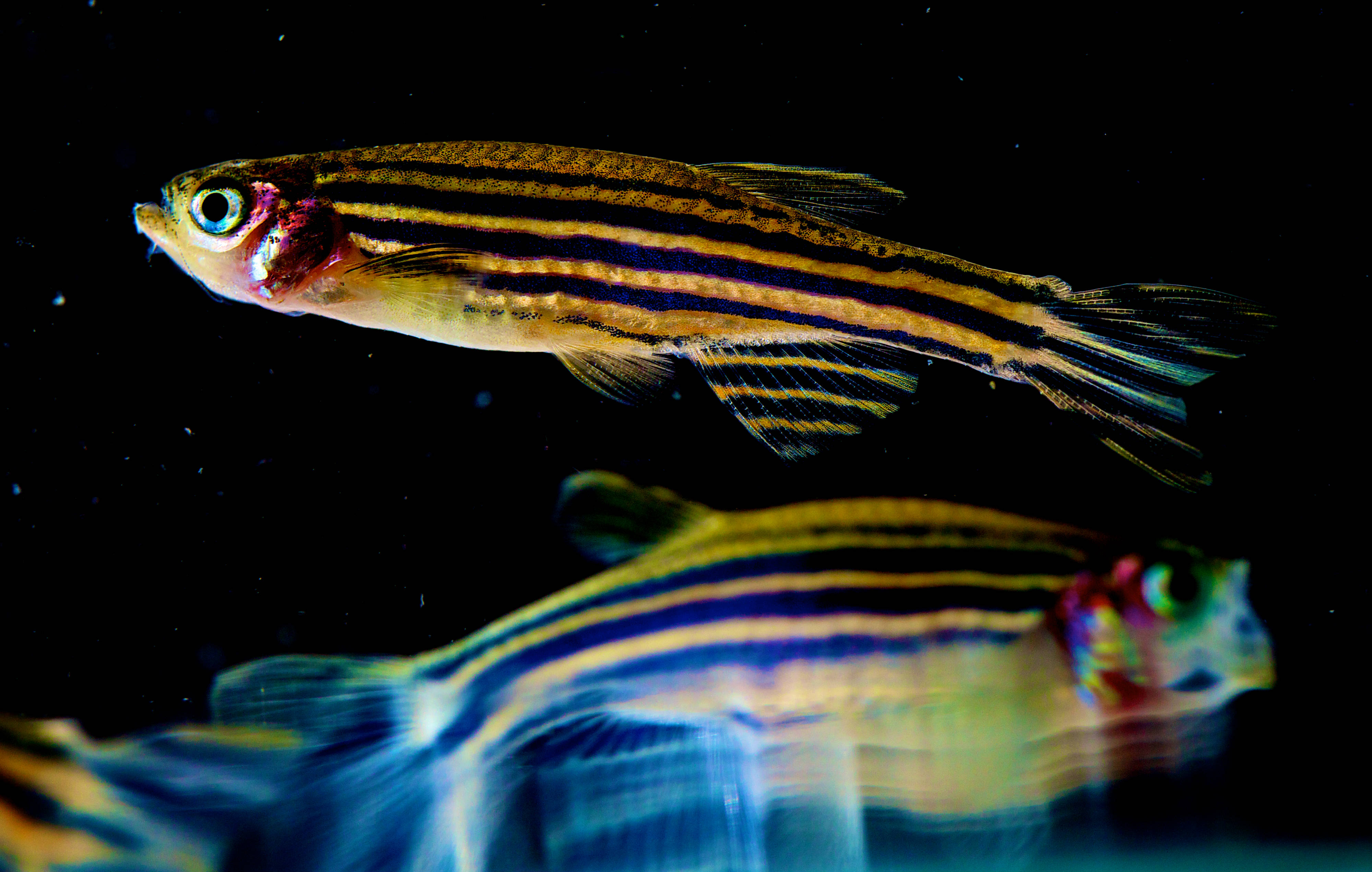
Early in graduate school, I had total study system envy. In many biological fields, including my own field of evolutionary ecology, a study system is a specific species that a scientist uses to run tests. Some of these species like mice, zebrafish, and the plant Arabidopsis are model organisms, and have been well-studied for decades or more. Whether scientists choose a model organism or a relatively unknown species as a study system can have drastic consequences for their research.

Zebrafish

Zebrafish{credit}Uri Manor, NICHD{/credit}

Continue reading →

Team science and the early career researcher

The current trend towards increased research collaboration and larger groups is fuelled by the need to answer bigger questions, but this approach puts individual contributions at risk.

Guest contributor Lucia Possamai

Research ventures where several researchers, groups or institutions work together to answer a research question is becoming known as ‘team science.’ It can be seen at work today in large genetics studies, such as the 100,000 genomes project, in multi-centre clinical trials, or in rare disease consortia. Even on a smaller scale, it is becoming more common for publications to arise from collaborative projects.

As an early career researcher I can appreciate that team science is not just good for science: it gives those of us embarking on our scientific careers the opportunity to take part in research with high impact that would otherwise not be accessible to us. It can remove the pressure to obtain independent funding – in many cases, all funding will have been obtained as part of the larger project’s grant.

Continue reading →

Peer-review tips for young researchers

Cross-posted from Nature Middle East’s House of Wisdom blog

During the Euroscience Open Forum 2012 (ESOF 2012) which opened in Dublin yesterday, Alaa Ibrahim, an astrophysicist from the American University in Cairo, Egypt, gave his advice to young researchers starting their research career on how to handle the peer reviewing process. Here is a summary of his tips:

  1. Understand that the peer reviewing process is an essential part of proper science. It gives credibility to your work and acts as an initial endorsement of your work by the science community.
  2. Start early. You now have an option to be involved in undergraduate research during graduate school. This is useful to give you a feel for the peer review process and to understand and appreciate how it works.
  3. Be part of the research community in your particular discipline. Go to meetings and conferences and get engaged with the latest research taking place. Read papers and see how they are written to get a feel for the quality of published, peer-reviewed work.
  4. Get to know the leading researchers in your field. These are likely to be your editors and reviewers. They are usually experts so don’t be shy to ask them for their advice and even mentorship when you are still starting your research career.
  5. Present your research results at meetings and solicit feedback from senior researchers and peers before you go for publishing. Their advice could help improve your work to make it publishable before you submit (and possibly get refused)
  6. Once you have a good network of contacts among senior researchers in your field, circulate your paper among them for feedback and input before submitting your manuscript for review.

For three more top tips and other peer-review advice for early-career scientists, continue reading on the House of Wisdom blog.

Writing a paper: habits of successful authors

If you’d like to boost your chances of getting your research published in the right journal, it’s worth knowing some of the habits of successful authors. Bernd Pulverer, head of scientific publications at the European Molecular Biology Organisation (EMBO), shared some insights with attendees at last week’s Naturejobs Career Expo in Heidelberg, Germany.

Consider the final paper when you first plan your project

Pulverer advises authors to “plan carefully and think holistically”.

Choose your journal with care

“There are many good journals out there,” Pulverer says. Study what kind of papers the journal publishes to see if its scope is suitable.

Don’t hold back data

“I can’t emphasise this enough,” Pulverer says, adding that the “cat and mouse game” between authors and referees is a huge problem. Don’t hold back data that you think the referees will ask for later in order to please them — include it with your initial submission.

Write a cover letter

Pulverer says a cover letter allows you to explain the importance of your research to editors and referees in a less formalised manner than in your paper. “It’s not essential, but it provides a good opportunity to give a different flavour to the results,” he says.

Tell a story, but avoid spin

Think about the ‘story’ of your paper, but don’t over-labour it — and don’t oversell your findings.

Be thorough when responding to referees

If you make it to peer review and get recommended changes from referees, “make sure you address every single point raised”, says Pulverer. If you don’t agree with something, write a thorough, point-by-point rebuttal.

Respond well to rejection

If your paper is rejected, don’t simply resubmit it to the same journal with a different title and list of authors. “It sounds trivial, but we see this quite a lot,” says Pulverer. “There are many other good journals at the same level.”

Have your say

Do you have any other tips or advice to share? Let us know below.