Author’s Corner: Is fame fair?
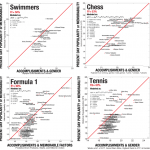
Is fame superficial? Or can it be a signal of accomplishment? Read more
Is fame superficial? Or can it be a signal of accomplishment? Read more
Since it’s inception, Scientific Data has been working to encourage a “show me the data” culture, with the aim of publishing Data Descriptors on fully reusable datasets. Datasets can only be used if data have been rigorously described; as recently shown, even when journal policies on data archiving are strong, data are not always shared in a reusable manner¹. Read more

In 2010, BANTER started with a “tweet-up” (which is exactly what it sounds like, a meet-up of people who know each other from twitter) at a bar in San Diego during the annual meeting of the Society for Neuroscience (SfN). Natural born entertainer, @doc_becca, decided to make this a standard feature of the unofficial SfN program and ever since, BANTER has been an increasing success with neuroscience “tweeps” and bloggers. I ran some @symplur analytics for #sfn15 (official twitter hashtag for the main conference) to get this great dataviz on tweeps using the tag from Sept 16–Nov 16. There are more than 40 people among the top #sfn15 tweeps who also attended BANTER, which is a nice correlation. Are you in the picture? Read more
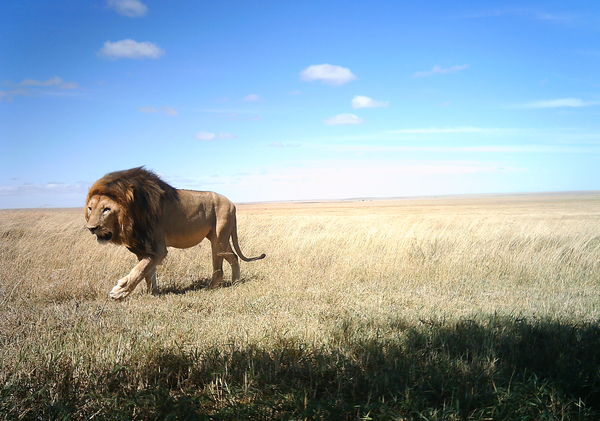
Guest post by Todd J. Vision, Dryad Digital Repository. This blog was first posted on Dryad News & Views on Tuesday, June 9th 2015. Read more

Guest Post by Dr. Allyson Lister, Knowledge Engineer, BioSharing & ISA-Tools, University of Oxford e-Research Centre BioSharing‘s Information Resources are curated and searchable web-based registries of linked information about content standards (broadly including minimum information reporting requirements, terminologies and representation formats/models), databases, and (progressively) journal and funder policies in the life sciences. Read more
Say you are studying a disease in human patients, such as diabetes and obesity, and you are looking at the human DNA sequence to try and find out whether specific mutations could be contributing to it. As all mammals shared a common ancestor approximately 80 million years ago, their genomes show great similarities. This means that non-human mammals can be used as experimental models for human disease. So, to narrow down the number of suspects (disease causing mutations), you might want to compare the human genome with that of a well-established experimental model – such as the mouse – showing the same condition (phenotype): if these mice have the same mutations, this would provide an indication that the genes in question have the same function in both organisms. You have now found mouse models you can use to study the human disease, or you may look deeper into the pathways behind glucose metabolism in which these genes are involved. Read more