United Therapeutic releases annual report for its teenage investors — a comic book

unither4.bmp

Who said you can’t have fun in biotech? The Silver Spring, Maryland-based United Therapeutics, instead of conventional typed pages and figures, employed a caricaturist and comic book artist, Jed Mickle, to write their annual report. At 44 pages, it’s narrated by vice president of business development, Martin Auster, who dances through the pages to share the tale of his own career path, what makes UT and its employees, the Unitherians, so special, and, of course, a few figures about revenue and product development.

Did I mention that he drew one page that requires 3D glasses?

The company’s major product is Remodulin, which treats pulmonary arterial hypertension, high blood pressure in lung arteries that can cause a shortness of breath. It’s currently offered as an injection or inhaled drug, the sales of which make up 92% of the company’s profits. Earlier this month, a clinical trial of an oral version of the drug allowed patients to walk 25 meters in 6 minutes, 30 meters more than a placebo. Reuters reports that this fell below expectations, but founder and CEO Martine Rothblatt remains enthused..

If their annual report reveals any truth about the company, it’s not hard to believe that they’ll pick themselves right back up.

unither2.bmp

unither5.bmp

Images used with permission of United Therapeutics. Read the entire report here.
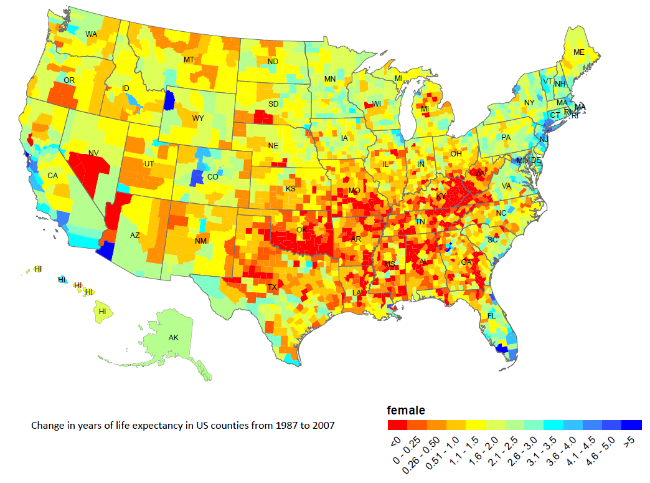
Granular map of US shows life expectancy, diabetes in pieces

LSWoMan2.bmp

Back in 2009, the Organisation for Economic Co-operation and Development (OECD) ranked the US 25th out of its 30 member countries for life expectancy. The low ranking raised eyebrows because per capita healthcare spending by Americans was more than twice the average rate in the countries evaluated in the report.

As it turns out, it only gets worse. A series of maps published today lend credence to the idea that, on top of the US’s low international ranking, life expectancy has actually dropped in parts of the nation over the past two decades, particularly for women.

“It’s a wake up call for all of us,” says global health researcher Ali Mokdad of the University of Washington, Seattle. “Maybe we should go back to our drawing board and look at health in a different way in this country.”

Continue reading →

Chile plans new agency to boost pharma oversight

By Anna Petherick

Chile’s growing trade with the US, Europe and China in recent years has made the Andean nation one of the most economically stable and prosperous countries in South America. Yet, despite Chile’s economic success, the country has continued to fall short on intellectual property laws. This lax enforcement of patent rights, experts say, has dissuaded many international companies, including the pharmaceutical sector, from investing in the country.

To bolster Chile’s patent protections and create a friendlier business environment for pharma, the country’s ministry of health last month announced plans to introduce legislation that would establish a new national medicines agency, called the Agencia Nacional de Medicamentos. The regulatory body, to be modeled after the US Food and Drug Administration, would replace the existing agency, the Instituto de Salud Pública de Chile, which has been criticized for showing favoritism to local firms and for turning a blind eye to sloppy manufacturing standards. In 2009, for example, just nine out of 34 drugmakers in Chile were certified as having good manufacturing practices.

The new agency, known as ANAMED, is intended to sort this out. First among its tasks will be to ensure that generic drugs meet bioequivalency standards—that is, that their rates and extents of action are statistically similar to the medicines that they imitate. At present, Chile enforces such requirements for only a small number of drugs, such as antibiotics, leaving the bulk of the industry to demonstrate bioequivalency on a voluntary basis. According to Ruben Gennero, a Latin American healthcare and pharmaceutical analyst with IHS Global Insight, only eight medicines currently comply with bioequivalency standards; by the end of January 2012, however, ANAMED intends to enforce these requirements for more than 300 medicines.

(Click here to continue reading.)

Drug companies hope to breathe life into asthma

By Mike May

inhaler.jpg Asthma affects an estimated 235 million people globally, and as that number grows, so does the demand for drugs to cope with the illness. GlobalData, a London-based research firm, says the global asthma market will expand from around $12.4 billion in 2009 to $14 billion by 2017. Its November 2010 report stated that “competition in the asthma market is becoming intense” as a result of the emergence of new treatment options, such as combination therapies, inhaled corticosteroids and beta agonists, which target airway muscles. In fact, GlobalData identified no fewer than 229 molecules in the pharmaceutical pipeline in development against asthma.

Yet even though drug companies are racing ahead with a pharmacopeia of experimental asthma agents, a new study published last month hints that researchers still have much to learn about the systemic action of asthma drugs. The study found that pills containing anti-inflammatory drugs known as leukotriene receptor antagonists (LTRAs)—sold by AstraZeneca as Accolate (zafirlukast) and Merck as Singulair (montelukast)—were as effective as inhaled corticosteroids in treating symptoms (N. Engl. J. Med. 364, 1695–1707, 2011). The confirmation that pills might match inhalers in controlling asthma was welcome news, says study author Stanley Musgrave, an epidemiologist at the UK’s University of East Anglia in Norwich. Both the oral and inhaled drugs reduce the inflammation-driven constriction of airways, but some scientists speculate that the former provides more systemic relief and perhaps acts on other parts of the body that are influencing the airways indirectly.

Musgrave is careful to add that the he and his colleagues did not show that LTRAs are more effective than inhaled steroids, just that they are equivalent at two time points, the longest being two years. But, notably, adherence was as much as 60% higher for the pills than with the inhaler. “Even with the best medical advice about asthma medication, compliance is [typically] lower than 50%,” says immunologist Dean Befus of the University of Alberta in Edmonton.

(Click here to continue reading.)

Image: Phyllis Buchanan, Flickr under Creative Commons

Translational science awards raise questions about the NIH’s new drug development center

Earlier this year, Francis Collins confirmed plans to rearrange some furniture at the US National Institutes for Health (NIH), reshuffling the National Center for Research Resources (NCRR) and creating the new National Center for Advancing Translational Sciences (NCATS), due to open this October. But as the months passed, it seemed less and less likely that the agency could meet that ambitious timeline. Where were the resources for this reform? The leadership? The political backing?

Some answers started to trickle in last week when US Health and Human Services secretary Katherine Sebellius wrote a letter to her bosses in the Senate, complete with a proposed budget for the new center. Under the plan, the NCATS would have a total budget of around $720 million, with some $550 million coming from the old NCRR funding pool, $50 million from the Therapeutics for Rare and Neglected Diseases Program (formerly administered by the National Human Genome Research Institute) and $18 million from the Office of Rare Disease Research (formerly within the NIH director’s office).

Additionally, the NCATS is slated to receive $100 million from the Cures Acceleration Network (CAN), a half-million drug development grant program included in last year’s health reform legislation. Organizers had previously hinted that CAN would be folded into the new center; this letter made that official.

Continue reading →

Disputed EU herbal medicine rules take force

By Karen Dente

herbals.jpg A controversial set of rules in the EU that changes the way herbal medicinal products are licensed and marketed in Europe came into full force this May, ending a seven-year grace period that had allowed manufacturers to come up to speed on the new measures.

Under the law, any plant product with a new curative claim sold over the counter is subject to an approval process the same as the one that pharmaceutical drugs are required to undergo when seeking marketing authorization. Additionally the new regulations, known as the Traditional Herbal Medicinal Products Directive, will force natural products producers to adhere to the standards of good manufacturing practice, a set of guidelines designed to ensure the quality of a product.

Although the use of herbal medicines in Europe is on the rise, the safety regulations governing these products in the EU have been “a mess,” according to Frederic Vincent, spokesperson for the EU Directorate General for Health and Consumers in Brussels.

(Click here to continue reading.)

Image: Tracy Hunter, Flickr under Creative Commons

OPINION: China needs to boost funding for graduate students to stay competitive

By Tony T K Lam

tony lam.jpg Countless biomedical discoveries have been made possible thanks to the hard work of graduate students. But students in China lack the same breadth of externally funded scholarship programs as their counterparts have in the West. If the Chinese government wants to strengthen its recruitment of elite graduate students from around the globe, it should expand the scholarship programs it offers.

China’s rapidly growing wealth continues to grab headlines, with the country’s yearly economic growth hovering in the double digits for much of the last decade. Buoyed by its economic expansion, two years ago China announced a special effort, known as the ‘one-thousand-talents scheme’, offering a bonus of 1 million renminbi ($150,000) per person to attract scientists who hold professorships in other countries (Nature 457, 522, 2009). There is a clear drive to entice top-tier faculty: just a year ago, BGI, a genomics institute based in Shenzhen, China, ordered 128 massive, high-tech DNA sequencers, creating an impressive infrastructure that any researcher in the world would want access to.

The push for elite research comes at a time when the country faces a real need for new medical solutions: almost half of the 200 million people in the world with type 2 diabetes live in China (N. Engl. J. Med. 362, 1090–1101, 2010). Many laboratories worldwide, including mine in Toronto, have research programs that aim to combat this epidemic. These research operations are made possible largely through externally funded granting agencies such as the Canadian Institutes of Health Research (CIHR). Because operating grants typically fund the daily salary of research trainees and staff in North America, the working capacity of a laboratory is greatly enhanced if the salaries of graduate students can instead be externally funded by a scholarship.

(Click here to continue reading.)

Buoyed by telaprevir’s success, Vertex adds more hepatitis C drugs to its pipeline

It’s looking more and more like Vertex Pharmaceuticals is working to monopolize the market on hepatitis C drugs. Hot off the approval of Vertex’s Incivek (telaprevir) at the end of May, the Cambridge, Massachusetts-based company announced today that they’re teaming up with South San Francisco’s Alios BioPharma to develop two more experimental compounds that disrupt the virus. Under the terms of the agreement, Vertex has committed $60 million up front and could give Alios as much as $1.5 billion in the long run.

Unlike Incivek, which targets an essential hepatitis C serine protease called NS3/4A, the two newly licensed drugs from Alios interfere with a different component of the hepatitis C replication machinery. Both agents disrupt a viral polymerase called NS5B, but the two compounds, dubbed ALS-2200 and ALS-2158, have different targets within the enzyme and work synergistically in pre-clinical cell-based studies, according to Vertex’s press release. With an eye to developing multidrug cocktails from within its own pipeline, Vertex has also shown that the Alios compounds have an additive effect with Incivek and another hep C drug known as VX-222.

After receiving an upfront payment of $60 million for the worldwide rights to the compounds, Alios could get an additional $715 million in research and developmental milestone payments if both drugs are approved, and another $750 million from Vertex based on sales.

Gene tests for brain injury still far from the football field

By Alla Katsnelson

helmet.jpg Last month, doctors released the autopsy results of former Chicago Bears star Dave Duerson, confirming speculation that the professional football player had suffered from chronic traumatic encephalopathy (CTE), a form of dementia thought to be caused by years of head injuries sustained on the field. Did he carry a genetic signature that predisposed him to the disease? For almost two decades researchers have hunted—some would say in vain—for genes that might make people more susceptible to dementia from traumatic brain injuries. In February, just days after Duerson committed suicide by a shot to the stomach, researchers published another paper that touched on the role genes might have in CTE, but the connection remains controversial.

“If we had a genetic marker that was really associated with a high prevalence of CTE, people with genetic risk factors might learn about them and choose another sport,” says Robert Cantu, co-director of the Center for the Study of Traumatic Encephalopathy at the Boston University School of Medicine.

(Click here to continue reading.)

Jewish genetic screening grows despite questions about breadth

By Elie Dolgin

In 1995, Randi Chapnik Myers chose to abort her pregnancy after a 20-week ultrasound revealed an extreme buildup of fluid inside the fetus’ skull. At the time, she and her husband Rob “were told it was not genetic,” recalls Chapnik Myers, a freelance journalist in Toronto. Besides, both partners had been tested as carriers for an ailment that affects the brain called Tay-Sachs disease, one of the most common life-threatening genetic disorders found to disproportionately affect Ashkenazi Jews like the Myerses. And “it didn’t ever actually occur to me that there could be another genetic recessive disease that we could share,” she says.

After giving birth to two healthy children in the late 1990s, the couple assumed they were in the clear. But when Chapnik Myers became pregnant again with twin girls in 2000 and the sonogram again showed the same brain swelling in one of the fetuses, the couple realized that genetics were likely to blame. Ultimately, doctors deduced that the Myerses each carried the same recessive mutation in a gene responsible for a rare genetic condition called Walker-Warburg syndrome, a severe form of congenital muscular dystrophy that causes most children to die before the age of three.

“From the day they’re born, it’s basically a miserable disease,” says Wendy Chung, a pediatrician and clinical geneticist at Columbia University Medical Center in New York who has treated children with the disease.

Since the Myerses’ harrowing experience, researchers have mapped the gene responsible for Walker-Warburg and developed a lab test to screen for the disease mutation. Recently, independent teams led by Chung and Christopher Walsh, a geneticist at Children’s Hospital Boston, have also shown in separate Israeli and American cohorts that around one in 150 people of Ashkenazi descent carry the disease-causing version of the gene—about twice the rate seen in the general population (Hum. Mutat. 29, E231–E241, 2008; Prenat. Diagn. 29, 560–569, 2009).

(Click here to continue reading.)