
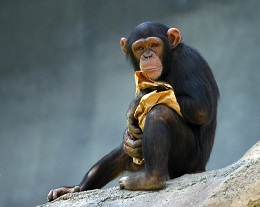
 Researchers presented their best case for the use of chimpanzees in research when the Institute of Medicine’s (IOM) Committee on the Use of Chimpanzees in Biomedical and Behavioral Research met today in Washington, DC.
Spurned by a Congressional request last year, the National Institutes of Health (NIH) asked the IOM to form a committee that would evaluate the current and future need for federally funded research on chimpanzees – increasingly controversial in the public eye and legal in only one other country, Gabon. The committee held an introductory meeting in May, but got to the heart of the issues today, the first of the two-day meeting.
As biomedical and behavioral researchers from around the country gave presentations, the committee made it clear that it needed to be convinced of the necessity of using chimpanzees, the closest living relative to human beings, for both non-invasive and invasive studies. It especially wanted to know whether alternative small animal or cellular models were advanced enough to do the job.
The strongest case for continued use of chimpanzees came from Hepatitis C Virus (HCV) researchers, who emphasized that the animals were still needed for vaccine development. The liver disease-causing virus is the most common chronic blood borne infection in the United States, infecting 3.2 million individuals. Human vaccine trials aren’t feasible, they said, and neither mice nor cellular models can mimic human infection as well as chimpanzees – the only other animal naturally susceptible to the virus. “These technologies have advanced, but they are clearly not there yet,” said Alexander Ploss, a virologist at Rockefeller University in New York.
 It’s been a week of budget mayhem in Washington and the impact of what is almost certain to be a tougher fiscal climate in 2012 is making itself felt in all kinds of ways.
 Mother Nature has devised all sorts of ways for plants to attract pollinators: colorful flowers, enticing odors, and yes, even echo acoustics.
 Biodiversity and ecosystem data gathered by US environmental monitoring programs need to be better centralized, according to Sustaining Environmental Capital: Protecting Society and the Economy, a
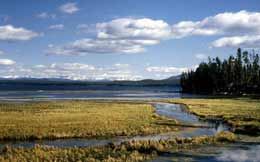
  Animal rescue teams and government agencies have rushed to Billings, Montana where they are assessing the damage from the Exxonmobil pipeline spill that occurred 2 July in the Yellowstone River, the longest undammed river in the US. Exxonmobil has estimated that up to about 160,000 litres of oil leaked from a ruptured pipeline into the river. But so far, teams haven’t come across any animals in distress.
 The
The  New Jersey Governor Chris Christie yesterday
  Since last year’s Deepwater Horizon oil spill in the Gulf of Mexico, microbiologists have been working to understand how the microbial environment responds to and ultimately breaks down oil from a spill. (For more information, see our