
FBI asks for delay on anthrax report

Daschle_letterSM.jpgThe US Federal Bureau of Investigations (FBI) has asked the National Academy of Sciences (NAS) to delay releasing its long-awaited report on the 2001 anthrax attacks that created havoc in the country in the wake of the September 11 attacks. [The New York Times]

The NAS report, which was due out last month, according to the New York Times, examines the scientific evidence used by the FBI to accuse army microbiologist Bruce Ivins of perpetrating the attacks. Ivins committed suicide in 2008, before he could be formally charged with the crime.

Controversy surrounding the FBI’s evidence and handling of the case prompted the agency to ask the NAS to convene an independent panel to review the scientific evidence. The FBI filed its own closing words on the matter earlier this year.

The request to delay the report came after the NAS recently shared a draft copy with the FBI. The reason stated for the delay: an additional 500-page stack of previously undisclosed documents that the agency says is relevant to the investigation and now wishes to turn over to the NAS committee.

The move has prompted Representative Rush Holt (D-New Jersey) to accuse the FBI of possibly “seeking to try to steer or otherwise pressure” the NAS “to reach a conclusion desired by the bureau.” [Statement]

The NAS panel says it can extend its review as requested, but the additional work will cost the FBI another $50,000 on top of the $879,550 the agency has already paid for the study. [The New York Times]

Meanwhile, the Government Accountability Office in September began its own review of the case.

Image: Envelope in which the letter containing anthrax was sent to Senator Tom Daschle during the 2001 attacks/ Wikipedia

Look dads – no mum!

ChimericMouseWithPupsSM.jpgHaving a so-called non-traditional family just got easier – if you’re a mouse. Well, actually it’s still not easy, as you’ll see if you keep reading, but at least it’s doable. Researchers yesterday reported using stem cell technology to create mice with two dads, and no mums, genetically speaking. That is, the mice carried chromosomes from two males, rather than the usual assortment of genetic material from one male and one female.
The study was published online in Biology of Reproduction.

To end up with animals doubly endowed with biological dads but lacking a biological mum, Richard Behringer at the University of Texas M. D. Anderson Cancer Center in Houston and his colleagues started with fibroblasts taken from the fetus of a male mouse, and reprogrammed them into induced pluripotent stem (iPS) cells.

Continue reading

DNA sequencing traces Haiti cholera epidemic to South Asia

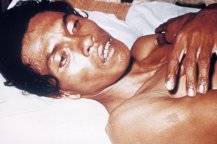
cholera _SM.jpgThe strain of cholera bacterium responsible for the epidemic currently raging in Haiti came from South Asia, and was most likely carried to Haiti by an infected human or some form of human activity, researchers report in the New England Journal of Medicine today.

A report obtained by the Associated Press earlier this week had suggested the likely source of the epidemic to a group of United Nations peace-keepers from Nepal – a conclusion supported by the current study.

According to the most recent data by the US Centers for Disease Control and Prevention, the cholera epidemic in the earthquake-devastated country has already infected over 91,000 people and caused at least 2,000 deaths.

“We really wanted to ask the question, how did cholera get to Haiti? It hasn’t been there more for than a century,” says Matthew Waldor, an infectious disease biologist at the Brigham and Women’s Hospital in Boston, Massachusetts, the study’s lead author.

Continue reading

Former chemistry grad student found guilty of fraud

MethaneSM.pngA former graduate student has been found guilty of misconduct in a high profile case that rocked the chemistry community four years ago and resulted in the retraction of six papers.

Dalibor Sames, a chemist at Columbia University in New York, retracted the six papers between March and June, 2006, when he and his colleagues found they could not reproduce the results. The research focused on selectively breaking carbon-hydrogen bonds within molecules with the aim of modifying the molecules for industrial purposes, such as producing pharmaceuticals or fuels.

The Office of Research Integrity yesterday published a notice finding Bengu Sezen, a former graduate student in Sames’s lab, guilty of 21 counts of misconduct – specifically, falsifying, fabricating and plagiarizing data in three papers and in her doctoral dissertation.

The punishment: a five year ban on “any contracting or subcontracting with any agency of the United States Government” – that is, receiving US funding — and on “serving in any advisory capacity to the US Public Health Service (PHS)” – such as scientific peer review.

Sezen completed another doctorate in the lab of chromosome biologist Elmar Schiebel at the University of Heidelberg in Germany. According to a list of lab alumni posted on Schiebel’s website, she then moved on to become a group leader at Yeditepe University in Istanbul, Turkey.

Image: ball and stick model of methane (CH4) via Wikipedia

Positive review for California stem cell agency

cirm.logoSM.jpgThe first comprehensive external review of the California Institute for Regenerative Medicine (CIRM) has come to overwhelmingly positive conclusions about the state stem cell agency’s progress. But some in the biotech community continue to grumble that the agency, which began operations in 2006, is focusing too much on basic research rather than fulfilling its mandate of taking stem cell therapies from bench to bedside.
Continue reading

New human embryonic stem cell trial set to begin

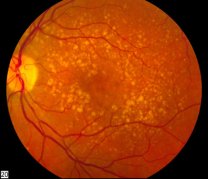
macdegenSM.jpgThe second-ever clinical trial of a therapy involving the use of human embryonic stem cells has received the green light from US regulators.
The company developing the therapy, Advanced Cell Technology (ACT), based in Marlborough, Massachusetts, got the go-ahead from the US Food and Drug Administration on 18 November, according to Robert Lanza, ACT’s chief scientific officer. ACT first requested approval from the agency to conduct the clinical trial a year ago.

The trial will examine the safety of a therapy for Stargardt’s Macular Degeneration, an inherited juvenile eye disease affecting an estimated 1 in 10,000 young people in the US. As the disease progresses, a layer of the retina called the retinal pigment epithelium (RPE) degenerates, causing vision loss. It’s hoped the new therapy would also work for other types of macular degeneration, a widespread cause of blindness, particularly in the elderly.

The treatment involves replacing diseased RPE cells with healthy ones generated from human embryonic stem cells, and hinges on a technique the company developed to create extremely pure concoctions of the cells. In the trial, 12 individuals at several US medical centres will receive injections of the cells directly into the eye to test the safety of the procedure. (Although the disease begins to take its toll at around 6 years of age, the trial will start with patients who are over 18.)

Continue reading

The new biology on the silver screen

Pacific.Biosciences69SM.jpgThe Smithsonian Air and Space Museum was the place to be yesterday evening for conference-goers at the American Society of Human Genetic meeting in Washington DC. The gene sequencing company Pacific Biosciences had taken over the museum for a premier screening of a documentary film the company had made called “The New Biology.”

It is certainly a beautifully produced film. John Rubin, a cognitive scientist-turned-documentary filmmaker who directed it, said in the post-movie panel that one of the reasons he took on the project was that “I wouldn’t have to say ‘cut’ whenever someone said the word ‘mitochondria’”. And indeed, it contains pretty detailed interviews with scientists such as systems biologist Leroy Hood, cancer biologists Todd Golub and Gary Nolan, geneticist Yusuke Nakamura, and bioinformatician Andreas Califano discussing flow cytometry, macrophages, gene interactions, and more. Weaving the interviews together, a soothing female voice narrates scientific concepts during image sequences showing waves of As, Cs, Ts, and Gs or complex animations suggesting the interconnectedness of data and of life.

Continue reading

Why so many rare variants?

chromosomesSM.jpgUnsurprisingly, this year much of the buzz at the American Society of Human Genetics meeting is about the 1000 Genomes Project, the eagerly awaited pilot data for which was published last week. One of the main take-home messages from the analysis has been the huge number of rare variants the study has turned up so far.
In a talk earlier today here in Washington DC, Andy Clark, a population geneticist at Cornell University, gave a tantalizing explanation for why rare variants are so numerous: population size. For millennia, population growth had been fairly static, but over the last couple centuries it has begun to shoot up wildly, with the growth rate now at about 1-2% per year.

That expansion, he says, “grossly distorts our geneology.” With so many people, there hasn’t been time for natural selection to weed out all those deleterious variants.

“We’re simply a mutation accumulation experiment that’s been going on for centuries now,” Clark said in the talk. “The explosive population growth actually results in the growth of deleterious mutations on the individual as well.”

Image: Human karyotype; NIH via Wikimedia Commons

NIH to launch genetic testing registry next spring

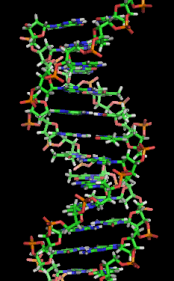
DNA_orbit_animated_static_thumbSM.pngA public, online registry providing information on the hundreds of available genetic tests is set to launch this coming spring, US National Institutes of Health (NIH) officials said at a public meeting in Washington DC this afternoon. But many of the details – such as what information it will include – have yet to be determined.

The NIH first publicly announced plans to create such a registry in March, though the idea had been circulation for at least a year. Exactly what the agency will do has been an active topic of discussion in a growing industry.

NIH director Francis Collins began the meeting by outlining some things that the registry would not do. Many in the genetics community have pushed for the registry to be mandatory rather than voluntary, but Collins gave a definitive “no” to such hopes today. Also, he said, “to be honest, it would take resources beyond our means” to review data in the registry to ensure it is accurate.

Continue reading

Stem cell plaintiffs argue for return of injunction — UPDATED

Scale_of_justice.pngThe first of two court documents expected today regarding the ongoing lawsuit on the legality of federal funding of embryonic stem cell research has been filed.

The document, filed on behalf of plaintiffs James Sherley and Theresa Deisher to the US Court of Appeals in Washington, DC, lays out arguments for why that court should reinstate a ban on the government’s human embryonic stem cell funding policy that was issued in August by a lower court.

That ban was issued by Judge Royce Lamberth of Washington DC’s district court on 23 August. It was intended as a preliminary measure that would hold while the case was in progress, but it implied that the judge accepted the plaintiffs’ arguments and was likely to rule in their favor.

The government appealed this preliminary injunction, however, and the appeals court agreed to consider the issue, temporarily lifting the injunction while it does so.

The appeals court asked the defendants and the plaintiffs to lay out their written arguments by 14 October and 28 October, respectively. The government must file an additional counter-reply on 4 November, and the court will then hear oral arguments at an as-yet-undecided date soon thereafter.

Continue reading