Synthetic reactions inside detergent micelles: Bruce Lipshutz at the #ACSSanFran

On Sunday afternoon, I went to a symposium in honour of Bruce Lipshutz, who won the Herbert C. Brown Award for Creative Research in Synthetic Methods. The line-up of dynamic chemists and one chemical engineer!) was impressive and his work stood out as being truly ground-breaking.

He started by asking the question: Why do we do synthesis “the way we do”, when Nature does her reaction in an aqueous medium, at around 37 C, and using only trace amounts of metals for catalysis?

Organic solvents are the main polluters from synthetic chemistry and the number of years until many metals are extracted to exhaustion is sobering. While chemists don’t use these reagents lightly – it is not like its possible to magically make a lipophilic compound water soluble! And metals like palladium enabled reactions that were previous impossible – there is a move now towards developing new synthetic methods that address these issues.

For example, the green chemistry challenge from the US Environment Protection Agency who had a stand in the Exhibitor’s hall.

green

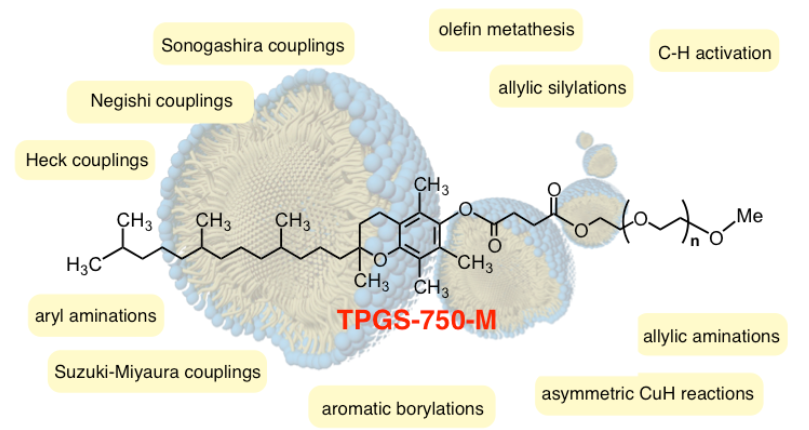
To address the solubility issue, Prof. Lipshutz’s team have developed a nanomicellar technology where organic reactions occur inside micelles formed from designer surfactants. Here water is not a solvent, but a medium – the reagents are not in solution, they are in a more dynamic state and are highly concentrated in the micelles. From the image below (taken from the Lipshutz Team website), the list of reactions that they have worked on is staggering.

nanomicelle small

They have been working on using iron nanoparticles doped with Pd, Ni or Cu to perform catalytic reactions such as Suzuki-Miyaura cross couplings, Sonagashira coupling, and reduction of nitro-containing aromatics.

What is notable, is that they are getting really good yields with lower catalyst loadings than those used in traditional organic synthesis; and that they are able to do may of the reactions – in some cases quite unexpectedly – under ambient conditions.

Synthetic collagen, protein microarrays and lipid bilayers – Sunday morning, #ACSSanFran

The “National Fresenius Award Symposium” celebrates researchers that have made amazing early career advances; this year the award went to Neal K. Devaraj, and this session was assembled in his honour.

The session started with a talk by David Chenowerth on making synthetic collagen. Collagen is a peptide triple helix made of peptide chains of the general form: [Gxx]3. His group has been doing experiments replacing carbon atoms with nitrogen – e.g. using aza-glycine instead of glycine in one (or more) of the repeating triplets Proline-Hydroxyproline-Glycine – which has remarkable effects on the stability of the resulting triple helices.

After a fascinating talk from Dale Poulter about exploiting the versatility of farnesyl transferase for the preparation of protein microarrays, there were three talks about lipid bilayers.

Steven Boxer spoke about recent work on tethered lipid bilayers – using a really clever approach using lipid-DNA conjugates with complementary DNA strands – which has been applied to looking at membrane fusion of enveloped viruses.

For imaging organelles, you could label either the membrane proteins or the lipids. An advantage of labelling the lipids is that there are many more lipid molecules than proteins in the membrane, so if you choose a photostable fluorophore that blinks spontaneously it should be possible to image for longer time periods before you get photobleaching. Alanna Schepartz spoke about work using an environmentally sensitive (fluorescesces more at low pH) fluorophore (Sir-Tz) to image things like Golgi and ER using STED.  The Supplementary Movies are remarkable both for the resolution, and for the length of time of the imaging experiment.

The last talk was by Neal Devaraj who spoke about his work on in situ synthesis membrane synthesis. So what does this mean? He creates clickable phospholipid precursors, sets up the reaction and watches how new lipid vesicles form over time. To solve the problem of catalyst dilution over time, they developed a really neat system for continual synthesis of a catalytic membrane.

Image taken from: 10.1073/pnas.1506704112, Hardy et al. (2015) PNAS 112  pp 8187-8192

They have also done some exciting work towards synthetic re-modelling of lipid bilayers using a reversible covalent coupling. Remarkably it is possible to see the formation of microdomains!

Image taken from: doi: 10.1073/pnas.1605541113, Brea et al. (2016) PNAS 113 pp 8589-8594

Writing home from the American Chemical Society Meeting in San Francisco

Dear Mother,
I have some exciting news! I am in San Francisco attending the American Chemical Society Spring Meeting.

acs picture

I made the rather unusual decision to stay at a youth hostel this time: the Pacific Tradewinds. As it turns out, there are quite a few attendees staying here – in fact 4 of my 5 room-mates are going to be walking with me this morning to the Moscone Center!

There are many parallel sessions, and we all have the impossible task of choosing between excellent options. The program runs to 607 densely printed pages; so getting the conference app was a big help.

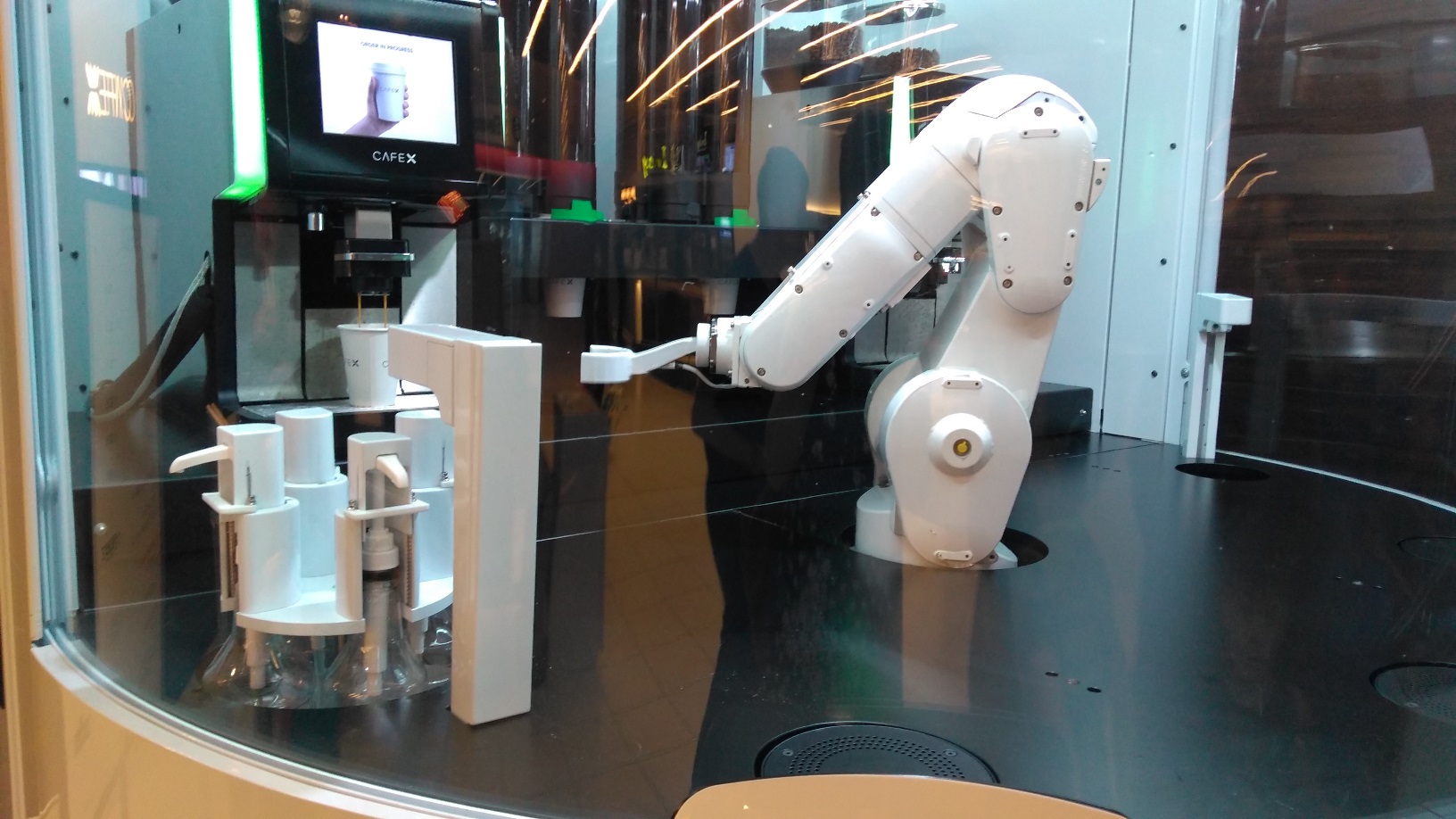
Yesterday I discovered that there is this booth – called Café-X – in a building near the Moscone, where you can have coffee made and delivered to you by robot; so you can guess what I will be doing every day this week!

robot - small

Yours etc.
Bronwen

SWATH-MS at Nature Protocols and Scientific Data

The lab of Ruedi Aebersold recently published a Nature Protocol for generating peptide libraries for targeted analysis of SWATH MS data-independent acquisition mass spectrometry. This protocol complements a data descriptor (published in Scientific Data by the same authors) for a large-scale human assay library that can be used to support protein quantification by SWATH-MS.

In order to understand an organism’s biology and how it responds to environmental changes (e.g. disease or drug treatments), many researchers would like to be able to correctly identify and even quantify as many of the proteins in any given sample as possible. Mass spectrometry – in particular liquid chromatography-coupled tandem mass spectrometry (LC-MS/MS) – is the analytical technique most commonly used for deep and reliable exploration of the proteome.

In bottom-up proteomics, the cells of the sample are lysed, the proteins are digested into shorter peptides, the non-peptide material is removed, and the peptides separated by liquid chromatography. In LC-MS, the column separating the peptides is interfaced with a mass spectrometer and the peptides are analysed as they elute.

Sometimes the researcher will already know which proteins will be most interesting for their study; in these cases Selected Reaction Monitoring (SRM) is a very sensitive mass spectrometry approach to detecting and consistently quantifying the peptides associated with these proteins over many samples. The reactions monitored are the specific fragmentations associated with peptides-of-interest that occur in the mass spectrometer.

In many cases this information will not yet be fully available before the measurement or the number of potential protein-players in the given system might be very large. Data-independent acquisition of mass spectra for proteomics experiments is an alternative approach that extends the number of proteins that can be targeted in a sample from approximately one hundred (in SRM) to several thousand. It is made possible by the development of mass spectrometry instruments that are able to acquire high-resolutioin mass spectra at a very high sampling rate. The analysis method requires the researcher to perform initial experiments to put together a library of time and mass spectrometric coordinates corresponding to the peptides associated with each sample type. These spectra are then used as the basis for the development of highly specific assays to detect and quantify the respective peptide in subsequent samples.

We recently published a protocol for generating peptide libraries for a type of data independent mass spectrometry developed by Ruedi Aebersold and co-workers called SWATH-MS. The assay libraries are generated by collecting high-quality fragment ion spectra in data dependent acquisition mode, and processing these in a number of computational steps as shown in the workflow below.

Workflow for SWATH assay library generation


Scientific Data published a data descriptor for a generic large-scale human assay library to support protein quantification by SWATH-MS. This library was prepared using the procedure described in the Nature Protocol and consists of 1,164,312 transitions identifying 139,449 proteotypic peptides and 10,316 proteins; it was generated by combining the results from 331 measurements of fractions from different cell lines, tissue and affinity enriched protein samples. 

The data itself is deposited in the ProteomeXchange at the following locations:
PXD000953
PXD000954
and at SWATHAtlas

Modelling the molecules of life – a talk by Michael Levitt

Last thursday I went to an inspiring talk given by Michael Levitt, joint winner of the 2013 Nobel prize for chemistry. It was the 2014 Sir Ernst Chain Lecture at Imperial College, London.
Starting with a project using lysozyme (where the co-ordinates for the computer input came from a ball and stick model and were typed onto punch cards) and early computer simulations of protein folding, to his more recent work on modelling ribosomes and eukaryote chaperonins, he presented a small slice of the amazing work that he and his collaborators have done. What was equally evident was the phenomenal advances in technology and computational power over the last 40 years.
He is currently holding a chair in Cancer Research at Stanford, and spoke a little about the work on humanised antibodies that he did with Cary Queen  at Protein Design Labs (a company that formed in 1987, is now PDL biopharma  and produced patents that underpinned the development of drugs like Herceptin,and Avastin).

He included a slide providing advice to the young:
Be passionate
Be persistent
Be original
Be kind and good (or, at least, act kind and good…)

He thanked the Nobel Committee for Chemistry for, amongst other things, considering awarding a prize for a method rather than a solution; a sentiment especially pleasing to the editors of Nature Protocols!

Some of the slides were similar to those published here.
In 2003, he prepared a series of video talklets to form a web-based class on Computational Structural Biology. These are available on-line; and I plan to listen to as many of these as I can this coming weekend! Structural Biology 228 | Computational Structural Biology

A burst of activity on the Protocol Exchange

In the last month we have pushed live 9 new protocols on the Protocol Exchange!

– Long-term calcium imaging of ASJ sensory neuron controlling cold tolerance in Caenorhabditis elegans

– A spinnable and automatable StageTip for high throughput peptide desalting and proteomics

– Cold tolerance assay for studying cultivation-temperature-dependent cold habituation in C. elegans

– Protocol for delivery of macromolecules using dfTAT into live cells

– Mouse meninges isolation for FACS

– Microglial Sholl Analysis

– Modified paired end rapid library preparation protocol for 454 GS Junior 8 kb library preparation using Covaris g-tubes and BluePippin electrophoresis

– Purification of influenza virions by haemadsorption and ultracentrifugation

– Multi-parameter assessment of thrombus formation on microspotted arrays of thrombogenic surfaces

One of the limitations of the Protocol Exchange has been that it is difficult to work out how many times one of the protocols has been cited. We have recently realized that google scholar can capture this information, and it may be possible to extract a citation report by using the DOI as the search term.

For example:
If you wanted to find out how many times the protocol “Anisotropic Mobilities in Organic Semiconductors” had been cited, you could paste 10.1038/protex.2013.070 into the search field of google scholar.

google scholar 1

The search will then give the following output:

google scholar 2

I am not sure how this works and perhaps the data should be taken with a pinch of salt, but if you have an Exchange Protocol, you might want to perform the search and see what it spits out!


CAUTION: Don’t mix concentrated nitric acid with organic solvents!

Radiolabelling with copper-64 (or any other metal cation radioisotope) is done by attaching a metal chelating group to the probe of interest. In 2006, we worked with Thaddeus J Wadas & Carolyn J Anderson to publish a protocol for radiolabelling peptides with copper-64 which included a procedure for making sure that the reaction tubes and pippette tips used for the labelling were free from any other metals that might compete with copper-64 for coordination by the chelator (Box 1 in the protocol). This procedure involved washing the equipment with nitric acid, followed by rinses with ethanol followed by diethyl ether.

This is actually potentially hazardous, and the authors would like to make the following precautionary statement:

CAUTION:  When removing trace metal contaminants from pipette tips or reaction vials with 1:1 concentrated nitric acid:ddH2O, make sure no organic solvents like ethanol or diethyl ether are inadvertently mixed with the nitric acid waste.  An explosion occurred when this happened at a lab using this procedure.  Fortunately, nobody was injured.

In fact, it is possible (and advisable) to not use organic solvents for this process at all. The text for Box 1 should instead read:

BOX 1 | REMOVING TRACE METAL CONTAMINATION

Working on the tracer level requires that the reagents and vessels used be as free as possible of trace metals. To achieve this, pipette tips, reaction tubes and caps can be acid-washed by following the steps below.
Alternatively, trace metal free reaction tubes and pipette tips can be
purchased.

Removing trace metal contaminants from reaction tubes, caps and tips
1. Soak the tubes and caps or tips in a 1:1 mixture of concentrated nitric
acid and ddH2O (greater than 18 MΩ resistivity) for several hours with
periodic mixing, and then drain.
2. Rinse the tubes with ddH2O, and drain.
<CAUTION> It is recommended that ethanol and/or diethyl ether not be
used to assist in drying the tubes, as even small amounts of these
organic solvents mixed with 1:1 nitric acid ddH2O can cause an explosion.
3. Place in a container and dry in an oven at temperatures below 50 deg C.

Removing trace metal contaminants from reaction buffers and other
solutions
1. Prepare the solution(s) or buffer(s) to be used.
2. Add Chelex resin (10 g l-1) to these solutions.
3. Stir for several hours or overnight at room temperature.
4. Filter through a Corning 1-liter filter system (pore size 0.2 mm).


………….

Related explosions:

It will probably not surprise you to know that this is not the first time that such things have happened with nitric acid and oxidisable organics. Here are some links to related anecdotes:

Safety Chat: Nitric Acid Waste
(Lawrence Berkeley National Laboratory, 2009)

Explosion at U. Maryland: Another Nitric Acid Oopsie
(University of Maryland, 2011)

The flaming apron that sparked the invention of gun cotton and the motion picture industry
(a kitchen in Switzerland, 1845)


…………………

Note added on 17 October 2013:

A corrigendum for this protocol has now been published (11 October 2013). Box 1 has been corrected in the pdf and the online version of the protocol.

https://www.nature.com/nprot/journal/v1/n6/box/nprot.2006.431_BX1.html


The phenome is a product of the genome and the exposome?

Last night I went to a public lecture at the University of Surrey organised by the Royal Society of Chemistry. Professor Ian Wilson spoke on the topic: “Mapping the Phenome: The analytical chemistry of life”.

I receive email alerts of talks like this, and was alerted by the fact that this was a topic that I was interested in (I have a past as a natural products chemist, and I edit quite a lot of metabolomics protocols), and that it was going to be happening in Guildford (which is closer to where I live than London is!).

The first comment to make is that this was a public lecture, so it was pitched at the level of an intelligent, interested person who had not necessarily had any formal scientific training. This talk was definitely a success; whenever I looked at the other people around me they were attentive and smiling.

The title of the talk mentions the phenome which, I suppose, looks at different phenotypes (as apposed to genotypes). As we know, organisms are somehow a product of their genome and their environment, and the point where I laughed and laughed was when he referred to the compounds that the organism is exposed to as being the “exposome”.

One part of the phenotype of an organism is its metabolome, and that was the main focus of the talk.  The title could equally easily have been: “Metabolomic analysis of urine” or perhaps “Pisse prophets of the past, present and future”.

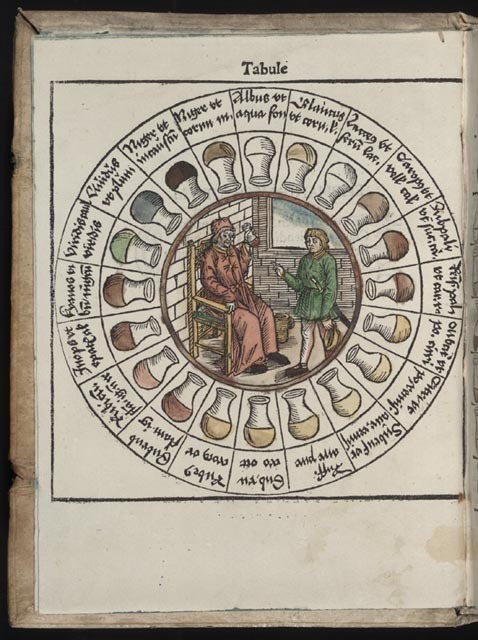
Woodcut showing a wheel and chart that classify urine samples, shown in the blog: “Medium Aevum”.

Professor Wilson had a wooden rack for screw-top test-tubes which he opened and sniffed during the first part of his talk. He concluded this act by drinking one of them! While they all looked they might possibly be urine, they were in fact: coffee, pepsi, two strengths of tea, and scotch. He drank the scotch, apparently.

For the rest of the talk, he showed a lot of NMR spectra from urine samples of mice, rats and humans:

600 MHz 1H NMR spectrum of control rat urine, displaying hundreds of resolved peaks


… and Principle Component Analysis plots:

I know, I know, it is actually from a protocol for NMR of plants, but it is the nicest image that I can find in our content that looks like what Prof. Wilson showed in the talk.

At no point did he get bogged down with how the samples were prepared, what NMR was, or even what principle component analysis involved. What he emphasised was pattern recognition, and how you could start to see patterns in the NMR spectra for different mouse types, treatment groups, or people with different diets.

There was a feeling of optimism that this type of analysis would ultimately result in clinicians being better able to choose for each patient the best drug out of an array of possible treatments (i.e. the one most likely to help, and least likely to cause harmful side effects), because clinicians would be able to determine which pattern-group the patient belonged to.


Preventing overfitting during the reconstruction of macromolecule images from CryoEM data

Using cryo-electron microscopy (cryoEM) it is possible to get information about the three-dimensional structure of macromolecules. Samples can be prepared using, for example, a protocol by Grassucci et al., and EM images obtained.

What is important to note, is that the re-constructed 3D image is generated using  many thousands of  macromolecules (particles). In the figure below, for example, a total of 29,926 particles from 616 CCD frames (4k × 4k frames from a charge-coupled device camera) were used to produce the 4.3 Å resolution reconstruction shown in panel a. (taken from Zhang et al., 2010)

Image reconstruction is therefore a significant part of the process of generating meaningful data, and it is important that the averaging process doesn’t overfit the data (my understanding of this is that overfitting relates to finding patterns in the parts of the data that are really just noise; and that this over-interpretation of the data would lead to an over-estimate of the true resolution of the image).

One of our protocols for image analysis involves the use of the software XMIPP. In a recent letter to Nature Methods, Scheres and Chen introduce a script that can be used on top of the conventional projection-matching protocol in the XMIPP package to help prevent data overfitting.

The article can be accessed here:

Prevention of overfitting in cryo-EM structure determination

The script is included in the Supplementary Information (should be accessible without a site licence):

https://www.nature.com/nmeth/journal/v9/n9/extref/nmeth.2115-S1.pdf

…………………………………………………

Nature Protocols relating to CryoEM of macromolecules:

Preparation of macromolecular complexes for cryo-electron microscopy
Robert A Grassucci, Derek J Taylor & Joachim Frank

Visualization of macromolecular complexes using cryo-electron microscopy with FEI Tecnai transmission electron microscopes
Robert A Grassucci, Derek Taylor & Joachim Frank

SPIDER image processing for single-particle reconstruction of biological macromolecules from electron micrographs
Tanvir R Shaikh, Haixiao Gao, William T Baxter, Francisco J Asturias, Nicolas Boisset, Ardean Leith & Joachim Frank

Image processing for electron microscopy single-particle analysis using XMIPP
Sjors H W Scheres, Rafael Núñez-Ramírez, Carlos O S Sorzano, José María Carazo & Roberto Marabini

Cryo-EM of macromolecular assemblies at near-atomic resolution
Matthew L Baker, Junjie Zhang,Steven J Ludtke & Wah Chiu


Radiochemistry at Nature Protocols

In March 2000 I came to England to start a PhD, and pet went from meaning a small animal you kept at home to meaning Positron Emission Tomography. There were months where my timetable was set by the half-life of iodine-124 (4.16 h), and my mind was occupied by the relative merits and problems with direct and indirect labelling of annexin V.

It has therefore pleased me to be able to commission a few protocols for radiolabeling molecules that could be used for PET or SPECT imaging.

The very first one that we published was:

Preparation of N-succinimidyl 3-[*I]iodobenzoate: an agent for the indirect radioiodination of proteins

https://www.nature.com/nprot/journal/v1/n2/full/nprot.2006.99.html


And now, in our most recent batch, we have published a group of three protocols for radiolabelling peptides and proteins with fluorine-18 using the silicon fluoride acceptor (SiFA) approach. Common to both the iodine and the fluorine radiolabelling is that a lot of effort is expended making a precursor with a labile group that will rapidly be exchanged for the radioactive ion. You want the radiolabelling reaction to go quickly and cleanly so that both the reaction and the purification can be performed in the shortest time possible maximising the amount of the radiotracer that can be used for your experiments.

The SiFA approach is almost miraculous, because it relies on the fact that for this extraordinary moiety fluorine-18 will replace the stable isotope, fluorine-19. Shown below is the reaction scheme for labelling peptides.


The three SiFA protocols are:

One-step 18F-labeling of peptides for positron emission tomography imaging using the SiFA methodology
https://www.nature.com/nprot/journal/v7/n11/full/nprot.2012.109.html

Synthesis of [18F]SiFB: a prosthetic group for direct protein radiolabeling for application in positron emission tomography
https://www.nature.com/nprot/journal/v7/n11/full/nprot.2012.110.html

Protein labeling with the labeling precursor [18F]SiFA-SH for positron emission tomography
https://www.nature.com/nprot/journal/v7/n11/full/nprot.2012.111.html


Here is a complete list of Nature Protocols that involve radiolabelling with isotopes suitable for PET or SPECT imaging:

Carbon-11, PET

Labeling of aliphatic carboxylic acids using [11C]carbon monoxide
https://www.nature.com/nprot/journal/v1/n2/full/nprot.2006.112.html

Tagging recombinant proteins with a Sel-tag for purification, labeling with electrophilic compounds or radiolabeling with 11C
https://www.nature.com/nprot/journal/v1/n2/full/nprot.2006.87.html


Fluorine-18, PET

One-step 18F-labeling of peptides for positron emission tomography imaging using the SiFA methodology
https://www.nature.com/nprot/journal/v7/n11/full/nprot.2012.109.html

Synthesis of [18F]SiFB: a prosthetic group for direct protein radiolabeling for application in positron emission tomography
https://www.nature.com/nprot/journal/v7/n11/full/nprot.2012.110.html

Protein labeling with the labeling precursor [18F]SiFA-SH for positron emission tomography
https://www.nature.com/nprot/journal/v7/n11/full/nprot.2012.111.html

Synthesis of N-succinimidyl 4-[18F]fluorobenzoate, an agent for labeling proteins and peptides with 18F
https://www.nature.com/nprot/journal/v1/n4/full/nprot.2006.264.html

Preparation of 18F-labeled peptides using the copper(I)-catalyzed azide-alkyne 1,3-dipolar cycloaddition
https://www.nature.com/nprot/journal/v6/n11/full/nprot.2011.390.html

PET imaging of herpes simplex virus type 1 thymidine kinase (HSV1-tk) or mutant HSV1-sr39tk reporter gene expression in mice and humans using [18F]FHBG
https://www.nature.com/nprot/journal/v1/n6/full/nprot.2006.459.html

Molecular PET imaging of HSV1-tk reporter gene expression using [18F]FEAU
https://www.nature.com/nprot/journal/v2/n2/full/nprot.2007.49.html


Copper-64, PET

Preparation of carbon nanotube bioconjugates for biomedical applications
https://www.nature.com/nprot/journal/v4/n9/full/nprot.2009.146.html

Radiolabeling of TETA- and CB-TE2A-conjugated peptides with copper-64
https://www.nature.com/nprot/journal/v1/n6/full/nprot.2006.431.html


Gallium-68, PET

Facile radiolabeling of monoclonal antibodies and other proteins with zirconium-89 or gallium-68 for PET imaging using p-isothiocyanatobenzyl-desferrioxamine
https://www.nature.com/protocolexchange/protocols/412

Conjugation of DOTA-like chelating agents to peptides and radiolabeling with trivalent metallic isotopes
https://www.nature.com/nprot/journal/v1/n2/full/nprot.2006.175.html


Yttrium-86, PET

Conjugation of DOTA-like chelating agents to peptides and radiolabeling with trivalent metallic isotopes
https://www.nature.com/nprot/journal/v1/n2/full/nprot.2006.175.html


Zirconium-89, PET

Conjugation and radiolabeling of monoclonal antibodies with zirconium-89 for PET imaging using the bifunctional chelate p-isothiocyanatobenzyl-desferrioxamine
https://www.nature.com/nprot/journal/v5/n4/full/nprot.2010.13.html


Technetium-99m, SPECT

Radiolabeling of HYNIC–annexin V with technetium-99m for in vivo imaging of apoptosis
https://www.nature.com/nprot/journal/v1/n1/full/nprot.2006.17.html

Methods for MAG3 conjugation and 99mTc radiolabeling of biomolecules
https://www.nature.com/nprot/journal/v1/n3/full/nprot.2006.262.html

An improved synthesis of NHS-MAG3 for conjugation and radiolabeling of biomolecules with 99mTc at room temperature
https://www.nature.com/nprot/journal/v2/n4/full/nprot.2007.144.html


Indium-111, SPECT

Conjugation of DOTA-like chelating agents to peptides and radiolabeling with trivalent metallic isotopes
https://www.nature.com/nprot/journal/v1/n2/full/nprot.2006.175.html


Iodone-124 / Iodine-125, PET / SPECT

Preparation of N-succinimidyl 3-[*I]iodobenzoate: an agent for the indirect radioiodination of proteins
https://www.nature.com/nprot/journal/v1/n2/full/nprot.2006.99.html