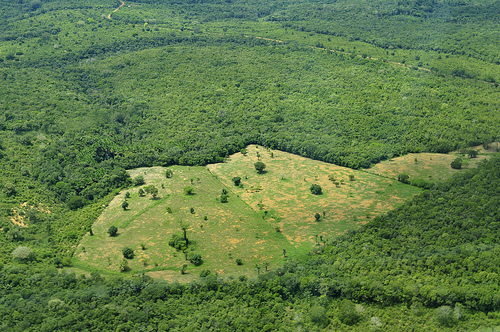
Deforestation rises in the Amazon

rainforest.jpgFor the third month in a row, Brazil’s early-warning system for monitoring deforestation in the Amazon has found higher-than-usual levels of cleared forest area (see the original report, in Portuguese). The LANDSAT satellite data, from Brazil’s National Institute for Space Research’s DETER program, shows a total clearing of 267.9 square kilometers in May, a 144% increase on the 109.6 square kilometers cleared in May last year.

For March and April 2011, about 593.0 square kilometers of forest area were cleared, according to DETER. This is five times the corresponding clearing in 2010.

Deforestation in the Amazon has been declining since 2004, but recent months have suggested a reversal, although month-to-moth figures tend to vary. The deforestation rates between August 2010 and July 2011 – the year covered by the programme – are yet to be released.

Continue reading

Science societies offer services to assess chemical risk

Eight scientific societies have voiced their concern over people’s exposure to chemicals, especially ones that mimic hormones, in the environment and their often-untested effects on public health in a letter in Science published today.

There is “growing recognition that currently accepted testing paradigms and government review practices are inadequate for chemicals with hormone-like actions,” states the letter. The scientists urge the U.S. Food and Drug Administration and the U.S. Environmental Protection Agency (EPA) to use a multi-disciplinary panel of researchers from across their boards to develop protocols for testing chemicals for health effects.

Continue reading

Malaysian university establishes ambitious biofuels research program

Malaysia has grand plans for its biofuels sector, with its massive palm oil industry currently producing 1,065 megawatts of electricity and 270 megawatts of biogas. The country is now reportedly aiming to become the hub of Asia’s research into green energy generation using biomass.

Universiti Teknologi Petronas (UTP) launched its Centre for Biofuel and Biochemical Research (CBBR) on 24 February. The effort is supported by Japan’s Mitsubishi Corporation, which is sponsoring the academic chair in green technology heading the center, according to the MoU signed by the two groups in 2009.

Continue reading

US carbon storage project chooses new ground

The Department of Energy (DOE)’s ambitious but troubled flagship program to capture and bury carbon dioxide emissions, FutureGen, has picked the area where it will inject captured greenhouse gas underground: at Morgan County, Illinois. The choice of burial place, revealed yesterday, is a small step forward for the project; it still needs environmental review and permits before carbon dioxide sequestration can go ahead.

Continue reading

Fight against cereal killer receives $40 million boost

wheat.jpgA devastating fungus is stalking the world’s wheat crops, placing millions at risk of famine. Now, in a renewed commitment toward eliminating the wheat stem rust pathogen called Ug99, the UK’s Department of International Development (DFID) and the Bill & Melinda Gates Foundation have pledged $40 million to Cornell University’s plant research program.

“[Stem rust] is the source of the great biblical plague,” says Ronnie Coffman, principal investigator of the Durable Rust Resistance in Wheat project at Cornell University. Plants affected by Ug99 erupt in rust-colored pustules on the stem. Clouds of red spores take to the wind, spreading their disease to distant nations.

In Kenya last year, Ug99 destroyed around 80% of the wheat crop. Spores have spread to Kenya, Ethiopia, Sudan, Yemen and Iran. Scientists fear the other major wheat-growing regions of the world, including North America, will be next.

Continue reading

Sea turtles use magnetic maps to navigate oceans

loggerhead.jpgLoggerhead turtles can do from birth what humans struggled to master for centuries – tell longitudinal, or east-west, direction to navigate thousands of miles of ocean with no visual landmarks. They do so using magnetic cues, according to a study by researchers from the University of North Carolina – Chapel Hill published in the journal Current Biology.
The turtles set off on a grand migration around the Atlantic immediately after they hatch and enter the sea. They swim from Florida to the circular currents swirling around the Sargasso Sea, called the North Atlantic subtropical gyre. They stay in the gyre and slowly migrate around the Atlantic, before returning home.

Such travels need the ability to tell both east-west and north-south direction. It is well known that many animals can tell latitudes, or north-south direction, using cues from the Earth’s magnetic field. But a few, such as the loggerhead turtle, also seem to be capable of deciphering east-west direction using a magnetic map. Before this paper, no one has actually shown this is true.

Continue reading

Diversity, not quantity, of germs cuts asthma risk

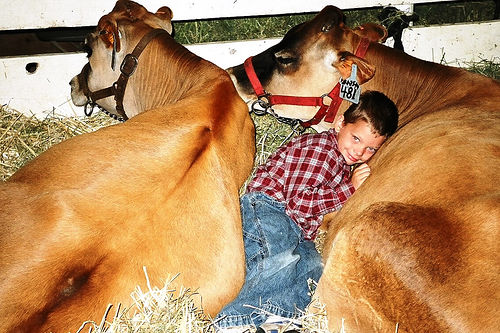
farm.jpgChildren living on farms and exposed to a wide variety of bugs have a lower chance of developing asthma, hay fever and other such alergies than city kids, according to new research published in the New England Journal of Medicine.

But having a dirty house with thriving communities of microbes, fungi, and other bugs is not the way to develop a normal immune system; the composition of the bugs in the house also matter. The best preventative is prolonged exposure to microbes in a farm environment, suggests the study.

The work builds upon the hygiene hypothesis, which states that lack of exposure to bugs during childhood can impair development of a normal immune system, and lead to an increased risk of allergies.

Continue reading

Cutting soot, ozone will keep climate change in check, says UN

chimney.jpgCutting black carbon and ground level ozone emissions will be the best way to slow temperature rise due to climate change, according to a United Nations Environment Program report discussed today in Nairobi, Kenya.

Curbing these emissions from cars, stoves, forest fires, and other sources could reduce the increase in temperature expected by 2070 by 0.5 degrees Celsius, states the report. The cuts could be achieved using existing technology and current policies, and they would help protect climate, public health, water and food security, and ecosystems.

The report was presented at the annual meeting of the UNEP governing council, a body of 58 ministers who advice the general assembly on environmental matters.

Continue reading

Green economy will promote growth, says UN

Investing $1.3 trillion – or 2% of global GDP – in “green” initiatives each year between now and 2050 will spur significant economic growth in the long run, according to a report published today by the United Nations Environment Program (UNEP).

The report, released in Nairobi, Kenya at the annual meeting of UNEP’s governing council, says there will be some short-term pain – jobs lost, and GDP growth cut back – in transitioning to a ‘green’ economy, which favours low-carbon activities that use over-exploited natural resources (such as water and forests) more efficiently. But in the end such changes would be “far less disruptive than a world running low on drinking water and productive land, set against the backdrop of climate change, extreme weather events and rising natural resource scarcities,” it says.

Like a pruned plant, this pared-back sustainable economy would blossom, boosting GDP growth rates beyond business-as-usual levels within 5-10 years.

The report is meant as a primer for policy makers in the lead up to the fourth Earth Summit, called Rio+20, to be held in Rio de Janeiro in 2012, which intends to focus on establishing a green economy.

Continue reading

Walrus must wait for endangered species protection

walrus.jpgEnvironmental groups are not happy with the Department of Interior’s decision to place the Pacific Walrus in the legal waiting room of the Endangered Species List, called the “warranted but precluded” list. There, it will join other animals caught in legal limbo such as the sage grouse and wolverines.

The Fish and Wildlife Service has found the walrus is indeed threatened by climate change, but they are not as high priority as other, more imperiled, creatures.

In doing so, it has postponed a decision that would have decided the fate of oil drilling in the prime walrus habitat of the Chukchi Sea off Alaska.

Continue reading