Common autism pathway opens the door for new drug treatments

main_bg.jpgThe definition of autism has undergone constant evolution — as any architect of the Diagnostic and Statistical Manual of Mental Disorders can attest — and now refers to a broad spectrum of various developmental and social disorders with many distinct genetic causes. This understanding of the disorder obviously complicates the development of therapeutics: if every person with autism is different, identifying drugs to treat everyone seems like a Sisyphean task. But research published today suggests that the disorder’s complexity may not beckon the end of drug development.

Neuroscientist Mark Bear and his colleagues from the Massachusetts Institute of Technology’s Picower Institute for Learning and Memory in Cambridge compared how a protein found in neurons called metabotropic glutamate receptor 5 (mGluR5), which is involved in the translation of other proteins, is regulated in two mouse models for autism: one for fragile X syndrome, the other for tuberous sclerosis. Reporting online in Nature, Bear’s team showed that levels of mGluR5 go up in mice with Fragile X, leading to elevated rates of protein synthesis, but decline in mice with tuberous sclerosis. And despite mGluR5 expression going in opposite directions for the two genetic forms of autism, the researchers managed to fix both defects with experimental compounds that have been demonstrated to either ramp up or dampen mGluR5 signaling. “We’ve identified this single core biochemical pathway of protein synthesis that, if you correct it, you can alleviate those symptoms,” says study author Emily Osterweil, a research associate in Bear’s lab.

Continue reading

New drug pathways under investigation for ALS

ALS-nm20111122.jpgA diagnosis of amyotrophic lateral sclerosis (ALS) is considered a life sentence. Most people with the neurodegenerative disease, which attacks the neurons responsible for motor control, only survive two or three years after their diagnosis — and 5,000 such diagnoses are made each year in the US alone. Despite the need, however, there is only a single drug on the market that targets ALS: Rilutek (riluzole), made by France’s Sanofi. But this agent only prolongs life by two or three months on average.

Recent advances provide some hope for future drug pathways that can be targeted to treat the disease. In the latest issue of Archives of Neurology, Teepu Siddique and his colleagues at the Northwestern University Feinberg School of Medicine in Chicago reported finding mutations in the gene that encodes a ubiquitin-binding protein (known as p62 or sequestosome 1) in about 3% of people with either sporadic or inherited forms of the disease. This protein assists the breakdown of other proteins, and its mutation may cause a build-up of dysfunctional proteins in neurons leading to the neurological problems associated with ALS. The research adds to previous findings, including work from the same lab that made a splash in August, implicating the protein degradation pathway in ALS (see our November 2011 news feature, ‘A raw nerve’).

Continue reading

WHO’s the boss: Chan set to stay at the helm of the global health agency

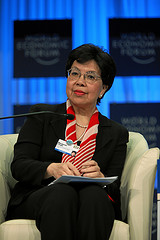
margaret-chan-20111120.jpgThe US Republican party has a long list of potential candidates to choose from for the 2012 presidential bid, but the World Health Organization (WHO) has no such leadership race. Today, the WHO, the Geneva-based health arm of the United Nations, announced that the organization had received just a single nomination for its next director-general: the incumbent Margaret Chan.

Chan first got the job after the untimely death of her predecessor, South Korea’s Jong-Wook Lee, in 2006. With her experience tackling epidemics, including Hong Kong’s bird flu and SARS as the special administrative region’s director of health, Chan, who had been working for the WHO since 2003, easily beat out the other 13 nominees for the post.

When Chan took office, she pronounced “improvements in the health of the people of Africa and the health of women” to be the “key indicator of the performance of WHO.” However, her defining role as director-general has probably been her management of the swine flu outbreak in 2009. By declaring a global ‘pandemic’, Chan spurred world leaders into action, and the flu’s spread was halted within months. However, governments spent hundreds of millions of dollars on flu vaccines from Roche and GlaxoSmithKline — many of which went unused. And when word got out that Chan’s emergency swine flu committee included scientists with financial ties to pharmaceutical companies, Chan personally received criticism for allowing pharma interests to have undue influence. The WHO denied the allegations.

Continue reading

Harsher penalties proposed to counter counterfeit drug peddlers

NM-som-20111118.jpgCongress is, yet again, throwing a fit about counterfeits. Now, US lawmakers from both political parties are proposing a new measure to increase the criminal penalties for the manufacture, sale or trafficking of counterfeit medicines.

Currently, prison times and fines for dealing in counterfeits are the same as any other illegal trade. But “counterfeit medication poses a grave danger to public health that warrants a harsher punishment,” the legislation’s co-sponsor Senator Patrick Leahy, a Democrat from Vermont, wrote in a statement. The Counterfeit Drug Penalty Enhancement Act, introduced yesterday in both houses of Congress, would increase the maximum penalties for first-time offenders to 20 years in prison with a $4 million fine; repeat offenders could be dinged as much as $8 million.

But, if precedent on Capitol Hill means anything, this bill is not set to go far. Tim Fagan’s Law, named after a teenager who was injected with counterfeit medicine after a live transplant, was first proposed in 2003 to increase penalties for dealing in counterfeit drugs. However, the legislation has been sitting pretty in committee for six years now, and is reintroduced every year with no advance.

For more on counterfeits, read our April 2010 news focus on the subject.

Image: Bag of seized counterfeit Viagra (sildenafil) via Wikimedia Commons

Straight talk with… Steve Brown

nm1111-1332-I1.jpgFor decades, the study of gene function has relied heavily on the creation of ‘knockout’ mice, bioengineered to lack certain genes. But making a rodent without a specific gene is a chore—so much so that doctoral students sometimes dedicate their entire PhD work to generating a single mouse strain. The International Knockout Mouse Consortium (IKMC), launched in 2006, plans to change all that. The consortium, involving scientists from 33 research centers in nine countries, is creating a library of every gene knockout in embryonic stem cell lines, which can be used to produce mouse strains.

In June, the group passed 10,000 embryonic stem cell lines generated in a targeted fashion, and, as they approach their goal of around 21,000 mouse gene knockouts, the project is moving onto its next step: phenotypes. The offshoot collaboration, the International Mouse Phenotyping Consortium (IMPC), plans to document disease-related phenotypes for each generated mouse strain including metabolic, neurological and behavioral data. The effort received support on 29 September, when the US National Institutes of Health (NIH) awarded $110 million to three US centers over five years to phenotype 833 strains each. Hannah Waters spoke with Steve Brown, chairman of the IMPC and director of the UK Medical Research Council’s Mammalian Genetics Unit in Harwell to learn more about the plans for the project.

(Click here to continue reading.)

Stanford program gives discoveries a shot at commercialization

By Mike May

In the late 1990s, Daria Mochly-Rosen, a protein chemist at the Stanford University School of Medicine in California, discovered that a certain class of drugs that inhibit enzymes known as protein kinase C could reduce cardiac damage after a heart attack. Working with Stanford’s Office of Technology Licensing (OTL), she patented the finding with hopes of licensing it to a pharmaceutical company. No one showed any interest.

Determined, Mochly-Rosen made the rounds with her colleagues in the pharmaceutical industry. But her pharma contacts wanted a drug to prevent heart attacks, not something to give after them. “They told me to go away,” she says. So, in 2002, Mochly-Rosen and her then–graduate student Leon Chen founded KAI Pharmaceuticals to commercialize this technology. To see the process through, Mochly-Rosen took a year off from academia to raise money for her company, work through the regulatory process with the US Food and Drug Administration (FDA) and launch a clinical trial.

Upon returning to Stanford, Mochly-Rosen realized that her invention was surely not the only one stuck in limbo at the OTL. To help her colleagues commercialize their inventions, she started SPARK, which “stands for nothing,” admits Mochly-Rosen, now senior associate dean for research at Stanford. “The program is just about sparking.”

Now in its sixth year and run by Mochly-Rosen and Stanford physician Kevin Grimes, SPARK consists largely of a Wednesday-night get-together of around 70 professors, postdocs, graduate students and industrial advisers. The group works on commercializing about eight projects a year—selected from a pool of about 150 projects that were languishing at OTL—within a two-year window, ultimately getting the inventor to form a company or licensing the technology to a biotech. Selected projects receive approximately $50,000 from the SPARK program for each of the two years and direct mentorship from industry advisors and academic colleagues.

(Click here to continue reading.)

Research organizations push back against clinical trials directive

By Priya Shetty

LONDON — European legislation intended to streamline clinical research is so steeped in bureaucracy that it is threatening “the development of potentially lifesaving treatments,” says a consortium of 16 research organizations, including Cancer Research UK, the Wellcome Trust and the UK’s Academy of Medical Sciences.

In late September, the consortium issued a statement calling on the EU to include changes that would cut red tape and streamline the authorization of clinical trials as part of its planned revision to its European Clinical Trials Directive (ECTD) in early 2012.

Instead of smoothing the process, “the directive has increased the administrative burden and cost of clinical trials, with no evidence of discernible benefits to patient safety or to the ethical soundness of trials,” John Bell, president of the Academy of Medical Sciences, told Nature Medicine.

(Click here to continue reading.)

Graphic design in pharma ads traces the history of healthcare

redoxon.jpgModern-day print ads for medicine are hardly worth a glance, with their universal fine print detailing drug side effects amidst stock-photo graphics and vague illusions to disease. However, such ads would be unrecognizable to their predecessors in the mid-twentieth century. At the time, pharmaceutical advertising was a new frontier for American artists working in marketing. And with a heavy influence from the European avant-garde movement, drug ads became bold, colorful statements for the nascent field of graphic design.

“The industry was just being born, and there was a feeling that this was something new and something really exciting,” says Alexander Tochilovsky, a graphic designer who teaches at the Cooper Union in New York. “It attracted a lot of young designers who were all trained as artists who created really interesting things without too much guidance and restriction.”

At the Cooper Union earlier today, I wandered through ‘Pharma’, a new exhibit curated by Tochilovsky detailing the history of pharma advertising and design — from the penciled advertisements for cure-all snake oil drugs of the early twentieth-century to modern ad campaigns starring ambiguously happy men and women with taboo diseases such as irritable bowel syndrome and sexual dysfunction disorder.

In the 1940s and 50s, pharmaceutical design came with a compelling set of challenges. Artists had to visually explain complex medical conditions and drug applications, and they often turned to avant-garde abstraction. The shift to the conceptual also came at a time of changing infrastructure in healthcare, in which medicines were no longer peddled to consumers, but rather to hospital-based doctors. And according to Tochilovsky, artists were thrilled to design for the “sophisticated and highly-educated” doctors, who did not require hand-holding to understand the abstract designs and cultural references.

Continue reading

NEWS FEATURE: A raw nerve

By Virginia Hughes

nm1111-1333-I1.jpgAt a walkathon one Saturday in September, nearly 5,000 people traced two miles of Chicago’s lakefront to raise money for research into the progressive nerve disease that is thought to have killed baseball star Lou Gehrig. Janice Caliendo was there collecting blood samples from friends of those affected by the incurable disease to be used as controls in future genetic studies. Caliendo, a lab manager at Northwestern Memorial Hospital in the Streeterville neighborhood of the city, often attends these sorts of fundraisers, but this time she was getting more attention than usual.

Her lab, headed by Northwestern University neurologist Teepu Siddique, has been all over the news recently for a study published in August in Nature reporting a new gene associated with the disease formally known as amyotrophic lateral sclerosis (ALS). “Breakthrough could lead to effective treatment for Lou Gehrig’s disease,” read the LA Times‘s headline; “Cause of ALS is found, Northwestern team says,” wrote the Chicago Tribune. In honor of the study, in fact, the event’s organizers asked Siddique to lead the walkathon. Countless people approached Caliendo that day with the same questions: Does this mean there’s a cure? Is there a blood test for ALS? Is there a drug to treat it?

The answer to all these inquiries was ‘no’. “It’s not a cure, but people read into it what they want to hear,” Caliendo says. “I don’t think they were disappointed, though, because it’s still very good news. It’s huge.”

The study, some two decades in the making, was certainly newsworthy: it uncovered mutations in a gene called UBQLN2 that seemed to cause ALS in a handful of individuals with hereditary forms of the disease. But, according to Siddique, that’s not even the exciting part. In the new paper, his team analyzed postmortem spinal cord tissue from dozens of people with different forms of the disease, including those who developed ALS spontaneously and didn’t carry UBQLN2 mutations. To their surprise, Siddique and his colleagues found abnormal blobs of the ubiquilin-2 protein encoded by UBQLN2 in the neurons of every single individual they looked at.

In Siddique’s view, his study proves that all forms of ALS converge on a glitch in protein recycling that results in the accumulation of many types of proteins and the death of motor neurons. It’s similar, he says, to the discovery decades ago that people with a genetic disease called familial hypercholesterolemia carry mutations in a receptor for ‘bad’ cholesterol. On the basis of those data, researchers designed drugs—statins—that are now taken not only by those affected by the rare disorder but also by the majority of people with all forms of heart disease in the developed world.

“What we’re showing here is a direct functional mechanism that causes disease,” Siddique says. “It’s not just another cause; it’s not just another pathology; it’s a game changer.”

(Click here to continue reading.)

First drugs found to inhibit elusive cancer target

By Melinda Wenner Moyer

Ever since scientists discovered the cancer-promoting gene MYC in the late 1970s, researchers have dreamt of developing drugs that inhibit its function. Yet efforts to target MYCactivity have proven unsuccessful, in part because the protein product encoded by the oncogene lacks an obvious target-binding site. Now, however, scientists from a handful of research groups have found a way to inhibit MYCindirectly—by preventing an upstream protein from instigating the expression of MYCand its downstream targets. Buoyed by the promising therapeutic effects that such experimental drugs have had in mice with several types of cancer, companies are racing to test the molecules in clinical trials, despite lingering questions about how, exactly, they work.

“We, like everyone else, are very excited,” says Brian Huntly, a hematologist at the University of Cambridge in the UK. “We’re very keen to get this into humans as soon as possible.”

(Click here to continue reading.)