Politicians pile pressure on England’s patient-data scheme

A scheme to combine English medical records in a huge database that could be exploited by researchers came under fire in a UK Parliamentary hearing yesterday.

Care.data is designed to create a central database of England’s medical records, which are now held locally at the offices of general practitioners (GPs, or family physicians). As well as allowing better planning and management of the UK National Health Service (NHS), the data would also eventually be available to researchers.

The scheme was strongly backed by an array of UK medical research charities. But there have been complaints from privacy campaigners and other groups that patients have not received enough information about the scheme, and how they can opt out. Last week these concerns led to the scheme being delayed by six months.

Sharmila Nebhrajani, chief executive of the London-based Association of Medical Research Charities, which has previously supported the project, said at yesterday’s hearing that it was still unclear who exactly could have access to the data being collected, and on what basis this access would be granted. Care.data, she said, could be “a really valuable asset” to research, “but it is being stymied by its execution”.

“We are really in danger of throwing this baby out with this rather grubby bathwater,” she told the health select committee during the hearing.

But Barbara Keeley, a Labour party member of parliament and a member of the committee, said that it was a “waste of time” to be extolling the benefits of the system when there were so many concerns about privacy and security. “I think most patients should be scared to death of the mess that this is,” she said.

Daniel Poulter, the health minister responsible for care.data, and Tim Kelsey, the man in charge of the scheme at NHS England, insisted that most of the problems were down to communication and public perception. But Sarah Wollaston, a GP and Conservative party member of the committee, said it was “very disappointing” that those behind the scheme were trying to present the problems as “some kind of communication issue”, when numerous witnesses to the hearing had already outlined more serious concerns, including data security and consent.

Chand Nagpaul, chair of the GP committee of the London-based British Medical Association — a powerful trade union for doctors — also added to criticism of the scheme. He told the committee that any potential benefits were currently lost in the “fundamental problem” of lack of confidence among both patients and doctors about the scheme. He warned that care.data could even damage health, as some patients might be so worried about what would happen to their data that they could withhold information from their doctors.
Evidence of misconduct found against cardiologist

The scientific community has long been sceptical of claims made by German cardiologist Bodo-Eckehard Strauer that stem cells derived from bone-marrow cells can repair damage in diseased hearts, and critical of his clinical trials.

Now an investigation committee at the University of Düsseldorf, where he worked until his retirement in 2009, has found evidence of scientific misconduct in papers reporting the trials’ findings, according to a statement the university sent to reporters by e-mail.

The university has referred the committee’s report to an internal disciplinary procedure, which is not expected to draw a conclusion until next year. In the meantime the university is providing no further public information about the nature of the misconduct — nor the outcome of a parallel investigation into the whether clinical trials involving 537 patients complied with rules of good clinical practice and the provisions of the German Medicines Act. But Benedikt Pannen, acting chief executive of the University Hospital in Düsseldorf, says that the report of the clinical investigation had been sent to the city’s public prosecutors.

Blow to researchers as England delays medical data sharing

A massive scheme to create an England-wide database of medical records, which has been heavily supported by many research groups, has been delayed today amid concerns from patients and controversy over how they can opt out.

The care.data project would have collected patient data from English general practitioners, who currently hold it locally, in a central system that would eventually have been accessible to medical researchers. Research charities have thrown their weight behind the project, and wheeled out a public-relations campaign in support of it last year, saying it would help epidemiological studies into the causes and treatments of diseases.

But today the organization in charge of the project — NHS England — announced that it would not begin the data collection until next autumn, instead of April, to allow more time to ensure the public know how to opt out.

“We have been told very clearly that patients need more time to learn about the benefits of sharing information and their right to object to their information being shared,” said Tim Kelsey, national director for patients and information at NHS England, in a statement. “That is why we are extending the public awareness campaign by an extra six months.”

Nature has previously expressed support for this scheme, while voicing concerns over the consent and opting out (see the editorial ‘Power to the people’). Some patient groups have criticized the lack of information available on how to opt out of the database. Flyers are supposed to have been sent to every household in England, but some people report not having received them.

Sharmila Nebhrajani, chief executive of the Association of Medical Research Charities, one of those groups behind the supportive campaign, said in a statement: “Care.data is a good idea currently stymied by its execution”. She added, “NHS England need to use the next six months to talk to them about their plans and why this is an important asset for all of us.”

Nicola Perrin, head of policy at the London-based Wellcome Trust — another charity supporting care.data — also welcomed the delay. She said in a statement, “Sharing information from medical records has huge potential to drive progress in medical research and healthcare delivery, but systems for achieving this need to be trusted and understood by everyone.”

Top UK university pledges reform to ‘change the culture’ of its animal research

[Update 3 February: the article was updated with Michelle Thew’s comments.]

One of the UK’s leading universities today outlined a “wholesale reform” of the ethical review and governance of its animal research, following criticisms last year.

Imperial College London was subject to an independent review of its management of laboratory animals after an undercover investigation from anti-vivisectionists produced allegations of malpractice. That review found a high quality of animal husbandry but also concluded that animal-research facilities were understaffed and that Imperial’s systems for management, training and ethical review were not adequate.

In an action plan released today in response to the review, the college pledged to recruit more staff, to “implement wholesale reform” of its Animal Welfare Ethical Review Body and to employ a new Director of Bioservices as part of a new governance structure. Imperial will also do more to promote the ‘3Rs’ of animal research: replacement, reduction and refinement.

“Imperial’s new action plan will change the culture towards animal research at the College, by improving the way we manage this work in a clear, accountable and transparent way, finding more ways of applying the 3Rs, and strengthening our investment in how we assess and review research proposals,” said Dermot Kelleher, dean of Imperial’s Faculty for Medicine, in a statement.

Michelle Thew, head of the British Union for the Abolition of Vivisection — the London-based group behind the undercover work which produced the original allegations — said Imperial “appears to have taken the recommendations of the Brown report seriously and is prepared to make organisational changes”. But Thew says it is unclear exactly what the increase in staff will entail, and what steps will be taken to “ensure that non-animal methods are properly explored”.

New revelations on controversial stem-cell foundation in Italy

Following the leak last month of a treatment protocol for a controversial stem-cell therapy earmarked for a clinical trial to be sponsored by the Italian government, further leaks from police investigations and other revelations are emerging daily about the activities of the trial’s sponsor, the Stamina Foundation.

The foundation has treated scores of seriously ill patients with the therapy since 2007, and its president Davide Vannoni has whipped up a frenzy of support among the families of dying patients to whom he claims to offer a cure. He has also so far managed to maintain political support.

Now, however, Stamina’s case appears to be unravelling.

On 12 December the newspaper La Stampa published an article describing, based on police witness accounts, how the Stamina Foundation’s roots lay in a call centre run by Vannoni, called Cognition Turin. After experiencing a partial facial paralysis in 2004, he went to Russia seeking a stem cell‒based treatment. He brought back with him two Ukrainian scientists and set up a small lab for them in Cognition’s basement, described by a police witness who had worked there as tiny and dark, with no ventilation. The lab was equipped with a couple of fridges and a few microscopes on a shelf, said the witness. Patients began to arrive from all over Italy.

In its early years, Stamina enjoyed political protection in the Piedmont region, which agreed to provide it with a grant of half a million euros to develop its stem-cell activities. But the region dropped the plan at the last minute after police in Turin began investigating possible fraud in relation to the proposed Piedmont grant. That investigation led to Vannoni being indicted for attempted fraud last month.

Patients were charged tens of thousands of euros for treatment, which consisted of extracting stem cells from their bone marrow, manipulating them in vitro (ostensibly to turn them into neurons) and delivering them back into the blood stream or spinal cords of the same patients.

Police are investigating the fate of 68 patients, or their families,  who claim they were damaged by Stamina treatment.

On 9 January, La Stampa published an interview with Milena Mattavelli, whose husband died within eleven days of his first Stamina injection, though doctors had expected him to live with his incurable disease, multiple system atrophy, for several more years.  Mattavelli said she paid Stamina €50,000 in cash and got no receipt.

In another revelation, the father of a young child treated by Stamina told the police investigators that he also paid €50,000 and had been told by Stamina to transfer the money using a description ‘contributions, donations and offerings’ because the procedure was illegal in Italy. His daughter’s condition, not named in the newspaper article, did not improve.

Nicola De Matteis, whose daughter was born with encephalopathy, ran out of money after several treatments and was told by Stamina’s physician Marino Andolina to make his wife earn it through prostitution, according to an article in La Stampa on 13 January. Andolina did not respond to an email requesting comment.

Meanwhile the University of Udine, where Vannoni had been an assistant professor in psychology, has revoked his teaching contract, saying his “role in the university is no longer compatible with his other activities as president of the Stamina Foundation.” Vannoni says he was leaving anyway to join an online university.

And more top scientists have distanced themselves from diabetes expert Camillo Ricordi from the University of Miami in Florida, who has frequently voiced support for Stamina, and who holds a potentially influential position in Italy as the new president of RiMED, a translational-medicine institute being established in Sicily whose mandate includes development of cellular therapies. Ricordi had also offered to test Stamina cells in his Miami laboratories, although on 13 January he said he would “postpone” the offer.

Immunologist Alberto Mantovani, scientific director of the Clininal Institute Humanitas IRCCS in Milan, and cell biologist Tullio Pozzan from the University of Padua have resigned from RiMED’s scientific board, citing concern that Ricordi has declined to condemn Stamina.  They join cancer researcher Carlo Croce from the Ohio State University in Columbus, who resigned for the same reason at the end of December. The scientific board is now left with just three (non-Italian) members.

Even after prodding, animal researchers omit key details

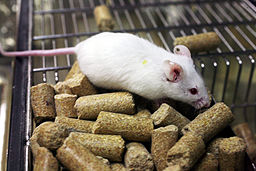
Lab_mouse_mg_3140Preclinical animal studies often lack important details needed for other researchers to assess and replicate the work, and they use statistical calculations that are not fit for purpose.

Those conclusions come from a new analysis of recent papers that use a popular animal model for multiple sclerosis. Published today in PLoS Biology, the analysis concludes that voluntary reporting guidelines for animal studies, which have been endorsed by hundreds of research journals, are largely being ignored.

David Baker, a neuroimmonologist at Queen Mary University of London who led the study, says journals ought to compel animal researchers to disclose experimental details that could lead to bias, such as whether animals were randomly assigned to different treatment groups or not. “Unless there is enforcement there is no change,” he says.

In 2010, the UK National Centre for the Replacement, Refinement and Reduction of Animals in Research (NC3R) laid out best practices in the Animal Research: Reporting of In Vivo Experiments (ARRIVE) guidelines. Modeled after clinical-trial guidelines, ARRIVE is a 20-item checklist that addresses study design, experimental procedures and animal care. More than 300 research journals, including Nature Publishing Group (NPG) and PLoS journals, have since endorsed the guidelines.

To see if researchers and journals were following those suggestions, Baker and his team analysed papers published in NPG journals and PLoS journals that used a multiple sclerosis model called experimental autoimmune encephalomyelitis (EAE). The team compared papers published in the two years before ARRIVE was released with papers published in the following two years.

The ARRIVE guidelines did not have much impact on which details were included in papers, Baker’s team found. For instance, less than 21% of the NPG or PLoS journal articles reported whether animals were randomly assigned to experimental groups or not, both before and after the ARRIVE guidelines were issued. Similarly, before and after 2010, less than 7% of studies reported whether or not they conducted sample size analyses, which can indicate whether enough animals were used in the experiment to tell if it worked or not. Baker’s team noticed some uptick in the reporting of the sex, age and number of animals used, particularly in Nature journals.

In a separate analysis, Baker’s team found problems with how statistics were reported in papers using EAE data. The researchers analysed 180 papers using the model between 1 December 2011 and 21 May 2012 and calculated how many used so called “non-parametric” statistical tests. Baker says non-parametric tests are most appropriate for EAE data because they make no assumptions about the relationship between data points or the overall distribution of data. (Not all researchers agree with his argument.)

The team found that only 39% reported the use of non-parametric statistical calculations for the data. In the case of Nature, Science and Cell, just 4% of papers indicated that they used such tests. Baker says these studies are more likely to report false positives, indicating, for instance, that an experimental treatment for multiple sclerosis is effective.

“There’s this very vocal minority of clinicians who say ‘animal data is rubbish, it never translates into human benefit,’” Baker says. “By doing bad science which is of poor quality and experimental design, we just pander to that problem.”

Baker says journals should compel researchers to report key details from animal experiments, which would allow other scientists to assess and replicate the work. Because of such requirements, statements about ethical approval for research are more likely to appear in manuscripts than in the 1970s or 1980s, Baker says.

According to an editorial published alongside Baker’s article, PLoS ONE is likely to require all researchers conducting animal experiments to fill out a checklist including the ARRIVE guidelines, and PLoS Medicine already has this requirement (though it publishes few animal studies). PLoS Biology is mulling its options, according to the editorial.

“Voluntary guidelines are very important, but journals need to take tangible steps to implement them with standards flexible enough to work for a broad range of studies,” says Nature’s Editor-in-Chief, Philip Campbell. In May 2013, NPG journals began asking researchers to fill out a checklist addressing statistical calculations and some details of animal experiments. (See “Reducing our Irreproducibility“) “These guidelines were established in consultation with the community to address the most common problems in transparency and potential bias in research papers. We will be reviewing their implementation and impact later this year,” Campbell adds.

Lack of transparency casts doubt on Tamiflu’s efficacy, say UK politicians

Doctors, researchers and patients are being undermined by a practice of “routinely and legally” withholding the results of clinical trials from them, a group of British politicians says.

In a report released today on the United Kingdom’s stockpiling of the drug Tamiflu, used to treat influenza during a pandemic, the Committee of Public Accounts of the House of Commons has weighed in to the debate over access to clinical-trial data. The United Kingdom has spent £424 million (US$697 million) in recent years stockpiling Tamiflu, but had to write off £74 million of this, as it was not clear the medicine had been stored correctly.

A vocal group of medical researchers has questioned the evidence base for Tamiflu, in part because they say that many details of trials of the drug have not been released by its manufacturer, Roche, which is headquartered in Basel, Switzerland. Their campaign has been spearheaded by the Cochrane Collaboration, which is a group of medical researchers, and the British Medical Journal.

Richard Bacon, a member of the committee, said in a statement that the committee was “disturbed by claims that regulators do not have access to all the available information”. He also said that a “lack of transparency of clinical-trial information on this drug to the wider research community” is hindering proper assessment of Tamiflu’s efficacy.

“The ability of doctors, researchers and patients to make informed decisions about treatments is being undermined,” says Bacon.

The report from comes just days after an industry scheme to share data from clinical trials came into force, backed by the European Federation of Pharmaceutical Industries and Associations (EFPIA) and the US Pharmaceutical Research and Manufacturers of America (PhRMA). The European Medicines Agency (EMA), the regulator for drugs in the European Union, is also pushing forward with plans to make more clinical-trial data available.

However, the new report says these moves are inadequate, as they do not address access to data from all trials, and, in particular, they do not apply to those from previous years.

In its response to the report, Roche said that its own policies on data sharing go beyond the EFPIA and PhRMA guidelines.

“We support the call for greater transparency in access to clinical-trial results. This is why we expanded our policy last year to provide enhanced access to data from our clinical trials,” read the statement.

The company says that it has already sent the Cochrane Collaboration all 77 of the studies it sponsored on Tamiflu, in line with its policy, which came into force last year.

On the other side of the arguments, Ben Goldacre, the co-founder of the AllTrials campaign for greater openness of clinical-trial data, called the report “a complete vindication” of the campaign.

“Industry has claimed it is on the verge of delivering transparency for over two decades,” he said in a statement. “While obfuscating and delaying, ever more results have been withheld.”

E-cigarettes escape stricter European regulation

Europe has shied away from regulating electronic cigarettes (‘e-cigarettes’) as medical devices.

Tobacco-control researchers have been furiously debating the safety and desirability of these products, which have surged in popularity over the past year (see ‘Regulation stacks up for e-cigarettes’).

The European Commission had proposed to regulate e-cigarettes as medical devices, as part of a major revision of tobacco control in the European Union (EU). But after negotiations this week, it seems that the nicotine-inhaling devices will instead fall under the same rules as other tobacco products.

Some scientists believe that e-cigarettes are less harmful than conventional cigarettes, and thus can help reduce the burden of disease from tobacco smoking. But others counter that with few controls on advertising and sales, the devices will make smoking socially acceptable again and that they can provide a gateway to conventional cigarettes for young people.

Politicians in the European Parliament have been pushing to have e-cigarettes regulated as medical devices — and therefore subject to tougher controls — only when their marketing makes health claims (see ‘Europe on collision course over e-cigarette legislation’). And they seem to have won over the other arms of the EU — the Council of Ministers and the Commission — although formal sign-off on the deal is still required before it comes into force in 2014.

Tonio Borg, the EU health commissioner, said today that the agreement reached yesterday will put in place “clear safety and quality standards for this growing sector of the market”.

The deal will also mean all cigarette and tobacco products will have to have health warnings covering 65% of their packaging. Flavoured tobacco — including menthol cigarettes — will be banned.

Controversial pesticides linked to human neurotoxicity

Europe should slash the acceptable human exposure limits on two neonicotinoids — a class of insecticide previously linked to bee declines — says a key European Union safety agency.

In a report released today, the European Food Safety Agency (EFSA), based in Parma, Italy, says that recent research suggests that acetamiprid and imidacloprid “may affect the developing human nervous system”.

The European Commission — which requested that the EFSA look at a potential link to human health in the first place — now has to decide what action to take on the basis of the agency’s recommendation.

Neonicotinoid chemicals have been a controversial subject this year, after the EFSA in January linked imidacloprid and two other ‘neo-nics’ to declines in bee health. Debate over the chemicals’ role in declines in insect pollinators that had been on-going in the scientific literature jumped into the mainstream (see ‘Europe debates risk to bees’).

That January assessment relating to bee health was of three neonicotinoids deemed a priority: thiamethoxam, clothianidin and imidacloprid. Assessment of the impact on bees of two other compounds — acetamiprid and thiacloprid — is currently on hold while that work continues.

But the EFSA is also looking at the impact of neonicotinoids on humans. These chemicals work as agonists of insect nicotinic acetylcholine receptors, but their effect on mammals has been unclear. The EFSA explicitly cites a paper from last year by a Tokyo-based team as shaping its thinking.

That paper, published in PLoS ONE by Junko Kimura-Kuroda of the Toyko Metropolitan Institute of Medical Science, and colleagues, found that both acetamiprid and imidacloprid triggered similar effects in cultures of rat neurons as are seen with nicotine. The authors point out that as nicotine may disrupt brain development in humans, so neonicotinoids “may adversely affect human health, especially the developing brain”.

After reviewing this and other evidence, the EFSA recommends that various acceptable exposure levels to these two chemicals be substantially lowered. Although it notes that the evidence available “has limitations” and recommending further research, the agency says that all neonicotinoids should now be assessed for their potential developmental neurotoxicity.

FDA institutes voluntary rules on farm antibiotics

The US Food and Drug Administration (FDA) has issued a set of guidelines intended to curb the widespread use of antibiotics for livestock, which contributes to the spread of antibiotic resistant bacteria (see Nature‘s feature story ‘MRSA: Farming up trouble’). But some worry that the voluntary nature of the rules — and their many loopholes — will do little to fix the problem.

Pharmaceutical companies that choose to comply with the FDA’s new rules will change the labels on their drugs so that they cannot be used for promoting animals’ growth. A second rule requires the involvement of a veterinarian in prescribing the drugs. The rules were announced 11 December,  and companies now have 90 days in which to tell the FDA whether they plan to comply.

In a phone conference this morning, Michael Taylor, deputy commissioner for foods and veterinary medicine at the FDA, told reporters that some drug manufacturers have already said that they will adopt the rules. He indicated that after the 90 days have elapsed, the agency could find ways to crack down on individual companies that are not cooperating, even though the rules are voluntary. Laura Rogers, health director at the Pew Charitable Trusts, says that agency pressure is not the only reason most companies will comply; companies also have an incentive in maintaining the efficacy of their antibiotics used in people. “Drug companies that sell these products need them to work just as much as we want them to work in human medicine,” she says.

If companies change their labels, prescribing the drugs for growth promotion will technically become illegal. But farmers will still be able to obtain the drugs and add them to animal feed to prevent disease outbreak. “FDA’s policy is an early holiday gift to industry,” said Avinash Kar, an attorney for the Natural Resources Defense Council in San Francisco, California, in a statement. “[It] covers only some of the many uses of antibiotics on animals that are not sick.”

Although she praises the new rule as a first step, Rogers says that the United States still has a long way to go before catching up with other countries. The Netherlands has reduced its livestock antibiotic use by 50%  since 2009 by banning widespread prophylactic use, and Denmark monitors antibiotic use on individual farms.

Rogers says that it will be key in the coming years for the FDA and the US Department of Agriculture to monitor whether the laws affect the prevalence of antibiotic-resistant bacteria in food. She also wants the agencies to address other factors such as crowded housing conditions on farms that allow these bacteria to spread.