Western Australia abandons shark cull

barnett_20140813_TomFisher_01

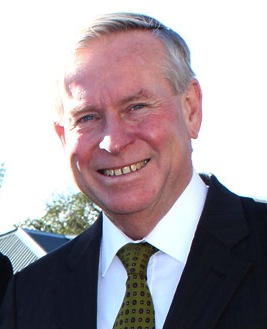
Western Australia Premier Colin Barnett
{credit}Government of Western Australia{/credit}

The state of Western Australia is abandoning a controversial shark-culling programme, but has also gained the right to deploy deadly baited lines for animals that pose an “imminent threat”.

The programme, run by the state government off several Western Australian beaches, had been heavily criticized by scientists when it was announced in 2013. It was due to run until 2017, and had caught at least 170 sharks using hooks suspended from drums moored to the sea floor.

In September the state’s own Environmental Protection Agency halted it. State Premier Colin Barnett then applied to the national government for permission to resume it, but today he announced that his government had ended that effort. “We have withdrawn the application after reaching agreement with the Commonwealth which enables us to take immediate action when there is an imminent threat,” said Barnett.

Under an agreement with the national government, Western Australia will be able to kill sharks in future to deal with a shark that has attacked or with one that it thinks poses a threat. Protocols for how this would happen are now in development.

This apparent concession from the national government has drawn some concern from those celebrating the end of the cull.

“I remain concerned that drum lines could be used in some instances as part of emergency measures and particularly that this could occur without Federal approval,” said Rachel Siewert, the marine spokeswoman for the Australian Greens, in a statement.

The Western Australia cull is also drawing renewed attention to the longstanding cull in Queensland, which continues unabated.


AstraZeneca neither confirms nor denies that it will ditch antibiotics research

16881_lores

A computer image of a cluster of drug-resistant Mycobacterium tuberculosis.
{credit}US Centers for Disease Control and Prevention/ Melissa Brower{/credit}

The fight against antibiotic-resistant microbes would suffer a major blow if widely circulated rumours were confirmed that pharmaceutical giant AstraZeneca plans to disband its in-house antibiotic development. The company called the rumours “highly speculative” while not explicitly denying them.

On 23 October, drug-industry consultant David Shlaes wrote on his blog that AstraZeneca, a multinational behemoth headquartered in London, “has told its antibiotics researchers that they should make efforts to find other jobs in the near future”, and that in his opinion this heralds the end of in-house antibiotic development at the company. “As far as antibiotic discovery and development goes, this has to be the most disappointing news of the entire antibiotic era,” wrote Shlaes.

AstraZeneca would not directly address these claims when approached by Nature for comment. In its statement it said, in full:

The blog is highly speculative. We continue to be active in anti-infectives and have a strong pipeline of drugs in development. However, we have previously said on a number of occasions that as we focus on our core therapy areas (Oncology, CVMD [cardiovascular and metabolic diseases] and Respiratory, Inflammation and Autoimmune) we will continue to remain opportunity driven in infection and neuroscience, in particular exploring partnering opportunities to maximise the value of our pipeline and portfolio.

Research into antibiotics is notorious for its high cost and high failure rate. AstraZeneca has previously said that its main research focus would be on areas other than antibiotic development.

Public-health experts have been warning about a trend among large pharmaceutical companies to move away from antibiotics research — just as the World Health Organization and others have pointed to the rising threat of deadly multi-drug-resistant strains of bacteria such as Mycobacterium tuberculosis or Staphylococcus aureus (see ‘Antibiotic resistance: The last resort‘).

Australia puts science in ‘competitiveness’ drive

ian-macfarlane_0

Minister for Industry Ian Macfarlane
{credit}Australian Department of Industry{/credit}

The Australian government has unveiled plans to increase the commercial return on its billions in research funding and to pump more resources into boosting industry-science links.

The government appointed ten experts — five business leaders and five leading researchers — to a ‘Commonwealth Science Council’ to advise on science priorities and to become the “pre-eminent body for advice on science and technology” in Australia, according to the ‘competitiveness agenda’ released on 14 October.

The council will be chaired by Prime Minister Abbott, with Industry Minister Ian Macfarlane as deputy chair. It will replace an existing (and some say moribund) advisory group.

The statement also says that there will be a “sharpening” of incentives for collaboration between research and industry. Five new centres to improve collaboration, and increase the competitiveness of industries including mining, oil and medical technologies, will be set up at a cost of Aus$188.5 million (US$164 million).

The Abbott government has come in for fierce criticism over its perceived lack of support for science, with many government-funded researchers and science agencies facing cut backs (see ‘Australian cuts rile researchers’). Macfarlane has previously said that the competitiveness agenda would show how the government was dealing with these concerns, by setting science at the centre of industry policy.

Australia’s chief scientist Ian Chubb said that the new council would “provide the strategic thinking and direction that a national transformation truly demands” and also welcomed an Aus$12 million investment in science education. “This is about improving the impact, focus and prioritisation of Australia’s investment in science and research,” he said in a statement.

The Australian Academy of Science also welcomed the announcements. Its secretary of science policy Les Field said in a statement: “Anything which aligns science more closely with industry has got to be a big plus, especially when this is an area where Australia traditionally struggles.”

Work still needed to reduce animals in research

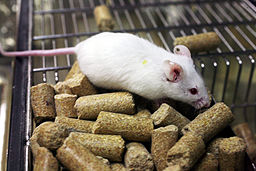
Replace, refine, reduce. Those are the goals of a centre founded 10 years ago to improve the welfare of animals used in research. But more still needs to be done to embed these ideas, according to the head of the centre.

Lab_mouse_mg_3140

{credit}Wikimedia Commons{/credit}

Vicky Robinson, chief executive at the London-based National Centre for the Replacement, Refinement and Reduction of Animals in Research (NC3Rs), says that when the centre was launched 10 years ago there was “some uncertainty” in the scientific community about it. The organization has since funded research that ranges from using facial expressions of animals to assess pain and improve welfare to growing ‘micro-cancers’ in a dish in order to reduce the use of animals used in drug development.

Last week, launching the NC3R’s strategy for the next decade, she said: “Ten years on I think the transformation has been huge. Getting a grant from the NC3Rs really does count these days.”

But she added that there were still “too many scientists who think that the 3Rs belong in the animal house” and do not apply to their research. And she admitted that there were still concerns in the scientific community to be overcome around whether changing laboratory conditions to improve animal welfare could also negatively impact research outcomes. The new NC3Rs strategy includes working to ensure that standardised measures of animal welfare can be used to improve both the welfare of animals and scientific results, that all scientists are committed to the ‘3Rs’ and that this is expanded to other countries.

Jim Smith, chief of strategy at the UK’s Medical Research Council, told the meeting that the work of the NC3Rs had been “enormously influential”. He cited the widely-backed  ARRIVE guidelines, which lay down how researchers using animals should report their work in journal papers, as an example (although there is some debate over how effective the guidelines have been).

Despite the work of the NC3Rs, Smith admitted, the statistics show an increase in animal use in UK research every year. However, much of this is down to the UK measuring procedures, rather than animals used; breeding counts as a procedure, meaning that simply producing genetically modified animals needed for scientific research is a huge contributor to the overall rise.

Stephen Holgate, the chair of the NC3Rs board, told the meeting that the centre had created a community of like-minded animal-welfare scientists that did not exist before.

“The success of the NC3Rs is without doubt,” he said. “Our challenge now is to get adoption and uptake.”

European regulator confirms milestone medical-data transparency rules

Clinical trial data previously kept behind closed doors is to be released to the public by Europe’s medical regulator, after a new transparency policy was finally agreed at the European Medicines Agency (EMA).

The EMA, which is responsible for licencing drugs to be sold in European Union states, has been embroiled in a long-running debate about how it could or should release information submitted by drugs companies seeking permission to market their medicines. On 2 October, the EMA management board approved a new policy that will see it pro-actively publish clinical reports submitted to the agency in support of marketing authorisation from 1 January.

Guido Rasi, the executive director of the EMA, said the policy “sets a new standard for transparency in public health and pharmaceutical research and development” and would provide an “unprecedented level of access to clinical reports”.

This policy has been subject of fierce debate since it was first proposed, with transparency campaigners claiming the EMA was not being bold enough, and that pharmaceutical companies had previously been able to manipulate perceptions about the effectiveness of their drugs by choosing to conceal data that might paint them in a bad light. And industry has feared that commercially sensitive information would be released, and this could compromise their long-term ability to invest in research.

A key change from earlier versions of the policy is that researchers, and other members of the public, will now be able to download data. It had previously been suggested they might only be allowed to view clinical reports on screen, limiting their ability to reanalyse the huge datasets collected by pharmaceutical companies in clinical trials.

Concerns have also been raised about confidentiality, and the possibility that it might be possible to identify some individuals from the patient data in these clinical reports, particularly in the cases of rare diseases. In future the EMA will make data down to the level of individual patients available, but it wishes to consult further about how it can do this while protecting privacy.

Companies will also be able to request that parts of their data do not go into the public domain if they consider them to be ‘commercially confidential’. This has already been criticised by some transparency campaigners, but the EMA insists it will have the final say on what is redacted, and the assumption will be that information is not commercially confidential.

Information held by the agency from pre-2015 company submissions will be available under an existing policy where researchers can request access, but it will not be placed in the open.

Imperial College cleared of animal-cruelty allegations

66355710

{credit}Courtesy of Imperial College London{/credit}

One of the United Kingdom’s leading universities has been cleared of charges of animal cruelty at the end of a long-running and contentious series of investigations, an official report has concluded. However, the report found that Imperial College London had a “widespread poor culture of care” in its animal-research labs.

The controversy began in April 2013, when the London-based British Union for the Abolition of Vivisection (BUAV) revealed that it had conducted an undercover investigation in 2012 at Imperial, and alleged that this had uncovered large-scale suffering and breaches of the law.

An official Home Office investigation into the BUAV allegations, the report of which is released today and refers to Imperial only as ‘the Establishment’, concludes: “Overall, the animal rights organisation’s allegations of cruelty at the Establishment have not been substantiated.”

The Home Office report says that more than 180 individual allegations were made, and only five were substantiated. These five led to formal non-compliance cases, resulting in sanctions to eight individuals, including letters of reprimand and further training. However it also says these non-compliances with regulations were “of a persistent nature” and “could broadly be traced back to failing in management structures”.

“It is concluded that there was a widespread poor culture of care,” says the report.

In December 2013, an independent academic review of Imperial’s animal-research culture found serious problems with Imperial’s animal research (see ‘Report slams university’s animal research’).

Earlier this year it emerged that government inspectors had expressed concerns about animal research at Imperial before the BUAV allegations, and the university official responsible for animal research stepped down from that role.

In a statement released today, James Stirling, the university’s provost, said: “We welcome the publication of the report about this extensive Home Office investigation, which shows that the vast majority of the allegations made against Imperial by BUAV have not been substantiated. … We recognise that there have been problems with the culture and management around our animal research. We are sorry for these shortcomings and we have addressed them through considerable efforts and investment in our animal research infrastructure, to improve our culture of care and to ensure that we meet the very highest standards in our animal research.”

In response, BUAV head Michelle Thew said that there was “continuing complacency” at Imperial and that today’s report highlighted the need to reform the government inspection regime.

“Problems identified [by the Home Office] in 2012 were still documented by the subsequent BUAV investigation, with a leisurely inspection regime and mild sanctions such as a requirement for further training failing to breach the wall of indifference,” Thew’s statement said. “The conclusion is that the system is simply inadequate to enforce the standards that it purports to uphold.”

Animal populations ‘have halved since 1970’

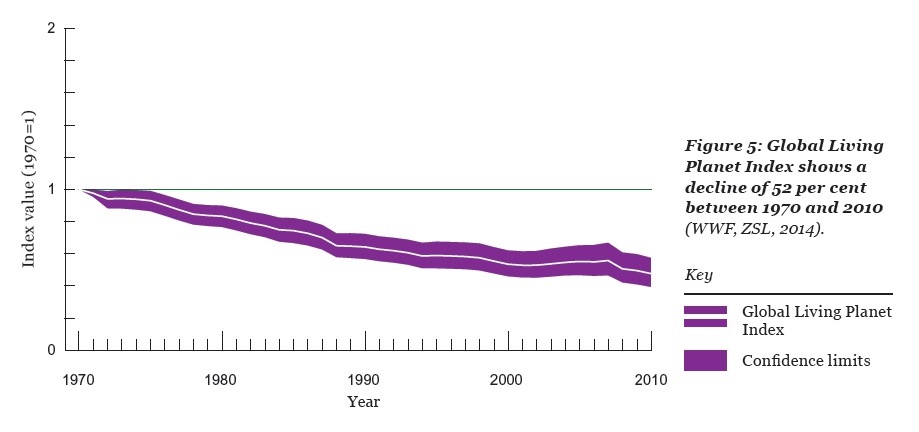
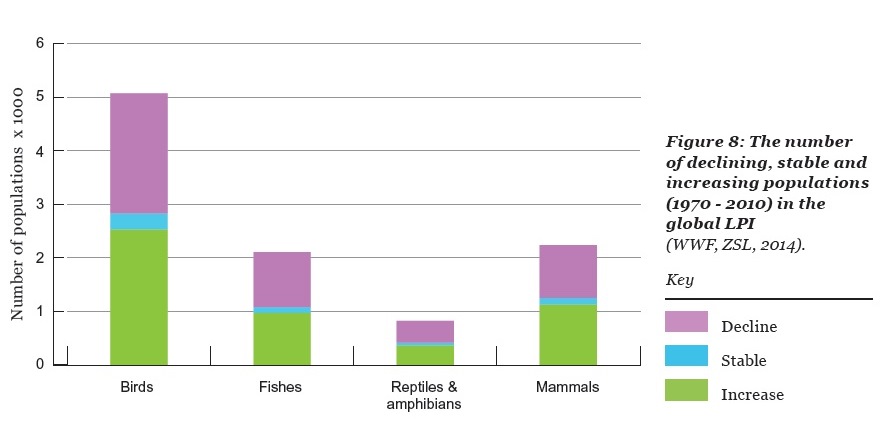
Earth’s wild vertebrate populations have dropped to one-half the size they were in the 1970s, according to an analysis of more than 3,000 species.

Researchers from the WWF wildlife NGO, headquartered in Woking, UK, and the Zoological Society of London (ZSL) aggregated data on 10,380 populations from 3,038 species into an index of the health of the five main groups of vertebrates — mammals, birds, reptiles, fishes and amphibians. Set at 1 in 1970, this index has decreased to 0.48 (meaning by 52%) since then, according to their latest report.

living planet 2 jay

This analysis is the tenth ‘Living Planet Index’ from WWF and ZSL, but this year’s has a crucial difference from previous editions in that it is weighted to take account of the make-up of biodiversity in different areas. Previous versions treated every species on which data were available equally, whereas the new edition attempts to correct for the size of each taxonomic group in a region, for example by giving more weight to fish than mammals in the palearctic.

The last index – published in 2012 – showed a 28% decrease between 1970 and 2008. The bleaker picture painted by the 2014 edition comes both from real declines in newer data, and from the new weighting.

“The scale of biodiversity loss and damage to the very ecosystems that are essential to our existence is alarming,” said Ken Norris, the director of science at ZSL, in a statement. “Although the report shows the situation is critical, there is still hope. Protecting nature needs focused conservation action, political will and support from businesses.”

There have been some successes, especially in protected areas. The study mentions the example of Nepal’s tiger (Panthera tigris), whose population increased by 63% between 2009 and 2013. But most vertebrate populations are in decline, and some drastically — such as rhinos and elephants threatened by poaching in Africa and sharks impacted by overfishing.

living planet 1 jay

{credit}Living Planet Report 2014{/credit}

Obama vastly expands Pacific reserve

Coral_at_Jarvis_Island_National_Wildlife_Refuge

Coral at Jarvis Island National Wildlife Refuge
{credit}US Fish and Wildlife Service{/credit}

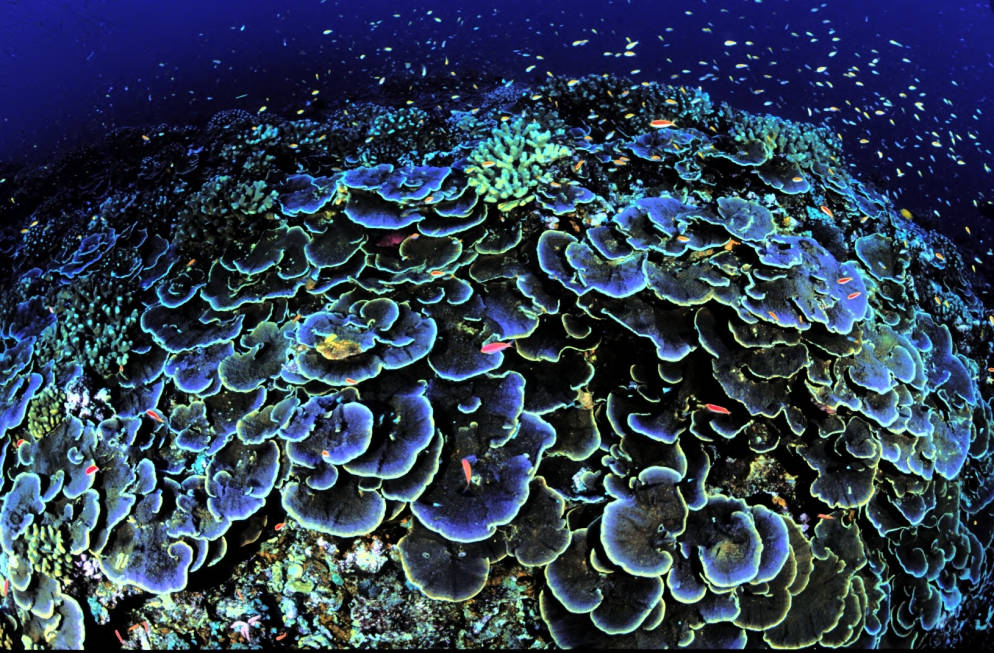
US President Barack Obama has vastly increased marine protection in the Pacific by declaring 1 million square kilometres of ocean part of a giant marine reserve.

Obama’s declaration on 25 September increased from 210,000 square kilometres to 1.3 million km2 the size of the protected area around a group of small islands in the central Pacific, stretching from Wake Atoll to Jarvis Island. This makes the Pacific Remote Islands Marine National Monument (PRINM), originally created by former president George W. Bush, one of the largest marine protected areas in the world. Thousands of sea birds, turtles, sharks and other marine life will now be fully protected from commercial, if not from recreational, fishing over this extended area.

The expansion was not as large as some researchers and conservationists were hoping. It had been suggested that the reserve could have been expanded by 1.8 million km2, and the scale-down seems to be a concession to the tuna fishing industry, which is active in the region.

Still, the expansion means Obama has put more of the planet under protection than has any other world leader, says Elliott Norse, chief scientist at the Marine Conservation Institute, a non-governmental organization in Seattle, Washington, that has played a central part in the creation and expansion of PRIMNM.

“We have been working to make this happen for nearly a decade,” says Norse. “We’re thrilled that President Obama has done this.”

Norse says the expansion should act as a trigger to nations that have been less progressive in protected their own waters, such as China, Russia and France: “We would love to see these and other nations take their cue from this action.”

Critics say WHO e-cigarette report was ‘misleading’

The latest salvo in an ongoing row over the safety of electronic cigarettes has branded a major World Health Organization-commissioned report guilty of misrepresenting and misinterpreting key evidence.

The fight over whether e-cigarettes curb or encourage tobacco use has reached new heights in recent weeks after the WHO released a report calling for tougher regulation of the devices, which vaporise nicotine-laced liquid for inhalation (see the news feature article ‘E-cigarettes: The Lingering Questions’).

These arguments are being splashed across many media sources today following the publication of a new paper in Addiction.

In the latest development a group of leading researchers on the pro-e-cigarette side take aim at a review commissioned by the WHO, and a version of it later published in Circulation, from a team including leading e-cig sceptic Stanton Glantz, director of the Center for Tobacco Control Research and Education at the University of California, San Francisco.

In the article published today, Ann McNeill of King’s College London and her co-authors write: “We identify important errors in the description and interpretation of the studies reviewed, and find many of its key conclusions misleading.”

Among the claims from Glantz’s team they dispute are that “marketing is back” on TV as a result of e-cigarettes. “Use of the language ‘marketing is back’ is polemic and has no place in an academic report. Reference to placement near ‘candy’ and ‘medicines’ similarly seems intended to create an emotional response and lacks reference to evidence on what the significance of such placement might be,” says the new paper.

McNeill’s group also takes issue with the statement that it has not been proven that these products actually help people stop smoking. “The statement misrepresents the consistent picture emerging from a variety of studies using different designs, that e-cigarettes can help smokers to stop, even though the effect is not strong,” they write.

Expect the other side to issue a strong rebuttal in short order. As Michael Siegel, a tobacco control researcher at Boston University School of Public Health in Massachusetts says in the Nature news feature, “These devices have really polarized the tobacco-control community. You now have two completely opposite extremes with almost no common ground between them.”

Oceans need saving before science is nailed

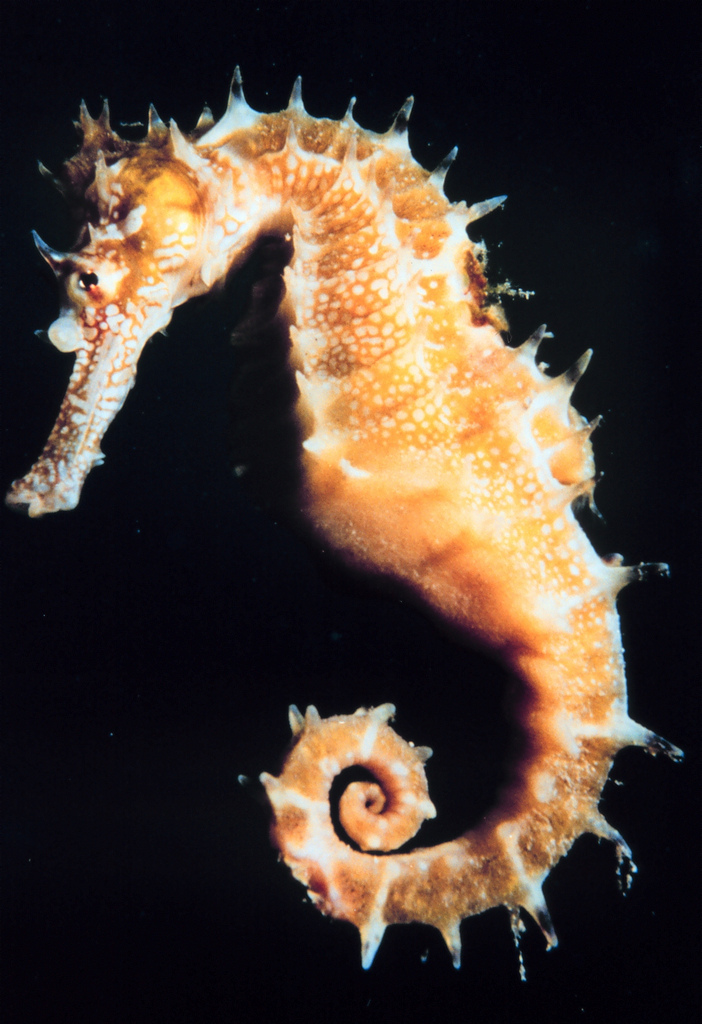
NOAA_Seahorse

{credit}Mohammed Al Momany/NOAA{/credit}

Don’t just gather data, do something. Scientists need to stop using a lack of knowledge as an excuse for not doing more to protect threatened species, a major gathering of marine conservationists has been warned.

“Science matters deeply, but we can’t let ourselves be trapped by the need to gather more data,” Amanda Vincent, a marine researcher at the University of British Columbia, told delegates at the opening of the International Marine Conservation Congress, which kicked off on 14 August in Glasgow, UK.

Vincent’s work with seahorses has involved fighting for better control of the international trade in these animals, many of which are endangered. Trade in seahorses is now restricted under the Convention on International Trade in Endangered Species (CITES). If scientists had waited until they knew everything about every species – or even until they had enough data to propose detailed plans for managing catches in individual countries – this protection would never have arrived, she says.

Vincent told the meeting that every speaker who called for more data on a conservation issue should also be prepared to present a recommendation for something that could actually be done now.

Making an analogy with the medical profession, she told the meeting that doctors use all available evidence when deciding how to treat their patients, but when there is a lack of evidence for a particular condition they don’t generally stand by and do nothing. The oceans are under threat, says Vincent, and “you don’t do research while your patient is dying”.

She warned the gathering of conservation researchers that “we’re a bit weasely sometimes in hiding behind our lack of knowledge” and told them to “just get going”.

Follow the meeting on twitter via @dpcressey and #IMCC3