One flerovium atom at a time

This month, our tour of the elements takes us to a corner of the periodic table that has only been explored recently, and from which only a handful of atoms have been observed. In the case of flerovium, literally one atom at a time. The superheavy element 114 has such a high nuclear charge that several months of nuclear fusion (in which calcium-48 ion beams are directed into targets of plutonium or curium isotopes) are required to produce just one atom — which then decays within seconds.

nchem.1688-i1

Georgii Nikolajevich Flerov
© RIA NOVOSTI / ALAMY

The discovery of element 114 is credited to a collaboration between the Flerov Laboratory of Nuclear Reactions in Dubna, Russia and the Lawrence Livermore National Laboratory in Livermore, California. In fact, things turned out pretty well for the two labs with two elements named at the same time: element 114, flerovium, and element 116, livermorium.

I’ll let you read Peter Schwerdtfeger’s account on what properties we might expect from flerovium, based on its structure, but also taking into account relativistic effects. Could those effects endow element 114 with an electronically closed-shell configuration, as suggested decades ago by Kenneth Pitzer? Is flerovium a gas at room temperature, or is it a metallic liquid? The properties and reactivity of flerovium are investigated both through calculations and experiments. For now, Peter Schwerdtfeger’s conclusion is that we should “expect the unexpected”.


Titanium tales

In this month’s ‘in your element’ article (subscription required), Mike Tarselli from Biomedisyn Corporation recounts just how pervasive titanium is in our lives. And by ‘our lives’ I refer to us human beings as well as us chemists.

[Note: Find out more about Mike here by reading his replies to our Reactions questions.]

Ti_nchem.1656-i1

{credit}© DIDIER ZYLBERYNG / ALAMY{/credit}

Element 22 is ubiquitous on Earth – although not as a pure metal, a form that has only become accessible in the 20th century. Titanium and its compounds serve a myriad of purposes. To name but a few, titanium is a component of jewellery, glasses frames, and the pins and screws used to staple together broken bones, while pigment TiO2 also endows paints, toothpaste and pharmaceutical coatings with a bright, glimmering white.  Not to mention partly making up the striking Guggenheim Museum in Bilbao (pictured)!

Chemists have long relied on titanium, in various compounds and oxidation states, to promote many, many reactions – the article elegantly relates diverse ways in which titanium, in different oxidation states and coordination environments, engages with a variety of molecules, but I will avoid spoiling it here. Let me point out though that titanium compounds may not be as environmentally-benign as we might have thought. Few efforts have been made so far to recover catalysts from finished products (for example polyethylene bottles), or by-product salts, but this is an issue that seems worthy of attention.

In any case, this year marks the 222nd anniversary of the discovery of element 22 — and what a rich 222 years that have been, too! As per Mike’s toast, “raise a titanium silicate-coated champagne glass, and enjoy some titania-frosted cake. Delicious!”


Neon behind the signs

A few different versions of the periodic table do exist — as Michelle Francl wrote about here a while ago in a certain chemistry journal  — but we’re all attached to the one that adorned our science class rooms at school: Mendeleev’s version. We generally think that each position is firmly set, but in this issue’s ‘in your element’ article (subscription required) Felice Grandinetti ponders on whether neon should really be at the top of the noble gases group — this would involve helium moving next to hydrogen, at the top of group 2.

Print

{credit}© PHOTO JAPAN / ALAMY{/credit}

An argument in favour of this change is the fact that neon is less reactive than helium. ‘Less reactive’ is perhaps a bit of a stretch when it comes to the noble gases, let me rephrase this to “neon is more inert than helium”. We know that, moving down the periodic table (that is, when moving from helium to neon, then argon, krypton and finally xenon) an increase in polarizability accompanied with a decrease in ionization potential makes elements more prone to form bonds. This trend is in good agreement with what we know of noble gas reactivity, both from experimental and theoretical studies — I’ll let you go to the article to read about the compounds that have been prepared or predicted — except from the fact that neon is more inert than helium. Should helium move to group 2, the situation would be resolved.

Grandinetti also relates how the discovery of neon represents a good illustration of the synergy between fundamental and applied research, and how element 10 went on to participate in the development of mass spectrometry. What nicely connects today’s widespread uses of neon to its history is its bright red-orange emission. The spectroscopic line that led to the identification of this new element (quite literally, as its name comes from ‘neos’, the Greek word for ‘new’) is the basis for signs that brighten cities at night, barcode scanners, laser eye surgery and blood cell analysis.

Cerium under the lens

In this month’s ‘in your element’ article (subscription required), Eric Schelter from the University of Pennsylvania draws our attention to cerium, an element that serves a variety of commercial and industrial applications, yet presents chemists with some rather peculiar challenges.

Cerium

©INGRAM PUBLISHING/ALAMY

Although it is one of the rare-earth elements, cerium is fairly abundant in the Earth’s crust, and widely used for various purposes. The oxide ceria (CeO2), for example, is a common abrasive for the polishing of surfaces ranging from optical lenses to electronic displays. The reason it is particularly efficient is that, in addition to a mechanical polishing action, it attacks the basic sites of surfaces.

Most of cerium’s applications rely on its interconversion between the +3 and +4 oxidation states. I’ll let you read in the article how “hydrocarbon fuels encounter element 58 at both the beginning and the end of their useful life”, and which cerium compound represents a “drastic ‘nuclear option’ for oxidation reactions” in synthetic chemistry.

There is much to explore regarding the reactivity of cerium, and even in terms of the electronic structure of some of its compounds — this is an aspect that I find particularly intriguing. Take cerocene, a seemingly straightforward complex that consists of a cerium centre sandwiched between two C8H8 ligands to form an eclipsed sandwich complex. Experimental characterization and computational calculations point to a multiconfigurational ground state, for which it’s proving rather difficult to determine unambiguously the Ce(III) and Ce(IV) contributions. As Schelter puts it, “this deceptively simple compound represents a stimulating case where the very human concept of a formal oxidation state fails to capture the essential essence of a molecule.”

Anne Pichon (Senior Editor, Nature Chemistry)


Enigmatic astatine

When we think of the halogens, F, Cl, Br and I are generally those that spring to mind. Yet there is, of course, another one — astatine. In contrast to the first four, ubiquitous on earth and which serve in numerous reactions, astatine is rare and has remained a bit of a mystery. It is the topic of this month’s ‘in your element’ article (subscription required), written by Scott Wilbur from the Department of Radiation Oncology at the University of Washington.

As its name reflects — astatos is the Greek word for unstable — it is radioactive. All of the known isotopes of astatine are radioactive, the longest-lived ones (210At and 211At) with half-lives of only 8.1 and 7.2 h, respectively. This does not facilitate chemical and physical characterization, in particular making it impossible to weigh and even observe element 85 in the conventional sense. Fortunately, these two isotopes can be produced by irradiation of bismuth targets — only in very small amounts, but sufficient for some research nonetheless.

The field in which astatine has attracted the most attention is medicine — but only the 211 isotope; its 210 counterpart is definitely unsuitable as it decays into polonium-210, a species that made the news a few years ago through the poisoning of Alexander Litvinenko. Actually, 211At is one of the rare α-emitters to be investigated for medical applications; they usually wreak havoc in internal organs. I’ll let you go to the article to read about its potential medical uses — as well as the challenges in investigating it, including how difficult it is to even determine whether or not it is released from a carrier molecule.

In some other ways, astatine behaves very much like other halogens and undergoes electrophilic and nucleophilic reactions. I wouldn’t recommend trading halogens for astatine in any of your up-coming reactions just yet; reproducibility can be an issue (this is not overly surprising considering you may only have about 10-13 to a maximum of 10-8 grams of astatine in any given sample and this may be a smaller amount than any trace impurities!). In any case, we don’t know nearly enough about astatine’s physical and chemical properties — but if you like working with minute amounts of decaying species, give it some thought!

Anne Pichon (Associate Editor, Nature Chemistry)

Barium bright and heavy

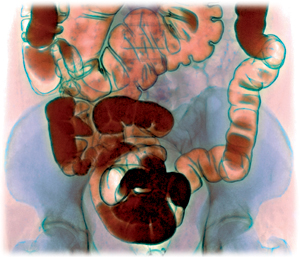
This month’s ‘in your element’ article (subscription req’d), written by Katharina Fromm from the University of Fribourg, is about barium — an element infamous among those who have ingested it as a ‘barium meal’ for an X-ray of the stomach and bowels.

© DU CANE MEDICAL IMAGING LTD/SCIENCE PHOTO LIBRARY

It is barium sulfate that serves as a contrast agent for these scans, despite its toxicity. The barium ions of various salts can interfere with the calcium- and potassium-based processes in the body, leading to problems ranging from muscle weakness to breathing difficulties, cardiac irregularities and even paralysis. This is why barium carbonate is an efficient rat poison. But — because there is a “but”, otherwise it wouldn’t serve as contrast agent in those gastrointestinal studies mentioned above — the reason why barium sulfate can be ingested safely is that it is insoluble in aqueous media. Phew. Never underestimate solubility effects!

I’ll let you read the article to find out how a barium-containing stone intrigued witches and alchemists from the early 17th century, with such a peculiar behaviour that one scientist, Giulio Cesare Lagalla, remained sceptical even after seeing one such stone. It is somewhat surprising that the origin of the phenomenon was only unambiguously elucidated last year (until then it was mistakenly attributed to another one of the stone’s components).

Barium compounds are also used in many other fields, for example as weighting agents to make drilling fluids — used in oil and gas wells — denser. This fits with the particular characteristic element 56 was named after: barys means ‘heavy’ in Greek. It has however a somewhat more artistic side: barium chloride and nitrite salts are used to colour fireworks bright green, and barium dihydroxide is used in the restoration of artworks. While we’re on the topic of barium hydroxide, I can share one regret with you: as a kid, I’d have loved to do this endothermic reaction with an ammonium salt. Mix two powders, get a liquid and a smelly gas and, as a bonus, any water placed underneath your beaker freezes. Pretty cool (ahem).

Anne Pichon
(Associate Editor, Nature Chemistry)


The allure of aluminium

In the first issue of the year, Daniel Rabinovich from the University of North Carolina at Charlotte shares with us anecdotes about an element we use on a daily basis (subscription required). But just because aluminium serves to package food and drinks, we shouldn’t overlook its grander history and rich chemistry.

Aluminium hasn’t always been such a common-or-garden element: it used to be pricier than gold, it is aluminium cutlery that Napoleon III reached for to impress guests, and I’ll leave you to check Rabinovich’s ‘in your element’ article to read Jules Verne’s praise of element 13.

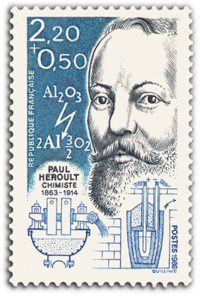
QUILLIVIC © LA POSTE, 1986

Alum, a hydrated sulfate salt of potassium and aluminium [KAl(SO4)2·12H2O], has long been known — ancient Greeks and Romans used it as astringent for dressing wounds. But although aluminium is present in various compounds, and abundant on Earth, it is so reactive in its elemental form that it wasn’t isolated until the 1820s.

Friedrich Wöhler isolated aluminium metal in 1827, Henri Sainte-Claire Deville produced larger quantities and published a detailed account of its properties and applications in the 1850s, and both Charles Hall and Paul Héroult devised electrolysis-based large-scale fabrication processes in the 1880s. Add to this the contribution of Karl Josef Bayer, who developed a route to extract and purify alumina from the mineral bauxite et voilà, aluminium became so widely used it was to be referred to as ‘the magic metal’ by National Geographic.

Its salts, compounds and coordination complexes have also proven useful for a variety of reactions, some of which have recognizable names such as the Friedel–Crafts acylation and alkylation reactions, or the Ziegler–Natta polymerization of olefins. Beyond its interesting chemistry and a myriad of practical applications, the unassuming metal also inspired artists — I particularly like the “Molecule Man”: 30m-tall structures by Jonathan Borofsky.

Anne

Anne Pichon (Associate Editor, Nature Chemistry)

Plutonium’s new horizons

The piece on plutonium in the December issue (subscription req’d) marks the end of last year’s writing competition’s excitement; all winning essays have now appeared in the journal as ‘in your element’ articles — we hope you enjoyed reading them!

LTOR: © GL ARCHIVE/ALAMY; © IVY CLOSE IMAGES/ALAMY; © DENNIS HALLINAN/ALAMY

The last word goes to Jan Hartmann, graduate student at RWTH Aachen University, who acknowledges the history of plutonium yet highlights that nuclear weapons, and nuclear energy, are not all there is to this intriguing element.

Whether it counts as a naturally occurring element is pretty much a matter of opinion — some plutonium has been isolated from uranium ore, but only traces, and all the plutonium in nature makes up about 2 x 10–19 weight% (minus nineteen!) of the lithosphere so you’re free to consider that the heaviest naturally-occurring element is really uranium.

Hartmann’s article describes why element 94 is referred to as “a physicist’s dream but an engineer’s nightmare”, and also discusses the rich redox and coordination chemistries of this element. But one anecdote I’m particularly fond of is that, “of all the elements named after celestial objects, plutonium is the only one so far to be sent to its astronomical namesake”.

Anne

Anne Pichon (Associate Editor, Nature Chemistry)

Osmium weighs in

It was while studying another transition metal, platinum, that chemists came across osmium: a black residue would always appear when platinum-containing ores were dissolved in aqua regia. Naturally, they wouldn’t rest until they had found out what exactly that residue was — but the amounts available were too small to allow for its full characterization. It was Smithson Tennant who obtained sufficient quantities (while in a business selling platinum metal), and discovered it to be a mixture of two new elements — one with striking and diverse colours, the other possessing a strong and distinctive smell. He named them iridium and osmium, after the goddess Iris (represented by a rainbow) and the Greek word for smell (osme), respectively.

PEN © ISTOCKPHOTO/THINKSTOCK

In last month’s ‘in your element’ article (subscription required), Gregory Girolami recounted how the fate of these two elements, discovered together and neighbours in the periodic table, was to be further intertwined: their densities are so close that for decades different techniques gave a different answer as to which one was the densest of the two — a prestigious claim that would also make the winner the densest of all metals. The title of the article might give you a hint as to which one eventually won, by a very small margin.

Osmium has a few other claims to fame; read the article to discover in what way it rivals diamond, and what urban legend it’s involved in. It also exists in eleven oxidation states, up to a (+8) state rather rarely encountered — OsO4 has a few applications, but is most famous (amongst chemists at least) for its involvement in the Nobel Prize work of K. Barry Sharpless.

Yet, as attractive as alkene dihydroxylations are, especially asymmetric ones, osmium tetroxide is both highly volatile and highly toxic so don’t play Nobel-chemistry at home.

Anne

Anne Pichon (Associate Editor, Nature Chemistry)

A touch of indium

The presence of some elements in our daily lives often gets overlooked, and this is certainly the case in a striking manner for indium. We all know a copper coin when we see one, but I wonder how many people know an indium device when they use its fancy touchscreen function.

Catherine Renouf, a PhD student in materials chemistry at the University of St Andrews, does — and chose to spread the word by writing about indium for our essay competition last year. Her essay, which appears in this month’s ‘in your element’ article (free to registered users), explains indium’s sudden rise in popularity.

PORTRAIT OF REICH © SPL; IPAD © ISTOCK PHOTO/THINKSTOCK

Indium was unveiled to the world in 1867 — a public presentation that involved a bit of an artifice; find out in the article how discoverers Ferdinand Reich (pictured) and Hieronymous Richter ensured their ingot of rare indium wouldn’t inadvertently go missing.

Element 49 pretty much remained a curiosity in chemistry labs for the following 50 years, and it was its involvement in indium tin oxide (ITO) that suddenly rendered it very attractive. A material that is both electrically conductive and transparent makes for a great device coating, as simply touching the ITO layer sends a signal to the device. It is brittle, however, and we’ll need an alternative material to progress towards flexible and rollable displays.

But maybe that’s not a bad thing, as indium resources are fast being depleted. Chemists, to your benches!

Anne

Anne Pichon (Associate Editor, Nature Chemistry)