India’s DNA fingerprinting hero through the eyes of a life-long mentee

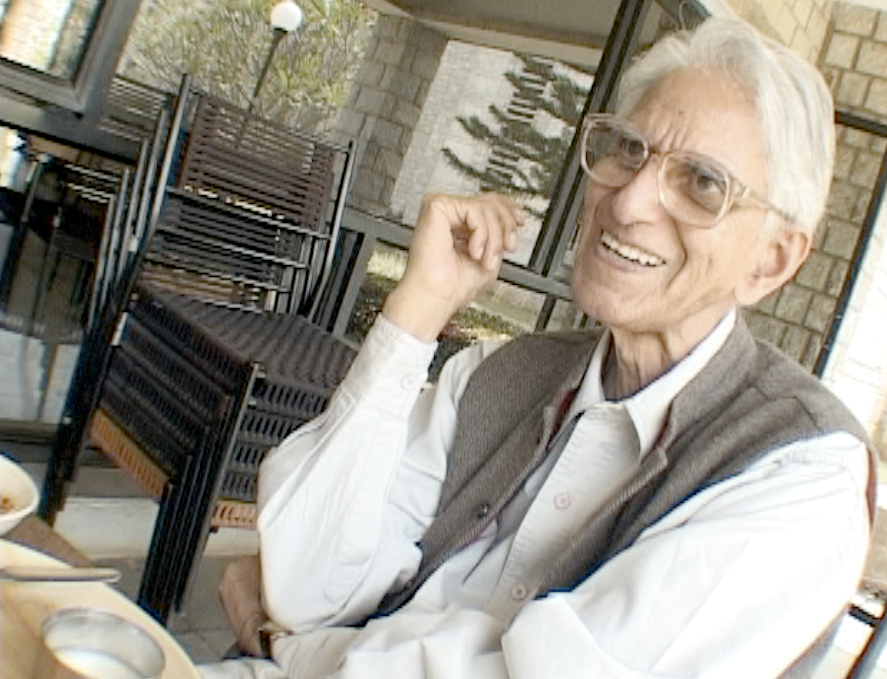
It has been over a week that Lalji Singh, widely regarded as the father of DNA fingerprinting in India, and a former director of Hyderabad-based Centre for Cellular and Molecular Biology (CCMB) passed away (on 10 December 2017).

Tributes have been pouring in from around the world for the affable geneticist who could ‘light up a room with his smile’.

Today, one of his mentees and long time associates Kumarasamy Thangaraj pays a personal tribute to the man who was also known for his ‘English weather-like anger’ and was always true to his word, except once….

Dr_Lalji_Singh

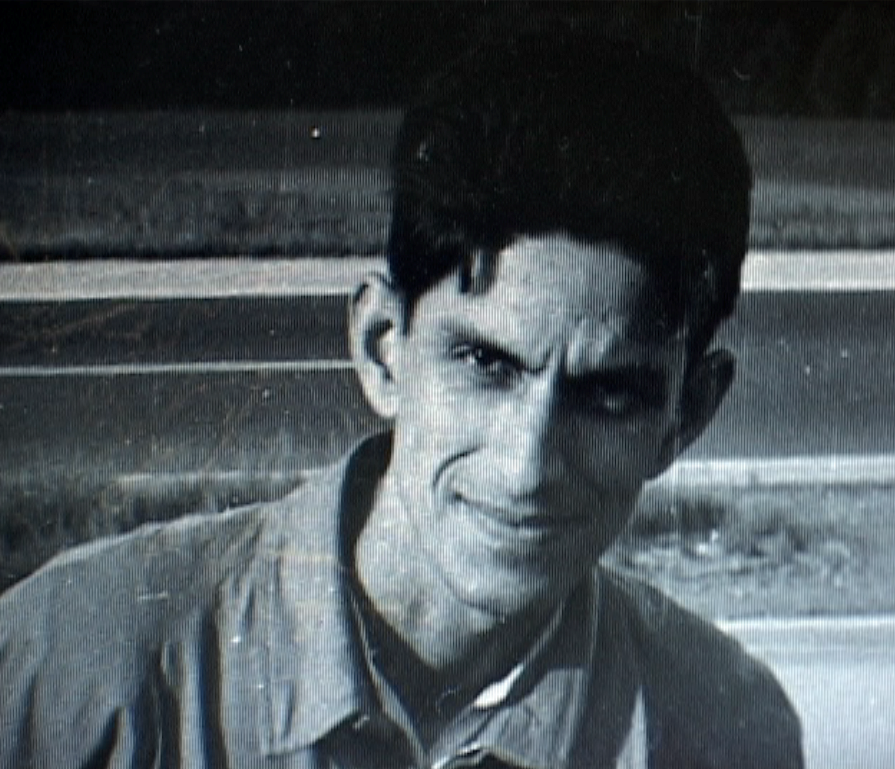
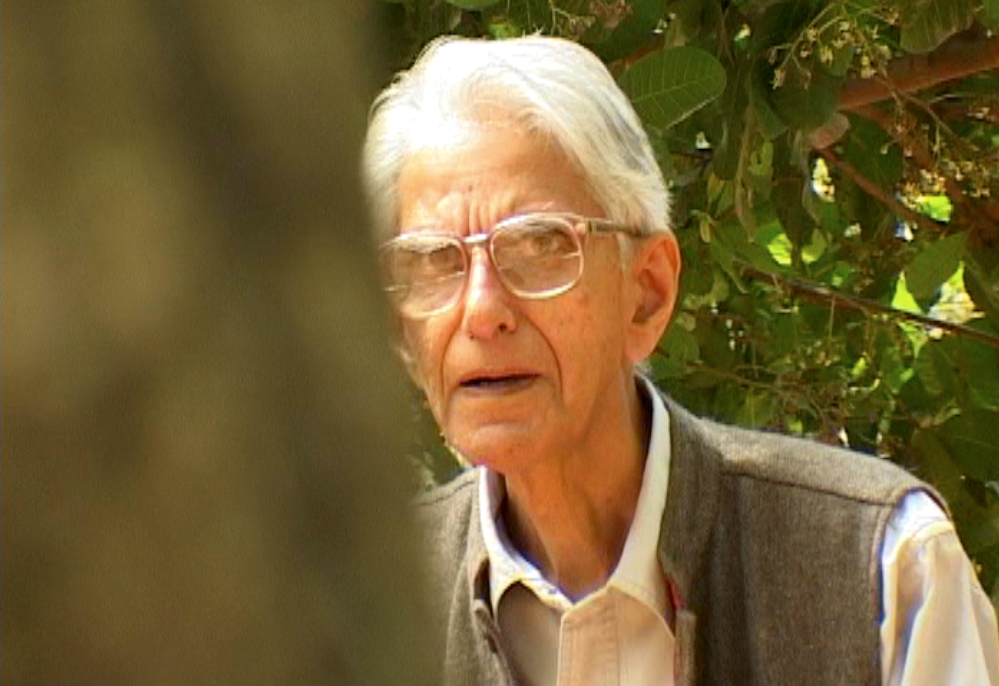
Lalji Singh (1947-2017)

It’s very difficult to accept that Dr. Lalji Singh, who was always full of life and infected so many people around him with his exuberance, is not among us today.

I met Dr. Singh for the first time in Chennai in 1991 when he visited the Department of Genetics of the University of Madras to conduct the Ph. D viva of one of my seniors. I was a Ph. D student at that time and my supervisor Prof. P. M. Gopinath deputed me at the airport to receive Dr. Lalji Singh. I never imagined that this meeting would be the beginning of an immersive, life-long mentoring that was to shape my entire scientific career.

A couple years later I joined the Centre for Cellular and Molecular Biology (CCMB) in October 1993 as a junior scientist. CCMB Director Prof. D. Balasubramanian allowed me a generous interaction with group leaders to identify the lab I wanted to join. I met Dr. Lalji Singh, he offered me coffee, gave me an overview of CCMB, and discussed the project I would be expected to carry out in his lab. I liked the project as it was in human genetics, very similar to my Ph.D work. I readily agreed to begin my scientific journey with Dr. Singh, an association that continued till a few hours before his demise.

Dr. Singh made sure everything in CCMB ran smoothly, not just the science but also the supporting facility and administration. One morning in 1995, when most of us were working in the lab, he noticed a sink blocked with some gel causing problems for all of us. He walked up to the sink, put his hand in and removed the gel without waiting for anyone to come and clean. Everyone in the lab was stunned. We had learnt a great lesson in self-drive.

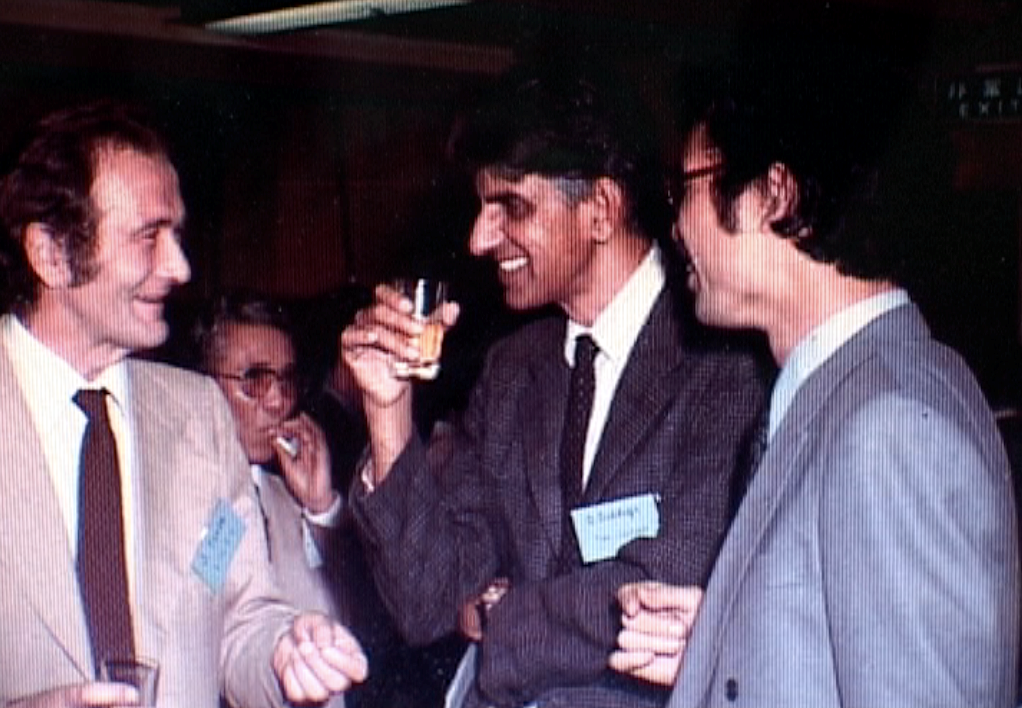
Many people thought he got angry very quickly. But not many knew that his anger was very short-lived and he never nursed grudges. In 1994, he organised an international conference on DNA fingerprinting and wanted to invite Prof. Ed Southern  of the University of Oxford. Prof. Southern’s secretary picked up his call but was somehow unable to connect the two — the invitation could not go through. Dr. Singh was infuriated. One year later, we established a collaborative research programme with Prof. Southern’s lab.  Dr. Singh sent me to Oxford to initiate the human diversity programme with Prof. Southern’s colleague Dr. Chris Tyler-Smith. When I met Prof. Southern’s secretary there, she recollected how angry Dr. Singh had got during that phone conversation. I told her she should forget this incidence as Dr. Singh’s anger was like the English weather — it never stayed for long. Back in Hyderabad, when I shared this incident with Dr.Singh, he had a hearty laugh.

If he couldn’t give something 100%, he wouldn’t do it. In March 2009, we jointly established the Society for Mitochondrial Research and Medicine (SMRM) along with Prof. Keshav Singh of the University of Alabama at Birmingham, USA. The idea was to promote mitochondrial research and bridge the gap between basic research and the clinics. Dr. Singh was the founder president and presided over two annual meetings. When he became the Vice-Chancellor of the Banaras Hindu University (BHU), I send him a mail regarding SMRM’s next annual meeting. He called me to convey it would be difficult for him to devote much time to SMRM and suggested we elect a new President instead.

He initiated several innovative programmes at CCMB. One such symbiotic programme invites students from universities and colleges with scant research facilities to make dissertations in human diversity at CCMB. The students get an opportunity to conduct research on human population samples which they bring from remote places, and CCMB gets to build a robust DNA bank, a great resource for population and medical genetic research. Dr. Singh’s mentorship and easy prodding has helped many, incuding me, to excel in the field of human genetics and has influenced several generations of scientists.

My journey with Dr. Singh was not restricted to the lab — it took me to the remote islands of Andaman and Nicobar and the dense forests of Chhattisgarh, where we collected the most precious samples, helping us reach very big scientific conclusions.

Though Dr. Singh always stood by his words, the one occasion he could not do so was on the afternoon of 10 December 2017. He told me on phone, “I am coming to Hyderabad”, but end came before he could leave Varanasi. This last conversation, which I was so fortunate to have with him, will continue to ring in my ears for a long, long time.


Related links:

India’s DNA fingerprinting pioneer Lalji Singh passes away

Goodbye Kalam saab

Last night when news of APJ Abdul Kalam’s death spread thick and fast on social media – many heartbroken with the scientist/ex-President’s death and many wishing the news wasn’t true – one thing became clear. That this was not just the death of a scientist, a leading light of India’s space programme, or of the ‘People’s President’ – it was the demise of an adorable, all-round-good-natured, immensely accessible human being, rooted in his humble beginnings and untouched by the highs that fame brought.

Avul Pakir Jainulabdeen Abdul Kalam (1931-2015)

Avul Pakir Jainulabdeen Abdul Kalam (1931-2015){credit}PIB{/credit}

Why do I say that? In no time, my Facebook wall was a collage of pictures featuring Kalam alongside practically everyone I knew – the quintessential smiling face beamed in each of those pictures almost saying “Come here, do you want a picture with me?” Kalam would be missed most for this ease of approach, this humility that comes with knowledge. Small wonder that he often quoted from a Sanskrit slöka that roughly translated to “A fruit-laden tree always bends low.”

For Kalam, science was one of the many, many things he was passionate about – the number one on his passions list being teaching. “You ask me to teach 20 hours a day, I perhaps can,” he said to me once.

And he always came across as a teacher you could look up to for those wonderful motivational one-liners that stay with you for a long, long time and egg you on when you are not in the best of speeds. For instance, the Christopher Morley quote “Big shots are only little shots who keep shooting” featured quite regularly in his talks. “India needs such small shots in thousands,” he would say. No big surprise that his books – strewn with such pep quotes – flew off the shelves in no time.

With a gentle sway of the head and smiling eyes, he could heap on you tonnes of data peppered with intricate statistics, effortlessly – and then cross check if you retained all of it, typical Professor-style. “An aerobic space transportation vehicle can have a 15% payload fraction for a launch weight of 270 tonnes. This trans-atmospheric space transportation system has the potential to increase the payload fraction to 30% for higher take-off weight. So what per cent payload fraction can an aerobic space transportation vehicle have?” he would ask. And you had to say, “15%”, before the conversation went any further. He made sure the learning never stopped as long as you were with him. And then he left you with further food for thought – that was the magnet of his personality.

Kalam saab, as we fondly called him (though he might have secretly preferred Prof. Kalam), wrote several books, scientific papers, essays and his public talks are all freely accessible on the internet for anyone to benefit from. One piece he wrote for the launch of Nature India, however, will always remain precious to me. “What do you want me to write on?” he asked when I said we would love to have an inaugural article from him. “You are launching Nature India – I have to write something worthwhile. Let me give it a good thought”. Kalam, then a popular President with non-stop speaking assignments, entertained several rounds of emails before the article could be finalised. “Please feel free to edit as you like,” was his standard reply to all my queries. Here’s the piece that was finally published in Nature India.

I leave you with the endearing bits from that article – they give a peek into the man’s difficult early years that ended up shaping his invincible spirit, which India will continue to look up to for years to come:

“As I embark on my discussion on space safety and security, I am reminded of my joint family in Rameswaram, a small island in southern part of India, where a number of us brothers and a sister lived together. I was the last fellow. I keenly witnessed my mother keep all her children connected in spite of their varying needs and personalities. I used to ask myself, how does she keep us united despite such amazing diversity? It was only through the inherent pure love of the mother.

During the last five decades, I have seen how many successes and a few failures of space programmes helped connect countries around the globe. Whenever a major space event takes place – man landing on the moon, first series of communication satellites in the geo-synchronous orbit or remote sensing satellites in polar orbit, NASA astronauts, including Sunita Williams, descending on earth on a rainy day – it captures the attention of the entire planet. Events in space have in a way integrated the world, like the mother unifying the family. The question is: can we use space to transform earth into a homogenously prosperous place without poverty or fear of war?”

[“With Kalam’s demise, India’s scientists will miss their champion and star supporter in New Delhi,” says veteran science journalist K. S. Jayaraman in this obituary. “Being non-political, Kalam could cut across political parties while his image as father of India’s missile programme helped him promote science and technology. An approval from Kalam almost always resulted in budgetary support for such projects like the $250 million nanotechnology initiative, or the manned space mission.” Read more on India’s missile man’s contribution to India’s science vision here.]

Biology’s ‘gentle genius’ through the eyes of a protege

It’s been a week that Obaid Siddiqi, India’s molecular biology genius, passed away in a freak accident on July 26, 2013. Tributes have been pouring in from far and wide and we are overwhelmed by responses from our readers, fellow scientists and colleagues wanting to express their love, admiration and respect for the man variously called ‘Renaissance Man’ and the ‘Catalyst of a culture of creativity‘.  We compiled some of this outpouring in the Nature India feature “India mourns loss of ‘aristrocratic’ & gutsy molecular biology guru“.

We also heard from science film maker Matiur Rahman, who has been tracking Siddiqi’s life sine 1983. He sent us some rare pictures of Siddiqi which we featured in a guest blog piece “An ace biologist through the eyes of a lenseman“.

In this series of tributes, today we got to hear about Obaid Siddiqi from another unique perspective — from someone who hero-worshiped him as a child and who’s family ties with Siddiqi go back ages. Our guest blogger today is an ace scientist himself, inspired hugely by Siddiqi. He is Shahid Jameel, group leader of Virology at the International Centre for Genetic Engineering and Biotechnology (ICGEB), New Delhi. He recently took over as CEO of the Wellcome Trust-DBT India Alliance.

Shahid told me he wasn’t going to give an account of the scientist — everyone is aware of Siddiqi’s scientific genius. So here’s Shahid’s touching tribute to the extraordinary human that Obaid Siddiqi was:

The Gentle Genius: my childhood hero

One sign of getting old(er) is to see the heroes of your youth leave this mortal world. I lost three in 2011 – my father in August, cricketing legend ‘Tiger” Pataudi in September and the evergreen actor Dev Anand in December. Last week I lost another – Professor Obaid Siddiqi, or simply Obaid.

OS

© Matiur Rahman

Obaid was popular with three generations of my family. Being related to my maternal grandfather through his mother, Obaid shared with him the common bonds of leftist ideology and progressive Urdu literature. He and my father had the same last name and were contemporaries at the Aligarh Muslim University, having done MSc in the same year in Botany and Chemistry respectively. Both returned to India in 1962 to establish a career in teaching and research.

While growing up in Aligarh, I do not recall meeting Obaid; he made short visits to see his parents. But there was always talk of his genius and even as kids we knew that he was an important scientist. I was friendly with his father, who we called Qadeer Nana. He came frequently to the AMU Lawn Tennis Courts where Obaid’s nephews – Salman and Chotu, and I played. There were many tips on the game, admonition for bad shots and endless stories in his inimitable style.

My first interaction with Obaid was in1978 when I was selected as a National Science Talent Summer Fellow in his lab at TIFR. This was my first taste of laboratory research and it was so much fun. We rarely left the lab and many nights were spent sleeping on the seminar library table. I worked directly with Krishnan (who is as kind now as he was then), and Obaid appeared occasionally to enquire if all was well. He was quiet but there was an aura around him that made people respect him and be comfortable at the same time.

Much through the 80s, I was in US and lost touch but reconnected again when I returned to India. Obaid was starting NCBS and proudly gave me a personal tour of the interim laboratories on the Indian Institute of Science campus. For the past 25 years, we were in constant touch and developed a bond that cannot be described, only felt.

Over the past few years, our link has been Abu, who Obaid took on as a PhD student on my recommendation. Abu graduated from rearing flies to taking care of Obaid, while trying to understand the biochemical and genetic basis of olfactory memory. Obaid sent him to my lab to use biochemical methods for identifying proteins associated with olfactory learning in Drosophila. Having been in a completely different field of research, this was my chance to fulfill a life-long dream to publish a paper with Obaid. But fate had other plans. The paper will be written up, but there will be no Obaid to celebrate it.

Though I never worked with Obaid after that summer in 1978, I have benefited both professionally and personally from his visionary thinking for Indian science. Around the turn of the century, he played a big role in the Wellcome Trust’s decision to start a special International Senior Research Fellowship competition for Indian scientists. In the few years that it ran, the ISRF selected 30 odd Fellows; many are now in leadership positions in the country. I was lucky to be one of the Fellows. He also catalyzed the Wellcome Trust-DBT India Alliance, a visionary partnership between the British charity and Government of India that was set up in 2008. I recently started looking after the India Alliance and hope it will produce the next generation of biomedical research leaders for the country. That will be my tribute to Obaid. In his silent and unassuming ways he has done more for Indian science than many of his vociferous peers.

Dhoondhogey hamein mulkon-mulkon / Milney key naheen, naayaab hain hum! (You may look for me around the world but in vain. For, I am rare).

I admired Obaid for many things but one of them stands out — his confidence in the next generation. Many people in leadership positions claim to do this, but become large trees under which very little can grow. Obaid, however, was different. He conceived and set up NCBS, but then let his younger colleagues manage it. And they have done full justice to the confidence he reposed in them to make NCBS a world-class institution. This is a legacy we must celebrate and nurture as our best tribute to this visionary.

A few months back Obaid had fallen down at home and had hurt himself. I went to see him in June, 2013 and was pleasantly surprised to see how well he had bounced back. He made me a cup of tea and insisted that I also ate the biscuits. We chatted for over an hour. Little did I know this was to be our last meeting.

I want to remember this gentle genius for the special bond we had. To his family and to his numerous friends and admirers at NCBS, TIFR, in Aligarh and elsewhere, I can only say –

Ujaale apni yadon ke humare saath rehne do / Na jaane kis gali mein zindagi ki shaam ho jaye (Let the light of your memories remain with us. Who can tell when the twilight of life comes by?)

Till we meet again!

(Shahid Jameel can be reached at shahid@icgeb.res.in or shahid.jameel@wellcomedbt.org)

An ace biologist through the eyes of a lensman

India mourned the death of eminent biologist Obaid Siddiqi, who was knocked down by a moped last week (on July 26, 2013) while taking a stroll near his residence. Friends and colleagues paid rich tributes to the scientist known for his go-getter attitude and towering personality. His students and co-workers wrote heartfelt memoirs  of the man they adored and worshiped calling him the ‘Renaissance Man’ and the ‘Catalyst of a culture of creativity‘. India’s Prime Minister Manmohan Singh said Siddiqi was among that crop of scientists who helped lay the foundation of the country’s scientific research effort.

At 81, Siddiqi had a long list of achievements — to name just a couple, he had set up the molecular biology unit at the Tata Institute of Fundamental Research, Mumbai, in 1962 and founded the National Centre for Biological Sciences (NCBS), Bangalore, in the early 1990s. His work on the the fruit fly, Drosophila melanogaster, led to a deeper understanding of the mechanisms of brain cell functions and heralded the dawn of behavioural genetics.

We heard from many scientists this week telling us about their rich association and life-changing interactions with Siddiqi. We put together some of these anecdotes in our feature “India mourns loss of ‘aristrocratic’ & gutsy molecular biology guru“.

And then we heard from science film maker Matiur Rahman, who has been tracking Siddiqi’s life sine 1983. Rahman was still a student of mass communication at Jamia Millia Islamia then. He sent us some rare pictures he has clicked of Siddiqi. And some more from the scientist’s personal archives. The most appropriate thing, then, was to invite him to write a guest blog that paid a pictorial tribute to the handsome biologist.

So, here’s Matiur Rahman’s impression of Obaid Siddiqi, with rare pictures, many of which will be seen by friends and colleagues for the first time:

13I first came to know about Prof. Obaid Siddiqi while researching about India’s top scientists for a TV programme. For some strange cosmic (read administrative) reason, the series never got produced. But my teacher Prof. James Alexander Beveridge, suggested I keep the theme alive for a future production.

In 1988, I was told that Prof Siddiqi would be visiting Hyderabad to participate in the inaugural function of the establishment of a new laboratory by the Council for Scientific and Industrial Research (CSIR). It was called the Centre for Cellular and Molecular Biology (CCMB) in Hyderabad.

Problem was, I had no idea what Prof. Siddiqi looked like. As I passed the administrative block at CCMB, I saw a huge scaffolding with a bamboo ladder leaning against it. A graceful old man was perched upon it with his back to me – it was the celebrated artiste M. F. Hussain, who looked down at me briefly before turning back to his canvas. Someone else stopped beside me to gawk at the spectacle — staring intently at the flying brush strokes of the master painter. I was about to ask him how Hussain, perched at such a height, could judge the viewpoint of a spectator on the ground.  Before I could do that, the man turned to me, eyed my odd looking camera and asked me what I was up to. It turned out that besides being a scientist, he had a keen interest in photography. That was how I first met Prof. Obaid Siddiqi. Pushing his spectacles up a bit, he said, “See you at the sessions”. And he was gone.

16Some 25 years later, we were walking again together. This time, not in Hyderabad. It was Bangalore and the location was the TIFR National Centre for Biological Sciences, which he helped found. As we walked from his lab to the canteen, Prof. Siddiqi spoke in measured tones, remembering how we had met years back. Nobel laureates from the world’s best known biology labs had flocked to Hyderabad to participate in CCMB’s inaugural function — among them were Francis Crick & Robert Edwards. When Prof. Siddiqi rose to speak, he presented a picture much unlike a typical scientist. He spoke right after Severo Ochoa, discoverer of the Kuru virus — a well-fed but stodgy fellow. In contrast, Prof Siddiqi looked dapper — handsomely lanky, with stylish wavy hair and a piercing look — he almost looked like the Bollywood heart throb Shashi Kapoor. Down in the audience, I was busy wrestling with our tapes and cameras. But secretly I was elated, that one of our own, was outshining the best and brightest in the molecular biology fraternity.

2In 2008, I met him again, to shoot a full television story on his life and times for a series we call “Mind Find”. He walked into his office with a graceful stoop, as if he was carrying an invisible load of huge books on his back. Sadly, this series is yet to see the light of day – I still haven’t found a sponsor or an affordable slot on any of our TV channels.

We watched him quietly, as he paused at his work table, looking blankly into the distance — like he was trying to remember something or maybe, planning his day.

Next, he peppered us with a barrage of questions — the interviewee was suddenly the interviewer. He wanted to know why I was so keen to tape him. He wanted to check if I knew any biology. Convinced we weren’t jokers, he opened up, and before I knew it, we were coasting through his past life, his journey in molecular biology.  How does a brain ‘know’ what it knows. How does it ‘remember’, how does it ‘store’ information, what chemical changes take place when nerve cells talk among themselves.  These were things that fascinated him — and in his telling, we got hooked ourselves.

3Interview over, it was time to get some glucose. Despite being the founding director of NCBS, he didn’t sit down in the VIP corner and order lunch. Instead he lined up with everybody else, holding that standard steel thali, till his turn came.

Switching to chaste Urdu, he chatted about his other interests – photography and sarod. Cricket took up so much of his time, he said, that he had to switch to tennis.

As I look back at those tapes today, I notice the good professor picked up just twenty five handsome wrinkles over the twenty five years that separated our two interviews.

18


(Matiur Rahman can be contacted at matiurrahman@gmail.com)