
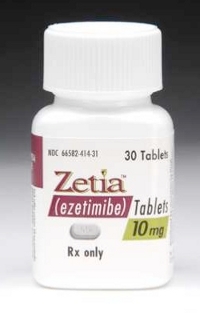
 Two blockbuster cholesterol drugs are not as effective at unclogging arteries as a cheap vitamin for patients already taking cholesterol-lowering statins, according to a new study published today in the New England Journal of Medicine and reported at the American Heart Association meeting in Orlando, Florida.
The new study, with only 208 patients, found that a controlled-release version of the B vitamin niacin, made by Abbott Laboratories (which funded the study), reduced artery plaque significantly better after 14 months than ezetimibe, the active ingredient in Zetia and a combination cholesterol drug Vytorin, both highly profitable pharmaceuticals made by Merck & Co. The trial originally enrolled 363 people but was called off several months early, in July, when investigators concluded there was a clear difference between the two drugs, although they didn’t release any results at the time.
This is not the first time that Zetia and Vytorin, which account for US$4.56 billion in worldwide sale, have been called into question. A study released last year by Merck showed that Zetia was no more effective a plaque reducer than statins alone. Another study found that the drugs might cause more incidences of cancer. (Washington Post)
Merck officials said the study was too small to draw any definitive conclusions. In addition, they challenged the study’s primary outcome, arguing that improved artery-wall thickness does not automatically translate into reduced rates of heart attacks, and that lowering bad cholesterol is also an important indicator of cardiac health. (NY Times)
Two accompanying NEJM editorials also caution that the study was too small and too short to start ditching the meds. “Although the study results are provocative, I am not convinced,” said Roger Blumenthal, a cardiologist at Johns Hopkins University in Baltimore, Maryland, and one of the editorial authors. “These early results offer no conclusive evidence that niacin along with a statin will actually lower the number of deaths and incidents of heart attack from coronary artery disease down the road.” (LA Times)
Investors breathed a sigh of relief as the study results were not as bad as some had feared. As of around 12PM EST, Merck shares were up 2.7%, while Abbott’s had risen 1.3%. (Reuters)