
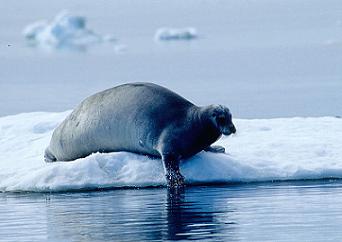
 A warmer world could mean a reduction of the colder climates. With this in mind, on 3 December the National Oceanic and Atmospheric Administration (NOAA) proposed designating two Alaskan mammals—Arctic ringed seals (Pusa hispida) and Pacific bearded seals (Erignathus barbatus)—as ‘threatened’ under the Endangered Species Act, citing diminished sea ice due to climate change in their native habitat.
“These are the first species since the polar bear to be listed because of climate change,” says Rebecca Noblin, Alaska director of the Center for Biological Diversity, a non-profit group that petitioned NOAA to place the seals on the list.
Both seal species rely on sea ice as resting platforms while hunting cod and other fish, says Rick Steiner, retired professor of marine conservation from the University of Alaska in Anchorage. They give birth and nurse their pups on the ice, with ringed seals excavating small lairs as a protection against polar bears, he adds.
The protection proposal now enters a 60-day period for public comment before NOAA must make a decision. If approved, the agency will have to create a recovery plan aimed at increasing the seal population numbers, says Noblin. Federal agencies and commercial businesses, such as gas, oil, and merchant shipping, will also have to consult with NOAA to make sure their actions don’t affect the seals, says Steiner.
While acknowledging the decision’s necessity, Steiner criticizes the government for not taking the leading role in suggesting species to place under protection and instead waiting for non-profit organizations to petition them. “If government is to be responsive, there have to be far more listings and they have to mitigate the cause of the endangerment: global carbon emissions,” he says.
In related news: on 24 November, the Obama administration set aside 187,000 square miles of Alaska as a “critical habitat” for polar bears, which have been listed as ‘threatened’ since 2008. The move may restrict future oil and gas drilling in the area.
Image: Wikimedia