
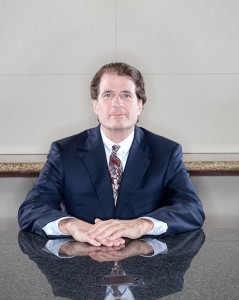
Andrew Beal, a banker and mathematics enthusiast, offered US$1 million to anyone who can find a proof for the number-theory conjecture that bears his name.
Posted on behalf of Devin Powell.
A billionaire businessman from Dallas, Texas, has sweetened the pot for a number-theory prize that has remained unclaimed for 16 years. After putting up US$5,000 in 1997 for a solution to the Beal conjecture and then upping it to $100,000 in 2000, Andrew Beal has now raised the stakes yet again to $1 million, the American Mathematical Society (AMS) announced today.
That puts the Beal Prize on equal footing with the Clay Mathematics Institute’s million-dollar Millennium Prizes, announced in 2000, which address seven extraordinarily difficult problems in mathematics. Only one of those problems has been solved to date, but the man who solved declined to accept the prize.
The Beal Conjecture is related to Fermat’s Last Theorem, which famously states that Ax + Bx = Cx has no solution if A, B and C are positive integers and x is an integer greater than 2. A lawyer named Pierre de Fermat had claimed during the seventeenth century to have a proof for this statement, but if he did, it was lost to history. It wasn’t until 1995 that mathematicians Andrew Wiles and Richard Taylor formally published the proof known today.
Beal, apparently unwilling to wait 350-plus years, started with a similar equation, Ax + By = Cz. If A, B, C, x, y and z are positive integers greater than 2, he posited, then A, B, and C must share a common factor — meaning that they must be divisible by the same number.
The statement of his conjecture is a stronger form of Wiles and Taylor’s result: the truth of the Beal Conjecture also implies that of Fermat’s Last Theorem, but not vice versa.
To claim the money, a solution must be published in a “respected” peer-reviewed journal and reviewed by an AMS committee. No one has yet done so. Some have instead tried to claim the prize by searching for counter-examples, using simpler math and aided by computer programs.