
 Cross posted from Nature Medicine’s Spoonful of Medicine blog on behalf of Michelle Pflumm.
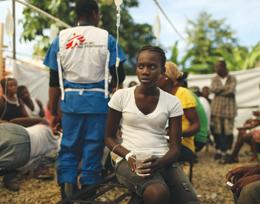
Last month, the United Nations released a long-awaited report indicating that human waste from Nepalese peacekeepers along with dirty drinking water likely triggered the spread of the cholera epidemic that has gripped Haiti since October, killing more than 5,000 people and sickening hundreds of thousands more.
The presence of foreign aid workers in the aftermath of last year’s earthquake, however, hasn’t been all bad. According to government officials, emergency response teams have helped contain the disease by providing clean water, medical treatment and sanitation systems. But with recent warnings that the numbers of people stricken with cholera could rise to 800,000 after the spring rainy season, global health experts say its time for a new approach to beat this infectious disease.
In a plan unveiled on 31 May in PLoS Neglected Tropical Diseases, a team led by Paul Farmer, chief of the division of global health equity at Brigham and Women’s Hospital in Boston and a founder of Partners in Health, called for improved case detection, more aggressive treatment strategies and cleaner public water supplies to curb the spread of the disease.
“It’s important to recognize that we are losing the battle,” study co-author Edward Ryan, director of tropical medicine at the Massachusetts General Hospital in Boston, told Nature Medicine. “There has to be the use of new tools and old tools in new ways.”
Image credit: Spencer Platt/Getty Images
Read the rest of this entry on Spoonful of Medicine.