
 Hours after a federal appeals court temporarily lifted an injuction blocking the National Institutes of Health (NIH) from funding human embryonic stem cell research, agency officials told grantees and staff that they can pick up where they left off when a US district court judge issued the injunction on 23 August.
“We are pleased with the Court’s interim ruling, which will allow this important, life-saving research to continue while we present further arguments to the Court in the weeks to come,” said NIH Director Francis Collins in a statement.
In an email to senior agency officials (see below), Sally Rockey, the NIH’s Deputy Director for Extramural Research, wrote that 24 existing grants due for annual funding this month should be fast-tracked, as should new human embryonic stem cell grants competing to get funded a first time.
“Given the delay in their issuance, hESC awards should be given priority including non-competing continuations, and new and renewing competing awards,” Rockey advised.
Aware that the funding could be blocked again as of September 20—after the appeals court has heard from both sides in the legal case over the matter—Rockey also gave NIH institute councils who were expecting to grant additional awards for 2010 after that date the go-ahead to expedite the approval of those awards.
She further wrote that grants that had been scheduled to be considered by councils in January 2011 could be advanced for consideration in October.
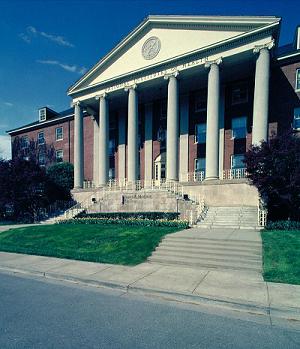
Separately, Michael Gottesman, NIH’s Deputy Director for Intramural Research, gave rearchers on the Bethesda campus the green light to recommence their experiments, using “prudence.” Unlike outside researchers who were allowed to continue on projects for which they had grant money in hand, NIH staff scientists were asked to immediately stop all work on human embryonic stem cells as of 30 August.
Gottesman sent the following message this afternoon to the scientific directors at NIH institutes:
We just learned that the U.S. Court of Appeals for the DC Circuit has issued
an order granting a temporary administrative stay of the Federal District
Court’s injunction to halt all hESC research supported by the NIH. For the
intramural program, this means that studies on approved hESCs may resume.
However, the Court of Appeals has requested quick briefing on the emergency
motion for a permanent stay and could decide as early as Sept. 20th as to
whether to grant a permanent stay or deny a stay. Therefore, to assure
appropriate stewardship of NIH resources, prudence in resuming experiments
is advised.
Eight projects on the NIH campus use human embryonic stem cells. Another unit characterizes cell lines after they are added to the NIH Stem Cell Registry.
Senator Tom Harkin, the Iowa Democrat who chairs the Senate spending subcommittee that oversees NIH, said that today’s appeals court action is “outstanding news for the millions of Americans who suffer from debilitating diseases and conditions that could be cured or treated with the help of embryonic stem cell research.”
“Obviously, this is not the end of the legal process. But it’s a positive sign that Judge Lamberth’s ruling will ultimately be overturned,” Harkin added.
In a related development, the plaintiffs in the case this afternoon filed their motion requesting that Judge Royce Lamberth issue a so-called summary judgment – that is, provide his ruling on the case without a court hearing – “vacating and declaring invalid the National Institutes of Health’s Guidelines for Human Stem Cell Research (“Guidelines”) and permanently enjoining further implementation of the Guidelines.” They argue their case in the 68-page document and 21 supporting documents included in the filing.
Below is the entirety of Rockey’s email this afternoon regarding extramural human embryonic stem cell research:
From: Rockey, Sally (NIH/OD) [E]
Sent: Thursday, September 09, 2010 4:45 PM
In light of the Order issued by the US Court of Appeals for the D.C. Circuit (No. 10-5287, Filed on September 9, 2010) which provides a temporary administrative stay until at least September 20, 2010 of the district court’s August 23, 2010 preliminary injunction (PI), NIH may proceed with awarding pending hESC grants as necessary to meet end-of-year deadlines. The Court of Appeals has requested quick briefing of the motion for a permanent stay pending appeal of the PI and could decide as early as September 20th as to whether to grant or deny a permanent stay. We will provide additional guidance at that time.
The following applies to pending hESC awards.
• The suspension of all pending grants and contracts, and applications and proposals that involve the use of hESCs, is hereby temporarily lifted.
• Given the delay in their issuance, hESC awards should be given priority including non-competing continuations, and new and renewing competing awards.
• Competing applications must have Council concurrence before issuing the award. If the application was deferred before Council review happened, ICs must secure Council concurrence before issuing the award. Expedited Electronic Council approval can be used.
• If there are any applications pending 10/2010 Council that you expect to fund this Fiscal Year and Council is meeting after 9/20, you are encouraged to use expedited Council concurrence for those as well.
• Competing applications should move forward based on the peer reviewed and approved scope.
• There is no need to issue special hESC-specific restrictions (except for standard hESC footnotes).
• Do not modify the hESC indicator in IMPACII unless the indicator is erroneous and should be corrected.
• Any other pending actions placed on hold (i.e., revised awards for CAN changes, administrative supplement actions, no-cost extension requests, prior approval actions, etc.) may also be processed at this time.
• These instructions apply to pending all hESC ARRA and non-ARRA awards.
With regard to applications placed on hold:
• Those on hold for Council Review may proceed to September/October 2010 Council. hESC applications that were submitted originally for August 2010 Council or October 2010 Council and were deferred to January 2011 Council will be reinstated for October 2010 Council. IC Staff will be responsible for re-instating those applications.
• Those on hold for SRG Review (January 2011 Council) may proceed to initial peer review. Staff may re-assign the applications from the IRG designation (CSR) or ZIC designation (IC staff) to the appropriate study section designation. If review in the originally-scheduled meeting is not feasible, an application(s) can be reviewed in another appropriate meeting, as long as the reviews are completed in time for January Council.
As everything regarding hESC continues to change from moment to moment, we will send out additional information as it is received and please continue to monitor the situation from your end.
……………………………………………………………………………………………….
A complete list of Great Beyond entries tracking this story can be found here.
For Nature’s analysis of the ruling and its impact see:
Stem-cell bill may need fixing
US stem-cell chaos felt abroad
The legalese behind the funding freeze