Small schools greener

Looks like the greenest schools are in India’s suburbs. An annual environmental audit of schools by New Delhi-based Centre for Science and Environment (CSE) says ‘the real action is not happening in the ‘elite’, big-budget, up-market schools.’ Rather, semi-urban and mid-rung institutions in small cities such as Panipat (Haryana) and Jalgaon (Maharashtra) are leading the green brigade.

CSE asks schools across India to carry out rigorous self-audit on environmental practices within their own premises. From among the 5,000 schools that participated this year, the 20 national toppers had nine from the semi-urban, mid-rung category. Six of the national-level winners are from Delhi. Interestingly, ‘elite’ schools joined the programme with great fanfare, but failed to carry it through.

Small schools showed commitment — discarded cars in favour of walking and cycling to commute, reused grey water to irrigate playfields and green areas, harvested rainwater, recycled solid wastes, turned their grounds into biodiversity hotspots planting large varieties of medicinal plants and used solar power to heat water, cook and light up streets.

The green campaign in ‘elite’ schools was found to be restricted to reating ‘eco clubs’ and campaigns with no long term commitment. The trend reflects a larger social behaviour — the lack of commitment of our big cities and urban citizens to make any path-breaking contribution towards this end. It would be a good thing to see small cities lead by example.
Leave a Reply

Your email address will not be published. Required fields are marked *

Sizzling summer of fun

A few weekends ago I made the mistake of volunteering for a fund-raising festival at the local toddler stomping ground. The afternoon hit 90 degrees, with full humidity. Determined to be a good mom, and a good citizen, I went to the park anyway.

The place was packed with kids, whining to ride a pony and eat pink cupcakes. The adults were sweaty, distracted and grumpy. But at least they did not have my job!

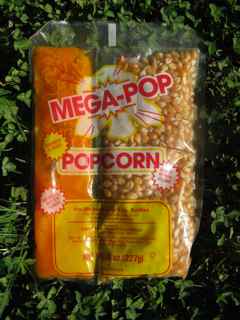
I got to feed little children this:

popcorn.jpg

I knew, in a vague way, that mass-produced popcorn wasn’t a great thing. But this was in another realm entirely: a 2:1 ratio of popcorn to coconut oil, tinged with some yellow substance. My job was to extrude the pure supersaturated ooze into the sizzling machine and joyfully dispense the popcorn product.

Apparently it’s not too different from what kids must be eating every day. According to a September 1 report from the Institute of Medicine (IOM), “Local actions to prevent childhood obesity,” 16.3 percent of children and adolescents in the US between the ages of two and 19 are obese.

People started flocking to my hot corner of the playground. Parents tactfully steered their children clear of the plastic-colored cake items and to what they might have thought, in their harried state, looked a little more like normal food. Admittedly, the popcorn people did a good job with the artificial butter, it had a certain chemotactic pull.

Holding back an urge to run home fast, I instead carefully placed an unopened plastic pod of kernels on the table. Surely, with the goop right in front of them, people would hesitate before grabbing a bag of popcorn.

No such luck. Cranky parents yanked at the cheerful striped bags, shoving quarters in my hand. Grubby 8 year olds came back for seconds. It was like some sort of food hell. When a pregnant woman came up my frozen smile cracked:

“You might not want to eat that,” I said, imagining what Yellow #6 Lake (E110) did to embryonic digits. She was unfazed by my meddling, “Oh! It’s not for me! It’s for my son!”

My only conclusion from the experience is that kids will eat whatever is in front of them and that harried parents will do little to stop it. Parents are a poor filter against the proliferation of junk food targeted to children (my favorite is this baby-bottle-shaped candy, marketed by teeny bopper band the Jonas Brothers, in a wildly popular YouTube video).

If the IOM had its way I’d be prosecuted. One of their recommendations: “Implement local ordinances to restrict mobile vending of calorie-dense, nutrient-poor foods near schools and public playgrounds.”

During my hours pouring grease and yellow stuff into a machine, and inserting it into the veins of my neighbors’ children, only one child paused. He looked at the package, turned it over gingerly, and walked away.

I had poisoned many, and saved one. I went home with my two-year old, face flecked with neon frosting, to contemplate my crime.

baby bottle.jpg

Leave a Reply

Your email address will not be published. Required fields are marked *

Leave a Reply

Your email address will not be published. Required fields are marked *

Leave a Reply

Your email address will not be published. Required fields are marked *

G8 Hokkaido Summit: Tale of the unexpected

<img alt=“A1256_D3_02_DSC_0295_ps.jpg” src=“https://blogs.nature.com/climatefeedback/A1256_D3_02_DSC_0295_ps.jpg” width=“320” height=“242” align="right"hspace=“10px”/ ></>

Toyako, Japan-

Tomorrow, delegates are expected to finally get down to the real discussions here at the G8 Summit in Hokkaido, with climate change scheduled as the topic of a working lunch. Experts here are musing over the various ways in which leaders could move forward on the issue.

Kim Carstensen, Director of the Global Climate Initiative for conservation organisation WWF International, said that they hope that constructive proposals being put forward by developing nations, such as India,will spur concrete engagement from rich nations. Specifically WWF’s position statement echoes recent calls from scientists for at least 80% reductions on 1990 emissions levels by 2050, though in reality Carstensen says he’s be happy if they agreed to at least 50% cuts by mid century.

Also monitoring the talks here is Philip Clapp, Deputy Managing Director at the Pew Environment Group, a non-profit organization in Washington DC. According to Clapp, a new proposal put forward by developing nations, however, is being considered by negotiators. The proposal, expected to be issued as a formal statement here tomorrow afternoon, could be the key to resolving the issue of how to bring developing nations on board a deal with emissions targets while ensuring rich nations take the lead.

In the proposed deal, developing nations including China would be willing to slash emissions by 50% of 1990 levels by 2050 if unindustrialized nations are willing to agree to a clear specific emissions reduction target by 2020. And given that they haven’t said what the 2020 target would be, the idea would likely be acceptable to many of the delegations here – with one exception; the US.

“It would have to be some sort of package”, says Clapp, who remains optimistic that an agreement could be reached. It will be a “difficult agreement”, he says, and is “entirely depends on what President Bush is willing to give. If the President wanted to enumerate he could have an historic agreement. If not, then this is the end of the road for him on climate change”.

But as Clapp acknowledges “Presidents do some unexpected things when faced with the end of their terms”.

Olive Heffernan

Image: US President George Bush and Japanese Prime Minister Yasuo Fukuda meet today at the G8 Summit in Hokkaido

Leave a Reply

Your email address will not be published. Required fields are marked *