
 Ruth Francis, Nature’s Head of Press, is reviewing all the entries shortlisted for the Royal Society’s science book prize. She’ll be reading one per week and posting her thoughts on The Great Beyond every Friday between now and the prize ceremony on 21 October.
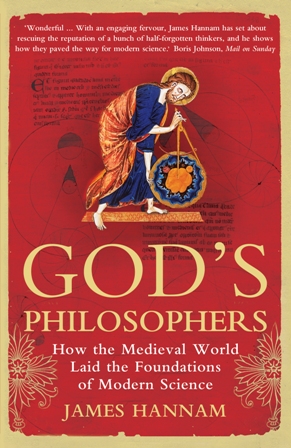
Far from their reputation as ‘dark’, the Middle Ages were a period of huge technological and cultural advance. So argues James Hannam in his vivid depiction of the 11th to 17th centuries.
God’s Philosophers condenses six hundred years of history and brings to life the key players who pushed forward philosophy and reason.
Along with debunking the ‘Dark Ages’ myth, one of Hannam’s key arguments is that the church was not as anti-science as is now commonly understood. Many of the book’s cast of characters were church figures, including the famous philosopher Thomas Aquinas who was so devout he eschewed all honours the church tried to give him and remained a humble friar throughout his life. His most famous work Summa Theologiae is still considered a classic.
Aquinas was made a saint, but others were punished by the church. One heretical thinker, Amaury of Bene, was not only forced to recant his beliefs but three years after his death was dug up and burned along with some of his unrelenting followers.
Rich with such stories, this book describes often short, dramatic lives while reminding us just how far society travelled in Europe between the time of the Norman conquest of England and the trial of Galileo.
In his conclusion Hannam suggests: “It would be wrong to romanticise the period and we should be very grateful that we do not have to live in it. But the hard life that people had to bear only makes their progress in science and many other fields all the more impressive. We should not write them off as superstitious primitives.”
This period has been poorly documented, and I think this makes Hannam’s account all the more extraordinary. It is engaging, informative and I heartily recommend it.
Ruth’s Reviews: We need to talk about Kelvin
Ruth’s Reviews: Life Ascending
Ruth’s Reviews: Everyday Practice of Science