Year-closing eclipse

The year will close with another total lunar eclipse, though not as dark as the the mid-year eclipse of June 15, 2011. This one, to occur on the night of 10 December 2011, will have the advantage of a clear winter night.

Stargazers in India will have close to five hours to feast on the celestial event. And no, you don’t want to miss this one — the next total lunar eclipse is six years away in August 2017.

The Moon will be in the penumbral shadow of the Earth at about 5:00 p.m. Indian time, says Arvind Paranjpye of the Inter-University Centre for Astronomy and Astrophysics in Pune. For the next half hour or so, there wouldn’t be much action. Then we can see a gradual change in the brightness on the lunar disk. By 6:16 p.m. the Moon will be in the umbra of the Earth’s shadow. The dark shadow of the Earth will slowly cover the lunar disk. This phenomenon will be quite noticeable to the naked eyes, he says.

In the next 75 minutes, the Moon will be totally engulfed by the shadow of the Earth. The colour of the lunar disk will become many hues of red from crimson to brick red during this time.

The time of the maximum eclipse is 20:27:16 when the Moon will be very dark. The sky assume the likeness of a new moon night. One can see lots of faint stars. By 10:00 p.m. the shadow play will be over and a bright full moon will illuminate the Earth.

India has had six eclipses — four solar and two lunar — this year.

Lets say adieu to the year with this final cosmic event. Happy skygazing!
Raining awards

It’s raining international awards for Indian scientists this season.

nindia.2010.184-i2.jpg

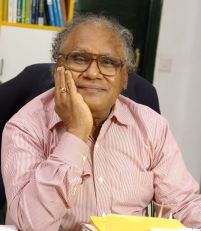
C. N. R. Rao, Linus Pauling research professor and honorary president of the Jawaharlal Nehru Center for Advanced Scientific Research in Bangalore has been conferred the 2011 Ernesto Illy Trieste Science Prize. Adding to his rich repertoire of achievements, Rao got the prize designed to give international recognition and visibility to eminent scientists in the developing world. The USD100,000 cash award is instituted by coffee maker illycaffè and is supported by the Ernesto Illy Foundation. This year’s award was given in the field of materials science.

satheesh.jpg

S.K. Satheesh of the Indian Institute of Science’s Centre for Atmospheric and Oceanic Sciences in Bangalore, shared the 2011 TWAS Prize for earth sciences with WU Fuyuan of the Institute of Geology and Geophysics (IGG) of the Chinese Academy of Sciences (CAS) in Beijing, China. Satheesh’s work on the impact of atmospheric aerosols on the radiation balance of the Earth-atmosphere system and climate have been recognised with this the award.

padmanabhan.jpg

Thanu Padmanabhan of the Inter-University Centre for Astronomy and Astrophysics at Pune Universityis has also recieved the 2011 TWAS Prize in physics. He is recognized for developing a thermodynamical perspective in which gravity arises as an emergent phenomenon and for contributing significantly to the understanding of dark energy. The TWAS Prize carries a cash award of USD15,000. The winners will lecture about their research at TWAS’s 23rd General Meeting in 2012, where they will also receive a medal and the prize money.

Nice beginning to the awards season for Indian scientists!