
Earlier this week the British Beekeepers’ Association reported that nearly a fifth of the UK’s honey bees died last winter. They found that 19.2% of the honey bee population was lost nationally in the 2008/2009 winter period with the highest losses reported in the north of England at 32.1%. These results are alarming given that a 7-10% death rate is usually considered acceptable.
With bees contributing £200 million annually to the agricultural industry such losses could drastically affect the survival of Britain’s plants and crops – bees are involved in the production of a third of the food we eat.
But there is some good news. The BBKA has seen a 25% increase in membership and a host of celebrities are keeping bees, including Scarlett Johansson and Ronnie Corbett.
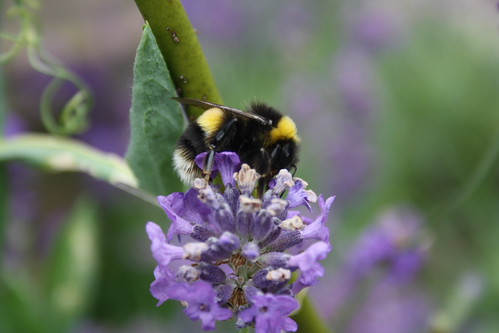
However, aspiring apiarists are not confined to just rural locations. Bee keeping is becoming an urban hobby too. An introductory bee-keeping course in London saw 1,000 applications for just 60 places and there’s a host of London bee-keeping organisations available for people to join.
London honey is also rumoured to taste better than that produced in rural England. In country locations the honey is often entirely from oil seed rape which is found in abundance in rural areas. However, in London there is often a larger selection of flowers and trees, such as lime trees, sweet chestnut, horse chestnut and sycamore. London plants are also far less likely to have been sprayed with pesticides and other chemicals further improving the taste of London honey. In fact in 2003, London honey was awarded first prize in the open international category at the National Honey Show.
So how can bees be kept in London? Many apiarists rely on roof-terraces (such as these photographs from East London) as well as small gardens and a new plastic bee hive, known as the beehaus, has recently been developed by Omlet, the firm which developed the urban chicken coop. Surprisingly, little space is needed to keep bees since the insects are capable of finding pollen within a 3mile radius and are able to reach a height of around 5 metres above the ground.
If you’re interested in getting involved in bee-keeping in London your first point of call should be The London Beekeepers Association who can provide the necessary information and courses to start your low-maintenance rural hobby.