
In a victory for supporters of human embryonic stem cell (hESC) research, a US district judge ruled today that government funding of the research is legal, despite an existing law that prohibits US funding of research in which an embryo is destroyed.
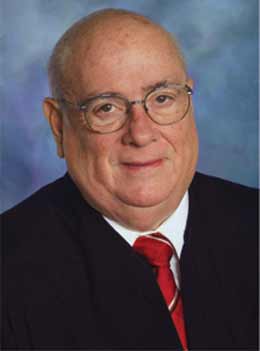
The 38-page summary judgment by Royce Lamberth (right), the chief judge of the US District Court for the District of Columbia, may not be the final word in the case of Sherley et al. v. Sebelius, the lawsuit that ground US stem cell research to a halt for 17 days last August and September. But it puts the plaintiffs, adult stem cell researchers James Sherley and Theresa Deisher, on a challenging course should they choose to appeal today’s decision to the US Court of Appeals for the District of Columbia Circuit or, ultimately, the Supreme Court.
Their lawyers said in this statement today that they “are weighing all of their options for appeal.”
Lamberth is the same judge who issued a preliminary injunction 11 months ago that temporarily suspended US funding for the research on the grounds that it was “unambiguously” prohibited by existing law. He noted in today’s opinion that an intervening decision in April from the Court of Appeals for the District of Columbia Circuit “constrains this Court” and obliges him to find that the law, the Dickey-Wicker amendment, is ambiguous enough to allow for National Institutes of Health (NIH) funding for hESC research.
The amendment prohibits government funding for “research in which a human embryo or embryos are destroyed.” The appeals court said in April that, given the ambiguity of the word “research” in that text, the NIH was “reasonable” in concluding that it could fund research using cell lines derived from embryos (which are destroyed in the process) as long as it does not fund the derivation itself.
Today, Lamberth wrote: “While it may be true that by following the Court of Appeals’ conclusion as to the ambiguity of “research,” this Court has become a grudging partner in a bout of “linguistic jujitsu”, such is life for a [lower] court.”
He added that, in briefs filed with him and with the appeals court since last August, the plaintiffs failed to present any convincing new arguments. “The only thing that has changed since this Court first considered the question of whether “research” in the statute is ambiguous is that the [appeals court] has made it abundantly clear that the term is ambiguous as a matter of law.”
Lamberth also pointedly dispensed with another argument made by the plaintiffs, that the NIH violated the Administrative Procedures Act (APA) in the spring and summer of 2009, as it drafted guidelines to implement President Barack Obama’s March 2009 executive order loosening constraints on government funding for the research. In those guidelines, it was up to NIH to specify exactly how that would be achieved, and to collect public comments on the guidelines. The plaintiffs had alleged that, by ignoring tens of thousands of public comments opposing any government funding of the research, NIH violated the APA.
Today, Lamberth wrote that: “the NIH wasn’t obligated to respond to [public] comments on the topic of whether to fund human embryonic stem cell research…..The NIH rightly disregarded comments that provided no assistance regarding the task at hand: to create guidelines for funding embryonic stem cell research that would ensure that funded projects are ethically responsible and scientifically worthy.”
Supporters of the research were both jubilant and cautious. “Given the quality of the briefs, this is certainly what we expected and hoped for, and it’s the right ruling,” said Amy Comstock Rick, a lawyer who is chief executive officer of the Parkinson’s Action Network in Washington, DC.
“This is a great victory for patients and the researchers who are trying to help them,” added Tony Mazzaschi, the senior director of scientific affairs at the Association of American Medical Colleges in Washington, DC. “[But] obviously, it’s likely that the plaintiffs will appeal this decision.”
George Daley, a stem cell scientist at Children’s Hospital, Boston, said: “While I am relieved that this case was decided in favor of the NIH policy on stem cell research, I remain concerned that the opponents will press this issue further, perhaps to the Supreme Court.”
Francis Collins, the NIH director, said in a statement: "“We are pleased with today’s ruling. Responsible stem cell research has the potential to develop new treatments and ultimately save lives. This ruling will help ensure this groundbreaking research can continue to move forward.”
Plaintiffs’ attorney Stephen Aden of the Washington, D.C.-based Alliance Defense Fund, portrayed Lamberth as having his “hands tied” by the court of appeals’ April decision.
“Americans should not be forced to pay for experiments that destroy human life, have produced no real-world treatments, and violate federal law,” Aden said in a statement. “The law is clear, and we intend to review all of our options for appeal of this decision.”
For all of Nature’s coverage of the stem cell injunction, see our special collection.