
Every Wednesday, our ‘Away from home’ blog series features one Indian postdoc working in a foreign lab recounting his/her experience of working there, the triumphs and challenges, the cultural differences, what they miss about India, as well as some top tips for postdocs headed abroad. You can join in the online conversation using the #postdochat hashtag.
Vijay Singh, a postdoc at Stanford University, USA tells us today about his fascinating switch from chemistry to biology. After a doctoral degree from the Central Drug Research Institute (CDRI) Lucknow, India, he found himself making a seamless transition from nucleic acid chemistry to protein biochemistry and multispectral cellular imaging. Vijay tells us why Stanford is a place where ideas get wings.

Vijay Singh at the Stanford University campus
What got me into science?
I can’t exactly say but I was always curious about things around me. That might be the reason I chose a career in science.
From chemistry to biology
I completed a doctoral degree in synthetic organic chemistry from the Central Drug Research Institute (CDRI) Lucknow, India. Then I moved to Germany, where I worked in the area of nucleic acid chemistry and investigated quadruplex conformation of human telomere in cellular conditions. While working on this project I realized that research in biological sciences was more interesting and fascinating.
I decided to switch my research area from chemistry to biology and came to Stanford University. The state of art infrastructure and highly competitive and supporting environment brought me here. Besides this, it was always my dream to work in a top ranked university. Now I work as a postdoctoral fellow in the chemistry department at Stanford and my area of research is protein biochemistry and multispectral cellular imaging.
My fluorescent moment
We have recently developed a unique class of fluorescent dyes which are excellent for multicolour tracking of dynamics and molecular interaction of cellular components in real time. Additionally, I have also developed fluorescent sensors for detecting toxic metal ions in contaminated water.
A place for ideas
The best thing about Stanford is if you have brilliant ideas or questions, and you want to work hard, it will provide you all possible resources and opportunities to do almost anything. People here are very enthusiastic about everything they do and they share their experiences and research materials with other fellows. The work culture is great, you can apply your own ideas and you are free to perform your research the way you want. Stanford promotes commercialisation of research/technology to transfer science from lab to the society.
No hiccups
Since I came here directly from Germany I did not face much difficulty in fitting in. The only hardship I faced in the beginning was while commuting because public transportation is not very convenient in this part of USA.
Miss freindships and festivals
I don’t know whether this is a good thing or bad, but people here are highly professional. Though I like professionalism but not upto this extent. Therefore, finding a good friend is very difficult. I also miss family, friends, relatives and most importantly Indian festivals.
Ensure good lodging and travel
My suggestions to the Indian students who are coming to USA are:
1) Bring enough money with you because you have to pay at least a couple of month’s rent as security deposit. Apartments are very expensive, especially in California. US-bound researchers can get an idea about apartments from the craiglist website ( https://sfbay.craigslist.org/hhh/).
2) Learn driving before coming here and bring your Indian driving licence with you. Based on your Indian driving licence you can get a temporary driving licence from the US department of motor vehicles.
3) Try to buy a car as early as possible. That will help in commuting.
Want to share knowledge
I want to go back to India someday and want to share my experiences and knowledge with Indian students.
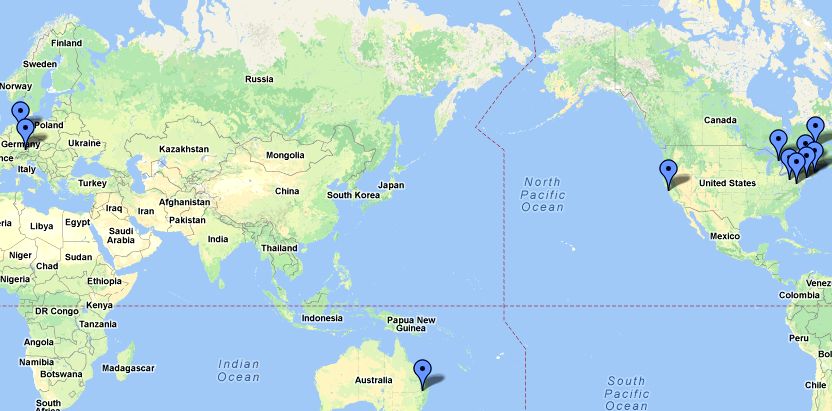
Vijay Singh is our first postdoc from the West Coast of the US. Stay tuned as we add more Indian postdocs from around the world every Wednesday to the interactive Away from home map pictured below. Please feel free to suggest names of postdocs from unusual places we haven’t covered yet.
Diabetes has been one of the most severe diseases amongst people of different ages. The initial stages can be dealt with but the later stages make a person very week and dependent on insulin. Thanks for sharing this wonderful info with us.
Thanks for sharing these. When I was a postdoc I also wanted all this information, especially when you go to a new country. Always comes handy in the beginning.