
 The sky-high costs of research and development are often cited by the pharmaceutical industry to justify the steep prices charged for prescription medicines. But the widely touted sticker price of bringing a new drug to market might be radically inflated, new research shows.
In a study published in February, two health policy experts argue that companies spend around $60 million on average to discover and test a new biologic or small-molecule drug—a far cry from the $1.3 billion estimate normally bandied about by the drug industry. If confirmed, the markedly lower price of drug development could undermine ‘big pharma’s’ claims that generous tax breaks and high drug prices are needed to spur medical innovation.
“Economists over the last 35 years have found more and more ways to make the costs as high as possible, and that’s been the chief lobbying tool for the industry,” says study coauthor Donald Light, a health policy researcher at the University of Medicine and Dentistry of New Jersey in Stratford.
The often-cited $1.3 billion figure traces its roots back to a 2003 report from a team led by Joe DiMasi, a health economist at Tufts University Center for Drug Development in Boston. In that study, DiMasi and his colleagues asked 24 drugmakers to submit their cost outlays to research and develop new medicines. The researchers considered 68 drugs from ten companies and found that the average out-of-pocket expense was around $400 million. Factoring in the cost of research into failed drugs and the monetary hit incurred by not investing that money on the stock market during the time needed for preclinical research, trials and regulatory review, the authors concluded that $800 million was typically needed to bring a drug to market (J. Health Econ. 22, 151–185, 2003). Adjusting for inflation, in 2006 the Washington, DC–based Pharmaceutical Research and Manufacturers of America (PhRMA) then bumped the number up to $1.3 billion.
According to Light, however, this figure is a gross overestimate for the drug industry as a whole. Together with economist Rebecca Warburton of the University of Victoria in British Columbia, he came up with a number around 20 times less than the prevailing $1.3 billion estimate. Notably, in their analysis the duo considered all new drugs approved by federal regulators—including licensed drugs and reformulations—rather than just the more expensive ones discovered in house (BioSocieties 5, 180–198, 2011).
Independent validation of the new cost estimate is still needed, notes Kevin Outterson, a drug pricing analyst at Boston University. But if it is proven correct, and drug development is as inexpensive as the new calculations suggest, then drugmakers have a lot of explaining to do. “If Light is right, then the industry should be producing more drugs,” Outterson points out. Last year, US federal regulators approved only 21 new drugs, despite the industry reportedly spending more than $60 billion on research and development.
DiMasi, for his part, stands by his original findings, describing Light’s methodologies as “invalid.” He argues that his approach considers the total cost of drug development—from initial discovery to full formulation—and he points to independent validation from others: last year, for example, economists at the US Federal Trade Commission similarly pegged the cost of drug development at around $1 billion (Health Econ. 19, 130–141, 2010).
PhRMA declined to comment for this story.
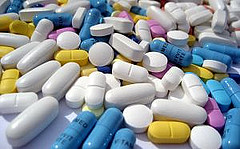
Image: Ramberg Media, Flickr
Readers should appreciate that the estimate of pharmaceutical R&D costs consists of the unknown and highly variable cost of R (discovery), plus the net, median cost of D(evelopment) of $59 million. It is based on the data from companies submitted to their principal policy research center at Tufts University, and on several other facts reported by DiMasi, Grabowski, and Hansen. In short, our much lower estimate is made by using their data but correcting for some of the inflationary factors they used to make the cost of R&D per new drug appear to be $1.3 billion.
Whatever the estimate, it is never related to revenues or how quickly R&D costs are recovered, except in a set of highly artificial econometric papers which conclude only 3 out of every 10 new drugs ever recovers its R&D costs.
All costs of failure are included, though we note that the authors’ estimate is probably high. The estimates of R&D costs for licensed-in new chemical entities and for non-NCEs come from the authors’ ratios. We explain, step by step, how we corrected for several of the inflationary factors used by the authors to get up to the $1.3 billion cost estimate now circulated by the pharmaceutical industry as it seeks longer market protections from normal price competition.
The real problem is not the cost of R&D but the strong incentives for companies to focus on developing many new drugs judged little better than existing ones which they can market to physicians and patients. These drugs, however, have harmful side effects with little offsetting advantages. Prescription drugs are now the 4th leading cause of death. The epidemic of 46 million harmful side effects is described in THE RISKS OF PRESCRIPTION DRUGS (Columbia Univ Press 2010).