
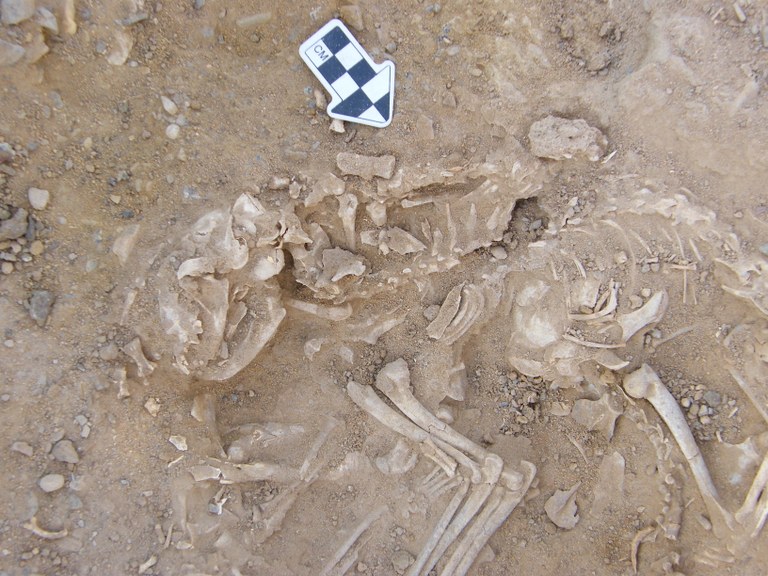
One of the cat skeletons excavated from a site in Egypt.{credit}© Hierakonpolis Expedition{/credit}
A new study reveals some fascinating insights into the origin story of the cat, arguably the internet’s most favorite creature and a cherished companion to countless humans.
Paleogeneticist Claudio Ottoni and his peers from KU Leuven and the Royal Belgian Institute of Natural Sciences have been collecting DNA from several archaeological sites in an attempt to track down the origins and trace the ancient journeys of the domestic cat.
The scientists unearthed over 200 cat skeletons from sites in Africa, Europe and the Near East and scrutinized DNA from feline skin, hair, bones and teeth that date back to between 100 and 9,000 years ago.
The result? A revelation about how cats dispersed in the ancient world. According to the study, the domestic cat we know today originated in ancient Egypt and the Near East.
Back then, the cats had stripes, not spots – the latter cropped up during the Middle Ages, but not before. The Middle Ages is also when the cat’s coat color had started to become variant.
The ancient felines were domesticated some 10,000 years ago, mostly by farmers wishing to chase away rodents from their fields. When the farmers moved, the cats moved with them. They also spread across the old world through trade, hopping on ships to protect stocks from vermin, and jumping from one port to the next, eventually covering long distances, and traveling far and wide. Now, the domestic cat is present on all continents except Antarctica.
The cats can all be traced back to one Felis silvestris, also known as the African wildcat, originally a feral, territorial and solitary hunter. Both the Near Eastern and Egyptian populations of Felis silvestris, according to the study, contributed to the gene pool of the domestic cat at different historical times.