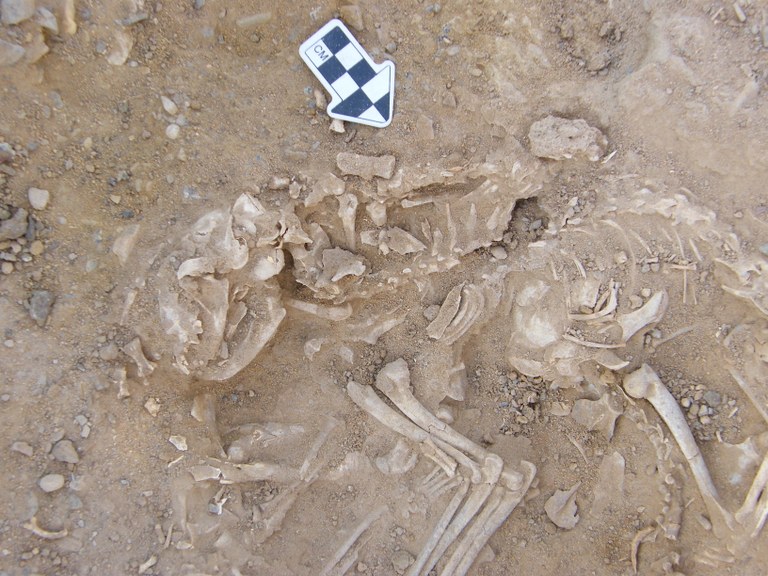
The origins of cats

One of the cat skeletons excavated from a site in Egypt.

One of the cat skeletons excavated from a site in Egypt.{credit}© Hierakonpolis Expedition{/credit}

A new study reveals some fascinating insights into the origin story of the cat, arguably the internet’s most favorite creature and a cherished companion to countless humans.

Paleogeneticist Claudio Ottoni and his peers from KU Leuven and the Royal Belgian Institute of Natural Sciences have been collecting DNA from several archaeological sites in an attempt to track down the origins and trace the ancient journeys of the domestic cat.

The scientists unearthed over 200 cat skeletons from sites in Africa, Europe and the Near East and scrutinized DNA from feline skin, hair, bones and teeth that date back to between 100 and 9,000 years ago.

The result? A revelation about how cats dispersed in the ancient world. According to the study, the domestic cat we know today originated in ancient Egypt and the Near East.

Back then, the cats had stripes, not spots – the latter cropped up during the Middle Ages, but not before. The Middle Ages is also when the cat’s coat color had started to become variant.

The ancient felines were domesticated some 10,000 years ago, mostly by farmers wishing to chase away rodents from their fields. When the farmers moved, the cats moved with them. They also spread across the old world through trade, hopping on ships to protect stocks from vermin, and jumping from one port to the next, eventually covering long distances, and traveling far and wide. Now, the domestic cat is present on all continents except Antarctica.

The cats can all be traced back to one Felis silvestris, also known as the African wildcat, originally a feral, territorial and solitary hunter. Both the Near Eastern and Egyptian populations of Felis silvestris, according to the study, contributed to the gene pool of the domestic cat at different historical times.


2016: Editor’s choice

Extracts from selected news and feature articles published this year.

Astrophysics

An international team of scientists, including from New York University Abu Dhabi (NYUAD), managed to directly observe structural components of one slowly rotating star, thanks to asteroseismology. This new technique, 10,000 times more precise than its predecessor, reveals a star’s flatter, rounder contours and different rotational speeds. It allows scientists to ‘see’ the nature of the stellar interior with very high precision.

Marine science

In an unprecedented study on non-model organisms in captivity, scientists from Saudi Arabia, Australia and Norway were able to create large sequence datasets on how reef fish and their offspring react to the phenomenon of decreasing pH levels, called ocean acidification, brought on by climate change. Acidification happens due the uptake of atmospheric carbon dioxide. “The amount of sequencing data we generated is unparalleled for a non-model organism,” says Timothy Ravasi, the senior author of the paper. Scientists discovered that the offspring of some reef fish can tolerate acidification by adjusting their circadian rhythm to night time function throughout the day.

Ecology and evolution

An international consortium of researchers analysed the coding portions of genes, or “exomes”, belonging to 1,794 nationals of Greater Middle Eastern (GME) countries, a region spanning from Morocco in the west to Pakistan in the east. “As expected for a region so rich in history and at the crossroads of many civilizations, the Middle East ‘variome’ [the set of genetic variations in a given population] suggests mixing with other populations, although the percentage varies greatly depending on which subpopulation you look at,” says geneticist Fowzan Alkuraya from Saudi Arabia’s King Faisal Specialist Hospital and Research Center. Northwest African genes were found in people across northern Africa, most likely representing the Berber genetic background. Arabian Peninsular genes were observed in nearly all GME peoples studied, possibly the result of the Arab conquests of the seventh century. Similarly, Persian expansion in the fifth century into the Turkish peninsula, the Syrian Desert region and parts of northeast Africa probably accounts for the Persian and Pakistan genetic signal present in the peoples of those regions. The peoples of the Syrian Desert and Turkish peninsular regions show the highest levels of mixing with European populations.

Geology

Shallow, dense magma reservoirs may be responsible for the most hazardous type of volcano on Earth, according to a new study. Ivan Koulakov and colleagues, including scientists from Saudi Arabia, present a fresh seismic model, based on studying magma paths beneath the Toba volcano in Indonesia, which last erupted some 74,000 years ago. The model explains why the magma system under Toba causes large, devastating eruptions, and how such large volumes of magma are generated.

Archaeology

“We always say it can’t get any worse, and then it does — and that’s the hardest part,” says Allison Cuneo, project manager for the American Schools of Oriental Research’s Cultural Heritage Initiative (CHI), which documents the loss of Syrian heritage. CHI reported 851 incidents of damage to cultural heritage between September 2015 and August 2016, mostly concentrated in areas of northern Syria controlled by forces opposed to President Bashar al-Assad. With such extensive damage, there “is so much data on destruction to report, it’s like holding the ocean back with a broom,” says Michael Danti, the academic director of CHI.

Environment

A world atlas of artificial night sky brightness, published earlier this year in Science Advances, captured the extent to which we are smothered in light. It reveals Kuwait, Qatar, United Arab Emirates and Saudi Arabia as the most light-polluted places to live on the planet, topped only by Singapore. More than half of people living in Israel and Libya live through extremely bright nights, and the widest connected twilight zone in the world is along the Nile Delta in Egypt. No more can people in Kuwait and Qatar see the glowing band of the Milky Way from their homes. For more than 97 per cent of people in the United Arab Emirates, Israel, and Egypt, this is also true. “The night sky is the beginning of our civilization. It leads to all religions, philosophy, science, literature and the arts. The cultural significance of a sky full of stars is huge. The new generations have lost this source of inspiration,” says Fabio Falchi, of the Italian Light Pollution Science and Technology Institute’s Fabio Falchi, who led the study.

Astronomy

The Qatar Exoplanet Survey (QES) has discovered three new “exoplanets” outside our solar system. The planets, named Qatar-3b, Qatar-4b and Qatar-5b, are hot Jupiters: they are similar in size to Jupiter (11 times the size of Earth) and orbit very closely to their respective suns. They are located some 1400 to 1800 light years away from Earth and can be seen in the same part of the sky as the Andromeda Constellation, best observed in autumn in the northern hemisphere.

Decoding bat talk

The Egyptian fruit bat is a highly social mammal roosting in crowded colonies.

The Egyptian fruit bat is a highly social mammal roosting in crowded colonies.{credit}Michal Samuni-Blank{/credit}

Bats are extremely social mammals, that live in colonies of thousands and sometimes millions, and they talk or “sing” to each other to communicate. Now, a group of scientists have studied vocalizations by Egyptian fruit bats and they found out that the calls contain information such as the identity of the caller as well as the context of the call.

The study published in Scientific Reports carries an analysis of almost 15,000 vocalizations of 22 Egyptian fruit bats, recorded over 75 days. The analysis paints a picture of some of the social interactions that the animals engage in.

“Bats spend many, up to 40 years, together with the same individuals around them and they live in the dark. All of these suggest that a sophisticated vocal communication might evolve in such animals and this is what we set to examine,” says Yossi Yovel of Tel Aviv University, corresponding author of the study.

The vocalizations the scientists recorded represented the full vocal repertoire the bats used during the experiment. And it turns out the cacophony of sounds that a person hears entering a bat cave is far from just noise, according to Yovel.

Although the calls sounds alike and were previously categorized under one category that boils down to “bat shouting”, the scientists showed it’s not the case.

“The vocalizations we looked at in this study were all categorized in the past as agonistic calls, that is, aggressive vocalizations emitted during fighting,” says Yovel. “We now show that there is information in this chaos. We demonstrate that a third individual listening to a fight between two bats can tell who is shouting, what is the context of shouting, for example fighting over food or over position or over mating, and even to some extent who is being shouted at.”

That said, the communication of the Egyptian bats described therein doesn’t include clearly distinct words, as human communication for instance does, or what linguists often call semantics. “We do not find a ‘word’ that mean ‘hello’ or ‘move’ or ‘eat’ in bat communication. We just show that the spectral content of the vocalizations or their frequencies contain information about the context.”

The scientists elaborates: “You could imagine this as something like this: when a bat shouts at another bat for taking its food, the vocalizations will always be higher in pitch than when they are fighting over a position in the cave. This is what this cannot be defined as language and yet, because we will probably never fully understand animal communication it is important to understand its complexity.”

The next step, which the scientists have already taken, is into learning whether or not these vocalizations are learned by the bats or whether they are born with their vocal repertoire. “Learning new vocalizations is a main factor characterizing human language and it is debated how much other mammals depend on learning to develop their communication,” comments Yovel.

Bringing cinema magic to science

ISFAD17-ProgramStill-1

{credit}Imagine Science Film Festival{/credit}

In its third edition in Abu Dhabi, Imagine Science Film Festival, running from 2 to 4 March, 2017, is dedicated to light, reflecting on it through a multitude of films spanning documentary, fiction and experimental genres.

The film festival, which contemplates the intersection between science and art and which takes place at the Arts Centre in New York University Abu Dhabi (NYUAD), chooses a theme for its productions every year, and creates a conversation around it through talks, workshops, performances, and screenings of both local and international films.

In the past, the festival has collaborated with Zayed University, Petroleum Institute, Masdar in addition to NYUAD’s Arts Center in a keen effort to encourage local filmmakers to particpate in programming and filmmaking.

This year, the festival explores another fundemntal of life: light, and “how in multiple ways it has shaped how we see and understand the world providing us new insights, methods and understandings of how investigate our surroundings, and their scientific and artistic subtexts,” according to NYUAD professor and festival founder Alexis Gambis.

The festival is still accepting film submissions until December 5, 2016; works that, in the words of the festival founders, give viewers “a deep look into the natural, technological, and theoretical worlds, from the smallest molecule to the furthest reaches of space and everything in between”.

Many of the artists showcased are usually in attendance at the festival, which, in 2017, is expected to include panels on how we process and make sense of an overflow of media and information, a career talk with scientists, artists and filmmakers and how they navigate worlds that incorporate scientific and artistic dimensions, in addition to a retrospective of Larissa Sansour’s Space Triology: Nation Estate, Space Exodus, and In the Future They Ate from the Finest Porcelain (the latter featured in the second edition of Imagine Science).

Imagine Science will also exibit a revisited animation about Quantum mechanisms where data visualizations (inspired by CERN) will be projected on sand from Liwa desert.

According to Gambis, in 2017, the featured films will move from traditional documentaries to regional science fictions, experimental studies, and narratives inspired by essential science issues.

“We’re seeking new science films of all styles and subjects. Possible themes include technological shifts, neurological and cognitive functions from vision processing to memory and even dream, and the ecological and sociological studies of the Gulf and MENA landscape,” he elaborates.

To know more about the festival, how it began and what its creators have in store for it, listen to the latest edition of Nature Middle East‘s monthly podcast where this editor talks to Gambis about his brainchild and how it rose to prominence over the years.

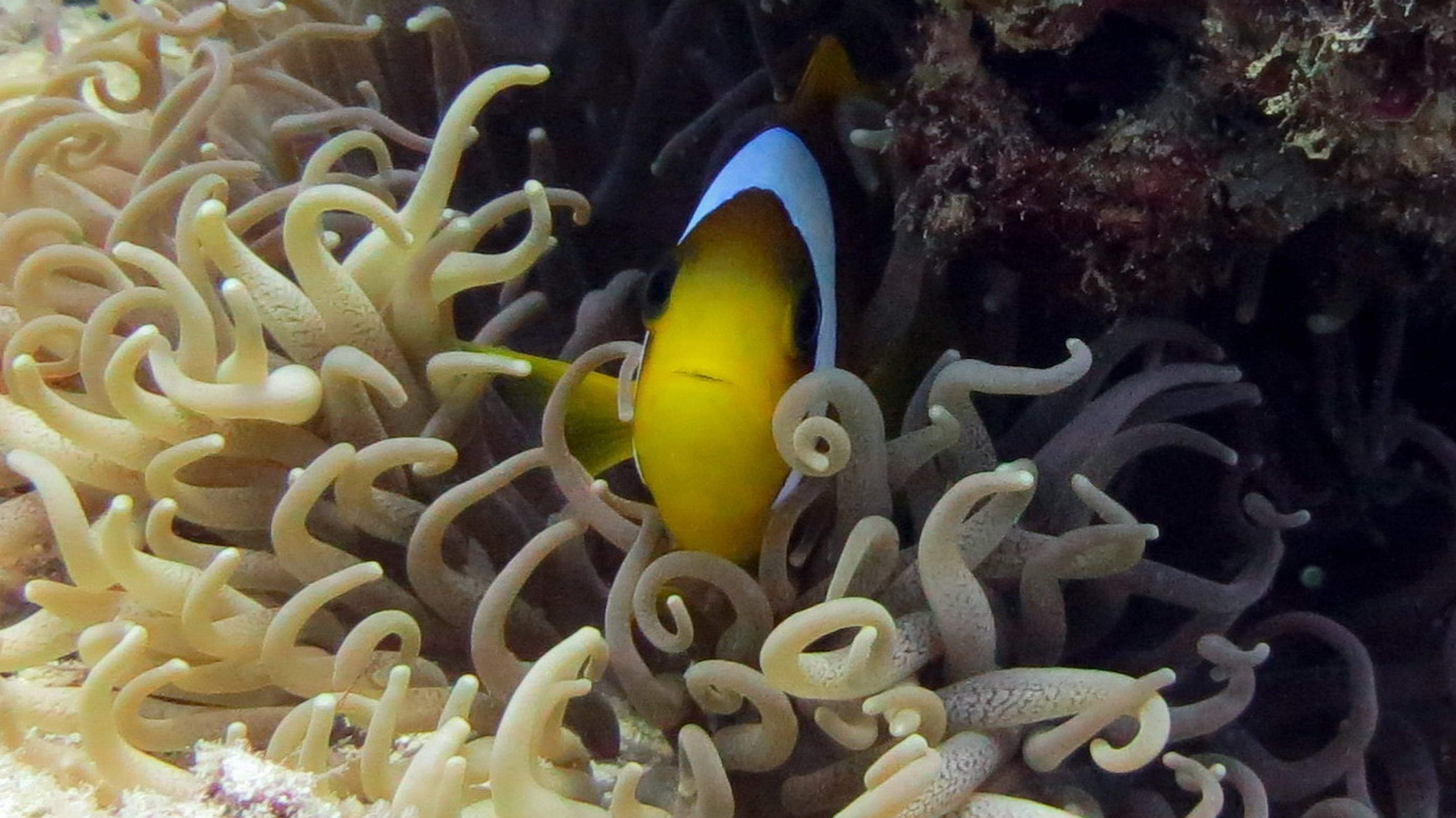
How changing sex helps “Nemo” survive and adapt

Laura Casas, House of Wisdom guest blogger and King Abdullah University of Science & Technology (KAUST) marine biologist, talks to us about the orange salt water fish and how it used a marvelous evolutionary mechanism to conquer the seas.

Clownfish_AlFahal

{credit}Fran Saborido-Rey{/credit}

How did a small, very bright, colorful fish that’s a poor swimmer become extensively distributed in tropical waters from the Indian to the western Pacific Oceans, including the Great Barrier Reef and the Red Sea?

Two processes have potentially played a role in the successful evolutionary adaptation of clownfishes: a mutual relationship with anemones – flower-like marine animals and relatives to corals – which provides shelter and protection in exchange for nourishment, plus their capacity to change sex when their partner dies, preventing the need for dangerous travel across the reef.

While the different aspects of this mutual relationship have been unveiled in dozens of studies, very little has been known about the mechanisms that orchestrate sex change in fishes.

Our new study at KAUST provides insights into the genetic mechanism governing social sex change in fish, using the Red Sea endemic species of clownfish, Amphiprion bicinctus, as a model in its natural habitat.

Clownfishes are monogamous, living in social assemblages as pairs or social groups consisting of a dominant female, always the largest in size, surrounded by her male partner and a variable number of immature juveniles of smaller size. They display a strong social hierarchy based on size; these hierarchies function as queues for breeding, so when a dominant female of a social group dies, all subordinates seize the opportunity to ascend in rank.

This way, the male is always poised to become female and rapidly changes sex to assume the vacated position, while the biggest juvenile rapidly matures into a male ensuring the ability to produce new generations without abandoning the anemone.

ClownfishExperiments_Credit_ThamerSHabis (3)

{credit}Thamer S. Habis{/credit}

The confinement of an animal, however, is known to alter its normal behaviour but traditionally sex change has been studied using aquarium experiments. In our study, we localized sixteen families living on the exposed side of Al-Fahal reef, in the Central Red Sea and removed all the females to trigger the sex change process.

One sex-changing individual was sampled every five days for 1.5 months to cover the full time course of the sex change process and their transcriptional responses were assessed using RNA sequencing.

Our results show a response in the male´s brain which starts two weeks after the female’s disappearance and lasts for two additional weeks.

During this period, there is a marked down-regulation in deferentially expressed genes of sex-changing individuals, compared to mature males and females. We identify a large number of candidate genes, both well-known and novel potentially playing a role in sex change.

Based on our results, we propose a picture of the genetic mechanisms that take place during the sex shift: the aromatase gene known as cyp19a1 plays a central role by modulating the balance between estrogen and androgen signaling. Aromatase is involved in the production of estrogen.

The genes sox6 and foxp4 may play a role in regulating the expression of aromatase and/or other genes involved in steroid production at the brain level. The genes cyp19a1 and foxl2 play a pivotal role in the activation of the female pathway driving the sex gland transformation from testis to ovary during sex change, while Sox8, Dmrt1 and Amh are important for testis maintenance.

The results have not only provided important insight into the main genetic mechanism governing sex change and sex gland restructuring in hermaphrodite flowers or animals, but also detailed information on specific genes involved during every step of the process. Our study is the first genome-wide study in a social sex-changing species in its natural habitat and the dataset generated is a valuable genomic resource for a species with virtually no genetic information available in public datasets.

Future work would ideally explore whether the genetic processes underlying sex change in hermaphrodites is evolutionary conserved. We need to deepen our knowledge of the unexplored genetic mechanisms underlying such sex change.

As well, only a deep understanding of the genetic processes governing reproduction in hermaphrodites will allow us to anticipate how reproductive success might be affected by the temperature rise in coming years as a consequence of the climate change and give us a chance to conserve and protect the sea’s biodiversity.

Historic genetic ‘picture’ of Arabian camel revealed

Camels blogpost

{credit}PhotoDisc/Getty Images{/credit}

An analysis of the ancient and modern DNA of the single-humped ‘Arabian’ camel or dromedary reveals how human societies have influenced the animal’s genetic diversity.

Long-distance and back-and-forth movements in ancient camel caravan routes are one way this has happened.

The camels have long been a source of food and transport for desert communities, and a vital resource in trade and agriculture in hot, arid regions. That’s why the scientists responsible for this study believe that in the context of climate change and advancing desert landscapes, scrutinizing dromedary’s biology, reproduction and adaptation to hostile terrain has acquired a new level of importance.

“The dromedary has out-performed all other domesticated mammals, including the donkey, in arid environments and continues to provide essential commodities to millions of people living in marginal agro-ecological areas,” says lead author Faisal Almathen from the Department of Veterinary Health and Animal Husbandry at King Faisal University.

“There is very little defined population structure in modern dromedaries. We believe this is a consequence of cross-continental back and forth movements along historic trading routes,” he adds. “Our results point to extensive gene flow which affects all regions except East Africa where dromedary populations have remained relatively isolated.”

For this study, the researchers collected and analysed genetic information from a sample of 1,083 living dromedaries from 21 countries across the world. The team also examined ancient DNA sequences from bone samples from early-domesticated dromedaries from 400-1870 AD and wild ones from 5,000-1,000 BC.

The international team of scientists was led by geneticists from The University of Nottingham, the University of Veterinary Medicine in Vienna and King Faisal University in Saudi Arabia. The research itself is published in the Proceedings of the National Academy of Sciences of USA.

The ancient refuge of southern Arabia

It seems that southern Arabia has provided shelter to people, 20,000 years earlier, following an ice age that made much of the Earth uninhabitable, according to new evidence provided by University of Huddersfield researchers this week.

Once the Ice Age receded, the Red Sea plains of what we know now as southern Arabia in addition to the far side of the Bab el-Mandeb strait and the Horn of Africa were among glacial sanctuaries where people were able to cluster and survive.

This has been hypothesized before by scientists but never confirmed until this study.

It defies what was commonly thought of Arabia; that humans did not settle there in large numbers until the development of agriculture, roughly 10,000 years earlier.

Analyzing mitochondrial DNA for a lineage that’s common in Arabia and the horn of Africa, the researchers discovered that the lineage, named R0a, is more ancient than what was thought.

The ancient gene flow infiltrated the horn, well before the spread of agriculture into that region. It seeped into the rest of the Middle East (present day Iran, Pakistan and India) and other territories, like Europe through the movement of people and the development of trading networks.

The study mapping human dispersals, post the Ice Age, and deep ancestry was published in Scientific Reports. The DNA analyzed was extracted from living people, since to date this couldn’t be recovered from prehistoric remains. So the scientists had to rely on modern diversity to draw conclusions about the history of the DNA lineage.