Diagnosing diseases using a simple blood test

Researchers from Qatar have developed biomarkers for plasma volume and red cell mass, which are used to monitor numerous disease states, such as heart failure, kidney disease or sepsis. The markers provide an applicable method to measure absolute plasma or red cell volumes, via a simple blood test, in a clinical set-up.

In their initial investigation, the scientists observed 33 healthy males over a period of six months. They collected monthly blood samples and concurrently estimated vascular volume.

They then analysed the individual variations of 45 common chemistry markers, such as total protein, cholesterol, calcium, transferrin, and albumin. These observed variations were then matched to the observed plasma volume variability. “We identified two panels of biomarkers, composed of 8 and 15 chemistry variables, which explained approximately 67% of plasma volume variance,” says corresponding author Louisa M. Lobigs, from Aspetar Sports Medicine Hospital, Doha, Qatar.

The scientist explains that, currently, vascular volumes are estimated in hospitals by calculating the change in concentration-based blood markers, such as hemoglobin concentration or hematocrit. This common approach produces relative values and assumes uniform mixing of the blood constituent (often not the case in the critically ill); it is also dependent on factors like the patient’s hydration levels, posture, their fluid intake. Alternatively, absolute vascular volumes can be estimated with radio-active tracers, but it’s a cumbersome and time-consuming approach, according to Lobigs.

The new method measures absolute volumes, and requires only a simple blood test.

“This is extremely promising news for improved volume management in the clinic,” she says. Validation of the model’s stability will be required before it can be streamlined among hospital patients.

How changing sex helps “Nemo” survive and adapt

Laura Casas, House of Wisdom guest blogger and King Abdullah University of Science & Technology (KAUST) marine biologist, talks to us about the orange salt water fish and how it used a marvelous evolutionary mechanism to conquer the seas.

Clownfish_AlFahal

{credit}Fran Saborido-Rey{/credit}

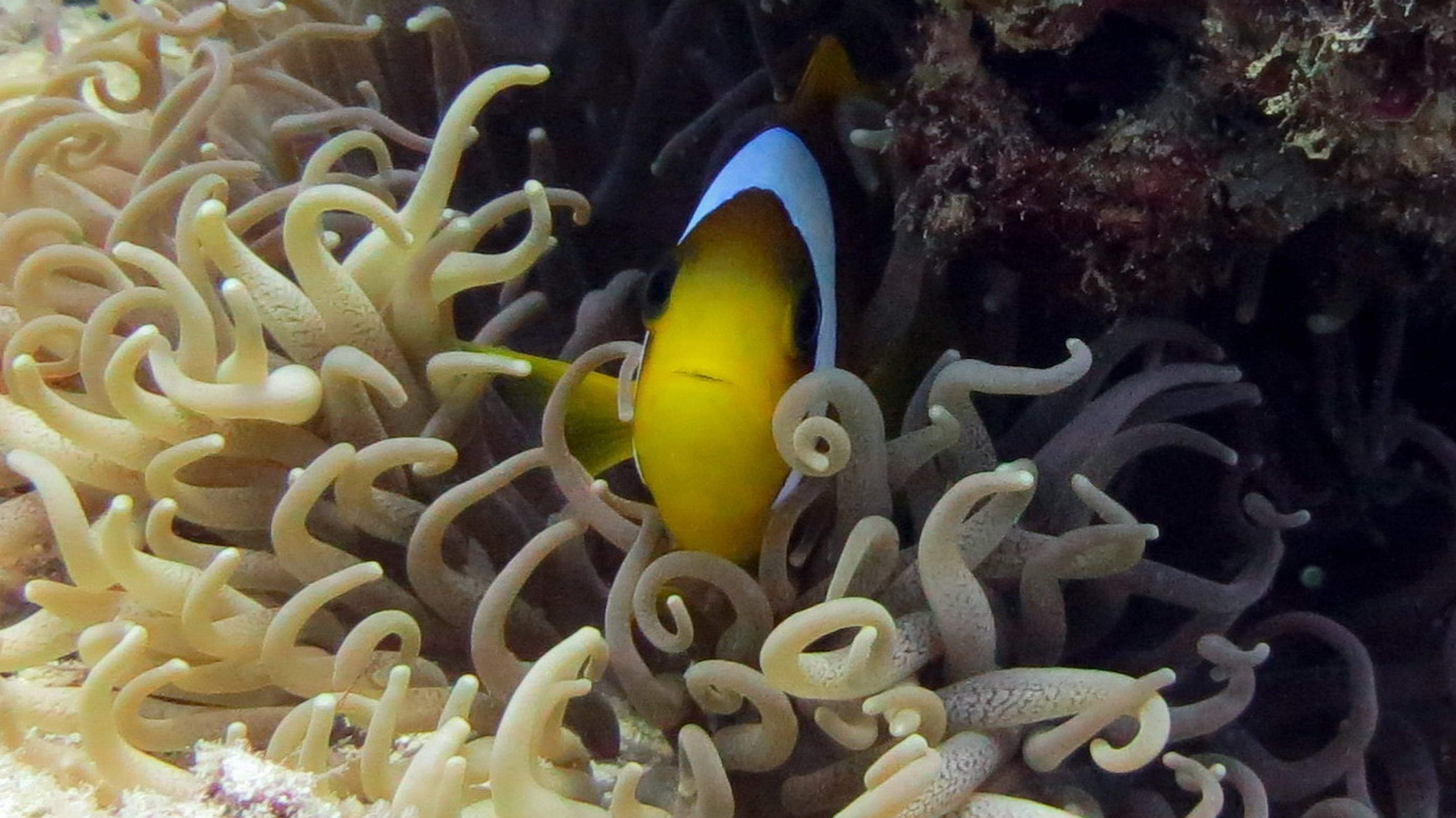
How did a small, very bright, colorful fish that’s a poor swimmer become extensively distributed in tropical waters from the Indian to the western Pacific Oceans, including the Great Barrier Reef and the Red Sea?

Two processes have potentially played a role in the successful evolutionary adaptation of clownfishes: a mutual relationship with anemones – flower-like marine animals and relatives to corals – which provides shelter and protection in exchange for nourishment, plus their capacity to change sex when their partner dies, preventing the need for dangerous travel across the reef.

While the different aspects of this mutual relationship have been unveiled in dozens of studies, very little has been known about the mechanisms that orchestrate sex change in fishes.

Our new study at KAUST provides insights into the genetic mechanism governing social sex change in fish, using the Red Sea endemic species of clownfish, Amphiprion bicinctus, as a model in its natural habitat.

Clownfishes are monogamous, living in social assemblages as pairs or social groups consisting of a dominant female, always the largest in size, surrounded by her male partner and a variable number of immature juveniles of smaller size. They display a strong social hierarchy based on size; these hierarchies function as queues for breeding, so when a dominant female of a social group dies, all subordinates seize the opportunity to ascend in rank.

This way, the male is always poised to become female and rapidly changes sex to assume the vacated position, while the biggest juvenile rapidly matures into a male ensuring the ability to produce new generations without abandoning the anemone.
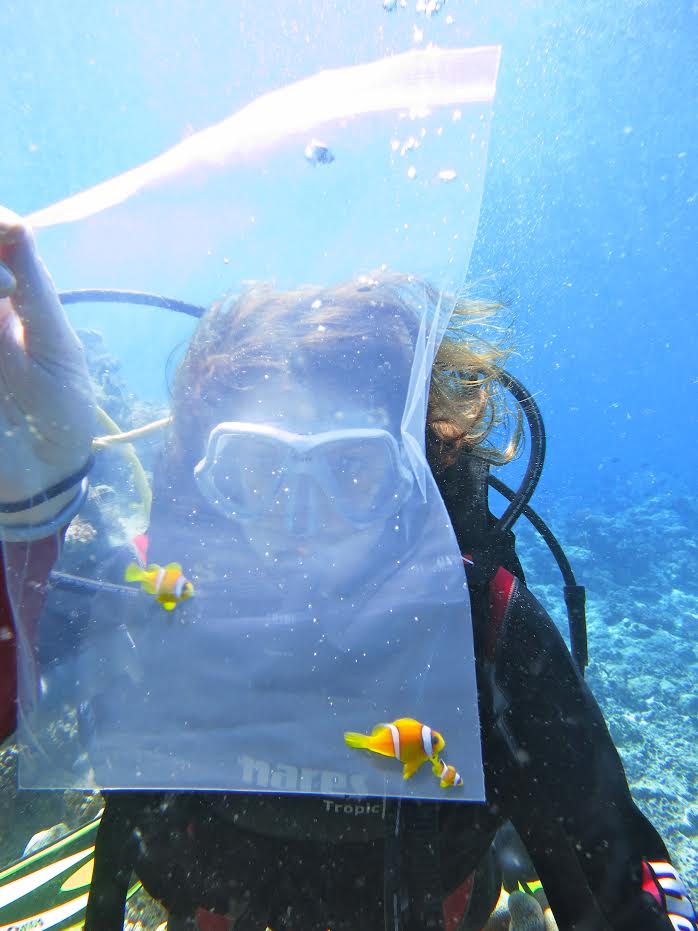
ClownfishExperiments_Credit_ThamerSHabis (3)

{credit}Thamer S. Habis{/credit}

The confinement of an animal, however, is known to alter its normal behaviour but traditionally sex change has been studied using aquarium experiments. In our study, we localized sixteen families living on the exposed side of Al-Fahal reef, in the Central Red Sea and removed all the females to trigger the sex change process.

One sex-changing individual was sampled every five days for 1.5 months to cover the full time course of the sex change process and their transcriptional responses were assessed using RNA sequencing.

Our results show a response in the male´s brain which starts two weeks after the female’s disappearance and lasts for two additional weeks.

During this period, there is a marked down-regulation in deferentially expressed genes of sex-changing individuals, compared to mature males and females. We identify a large number of candidate genes, both well-known and novel potentially playing a role in sex change.

Based on our results, we propose a picture of the genetic mechanisms that take place during the sex shift: the aromatase gene known as cyp19a1 plays a central role by modulating the balance between estrogen and androgen signaling. Aromatase is involved in the production of estrogen.

The genes sox6 and foxp4 may play a role in regulating the expression of aromatase and/or other genes involved in steroid production at the brain level. The genes cyp19a1 and foxl2 play a pivotal role in the activation of the female pathway driving the sex gland transformation from testis to ovary during sex change, while Sox8, Dmrt1 and Amh are important for testis maintenance.

The results have not only provided important insight into the main genetic mechanism governing sex change and sex gland restructuring in hermaphrodite flowers or animals, but also detailed information on specific genes involved during every step of the process. Our study is the first genome-wide study in a social sex-changing species in its natural habitat and the dataset generated is a valuable genomic resource for a species with virtually no genetic information available in public datasets.

Future work would ideally explore whether the genetic processes underlying sex change in hermaphrodites is evolutionary conserved. We need to deepen our knowledge of the unexplored genetic mechanisms underlying such sex change.

As well, only a deep understanding of the genetic processes governing reproduction in hermaphrodites will allow us to anticipate how reproductive success might be affected by the temperature rise in coming years as a consequence of the climate change and give us a chance to conserve and protect the sea’s biodiversity.

Solar barques: Ritual vessels into the afterworld or real, functioning boats?

Khufu solar boat museum, King Cheops ship in the museum at the base of the Great Pyramid, Giza, Cairo, Egypt.

Khufu solar boat museum, King Cheops ship in the museum at the base of the Great Pyramid, Giza, Cairo, Egypt.{credit}Jack Sullivan / Alamy Stock Photo{/credit}

The exact functions of the Khufu “solar vessels” unearthed south of the Pyramids of Giza, have come into question again after a new revelation by archaeologists showed that ancient Egyptians used metal in their boats.

The most famous of the vessels, and the largest, is the Khufu vessel, preserved in the Giza solar boat museum. The typically human-propelled vessels were discovered in several boat pits around the pyramids.

Now, a fresh dig near the Great Pyramid of Giza unearthed circular and U-shaped metal hooks in a piece of wood–eight metres in length, 40 centimetres­ wide–that belonged to the frame of a boat discovered during the same year as Khufu’s vessel.

In all the boats discovered from this era, “we have not found the use of metals in their frames like in this boat,” Mohamed Mostafa Abdel-Megeed, an antiquities ministry official and expert in boat-making in ancient Egypt, tells AFP.

In ancient Egypt, funerary boats were used to ferry the dead, most commonly in funeral processions of kings. The wooden boats were believed to be “magically charged” after having been used. And it’s the reason why ancient Egypt would dispose of them after use, since they were “dangerous to the living,” explains Pearce Paul Creasman, associate professor of Dendrochronology and Egyptian Archaeology and director of the Egyptian Expedition at the University of Arizona.

In the Old and Middle Kingdoms, funerary boats were buried near royal chambers at the pyramid complexes. Now, as far as many archaeologists believe, “solar boats were a concept, not necessarily a construction,” says the scientist, “to be used by the god Ra in his travels across the sky, perpetuating neheh, the cyclical nature of the world.” In iconography, solar barques feature a specific set of accouterments associated with them, setting them apart from other types of boats.

Creasman chats to Nature Middle East about the possible nature of the boats, in light of of the new discovery, the first of its kind.

NME: How significant is this discovery?

PPC: The discovery of metal used in association with the ships of ancient Egypt is significant as it fills a logical hole in our understanding. The Egyptians had metal and were capable seafarers, why wouldn’t they use the metals to improve the durability or function of their boats? Until the recent discoveries, including the Khufu II vessel as well as ship remains from the Red Sea harbor of Wadi Gawasis (dating to the Middle Kingdom), we lacked archaeological evidence to demonstrate such a link. While the finds from the Khufu II work have not yet been scientifically published, from the press photos it appears that the metal was used precisely where we might expect: at stress points, such as oarlocks. The totality of the importance of these finds will have to wait for the scientific publications and analyses, but this is a great start.

NME: Was not this seen before in ancient Egyptian boats?

PPC: In only one instance prior to the Khufu II finds has metal been found in association with the structure and function of ancient Egyptian boats, that is, the disarticulated boat parts from Wadi Gawasis. The Khufu II finds are, by far, the oldest and appear to be used in the locomotive aspects of the boat. While we have seen metal in association with sails and their ropes, we have not previously seen it in the human-propelled aspects of boats.

NME: Why is this an important piece of information for archaeologists?

PPC: In the more than 3,000 years of intensive maritime history for the pharaonic Egyptians, there must have been tens-of-thousands of boats created to traverse the waters. Yet, today we have comparatively little archaeological remains to understand the the ships that facilitated this maritime life: whole or part of only some 30 boats. So, any new clue in unraveling the mysteries of the world’s first great maritime society is extremely valuable.

Check Nature Middle East’s sister magazine For Science for the full coverage in Arabic.