German Science Centre Cairo launches

On 13 November, the German Foreign Minister Guido Westerwelle opened the German Science Centre Cairo (DWZ), which should bring German educational and scientific institutions closer to the Egyptian market and researchers.

“What the Egyptian and the German partners build here together will enable Egypt to better meet its major challenges and to build its future itself,” said Michael Bock, the German Ambassador to Egypt, in a press statement.

The centre is located within the German Academic Exchange Service (DAAD), located in Zamalek in Cairo, and will focus on natural, environmental and social sciences. There are eight other partners in the project besides the DAAD: the Freie Universität Berlin, the Technische Universität Berlin, the Technische Universität München, the Philipps Universität Marburg, Fraunhofer Gesellschaft, the Alexander von Humboldt Foundation, the Orient-Institut Beirut and the Central Agency for Schools Abroad.

President of DAAD in Cairo, Margret Wintermantel, called the centre “a lighthouse for science,” praising the role it will play in the country’s transformation following the 25 January popular uprising which removed long-time president Hosni Mubarak.

The DWZ is meant to be a two-way project, encouraging cooperation between Germany and the Arab world rather than transfer from Germany to Egypt. it encourags exchange of ideas, such as the successful Cairo Climate Talks, which the DAAD has been hosting for a while now, which brings together Arab and German experts to discuss issues related to climate change.

There will also be other, current issues interdisciplinary events organized on topics ranging from mathematics and phsycis to health and waste management to climate change and renewable energy. Interested researchers can also get information from the centre on funding opportunities from Germany and the latest on the research landscape there.

Negotiating Climate Change in Doha

COP18 opening

{credit}© sallie_shatz/Flickr{/credit}

For nearly 18 years now, governments have been meeting annually to attempt to sort out the pesky little problem of rising temperatures that most scientists believe may eventually destroy civilization. This year, the eighteenth Conference of the Parties (COP) of the United Nations Framework Convention for Climate Change (UNFCCC) is being held in Qatar — a tiny Middle Eastern country with the largest carbon footprint per capita.

This factoid has already raised a few eyebrows about holding the conference at Doha’s airport-like convention center — though it did not faze Abdullah bin Hamad Al-Attiyah, the COP’s president and Qatar’s Deputy Prime Minister, when he was confronted with it at a press conference yesterday. “We should not concentrate on the per capita figures,” he concluded.

Christiana Figueres, the UNFCCC’s executive secretary, noted at the same press conference that COP18 is “as important a COP as any before.” Nevertheless there is a strong sense here that this is more so a transitional climate change conference rather than a future policy setting one.

This is most notably due to the fact that the Kyoto Protocol’s first commitment period expires at the end of this year, making the focus and primary objective of this COP to help establish the transition from a first commitment phase to a second one.

Without doing so, while the Kyoto protocol will legally still be in force, it will be reduced to an empty shell that can do little to curb emissions. For one thing, it was never ratified by the US, contains no obligations for developing and emerging economy countries (hence why it remains popular with China and India), and has generally been abandoned by other governments over the years.

The second objective at this year’s COP is to make headway on reaching what’s termed a universal legal agreement on combating climate change by 2020 — an agreement that should be well worked out and agreed upon by 2015. Just how universal and effective such an agreement can be — not to mention what it would entail precisely — remains to be seen.

Lastly, finding ways to speed up financial and technical support for developing countries will be of central importance. One of the “goals” established at the Copenhagen Accord in 2009 was to raise US$100 billion each year by 2020 to help developing countries cut carbon emissions. Little progress to date has been made towards realising that objective. Translating this goal into an executable, concrete plan, is one of the things COP18 can hope to help achieve.

Family cluster of novel coronavirus cases reported in Saudi Arabia

Cross posted from Nature’s News Blog on behalf of Declan Butler.

The World Health Organization (WHO) this afternoon reported four new lab-confirmed cases of a novel coronavirus infection bringing the total number of cases identified since June to six. Two of the cases are from the same household, raising the possibility of human-to-human transmission of the virus, although it’s also possible that they both contracted it independently from an animal source in the area. Three of the new cases occurred in Saudi Arabia, including one who died, while a fourth case was reported in Qatar. The WHO gave few further details of the cases, such as their age or sex, or their current medical condition.

That the new cases have been found likely reflects increased surveillance for the virus since it’s identification as a novel virus. They follow two cases reported earlier — a 60 year old man from Saudi Arabia who fell ill, and died in June, and a 49-year-old man from Qatar who fell ill in September and has since recovered — see SARS veterans tackle coronavirus. None of the contacts of those two men are known to have contracted the virus, which suggests that the virus likely doesn’t transmit, or doesn’t transmit easily, between humans. The coronavirus, identified in September is genetically most-closely related to bat coronavirus, and bats and possibly intermediate animal hosts, are likely to be the virus’ reservoirs.

Among this new batch of cases, two of the four cases in Saudi Arabia were from the same family, living in the same household — one died and the other recovered. Moreover, two other family members showed similar symptoms, and one has died; the WHO is waiting on the results as to whether the fatal case tests positive for the coronavirus too; the recovered case tested negative. Household clusters of cases of a novel virus raise the possibility of human-to-human transmission, and so immediately catch the attention of epidemiologists, who along with clinicians and virologists, will be urgently seeking to tease out the likely source of infection, how the people contracted the virus, and whether they each caught it independently from an animal reservoir, or is their any human-to-human transmission going on.

The WHO gave no description of the symptoms, but the cases in June and September had severe pneumonia and acute renal failure. What’s also striking so far is the very high case mortality rate – so far two out of six cases, and three out of seven if the unconfirmed fatal case tests positive. Now, one can’t put a firm figure on case mortality rates until one knows the true number of deaths and cases, in particular as more asymptomatic or recovered cases may be going unnoticed — pinning that down will require more surveillance and epidemiology data, including seroprevalence surveys to tests if people not showing infection have antibodies to the virus, and so have been exposed to it. But the symtoms are serious, and the death rate in this particular cluster suggests the mortality rate could be high.

Not surprisingly, WHO is urging all countries to continue careful surveillance for severe acute respiratory infections, and warns that until more is known, it would be “prudent to consider that the virus is likely more widely distributed than just the two countries which have identified cases”. The WHO also seems to have upped the urgency of screening. It’s current case definition only calls for testing any unexplained pneunomias in places “where infection with novel coronavirus has recently been reported or where transmission could have occurred”. Today’s report says testing of such cases should be considered “even in the absence of travel or other associations with the Middle East”, adding that any clusters of serious pneumonia in health care workers “should be thoroughly investigated regardless of where in the world they occur”. For the moment, there’s no evidence that the virus so far transmits between people, but scientists and public health official will be keeping a close eye on it, and seeking to quickly understand every aspect of the virus and its ecology.

The plight of diabetes in the Middle East

This is a blog post from Hazem Zohny, Nature Middle East‘s assistant editor.

By the end of this year, diabetes will have killed 357,000 people in the Middle East in 2012 alone. For the sake of context, that’s over 280,000 more than the number of people killed each year by traffic accidents throughout the regions’ all too notorious roads, and over 100,000 more than those killed by the massively destructive 2004 tsunami in Southeast Asia.

Yet this diabetes tsunami continues to strike more devastatingly each year, killing in the Middle East nearly 80,000 people more in 2012 compared to 2011. But perhaps most tragic of all is that, according to the latest figures, over half of the people in the region with this disease don’t even know they have it. They remain obliviously undiagnosed as the unchecked disease triggers eye, kidney, and coronary heart disease, and all too often results in limb amputations.

It’s a crisis that many governments in the region have responded to by – perhaps understandably – dumping money at, collectively spending about US$5.5 billion annually to combat the spreading disease. Symposiums have been held, screening campaigns undertaken (even in the midst of shopping malls in some countries in the Gulf), and awareness campaigns such as World Diabetes Day are arguably on the rise.

But perhaps more proactively, some countries in the region – and particularly in the Gulf, where the proportion of people with diabetes are the highest in the Middle East and the world – are focusing their resources on biomedical research to better understand and tackle the disease.

For instance, Saudi Arabia’s King Abdullah International Medical Research Center’s (KAIMRC) bio-bank has undertaken an ambitious project to collect massive samples of blood, saliva, urine and tissue from volunteer patients in order to conduct large-scale studies on the interaction of genes, the environment, and lifestyle in diseases like diabetes.

In the United Arab Emirates, where diabetes rates are at 20%, the government hopes to join Europe’s bio-banking network in order to collect and share genetic and medical information on its national population that can help it better understand the genetic and environmental forces behind diabetes in the Emirates.

Meanwhile, Qatar Foundation’s Diabetes Association is setting up diabetes walkathons, mobile diabetic clinics, and regularly hosts major events like the Regional International Diabetes Conference. The new Qatar National Research Strategy focuses primarily on research into health issues concerning Qatar and the region, with a special focus on diabetes and cardiovascular disease.

The urbanized lifestyle which rapidly increased in the region has, however, increased the spread of diabetes exponentially. In Saudi Arabia, for example, this could lead to a 283% increase in diabetes by 2030. Ultimately, while the focus on science research is a noteworthy endeavour, given that these countries boast some of the world’s highest physical inactivity (as well as obesity) rates in the world, it remains clear that there is a need for radical lifestyle changes.

Qatar seeks to lead world in date palm research

{credit}Mohammed Yahia{/credit}

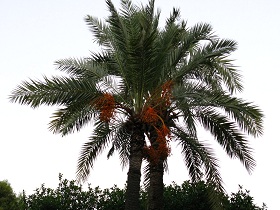
Weill Cornell Medical College in Qatar (WCMC-Q) has partnered with the Qatar Ministry of Environment’s Biotechnology Center to launch the Date Palm Research Program, which they hope will make Qatar the world’s leader in date palm research.

Four years ago, WCMC-Q researchers, led by geneticist Joel Malek mapped a draft version of the date palm genome. This helped the team to identify the gene sequences responsible for sex in the tree. This could potentially increase yield by 100% – since only the females of date palms, which are dioecious, can bear fruit. The gene families responsible for fruit quality are next on Malek’s agenda to help breeders improve the varieties of date palms.

The new programme has received seed funding of US$4.5 million from the Qatar National Research Fund over five years to set up. It will rank up basic, applied and human health research into dates and date palm. The researchers are hoping that, in the future, the progamme leads to the establishment of a Qatar Institute of Date Palm Research.

Dates, the sweet fruit of date palms, are a staple food in the Middle East. Historical evidence show date palms have been cultivated there as early as 6,000BCE.

Malek says this research is particularly interesting because no one region in the world is focusing on date palms, which are an important regional resource for the Middle East. “We have a great team of scientists assembled for this project from a broad set of backgrounds. The joining of local and international expertise will ensure that project stays focused on the needs of Qatar and the region while bringing the latest technologies to bear on challenges in date palm biotechnology.”

“What we aim at now is to translate our basic research know-how into real-world applications,” said Karsten Suhre, director of metabolics at WCMC-Q.