Identifying MERS-related changes by CT

A team of researchers in Saudi Arabia have identified certain airspace changes in patients with the Middle East respiratory syndrome coronavirus (MERS-CoV) infection,  by studying CT scans from seven hospitalized patients.

The changes “were more in the form ground-glass opacities than that of consolidation,” says lead author Amr Ajlan, a radiologist at the King Abdulaziz  University, Saudi Arabia. These changes are not distinctive to MERS-CoV infections only, but the patients also showed changes suggestive of an organizing pneumonia pattern.

The team of researchers studied patients ranging from 19 to 83 years of age, with a median age of 50 – all of whom were hospitalized and showing symptoms of the disease, such as coughing, fever and dyspnea. “These findings are useful in the context of acute viral illness in individuals living in or traveling from regions with a known MERS outbreak,” explains Ajlan.

He quickly adds, however, that CT should not be considered a screening tool for the disease, but that diagnosing and managing patients should continue to depend on the clinical and laboratory pictures instead. “We investigated only a small number of confirmed MERS patients, a fact that prevents us from reaching conclusions regarding the diagnostic performance of CT in evaluating MERS.” All the investigated patients were already hospitalized showing clear symptoms as well, which means the team has not assessed asymptomatic patients or ones with mild symptoms.

“With regards to imaging, the more available, cheap and commonly performed chest X-ray is practically more valuable in investigating MERS cases,” he adds.

The study appeared ahead of print online in the American Journal of Roentgenology.

Ramadan fasting can help protect from diabetes, bad cholesterol

New research on prediabetics reveals that periodic fasting can guard against cardiovascular diseases, eliminate “bad cholesterol” and reduce weight.

The study, whose results were presented at the 2014 American Diabetes Association Scientific Sessions in San Francisco, earlier in June, comes as the Muslim world is preparing to mark Ramadan, a holy month of ritual and fasting, where observant Muslims abstain from eating and drinking from dawn to dusk.

According to the research, after 10 to 12 hours of fasting time, the body enters into a self-protection mode and starts scavenging for other sources of energy throughout the body to sustain itself—something that on the long haul can help it combat diabetes, among other things.

After multiple episodes of fasting, going into this mode pulls LDL, otherwise known as “bad cholesterol,” from the cells of the body—it’s not clear however how it is used up, but its levels are certainly reduced.

“Though we’ve studied fasting and its health benefits for years, we didn’t know why fasting could provide the health benefits we observed.” says Benjamin Horne, director of cardio vascular and genetic epidemiology at the Intermountain Medical Center, and author of the study. “It is likely that Ramadan fasting would provide a similar level of risk reduction,” he adds.

Prior research done by Horne and his team in 2011 monitored healthy people during one day of fasting and showed that routine, water-only fasting was associated with lower glucose levels and weight loss. Other research by the team has shown that glucose and triglycerides are reduced over the long-term in association with fasting.

“When we studied the effects of fasting in apparently healthy people, cholesterol levels increased during the one-time 24-hour fast,” said Horne. “The changes that were most interesting or unexpected were all related to metabolic health and diabetes risk. Together with our prior studies, this showed that decades of routine fasting was associated with a lower risk of diabetes and coronary artery disease, this led us to think that fasting is most impactful for reducing the risk of diabetes and related metabolic problems.”

Horne launched this new study to look at the effects of fasting in prediabetics over an extended period of time. The study participants included men and women between the ages of 30 and 69 with a least three metabolic risk factors, like large waistlines (the “apple shape” where fat is concentrated in the abdomen), high triglyceride levels, low HDL cholesterol level, high blood pressure or high fasting sugar.

Prior studies have examined obese participants, and focused on weight loss that resulted from fasting, however Horne’s team’s main focus was diabetes intervention—although participants, naturally, also lost weight during this one, precisely three pounds over six weeks.

“During actual fasting days, cholesterol went up slightly in this study, as it did in our prior study of healthy people, but we did notice that over a six-week period cholesterol levels decreased by about 12 percent in addition to the weight loss,” says Horne. “It is unclear how the cholesterol is used during the fasting episodes, but this adds to the list of potential biological mechanisms that fasting affects. What it does suggest is that the health benefits of fasting can be obtained with a less intense regimen than some that are becoming popular today.”

The researches speculate that fasting uses the body’s fat cells for energy, which should help negate insulin resistance. “The fat cells themselves are a major contributor to insulin resistance, which can lead to diabetes,” Horne says. “Because fasting may help to eliminate and break down fat cells, insulin resistance may be frustrated by fasting.”

Horne explains to Nature Middle East that he doesn’t think that abstaining from water, as Muslims do during their fast, will eliminate any benefits of fasting.

“With the duration of fasting being around 16 hours during a Ramadan fast, it is plausible that the lower risk of diabetes is obtained by those engaging in Ramadan fasting,” he says.

Horne adds that they have also studied fasting effects on individuals with a higher risk of chronic diseases. However, in these studies, they have taken the approach of less frequent fasting compared to other groups being studied, but the fasting extends for a longer continuous duration, with one day per week of 24-hour water-only fasting. “With the dawn to dusk fasting of Ramadan, the total duration of the fast is around 16 hours,” he remarks, even less than what these participants endured.

The health benefits of fasting of course are not instantaneous—the episodes of fasting have to recur over a long period of time for results to show.

It is not clear yet what the optimal duration, frequency, or extended period of practice is that is needed or is optimal for the potential health benefits of fasting to be realized, Horne says.

The scientist says that they’re only just starting to examine these questions, and interventional trials will probably still take years to determine what the appropriate balance is between the safety and efficacy of fasting regimens.

“Our epidemiologic studies do suggest that the standard religious practices of fasting (such as Ramadan fasting) that have been practiced for centuries and millenia are likely sufficient for the general population to obtain beneficial effects on the risk of chronic disease when a fasting regimen is used as a lifestyle over decades (rather than as a short-term weight-loss fad),” Horn says.

“For those who still develop risk factors for chronic disease, though, it may be that a more intense regimen of fasting is needed.”

Other contributors to this study are Jeffrey L. Anderson, J. Brent Muhlestein, and Amy Butler.

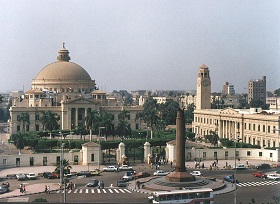
University election law scrapped in Egypt

Cairo University

Cairo University

Egyptian President Abdel-Fattah El-Sisi has introduced amendments to the university law on Tuesday to mandate that university presidents, deans and heads would be directly appointed by the president.

Prior to the 2011 revolution, all the heads of universities were appointed by the president. But after mass protests from students and faculty members following the revolution the law was changed, introducing elections amount faculty members for these  top positions. The presidential decree, issues last Tuesday, is seen by many as a reversal to pre-2011 control of universities.

Now, the minister of higher education will form a committee to suggest three names for each position, and these will then be passed on to the president to make the final selection. The appointment will be for four years and is renewable, according to the Arabic language local Al-Ahram newspaper.

The president can also dismiss the heads of universities and faculties before their four-year period is over, following the advice of the Supreme Council of Universities.

The presidential decree has angered several faculty members, who see this as a return to autocratic control of universities and their campuses.

Hany El-Husseiny, a founding member a founding member of the 9 March Movement for the Independence of Universities, told Al-Ahram Online that the decree shows that the current regime is committed to adopt a dictatorship and reject democracy, adding that the faculty members will not accept it and will not be silenced.

The 9 March Movement was created in 2005 to fight for academic independence and an end to police interference on campus, and includes several prominent researchers and professors from different disciplines and different universities.

The past year has seen a sharp increase in violence in university campuses, leading to the death and arrest of several students. Ever since the popularly-backed coup in 30 June 2013 that deposed of then President Mohamed Morsi, students that oppose the coup have held protests on campuses that were often violently dispersed by police interference.

Some faculty members have welcomed the decree, hoping it will bring stability in universities and remove supports of the Muslim Brotherhood, which was recently deemed a terrorist organization by the Egyptian government, from top leadership positions in universities.

‘End of world plague’ remains uncovered in Egypt

Two skulls, two bricks and a third century AD jug found inside the remains of the bonfire

Two skulls, two bricks and a third century AD jug found inside the remains of the bonfire{credit}© N. Cijan{/credit}

The remains of one of the most notorious epidemics to have hit the region—one so bad that it killed two Roman emperors and was labeled “the end of the world” plague—were uncovered in Luxor, archaeologists announced earlier this week.

According to Live Science, the team of scientists were working at the Funerary Complex of Harwa and Akhimenru between 1997 and 2012 in the west bank of the ancient city of Thebes (now known as Luxor) when they came across a body-disposal factory and a large bonfire with human remains. Nearby, the remains of what used to be kilns where lime—an ancient disinfectant—was produced were also found.

The site appears to be where bodies infected with the plague—whose nature remains mysterious but could very well be either smallpox or measles—were destroyed. The bodies, when they were found, were covered in thick layers of lime, and are believed to belong to plague victims.

The discovery was made by the Italian Archaeological Mission to Luxor, otherwise known as MAIL, and was made public this week.

Pottery remains found in the kilns allowed the researchers to date the grisly body-disposal operation to the third century, says Live Science, a time when a series of epidemics historically named the “Plague of Cyprian” had ravaged the Roman Empire, which Egypt was part of at the time.  

The science news hub quoted Francesco Tiradritti, director of the MAIL, as saying that the plague had occurred roughly between A.D. 250-271 and was said to have offed more than 5,000 people a day in Rome alone.

In Egypt, the bodies of victims of the epidemic were apparently burnt at a seventh century B.C. complex that was originally built for a grand steward named Hawra but after its use during the plague, it gained a bad reputation. Back then, Saint Cyprian, a bishop of Carthage, gave a graphic description of how the disease ravaged its victims, believing that the world was coming to an end.

“It killed two Emperors, Hostilian in A.D. 251 and Claudius II Gothicus in A.D. 270,” Live Science quoted Tiradritti as saying. It is “a generally held opinion that the ‘Plague of Cyprian’ seriously weakened the Roman Empire, hastening its fall.”

First ‘Falling Walls Lab’ held in Cairo

Guest post by Louise Sarant

The Middle East’s first ever ‘Falling Walls Lab,’ a fast-paced competition, attracted a reasonable crowd this week in the German Science Center Cairo (DWZ Cairo). One after the other, 13 candidates climbed on stage to present, in three minutes, their innovative idea, groundbreaking research or fresh business model in front of a jury from academia and research.

Established in 2009, two decades after the fall of the Berlin Wall, the Falling Walls is an annual conference that highlights breakthroughs in science and society.

At the beginning, the conference used to mostly host idea-makers and inventors from Germany, but starting 2013, it has been showcasing a growing number of young creative minds from across the globe.

Falling Walls 2

Members of the jury at Falling Walls Lab, Cairo.

Of the 22 international labs currently underway for the 2014 edition of the conference, the first Middle East one was held in Cairo, while the other regional lab will take place at King Abdullah University of Science and Technology (KAUST) some time in the coming months.

“The DWZ in Cairo received 70 applications, which is the most any lab has received to this point,” says Nåveed Syed from Falling Walls, who came especially for the Cairo Lab from Germany. “It shows a lot of interest for this type of format as well as an eagerness to show what they are working on.” Experts at the Cairo-based science center screened these applications and selected 13 bright minds under 35 from a various disciplines to present their innovations.

A young energetic engineer at the National Research Center, Ahmed Zakaria Hafez, sprung on stage, holding in his hand a cup filled with cold water topped by a miniature fan in motion. Filling the screen with a picture of his disabled friends sitting in wheelchairs, he told a story. “The energy contained in an electrical wheelchair only enables it to function 30 to 40 minutes. My project aspires to draw energy from three power sources:  heat created by the human energy, pressure and solar energy.”

Hafez ranked third in the competition, which results were announced after a 15 minute deliberation from the jury.

The top winner however was Hani el Khodary, a 28-year-old founder of the energy start-up ‘Biogas People’  and a composting expert. In his short exposé, entitled “Breaking the Walls of the Gas Crisis in Egypt,” he showcased his idea to partly solve two typically Egyptian problems: the insufficient energy supply and the rising amount of organic waste.

By attaching large biogas units to a chicken farm, he wants to create a closed, sustainable system in which chicken manure and organic waste would be fed to the biogas units, which would in turn provide heat for the chicks and compost for the land.

Falling Walls Cairo shortlisted candidates.

Falling Walls Lab Cairo shortlisted candidates.

“One chicken farm consumes diesel and 40 subsidized gas cylinders a day for the sole purpose of providing sufficient heat for the growing chicks,” says el Khodary, who is currently experimenting this system on a smaller scale on a chicken farm by the Ismailia road. “We are realizing that chicken manure has high ammonia levels that need to be neutralized by specific bacteria before this system can function.”

If he wins the Berlin competition, he says he will try and pursue a course on biogas in a German university.

Mohamed Salheen, Program Director of Ain Shams University’s Integrated Urbanism and Sustainable Design and a member of the jury seemed overall content with the performance of this first batch of applicants. He believes that the contenders were good at managing their time and presenting their projects, but that some of the ideas should have been more elaborated. He adds, however, “there is stamina, a momentum in Egypt right now: people want a change and a chance.”