Does language limit scientific expression?

Scientific papers

{credit}Fancy/Punchstock/Getty Images{/credit}

This is a guest blogpost by Aya Nader.

More evidence is confirming that the choice of language used in scientific literature can influence access to it, and how visible its authors are – including in the Arab world.

Language can limit the transfer of knowledge for one, concludes a study that looked into the prevalence of scientific literature written in local languages. The study, published in PLOS Biology, confirmed some sentiments that many researchers across the Arab world already have.

Over one third of conservation-related scientific documents are written in non-English languages, and a large proportion of local researchers interviewed in the study identified languages as a barrier to accessing knowledge. “I was expecting to see these results, as that was the primary motivation to conduct this work,” says Tatsuya Amano, corresponding author.

Amano says that gaps in information are formed when local scientists either do not get exposed or turn away from publishing in their original language. What surprised the researcher was that over one third of non-English literature reviewed in the study provided neither the title nor the abstract in English, so it’s essentially “invisible to international communities”.

The study might explain why Arab scientists are not as visible, in terms of science research, to international peers, he opines.

“Perhaps only 25% of the global population has some understanding of English and we cannot limit science to just a fraction of the world,” says Steve Griffiths, vice president for research at Masdar Institute of Science and Technology. According to him, having scientific knowledge being somewhat confined to the English language can present a problem when collecting scientific data or disseminating information.

“While language is probably not the driving force behind the lag in scientific visibility of Arab scientists, it certainly can hinder progress,” Griffiths says. Different factors could be causing the lag, he says, which include that the region has only been recently making strides in establishing top-tier research universities and institutes. As well, regional equivalents of supportive bodies like the US National Science Foundation or the US National Institutes of Health are absent.

One of the barriers could be the language itself. A few argue that Arabic, because of the way it’s structured, cannot be adopted as a language of science. “I personally am fluent in English and have studied Arabic for some time and clearly see the translation challenges for technical information,” says Griffiths.

On one hand, English is the universal language of science. On the other, having science available in the local language can enlighten field practitioners and local policy makers.

“The availability of scientific information in relevant non-English languages is a key to the use of science in policy making in countries where English is not widely spoken,” comments Amano. It’s one factor contributing to the divide between science and public policy. “I imagine that extremely busy policy makers would prefer just using easily-accessible information in their own languages, instead of trying to understand English-written papers.”

Poor English skills are observed in many MENA countries and particularly within the government sectors, which limits the uptake of scientific information, Griffiths highlights.

In order to compile non-English scientific knowledge effectively and enhance publishing of new and existing knowledge that is otherwise available only in English, Griffiths suggests launching regional initiatives modeled after the MIT Global System for Sustainable Development. The networking hub, specialized in sustainable development, was created to give researchers that speak English, Arabic, Chinese and Spanish seamless access to its science content.

Another approach is to encourage individual researchers to translate their work, or provide lay summaries of their work in different languages.

There’s also hope in artificial intelligence (AI) for natural language processing (NLP). “Major industry players like Google, Microsoft, Amazon and IBM are deeply engaged in AI NLP for commercial reasons, and over time the outcomes will benefit the scientific community,” Griffiths suggests.
The Finnish trio navigating the natural world through 3D art

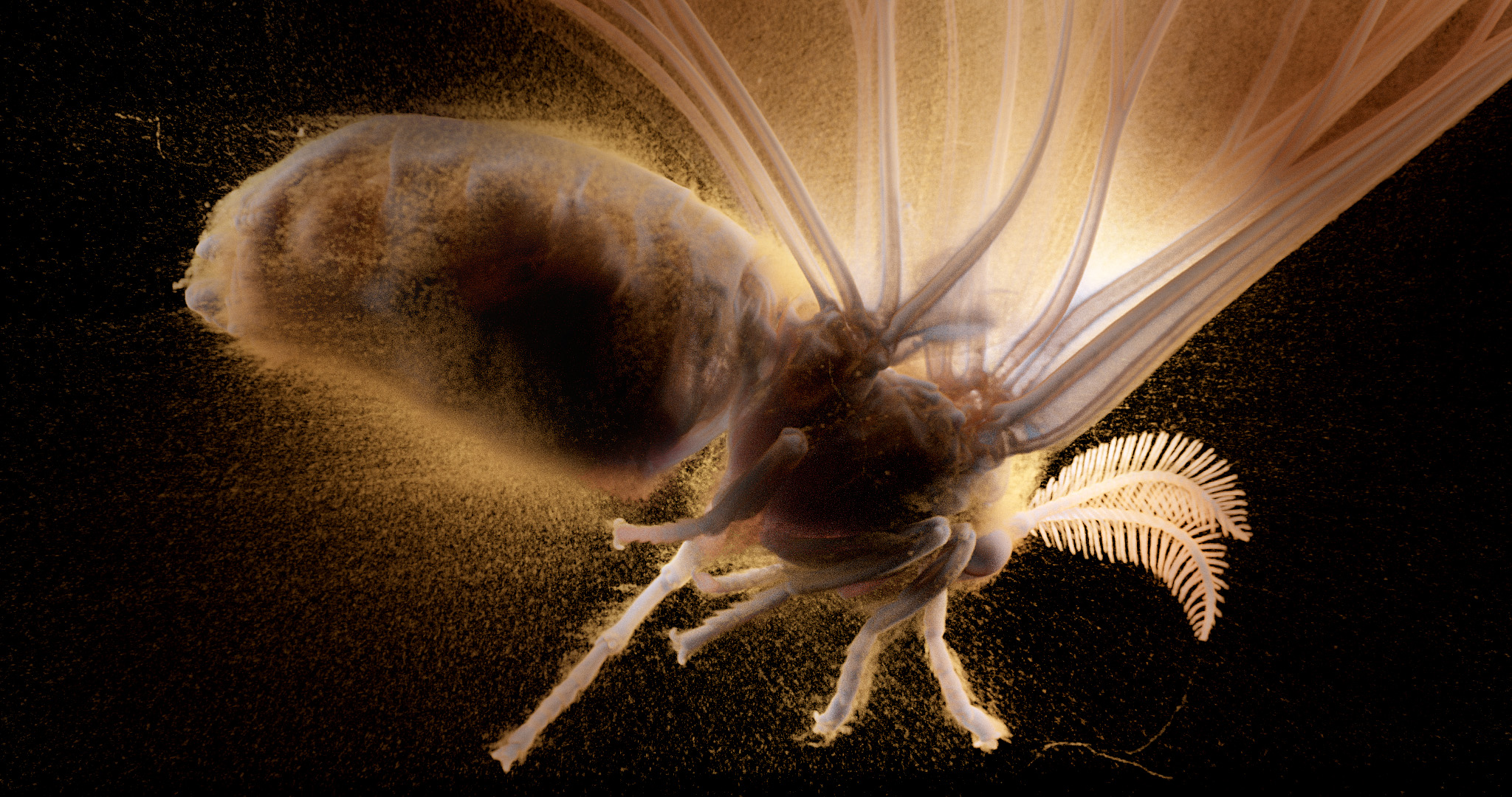
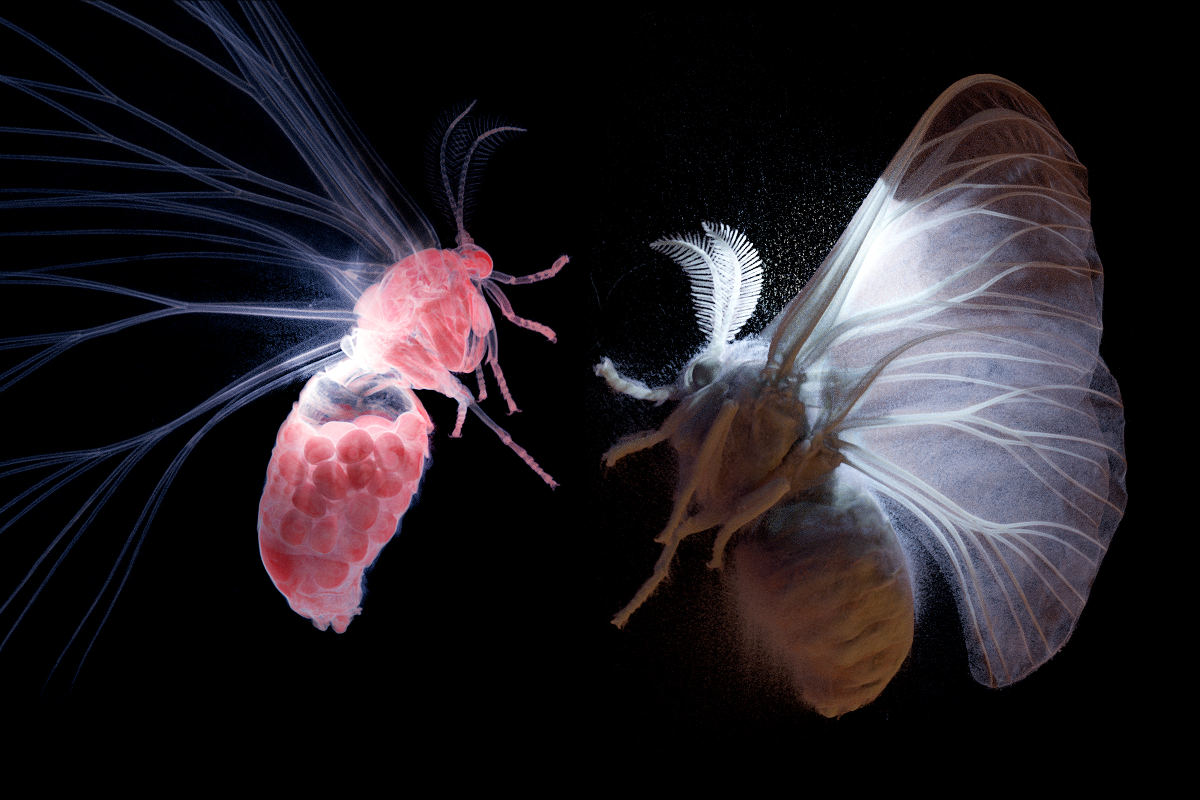
A still from the Secret World of Moths.

A still from the Secret World of Moths.{credit}POHJANKONNA OY{/credit}

In one film, “The Death of an Insect”, three animators, filmmakers, and game creators turned science communicators have given a group of dead insects one last dance.

Against a backdrop of stunning imagery – some monochrome or solidly black or white – the insects hovered, floated, and swam though air as if held by invisible strings in a stunning feat of 3D modeling and stop motion photography that is as equally meditative as it is poetic – and perhaps only slightly macabre. The insects that waltzed and flew through urban landscapes – dead but not lifeless – were collected from attics and sheds, and their choreography delicately animated in the studios of Pohjankonna Oy, the production company behind this experimental picture.

In their other film “The Secret World of Moths” showing at the 3rd edition of Imagine Science Film Festival in Abu Dhabi this weekend, the collaborative crew of three, Hannes Vartiainen, Pekka Veikkolainen and Janne Pulkkinen, who are also lifelong friends, provides a glimpse into nature’s macroscopic expanses through moths.

The dreamy images of vibrantly coloured, almost translucent and luminous insects were constructed using 3D X-ray tomography. This brainchild of Pohjankonna Oy was done in collaboration with the Finnish science centre Heureka. Dozens of insect scans provided by the University of Helsinki, Finland, helped make the film’s animated sequences possible.

A light technology crossover.

A light technology crossover.

In other projects, in collaboration with researchers from various institutions, such as Ghent University, they used computer generated imagery from numerous scans to create samples that they can virtually ‘move’ inside. The Centre for X-ray Tomography in Ghent has opened up some data archives for Vartiainen, Veikkolainen and Pulkkinen to explore, experiment with and develop their tools.

The final product is always a paragon of film-making excellence at the intersection of science, animation and art. But none of it is interpretative.

“We take something from the real world and try to visualise it as accurately as possible,” says Veikkolainen. His colleague Vartiainen adds, “It’s never 3D models that are based on the interpretation of the data, but always the real data.”

It’s their third Imagine Science Film experience – previously their work won the 7th Imagine Science Film Festival Visual Science Award in the festival’s New York edition and the Scientific Merit Award in Abu Dhabi back in 2015. Their accolade this year, however, was the reactions of awe and wonder that their virtual reality (VR) engine – part of an installation at the festival’s Spectrum art showcase – has garnered from the audience.

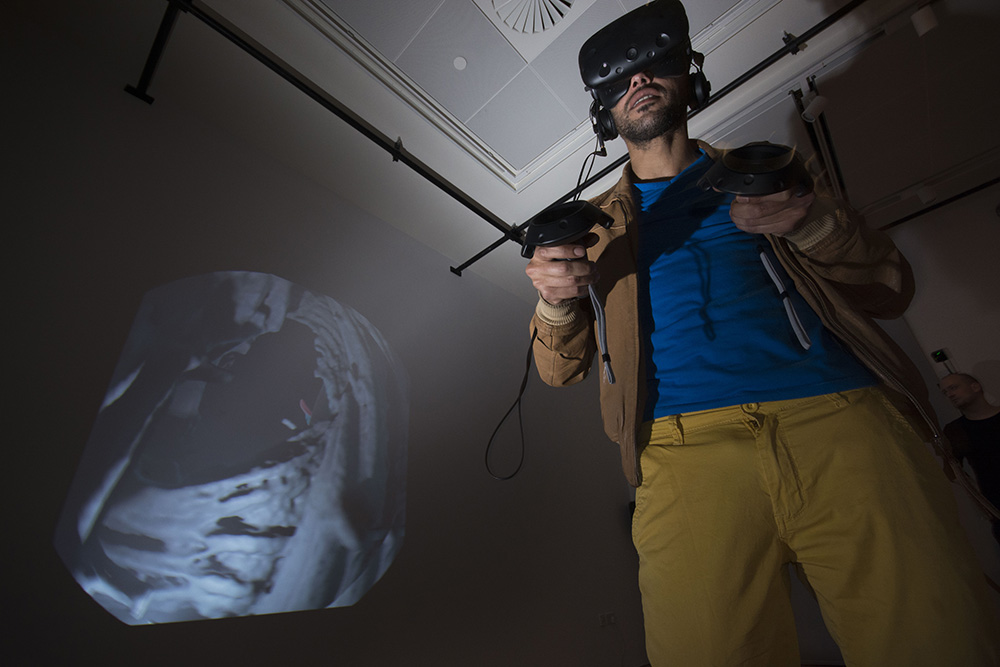
This Nature Middle East editor couldn’t resist a dive (or two) into the immersive virtual world that Vartiainen, Veikkolainen and Pulkkinen have created: a journey into the gut of a 2mm fish, scaled up and visualised with impeccable detail. You can shine a light into this virtual model, carve out or slice through it, swap scales with the hit of a button to be able to move around it and observe it from the outside or walk through it on the inside, as you would in a dimly lit cave.

Since the model is based on real-world data, even the smallest details are true to form; there are no imaginatively constructed visuals.

The VR installation drew a large audience at Imagine Science festival, Abu Dhabi,

The VR installation drew a large audience at Imagine Science festival, Abu Dhabi.{credit}Nate Dorr / Imagine Science{/credit}

The synergy between art and technology in this VR prototype is seamless; giving life to an organic sample that both scientists and the public can go deeper into, while keeping it real.

Their method of visual construction is inspired, in part, by diagnostic tools already in use in the medical industry, but that lack the technology to control and manipulate the data, or make it come to life. “Medical visualization tools typically lack the sophisticated lighting and camera controls necessary for cinematic work,” explains Pulkkinen.

But the trio’s unique tools give them precise studio-like control over lighting tomography data – the render engine makes use of video footage to cast ‘animated light’, for instance, adding layers of natural light, such as a timelapse of a moonlit night, to an otherwise static creature.

The light helps bring out the shape of said creatures and samples, giving an extra layer of reality to these digital visualisations – so in the end, nothing is oversimplified.