Sir Magdi talks about the glory and threats of science

There is a glorious side to science, to the ability to explain things and make people’s lives better. But there are also pitfalls that many researchers may fall in.

Sir Magdi Yagoub, professor of cardiothoracic surgery at the National Heart and Lung Institute, Imperial College London, UK, and chairman of Magdi Yagoub Heart Foundation in Egypt, held a lecture to students and science faculty at the Zewail City of Science and Technology to talk about “The Glory and Threat of Science and Medicine.”

Sir Magdi addresses issues of destructive competition, over recognition and commercialism – and talks about the brighter side of science as a beacon of light for all humans everywhere.

You can watch Sir Magdi’s talk (in English, only the first few minutes are in Arabic) below. Let us know what you think are the pitfalls that researchers may fall in in  the comments section below.

How you value yourself depends on your surroundings

A new social psychology study confirms that self-esteem varies across cultures but, unlike earlier perceptions, it doesn’t exactly result from rising up to expectations dictated by the surrounding culture – at least not directly – but instead from a delicate play between the individuals’ intrinsic personal values and how these values are rated within their respective societies or cultures.

In other words, the personal values that an individual hold in highest regard during self-evaluation and which contribute strongly to positive self-esteem are usually the ones most consistent with his or her surrounding culture.

“Within any given cultural context, individuals evaluate themselves in culturally appropriate ways,” reads the study. They derive “feelings of self-esteem particularly from those identity aspects that fulfill values prioritized by others in their cultural surroundings.”

The research authors, including Said Aldhafri from Sultan Qaboos University in Oman and Charles Harb of the American University of Beirut, Lebanon, are the first to try and systematically test the previously uncontested (but otherwise intellectually appealing) hypothesis that positive self-regard results from living up to values internalized from one’s surrounding culture. The study was published in Personality and Social Psychology Bulletin.

The researchers polled over 4,800 adolescents across 20 cultural samples, comparing four bases of self-evaluation: controlling one’s life, doing one’s duty, achieving an elevated social status or benefiting others.

Different models of analysis were used during the study including one that posited the effects of living in a particular cultural environment, another that posited the effects of personally holding particular value priorities, and one that gauged the value of the four main bases of self-evaluation across cultures.

The study shows that people evaluate themselves differently in different parts of the worlds, but how they rate and prioritize the bases for self-evaluation is culturally biased.

Self-enhancing hierarchal societies that value personal achievement and social status result in positive self-regard being influenced by that. In countries or cultures where openness values were more prevalent, for instance, self-esteem is derived from controlling one’s life, while in countries where conservation values are more prevalent, people’s self-regard is enhanced when they feel they’re “doing their duty.”

Women’s gap from education to research

More women than ever before are pursuing education in science around the world, and the Arab world is no exception. However, the number of women who pursue research careers after education quickly trickles down, especially in the private sector. In the Arab world, this is mainly due to cultural norms that force women to forego time-consuming research careers for family-raising responsibilities.

The private sector is often not keen on hiring women due to stereotypes of poor commitment and the fact they may require long holidays due to pregnancy and labour, which are seen as “problems” not encountered when hiring men.

However, there are some positive signs in the region. According to UNESCO, 38% of researchers in the region are women – more than the North American and West European average of 32% and the world average of 30%.

Tunisia and Egypt topped the list of Arab states with the least disparity between the sexes in research, with 47% and 42% of researchers being women respectively. This comes in stark contrast to Saudi Arabia where only 1% of researchers are women, says UNESCO. Jordan, Libya, Oman and Palestine were all below 25% as well.

To mark International Women’s Day, the UNESCO Institute for Statistics (UIS) has produced a cool interactive infograph on the status of women in research broken down by region and countries, with information about the different fields of research as well as the different sectors they are employed in. You can visit it by clicking on the image below, then start exploring the petri dishes.

UNESCO - Women In Science Interactive

Why the army’s incredible cure claims found ground among Egyptians

Major General Ibrahim Abdul Atti, the inventor behind the new device, told journalists that his invention is "20 years ahead of anything produced in the West."

Major General Ibrahim Abdul Atti, the inventor behind the new device, told journalists that his invention is “20 years ahead of anything produced in the West.”

The Egyptian army’s claim to have invented a device that can detect and cure hepatitis C and AIDS seemed incredulous to many of us when it was first announced in a large press conference, but with every media report it became more absurd and ridiculous.

In a matter of days, it quickly spiralled to become a device (or two) that can use electromagnetic waves to remotely detect, treat and cure HCV and HIV, along with cancer, diabetes, AIDS and any other bacterial or viral infection. These claims were fueled by the person claiming to have invented the device, members of his team, unknown clinical doctors and a host of eager journalists and talk show hosts.

I have discussed the false science behind this device, and the reason why almost everyone in the science community is skeptical about it, in a previous blogpost. There’s absolutely no way this research paper can be taken seriously or be treated as science in the first place due to a host of unforgivable errors.

But maybe this whole debacle is a good chance to look at some of the underlying problems that extend across the Middle East, and not just Egypt, that led to this embarrassing situation:

1) We have a serious problem with media in general, and science journalism in particular. As outrageous as the claim was, none of the journalists who reported it have questioned it. They simply took the story and ran with it, and with every news report the claims became more outrageous. Instead of acting as watchdogs and pursuing their role as searchers for truth, the media outlets chose to be a mouthpiece for the authorities. This could be for various reasons, from political gains of private newspaper owners to lazy journalists willing to take anything they are fed – but whatever the reason, we are left with a disaster, and the public are the losers in this.

Even worse, this points out to the glaring lack of a science editor in these publications, someone with enough scientific information to raise a dozen warning flags before such a story is published. While politics and sports sell most in newspapers, science cannot be ignored, especially with the large number of science-related problems that the region is facing from threats to water and energy security to poor education and a degrading environment.

2) The whole issue points to the most glaring problem: the lack of critical thinking. It is a problem with our school education system, with our universities and with the general upbringing of most people. Children are discouraged from questioning or from analytically thinking and analyzing what they are taught. This very often translates, in adulthood, into a failure to question such “discoveries” – no matter how bizarre the premises is, as long as it is endorsed by the government and media.

The public is desperate for good news, especially in a country in turmoil like Egypt. However, the claims here were too outrageous for anyone to believe – and the least bit of critical thinking and a little research would have quickly shown this to be bogus. But the lack of a culture that supports and promotes either meant this was silently accepted and hailed with much ado about nothing.

3) There is a glaring problem of abuse of public health for the sake of fleeting political gains. Regardless of who is in power, giving false hope to millions of people in danger of death for the sake of some extra votes in an election is a disaster. Health and science should not be political tools, they are basic human rights and should be enshrined as such. The way this whole facade was presented was, obviously, made for political gains. Citizens should be protected from such abuse, where any entity that advertises such false health hopes is harshly punished.

4) Science has no “champion” in Egypt. There is no one to stand up to such claims and call them out as bogus. The few voices who did, such as the Egyptian president’s science advisor and planetary scientist Essam Heggy, were clawed to pieces by the media and politicians who said he was “tarnishing Egypt’s and the army’s international image.”

There is a need in Egypt and in the rest of the Arab world for an independent science body – such as the Royal Society in the UK for example – that can act as a watchdog and advisory to protect the public from such false claims in the name of science. When a handful of us are fighting to strengthen the role of science in society in the Arab world, such claims can wreck what took us years to build in a matter of days, and shake the public’s faith in science.

This entity would protect both the public, and their understanding of science. It would be vocal in fighting such claims and can help the media produce better coverage of science – protecting the public, protecting science, and advising the government on science-related issues independently.

The false science behind Egyptian army’s AIDS and HCV cure

HCV magic device EgyptWhile politics are usually the main topic of discussion in most Arab states, surprisingly, science took the forefront in Egypt over the past few days – for some rather unfortunate reasons, however.

It started with a claim to have discovered a machine that can diagnose HCV, but quickly spiralled to become a machine (or two machines) that can detect, treat and cure hepatitis C virus (HCV) and human immunodeficiency virus (HIV), along with probably cancer, diabetes and AIDS.

Major General Ibrahim Abdul Atti, a doctor working with the military, announced his C-FAST discovery in a government-sponsored press conference. He claimed his discovery cured HIV/AIDS with a 100% success rate and HCV with 95% success rate, with a clear nod at the end to the role of the military and the defence minister in “making his discovery a reality.”

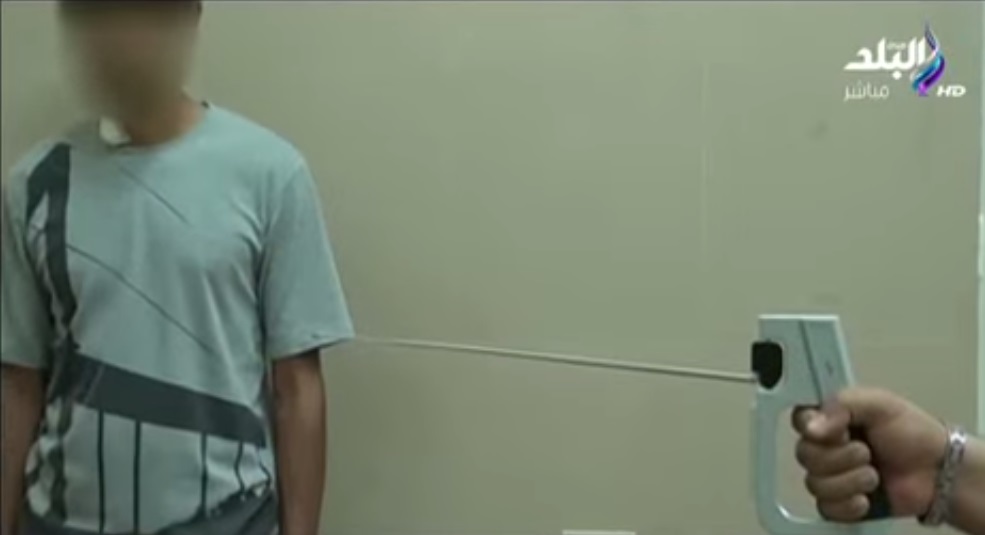
The miracle machine apparently diagnoses and treats patients non-invasively. The videos shown in the press release show a handheld device with a protruding antenna that follows patients as they walk around the room. Abdul Atti says that the device somehow remotely draws blood from the patient, destroys the virus, and returns it as “nutrients” to the patient. “”I will take it away from him as a disease and give it back to him in the form of a cure,” he said.

The media took this and ran with it, along with several doctors and members of the research team, claiming that the machine can treat HCV, HIV and even cancer and diabetes among other diseases. It is being taunted as a magic bullet to solve every problem there is. In fact, when Essam Heggy, a planetary scientist in the Radar Science Group at the NASA Jet Propulsion Laboratory and the Egyptian president’s scientific advisor, was quoted by a private newspaper saying the discovery was “a scientific scandal” for Egypt, many politicians and journalists called on the president to sack him for tarnishing Egypt and the army’s reputation.

Without going into any unnecessary political discussions, I’ll focus more on the science angle of the discovery. Islam Hussein, an Egyptian virologist working in MIT, made a detailed video debunking the science in the piece. The video runs close to 90 minutes though. However, here are several warning bells that leave little room for anything other than skepticism about this claimed discovery.

1) Such a discovery, if it was true, would have possibly been one of the biggest breakthroughs in history. This would have easily been published in one of the highest impact journals, such as Nature, Science or Cell. Instead, this paper appears in a little known journal with no impact factor called World Academy of Science, Engineering and Technology, which is listed as a potential predatory publisher, publishing hoaxes and poorly peer reviewed or non-reviewed papers.

2) The paper is poorly written. The language is poor, details are lacking, there is no proof of principle offered and no logical explanations. They just talk about tests on patients without even outlining the steps taken before starting to experiment on humans. There is no clear explanation of the processes followed either.

3) The researchers claim they have received a patent for their invention. However, a quick search shows that the patent review team commented that the “description undoubtly lacks a clear and complete disclosure of the claimed invention and cannot be allowed under Article 5 PCT.” They claim in the paper that they have patented their invention, but that is a lie.

4) With a little basic understanding of science, one cannot help but be completely skeptic about how the device works due to the large number of question marks surrounding it. The device is claimed to work remotely through electromagnetic waves. Somehow it is  the first process that uses biological electromagnetic frequencies (EMF) to detect signature marks of the viruses. This is something unheard of in any of the past science literature, yet there is nothing offered in the paper on the research or the principles used.

Then, there’s the question of how is the blood drawn out of the body, and then inserted back in again afterwards? How does it recognize the signature of the virus with the incredible 100% accuracy claimed? So many unanswered questions.

All in all, the paper does not follow any scientific methodology, jumping straight to clinical tests that they claim to have performed using the new device.

This is just a few of the problems with the paper, the research, and the methodology attached to this outrageous claims. The research is too poor to even be taken in consideration. This embarrassing event highlights the sad realities in Egypt right now – but I’ll go into those in more details in another blogpost tomorrow.

For now, this is not science. I do not know what this can even be called.