The natural wonders of Lebanon

cedars.jpgLebanon is a beautiful country, and much of its beauty is natural.

Visitors to Lebanon would do a disservice to themselves if they don’t stop at the Jeita Grotto, which is made of two large limestone caves found in the mountains around 18 kilometres north of Beirut.

The upper grotto, reached by a short ride up the mountain in a cable car, is home to the biggest stalactite in the world. The long walk through the spacious cavern shows some of the mos amazing natural formations, including stalagmites, stalactites, mushrooms and columns.

The lower grotto was discovered in 1836 when an exploring Reverend fired a shot from his gun. The gigantic echo returned convinced him he had found a cavern. Little excavation afterwards tapped into the grotto, which has a small river stream running through the cavern. Words cannot describe the marvel of a boat ride through the amazingly detailed creations of nature, slowly forming and growing since the last Ice Age.

Over 1,700 m above sea level, and a good 90 minutes drive from Beirut, lies another rare gem, though much less popular than the Jeita Grotto.

Al-Shorouk Cedar Natural Reserve spans over 400 km2, covering some 5% of Lebanon’s total area. The protected area was set up to preserve cedar trees, Lebanon’s national emblem. During the winter months, these mountains are often covered by snow. However, due to climate change, the snowfall and rainfall has decreased sharply, especially last winter, which prevents the cedar seeds from germinating.

Besides climate change, the area has been under threat for thousands of years due extensive logging and herding. Much of the cedar forest cover atop the mountains of Lebanon has disappeared over the years. The area is an important stop for migrating bird, which attracts bird lovers during the migration season from all over the world. Scientists at the reserve are worried that the reduced tree cover might affect the migrating birds. The reserve also protects some of the most important water sources that flow from the area and reach many Lebanese.

The current eco-reserves are trying to reverse the trend. Although Lebanon’s approach does not focus on replanting cedars, but making conditions optimum for natural growth of the forests. Scientists are worried that replanting might introduce cedars from Algeria or Morocco, which are different species from Lebanon’s own Cedrus libani.

The forests, which are home to the oldest cedar tree in Lebanon (over 3,000 years old), are a marvel to see. As the sunlight passes between the leaves of the huge, slow-growing cedars, the fresh air and the natural sounds of birds and bees are enough to make one forget the busy streets of Beirut not too far away.

Arab science journalism: Quality vs. quantity

Arab science journalists got together for the first meeting of the World Federation of Science Journalists’ (WFSJ) training programme SjCOOP

The meeting, held in Beirut, Lebanon, brought together all the Arab science journalists taking part in the programmed, representing 12 different Arab states.

SjCOOP is based on a mentor/mentee arrangement, which spans over two years. This meeting is the first time for the mentees to meet their mentors in person.

The group started their day with a discussion on the state, potential and pitfalls of science journalism in the region – a topic that has been exhausted over the past few years without much discussion on how to actually address these issues, rather than just outlining them.

The problem that moust science journalists see is resistance by their editors and editors-in-chief of their publications towards publishing science stories. The age old journalism motto “if it bleeds it leads” is pretty much in effect here. And when it comes to the Middle East, what bleeds is politics, and that take up pretty much most of the daily papers – followed closely by football news.

The science journalists are obviously passionate about their work, and would like to inform people about science issues that are critical to the region, such as climate change, water scarcity and the lack of collaborative scientific research in the region – and to do that they need more space – preferably on front pages of newspapers.

However, a problem that is usually overlooked is the quality of the science articles that are being written. Serious scientific topics are often approached very superficially and non-analytically by journalists who know nothing about the subject matter. This leads, in a best case scenario, to a worthless, uninformative article. The results can be much worse, such as misleading information and generating misplaced fear.

Quantity is the only problem that science journalists can see, but there is also a serious question of quality that cannot be ignored. It is just as important – if not more.

If Arab science journalists were to get their wish – if they wake up tomorrow and find that all their editors are clamouring for science stories real quick – what will happen? If they continue churning out stories on a business-as-usual basis then they might be putting in one more nail into the coffin of science journalism. That would be most unfortunate; especially since the Arab region does have high potential for science journalism growth, unlike most regions in the West.

Writing poor articles does, in a way, put science journalists in a never-ending cycle. Editors and publishers do not want low-quality pieces, so they decrease their science stories output, feeding back into the main problems that the journalists themselves feel.

So how do you solve the problem? How do you get science journalists to write amazing stories that will have their editors dying for more? I, for one, certainly hope that SjCOOP is the answer.

Rediscover Nature!

Nature rediscovered.jpgIf you just picked up your weekly issue of Nature journal, then you are in for a very pleasant surprise. Nature has finally received a complete redesign to make it easier to pick up, navigate through, and get to exactly where you want.

Not to sound too biased but it looks better than ever!

The redesign process has been underway for over a year, involving both readers and authors, to make the Nature experience more snappy – fit for the much busier lifestyle we all lead.

The most exciting part of the new magazine to me are the News in Focus and News Features sections. This is the part of Nature that focuses on journalism. So this is geared towards a wider audience that is interested in science, science funding and science policy issues. This is followed by the “Comment” section which includes debates, reviews, and reader correspondence.

Online, all three sections are nicely grouped together into the News and Comments section, where you can easily get all the more newsy material in one place.

Another new section that I think will be quite interesting to follow is “This Week”. This is where you go for editorials and up-to-date summaries of concern to the science community. It is also home to “World View” or prominent scientists will give their personal take on current hot issues.

The research section, the core of Nature, has also been streamlined to offer a clearer reading experience. You can easily know at a glance now what subjects an article covers and who the authors are.

For the full experience, you can tour a digital edition to see the changes firsthand.

It would be great if you can also tell us what you think is good or bad about the redesign.

“Less talk, more action please”

arab climate resilience initiative.jpg

Just like the next, environmentally aware young person, I strongly believe that climate change is one of the biggest challenges that humans have ever faced, and believe we should spread the message to as many people as possible.

But I also believe that when it comes to climate change, we have been doing great talking. Actions, however, have been badly lacking behind.

After the first meeting held in Damascus, Syria, last week, the Arab Climate Resilience Initiative is currently in its second meeting, taking place in Cairo, Egypt.

The initiative, launched by the UNDP, aims to come up with a clearly outlined plan to address climate change in the Arab region by November. This plan will be presented to Arab states governments, with the hope of them becoming partners in its implementation.

I think it is a great idea that the initiative has called on the science community to put the plan together. The meetings consist of several scientists presenting their findings and engaging in discussions on what needs to be done and how urgent.

However, that is where it ends. Endless discussions with very little on the front of putting together concrete plans. With two of the three planned meetings behind, the initiative has very little to show for it.

“We have spent the past 20 years or so saying that we should do this and should do that. But who will take action? And how and when? Nobody has taken the time to answer these questions for the past 20 years,” said Mostafa Tolba, president of the International Center for Environment and Development.

“The time has come for us to say what exactly will we do, who will do it, how much it will cost and who will be able to pay these expenses.”

This simply rounds up the problem. In each of these meetings, people go up to the podium and keep talking about how vulnerable the Arab region is to climate change, even though they are among the smallest contributors to it.

Yes, large parts of the coast in Egypt, Qatar and the United Arab Emirates will disappear under the sea due to the seawater level rise. Yes, the water scarcity problem in the Middle East will become even worse. Yes, the Nile Delta, which is the ending of the Nile River and Egypt’s most important breadbasket, faces dangers from salination and direct inundation.

If we know all these predictions, why are we still talking about them rather than doing something about them? Even what little is being done is through lone efforts rather than a unified, integrated, well-studied approach.

“Our systematic approaches are very weak, our experience is very weak and our knowledge is very limited,” added Mohammed El-Raey, professor of climate at the University of Alexandria.

Just like the next, environmentally aware young person, I want to raise awareness about climate change. But I also want to survive it. Unfortunately, words will not be enough for that.

That is why I hope that the promise of the UNDP, that these meetings will actually end with a concerted plan of action, hold true. Otherwise, it is just more of the same: more talk, and not enough action.

Evolution & Islam

Evolution discussions are not very popular in the Muslim world, but that is not due to a lack of controversy or conflict. Rather, it is a result of widespread outright refusal of the theory amongst many communities, especially the layperson on the street.

Resistance to critical thinking or scientific analysis has led to decades of refusal to even discuss evolution. Stock themes that creationists in the West regularly use are employed by evolution deniers in the Muslim world, such as saying evolution is only a hypothesis, an incomplete theory, full of scientific flaws and gaps, or implausible.

Last year, the British Council took a wonderful step to celebrate Darwin’s 200 years anniversary by holding a large conference in Alexandria, Egypt, to discuss evolution. They brought a diverse, international team of wonderful speakers to present their thoughts, research and work. Holding such a conference in this particular place was the first opportunity for many science students in the Arab world to actually hear and learn about evolution in detail – and from a completely different perspective from the one they have heard for all their lives.

While the bulk of students walked out of the three-day conference unconvinced of evolution and still praising Harun Yahya (popular Turkish evolution denier) for standing up against this “atheist theory” (as several called it), the conference was an important start. The debate had come to the Arab world and there was no stopping it now. Now I just hope the pressure can be built on and more discussions, debates and education finds its way to this region of the world.

Discussion of the details of evolution and Islam can take up several posts, highlighting the problems and conflicts, and the various interpretations of the Quran, the Muslim holy book, that can accept or deny evolution.

Meanwhile, Hampshire College, US, has put up a wonderful resource for anyone interested to learn more about Evolution, Darwinism and Islam. The newly launched Evolution and Islam seeks to start a nucleus of reliable information on this topic. Besides having links to evolution and religion lectures and a dedicated blog on the issues, the website also hosts webcasts and videos from an excellent conference held at Hampshire College held in October 2009 titled Darwin & Evolution in the Muslim World.

The website is definitely worth keeping an eye on. The ball has rolled and I feel that evolution discussions in the Muslim world will get more vocal in the coming years.

Water water not everywhere

water drop.jpg

A study several years ago compared people’s attitudes towards water conservation in Sweden and India. Surprisingly, Indians were much more aware of the importance of water conservation than their Scandinavian counterparts. The authors of the study attributed this to the fact that, unlike Swedes, Indians had actually gone through times of serious droughts and thirst and thus are much more aware of the value of water.

So during the World Water Week in Stockholm, Sweden, Arab countries would be well-advised to learn from the Indian experience. The Middle East is the world’s driest region, with ever dwindling water resources. The problem is aggravated by a booming population, with increasing demands for lavish lifestyles of plentiful water and food. Now, Jordanians have to contend with 135 cubic metres of water annually, well below the 1,000 cubic metres annually water poverty line. In Yemen, some regions only receive drinking water once a week.

Primitive farming techniques eat up a large bulk of the available fresh water supply. Saudi Arabia had to scale back its farming ambitions for wheat and depend on importation to save water for drinking. Qatar is looking offshore, at rich Africa, to invest its oil wealth in food production to save up on its own precious supply of water.

The looming threat of water conflicts remains highest in the Middle East. Egypt and Sudan were shocked to reality last year by plans in countries upriver of the Nile river to build dams on the river, potentially reducing the amount of water the two nations receive. Egypt, Africa’s driest country, receives less than 2 mm of rainfall on most parts of the country (apart from its northern coast), making the Nile the sole source of water for irrigation, drinking, and pretty much everything else.

A little further off, the Gaza Strip has to endure water problems as well. The World Health Organization reported that 90% of the water being supplied to Gaza’s residents is not safe for drinking due to the damage of Gaza’s single water purifier during the Gaza war in December 2008. Moreover, 50 – 80m of sewage water seeps into the sea everyday, which the Israeli human rights organisation Gisha says could wash up on Israel’s beaches.

Governments of Arab states should definitely be searching more actively for new sources of water to decrease the stress on current aquifers.

“Oil is the most plentiful resource in the Middle East, yet its discovery is the most funded. Water, on the other hand, is the least plentiful resource in the region, but its discovery is the least funded,” said Essam Hegy, a planetary scientist in the Radar Science Group at NASA.

The people themselves, however, need to change their habits to prepare for life with less water than they were used to in the past. Bad, water-wasting habits most be addressed quickly through awareness and education.

The Middle East needs to learn the lesson from neighboring India, instead of going through the same hardship, to know the importance of water conservation.

A donkey’s tale

Donkey.jpg

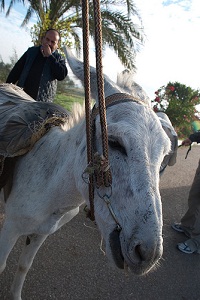
On a short visit to any North African countries one is bound to run into at least a few donkeys – more so if the trip takes them to any of the poorer rural areas. People continue to use this versatile animal till today for various activities, such as hauling goods or in agriculture or for cheap travel.

A new report published in the Proceedings of the Royal Society B last month shows that the link between humans in this region and the ancestors of today’s donkeys goes back more than 5,000 years. It wasn’t formed at the time of powerful kingdoms, but rather by simple, nomadic people who recruited the animals to help them face the rough life of a changing and ever-growing Sahara desert.

“It says those early people were quite innovative, more so than many people today give them credit for,” said senior author Connie Mulligan, associate professor of anthropology at the University of Florida and associate director of the UF Genetics Institute. “The domestication of a wild animal was quite an intellectual breakthrough, and we have provided solid evidence that donkey domestication happened first in northern Africa and happened there more than once.”

This newfound bond proved essential for the survival of the first people who started to settle the banks of the Nile river to start a pastoral life.

The ancestors of the domestic donkey were considered vital for collecting water, moving desert households and creating the first land-based trade routes between the ancient Egyptians and the Sumerians, according to study co-author Fiona Marshall, professor of anthropology at Washington University in St. Louis.

Using samples from living animals, skeletons and remains of the African ass held in museums around the world, and isolated donkey bones from African archeological sites, the scientists traced the family tree of today’s domestic donkey.

By sorting through and analyzing the most comprehensive sampling of mitochondrial DNA ever assembled from ancient, historic and living specimens, the researchers showed that the critically endangered African wild ass – which today exists only in small numbers in eastern Africa and some zoos – is the living ancestor of the modern donkey. The Nubian wild ass, which was presumed to have vanished in the late 20th century, is the direct ancestor of the donkey we know today.

The wear and tear of the donkey remains found in the tombs of Egyptian pharaohs is evidence of the animal’s domestic service, explained Marshall

“These were the first transport animals, the steam engines of their day,” Marshall said. “Today domestic donkeys are often conceived of as animals of poor people, and little is known about their breeding. This is the first study to determine the African wild ass, which includes the Nubian strain, is the ancestor of the domestic donkey. That’s important to know for efforts to preserve the species.”

‘Open SESAME’

SESAME.jpg

The Synchrotron-light for Experimental Science and Applications in the Middle East (SESAME) is a collaborative project set up in Jordan under the auspices of UNESCO.

The member states are Bahrain, Egypt, Israel, Jordan, Pakistan, Palestine, and Turkey, with Iran and the UAE in the final stages of becoming full members too.

According to SESAME’s website, the project aims to promote international collaboration in the Middle East and North Africa (MENA) region using synchrotron light for basic and applied research in physics, chemistry, biology, materials science, environmental and medical investigations, archaeological studies and other research areas of relevance to the member states.

Seven Beamlines have been approved for the first operational phase of the third generation 2.5 GeV Electron storage ring of SESAME. These are:

1. Protein crystallography

2. X-ray absorption fine structure (XAFS) and X-ray fluorescence(XRF)

3. Infrared spectro-microscopy

4. Soft X-ray photoemission and photo-absorption spectroscopy

5. Small angle X-ray scattering (SAXS) / Wide angle X-ray scattering(WAXS)

6. Powder diffraction

7. Extreme ultraviolet (EUV).

SESAME is joining up with IAEA now to offer a “capacity building project” in the operation of SESAME to build local talents from the member states who can run and use the Centre in the future. As part of this project, they are offer fellowships to young scientists from SESAME member states to carry out research on any of the seven beamlines above in any of several well-established synchrotron radiation laboratories around the world.

To be eligible for the fellowship, applicants must:

1) Be nationals of SESAME and IAEA members (Bahrain, Cyprus, Egypt, Iran, Israel, Jordan, Pakistan, Palestinian Authority and Turkey)

2) Have a PhD or evidence of being engaged in research for a doctorial thesisis in any physicla or biological science.

3) Be able to work effectively in a multicultural environment with a multidisciplinary team of scientists, engineers, and technicians.

4) Have excellent English – both written and oral.

5) Have good communication skills

6) Be willing to travel abroad (obviously!)

Interested applicants need to submit the following in English

1) A completed application form.

2) A detailed CV, detailing academic qualifications and major fields of training and research they were (and are) involved in.

3) A list of publications with an asterisk against the five most significant ones

4) At least two recommendation letters from experienced scientists who know the applicant’s work.

There are only four fellowships available right now for a duration of six months each during 2011. So if you plan on applying, you better hurry up because the deadline for applications is 15 October 2010.