El-Baz wants to solve Egypt’s problems from space

Following the recent and ongoing political upheaval in Egypt, Farouk El-Baz, the Egyptian-born director of Boston University’s Center for Remote Sensing, is suggesting his major development corridor construction project as a solution to Egypt’s biggest problems again, hoping the new government may be more attentive.

The project envisions building a “new Nile basin” parallel to the original river to the west, but one of asphalt instead. He wants to have an eight-line superhighway from Sudan to the Mediterranean, connected to all the major cities along the Nile basin. This should ease the population encroaching along the fertile Nile basin and offer millions of new land for agriculture and industry, El-Baz tells The Boston Globe.

El-Baz has been trying to sell his idea to successive Egyptian governments since Hosni Mubarak was president. While Mubarak’s governments was unresponsive, the first government formed after his ouster was excited about it and started selling the project as “Egypt’s salvation.” This government was dissolved under heavy protesting however, and the project was shelved again during the rule of Mohamed Morsi, the recently ousted president. Now, El-Baz is hoping the new government might bring the project, which would cost a whooping US$23.7 billion, back on the table.

There has been vast criticism of El-Baz’s project in Egypt, with some claiming it was overly optimistic, some arguing it was unaffordable and others suggesting the new population centres created would be prone to serious water shortages. El-Baz, who has been working for 30 years on this vision, refutes these claims and offers solutions to the problems. The funding, he says, should come from the private sector which would reap economic rewards immediately and the water can come from Nasser’s Lake, the large water reservoir at the High Dam.

You can read the full article at The Boston Globe.

NME’s weekly science dose (July 19-25)

Paleobiologist digging in Tunisia in 2011 have found the most complete dinosaur skeleton from Africa yet, belonging to a family of sauropods. The new species, Tataouinea hannibalis, probably had hollowed bones and probably large air sacs in its abdomen, morphological traits that are similar to birds and suggesting they may have a bird-like respiratory system. These dinosaurs were not small, however, with the remains suggesting they stood at about 14m in length when they were alive some 136 million years ago.  

Not too far away, researchers diving in the Res Sea are making some interesting discoveries. While bacteria have long been known to live on corals, they found that some species of bacteria may have a much more intimate relationship with the corals – actually living inside the coral cells and tissues.

This close relationship has prompted the researchers to suggest the bacteria most play an important symbiotic role for the corals, maybe acting as the “middleman” between algae and the coral by converting photosynthetic products into a form of energy the corals can use. Conservationists are excited that, if this is true, then the bacteria can serve as a measure of how healthy coral reefs are – acting as ‘alarm bells’ if things aren’t going too well.

This week, we are also highlighting two research papers looking into genetic disorders. In the first paper, researchers have produced the first human trials for a gene therapy to treat metachromatic leukodystrophy (MLD), a fatal neurodegenerative disorder appearing in children. The trials have been successful, stopping the appearance or progress of the disease in the three patients who underwent the treatment a year afterwards.

In the second paper, researchers produced a genome-wide association study (GWAS) of patients with Brugada syndrome, a rare genetic cardiac disorder that may increase the risk of sudden cardiac death. They found that the risk to develop the disease, which was originally linked to one gene, is actually increased by other genes that are involved in the electric conduction inside the heart. Patients with all three risk alleles identified had an unexpectedly high susceptibility to the disease.

Beyond the Hood

Though millions suffer from epilepsy around the world, our understanding of the disease remains very  limited. Now, however, a team of researchers used stem cells to discover the causes of one type of the disease. They created stem cells from skin cells taken from patients living with epilepsy. They then turned these stem cells into neurons, basically creating an ‘epilepsy in a dish’ to study it. They found high levels of sodium activity bursts in the cells that could set off seizures.

This could be used to test new drugs to try to come up with a treatment for this particular type of epilepsy, called Dravet syndrome. The researchers are also now working on recreating other forms of epilepsy using the same technique to study them and try to find a treatment or medication to handle them.

Have you ever caught yourself staring in awe at a male peacock’s fully-spanned tail? Apparently, without this extra-flamboyant display they would not be able to capture the attention of their mates pretty well. Researchers mounted eye-tracking cameras on peahens to track their eye movement and found it very hard to keep their attention. That is why the males need such large tails. Turns out that the peahens were also not that interested in how tall the tail was, but more interested in its width and the number of eyespots on it when it is further away.

The researchers suggest that, given all the things that can capture the attention of the peahen, the peacock’s tail had to evolve to eclipse everything else that might attract the female to find a possible mate.

Finally, if you suffer from cat allergy, you may be able to visit friends and family that you stopped seeing years ago because they keep pet cats. Researchers from the UK have discovered the mechanism in the body that causes this annoying issue. The culprit is the cat allergen Fel d 1, which is present in cat danders, which is tiny pieces of cat skin, activates a receptor in humans that causes a large immune response. This causes the itching, coughing and runny nose some people get around cats.

Now that the mechanism is known, the researchers hope they can start testing new medication to stop it – allowing many people to start visiting friends again and many cat lovers to finally have cats in their homes without sending their partners running away.

NME’s weekly science dose (July 12-18)

It seems that young researchers from the Arab world are missing out on a big opportunity to mix with people from the highest echelons of science. At least that’s the suggestion when only two Arab researchers attended the Nobel Laureate Meeting at Lindau, Germany—an annual conference where Nobel winners present to and interact with young researchers from around the world.

The two researchers from the region, both from Egypt, were among the 625 undergraduate and postgraduate students attending. In 2011, there were 12 Arab participants, raising the question of whether the drop in number reflects a diminished interested between players in Arab research sectors.

The fact that invited ministers from Egypt and Algeria did not attend—nor invited professors from Saudi Arabia’s King Abdullah University of Science and Technology—seems to suggest so. But there’s more to this story, and you can find out all about it here.

In other news this week, scientists have come a step closer to understanding the role of intracellular scaffold protein (Sch1) in cell signalling. To do so, the research team, including  Mohamed Soliman from Cairo University, mapped all possible interactions between Sch1 and other cellular proteins and found 23 new Sch1-interacting proteins involved in various cellular processes. Read more details about their findings here.

Beyond the Hood

In case you are not fed up with adding the letter “i” to every new invention, check out the i-knife: it doesn’t pump music out of its handle as you cut your carrots, but it can actually tell surgeons whether the tissue they are cutting into is cancerous or not.

In a freshly published study to test out the “iKnife”, the invention was found to diagnose tissue samples from 91 patients with 100 percent accuracy, almost instantly providing information that normally takes about half an hour to reveal using regular laboratory tests.

Here’s how it works: when relying on electrosurgery—an old technique using knives with an electric current running through them to rapidly heat tissue and minimise blood loss—vapours  arising from the cut tissue creates smoke that is a rich source of biological information. The iKnife works by basically being an electrosurgical knife connected to a mass spectrometer, an instrument that can identify what chemicals are present in the ensuing smoke.

Since different types of cells produce metabolites in different concentrations, these can be used to identify exactly what is being cut into: in this case, whether the tissue is cancerous or not.

It’s uses can potentially go beyond this, helping users identify types of bacteria present in a tissue sample, and more generally determine whether what you are cutting into is, say, beef or horsemeat.

State of science in non-Arab Spring states

Egyptian revolution 01

{credit}Mohammed Yahia{/credit}

The Arab Spring brought much hope for a science renaissance that would drive development across a region that has been rather stagnant for too long. However, for countries that overthrew their regimes, this has not yet fully materialized due to ongoing instability and turmoil.

Yet the ripples from these countries have spread far and wide to neighbouring countries that did not topple their leaders or monarchs. In a long feature published this week, SciDev.Net explores the effect of the Arab Spring on four of these countries: Algeria, Jordan, Morocco, and Sudan.

In Morocco, waves of protests spread across the country in February 2011 after the Egyptians protests toppled Mubarak in Egypt. They continued on four some four months, with angry young people protesting the increasing unemployment among younger people. This led the monarch to accelerate reform that focused on science research and linked it to industry to spur development. The money put up a US$65 million fund aimed to boost research projects up to 2014. However, Aziz Bensalah, the director of public engagement in Morocco’s National Centre for Scientific and Technical Research, told SciDev.Net that the rel problem was not about money, but about coordination between the different institutes in the country and the need to invest in good researchers to start with.

In Algeria, small protests that erupted after the success of the Tunisians and Egyptians in removing their presidents spurred the government to act quickly, which is wary of the country’s recent history of conflict between government forces and Islamists. In the 1990’s, this led to a mass exodus of researchers from the country, which has so far been unsuccessful in attracting them back.

Officials quickly moved to address the demands of the people. This led to an increase in science spending in the country’s budget, according to SciDev.Net, which rose from about US$250 million in 2012 to US$340 million in 2013 – bringing the country close to its target of spending 1% of GDP on science research. The lack of good scientists remains, however, the main hurdle – along with bureaucracy and lack of academic freedom. This may be what prompted Algeria to try to foster relations with American universities, since its researchers in the diaspora have not been very keen to return home.

In Jordan, the government’s answer to regular protests following the Egyptian revolution was to invest more in research that would help the country solve its energy problem, which was affected due to the natural gas supply from Egypt being disrupted regularly during unrest there. By investing US$39 million over a five-year-period, the country is hoping to decrease its dependence on other countries for its energy supply. Researchers, however, say that little has changed on the ground when it comes to science and research. The government’s budget has not changed, remaining firmly at 0.34%. Issa E. Batarseh, president of the Princess Sumaya University for Technology told SciDev.Net that the challenges to science research are huge and the government has not shown a real commitment to solving them.

In Sudan, an austerity plan introduced by the government in 2011 further reduced the already low science research budget. Only 0.04$ of GDP is used for science spending, and a decision to form a separate science and technology university two years ago was scrapped in 2012, merging the it with the communication ministry. Mirghani Ibnoaf, professor of sciences at Khartoum University, told SciDev.Net the problem is two-pronged. While the government is hardly investing in science and the private sector’s contribution is almost non-existent, the researchers themselves are “idle” and not involved in research that will actually help solve Sudan’s core problems.

Based on these four countries, and the others that had overthrown their regimes, it would seem that the Arab Spring has, so far, failed to bear fruit for science research. In fact, the countries that seem to be faring best and actually have a rapidly growing science sector are the oil-rich Gulf states who were mostly unaffected by the Arab Spring. Saudi Arabia, Qatar and the United Arab Emirates have been performing very well, increasing their science budgets and recruiting world talents to conduct research in their home institutes.

You can read SciDev.Net’s full article here.

Denial and anti-science movements

Anti-science themes are varied across the world, from anti-evolution and creationism to climate change deniers to HIV deniers. How can science journalists best tackle these issues? Is it important to be balanced, giving voice – for example – to vaccination opponents when covering a story about vaccination?

There’s little doubt that anti-science themes are increasing around the world. The strongest such topic worldwide may be evolution – which is a very touchy issue, especially in conservative societies. While educators and scientists have for years been trying to counter creationism and explain the amount of scientific data backing up evolution, anti-evolution sentiments remain strong – and will likely stay around for a long time. It may have actually seeped into other fields of science, sowing doubt in science elsewhere.

But what role do science journalists play? Do they, inevitably, feed these anti-science themes by their coverage? In a session exploring anti-science movements around the world during the World Conference of Science Journalists 2013 (WCSJ2013), Cristine Russell, a science writer and the past president of the Council for the Advancement of Science Writing stressed that science writers must inform people about science realities. “We are not educators, we inform. The problem is that science reporters are not dominating the scene anymore.”

This is particularly true in the US, for example, where many meteorologists and weather forecasters are climate change skeptics. People are more willing to listen to them than to the consensus of scientists who are saying climate change is a reality.

Valeria Román, a science journalist at Clarín newspaper in Argentina said she used to cover both sides of the climate change story but stopped because “only one of them is scientific.”

“”Most of the journalists usually include both sides in covering such issues, but they gave a false balance,” she adds. By giving weight to the arguments of denialists – who don’t base their argument on science – it can have a negative impact on readers.

Colleen Dawson, an author and the vice-chair of the South African Science Journalists’ Association (SASJA), thinks there are times when science journalists have to move from their role as informers to become educators – such as providing information to the public that they may not have learned at school such as HIV/AIDS.

Most of these anti-science themes are often driven by cultural or religious motives, which is why I think that science journalists should address them with sensitivity. They are deeply entrenched over decades and centuries in the societies, so an abrupt “you are wrong, here’s what is right” approach may often backfire.

Ultimately, however, science writers need to keep in mind that their source material is science. Russell suggests that they need to change some of their terminology. For example, in an interview, instead of asking “Do you believe in climate change?” that can be rephrased into “Do you think that climate change is going to happen?” The removal of the word ‘believe’ stresses that science is about evidence, not beliefs.

“We have to do our job, which is writing about science issues,” she said.

NME’s weekly science dose (July 5-11)

It’s often associated with Egypt, but the Nile River’s water resources are shared by eleven countries. It’s a resource that has been at the center of growing tension between Egypt and Ethiopia, particularly as the latter country moves ahead with plans to build the world’s tallest dam, leaving many in Egypt wary of the impact on its primary source of water.

A leaked report shows the degree of disagreement on how to proceed. It is a story where the political continues to overthrow the scientific in an issue that can only move forward using evidence rather than politics. Read more about it here.

Those curious about how animals got to be the way they now are, check out this story on sequencing the genome of an ancient horse.  A team of researchers has produced the draft genome of a 700,000 year old fossilized horse bone that is shedding light on the lineage of horses. Turns out that Przewalski’s horses—a type of wild horse—are the last surviving wild horse population.

Also, the genetic disorder nephronophthisis—a common cause of kidney failure in children–appears to be linked to a protein called ANKS6, new research suggests. Using knock-out animal models, researchers from Germany and Egypt were able to show how this protein is central to the normal development of kidneys. Click here for more details.

Finally, there’s been a bit of mystery as to why a chronic fungal infection called eumycetoma—which leads to the disfiguration of feet—exists in certain areas of Sudan, while the rest of the population does not develop the disease, despite being similarly exposed to the fungus.

Two studies have now attempted to explain this, highlighted here. Firstly, it appears that pre-existing co-infections dispose individuals to developing eumycetoma. Schistosomiasis, a parasitic disease, is strongly linked with also developing eumycetoma. Eliminating the intermediate host of schistosomiasis, the bilharzia snail, could reduce the prevalence of eumycetoma.

On a similar front, researchers also found that the fungal colonies that cause this disease are linked to a family of fungi that are generally found in animal dung. Not stepping on poo, or wearing shoes, may therefore help reduce the chances of infection.

Beyond the hood

Outdoor air pollution is directly causing over two million deaths each year, according to a study just published here in the journal Environmental Research Letters. While climate change has been suggested as an exacerbating factor to the effects of air pollution, this study was able to show that it plays a minimal role in the number of deaths due to air pollution.

Instead, the deaths are caused by human-caused increases in fine-particulate matter composed of tiny particles that can penetrate into the lungs, causing cancers and respiratory diseases.

In less depressing news, astronomers using the Hubble Space Telescope have identified, for the first time, the colour of an exoplanet. Known as HD 189733b, the huge gas planet has a deep cobalt blue colour, similar to Earth’s colour seen from space. With temperatures over 1000 degrees Celsius and at 63 light years away, it’s by no means a sister planet on any level.

The astronomers determined its colour by measuring how much light was reflected off its surface, and analysed at the change in the spectrum of the system before, during and after the planet passed behind its star. You can read more details about the study when it’s published in the August 1 issue of Astrophysical Journal Letters.

Management row threatens to blow Sahara solar dream

Cross-posted from the Nature News blog on behalf of Quirin Schiermeier.

Plans to supply Europe with electricity generated in North Africa suffered another blow this week when the DESERTEC Foundation, set up in 2009 to promote the idea, pulled out of the industrial consortium which is trying to advance the €400-billion (US$514-billion) project.

The split, agreed upon during an extraordinary DESERTEC board meeting on 27 June, is the climax of growing tensions between the founders of the project and the Dii consortium — including Deutsche Bank and German energy utilities Eon and RWE — over management and strategy issues. Solar power capacities are expanding throughout North Africa and the Middle East — but Dii has recently scaled back ambitions, hinting to political and technical problems with transmitting massive amounts of electricity from North Africa to Europe.

The DESERTEC foundation — sole owner of the project’s brand name — has been increasingly unhappy with how internal discussions over the future of the project leaked to the press.

“It was always clear to us that our idea of producing electricity from the deserts (…) was never an easy task and will always face extreme challenges,” Thiemo Gropp, director of the DESERTEC Foundation, said in a statement.

“However, after many months filled with a lot of discussions we had to conclude that the DESERTEC Foundation needs to preserve its independence. [Our exit] is the result of many irresolvable disputes between the two entities in the area of future strategies, obligations and their communication.”

Gropp said the dispute has “negatively affected” DESERTEC’s reputation but he did not rule out future cooperation between the two organizations.

Analysts have repeatedly criticized the project as too big and expensive. Pulling the plug on its loss-making solar business, German engineering giant Siemens, based in Munich, quit Dii last year. Technology supplier Bosch, based in Stuttgart, also pulled out last year.

NME’s weekly science dose (June 27 – July 4)

It’s not easy being a science researcher starting off a career in Egypt. Sameh Soror, a structural biologist at Helwan University, Cairo, knows this all too well. As the first Arab to now co-chair the Global Young Academy (GYA), an organization that helps support early career scientists across the world, he’s keen to give his colleagues a voice.

The GYA helps its members set up National Young Academies in different countries to lobby national governments to address issues of concern for young researchers. However, bureaucracy continues to complicate the establishment of such academies in the region. Soror tells NME about ongoing plans to establish one in Egypt, amongst other things, here.

In other news, while migraines are a common neurological disorder, little is known about their links to genetic influences. A new study, including researchers from King Faisal Specialist Hospital and Research Centre in Riyadh, has identified links between 12 gene loci and migraine susceptibility.

The researchers combed through 9 genome-wide association studies involving a total of 23,285 migraine sufferers and 95,425 population-matched controls. Read more about the study here.

Finally, a drug-resistant strain of salmonella has been on the rise in the region for a number of years now, and new research from Morocco and France has highlighted how it has spread and acquired resistance to antibiotics.  The research analyzed hundreds of subcultures of the strain, called  S Kentucky ST198-X1, and found that a far greater percentage of more recently collected isolates were resistant to the commonly-used antibiotic ciprofloxcin. More details here.

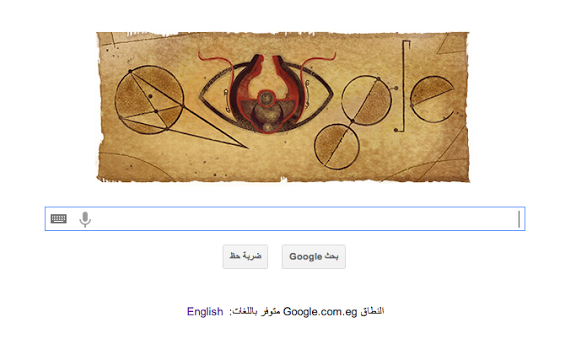
Google doodle celebrates Muslim physicist

If you live in one of the Arab states of the Middle East, then you will likely have been greeted by an interesting new Google doodle today for the anniversary of one of the most celebrated Muslim medeival scientists.


Google doodle AlhazenIbn al-Haytham, known in the West by his Latinized name Alhazen, was born 1 July, 956 AD, in Basra in present-day Iraq but lived most of his life in Egypt. A polymath, Alhazen has contributed to the sciences of optics, astronomy, mathematics and philosophy. He is one of the earliest, if not the first, theoretical physicists in the world, using mathematics to prove his theories of optics.

Alhazen is best known for his work to prove experimentally how we see objects. He disproved the emission theory, which was popular at that time and stated that the eyes shine light on objects that we see, and countered that we see objects because light from them falls on our eyes instead. He was also the first to prove that light moved in straight lines through experimentation on mirrors and lenses  and studying refraction and reflection.

This led to the discovery he is best known for, the camera obscura, or pinhole camera. His books had the first clear description of it and an analysis of how it worked.

Most of this research was done when he was under house arrest, after feigning madness when he had promised the caliph of Egypt, Al-Hakim bi-Amr Allah, he would be able to control the flow of the Nile but it proved too daunting a task for him. His arrest was lifted following the death of the caliph and he continued his research and made money copying books.

The most important contribution of Alhazen to science must be his “Book of Optics”, a seven-volume study of optics and other related disciplines. The book was quite influential in Europe when it was translated in the 12th century. The experimental approaches and mathematical verification that Alhazen took when writing the book were essential for laying the foundation of the scientific method. It was considered the most important book on optics in Europe until Kepler’s work.

In addition to his work on optics, Alhazen is thought to have published 200 books of science in total, with at least 96 being currently known. Most of his work has been lost, but nearly 50 books have survived and are still being studied.