
New regional network for research and education

ASREN.jpg

Earlier this month, the League of Arab States finally held the founding meeting for the launch of the Arab States Research and Education Network (ASREN), in Cairo, Egypt.

ASREN will be a network between universities and research centres in the region, aiming to digitally connect students, Arab scientists and academics and promote collaboration across barriers in the region. The network will be based in Dusseldorf, Germany. It will also have a regional office in the Arab region.

While ARSEN aims to link Arab states together, there are several other networks that have created nodes in specific Arab countries.

Algeria, Egypt, Jordan, Morocco, the Palestinian Territories, Syria and Tunisia are already members of the ultrafast network EUMEDCONNECT2, dedicated to research and education in the Mediterranean region.

Earlier in April 2010, the Global Ring Network for Advanced Applications Development (GLORIAD) was extended to the Middle East, with a new node set up in Egypt. GLORIAD’s extension was aimed at linking Egypt and the other Arab states to the large hemisphere network to promote science research and education in the region.

By connecting to these global networks, ARSEN can serve an estimate of 250 million people, delivering these networks to a wider array of countries in the region, such as Gulf States in the Arabian Peninsula.

The member countries are hoping the expanded networks will improve e-infrastructure in the region.

But more importantly, these new networks may help researchers from the Arab states to network with international peers and cooperate in research. They can facilitate the Arab World’s attempts to become part of the international science community, collaborating more effectively with international counterparts.

They will also offer students in the region access to large digital libraries and databases, surpassing borders that can often limit research and opportunities, especially for the poorer countries in the region. It can be a boon ti improve education in a region that has long suffered of outdated educational tools.

Talal Abu-Ghazaleh, chair of the Global Alliance for ICT and Development of the United Nations (UN GAID), was chosen to chair ARSEN as well.
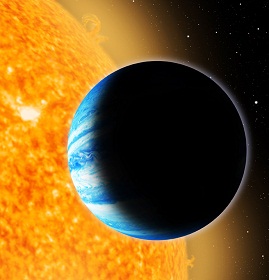
More than just a new planet

Qatar new planet Credit David A. Aguilar (CfA)

The discovery of a new exoplanet by a team of researchers from Qatar, working with their international counterparts, may not be something too special per se. After all, we have observed hundreds of exoplanets over the past years similar to this one already. However, it is the process behind the discovery that is really interesting.

In a blogpost over at the science and religion focused blog Irtiqa, Nidhal Guessoum, an astrophysicist and professor of Physics at American University of Sharjah, discusses with excellent insight the importance of the discovery of the new planet Qatar-1b by a team lead by Qatari astronomer and research Khalid Al Subai.

Guessoum explains that, unlike most science papers involving Arab authors that are published in reputable international journals, Al Subai’s name actually appears at the top of the list of authors as the principal investigator.

He also mentions that this research represents a shift in the usual focus of research funded by Gulf states. Such basic research is not very popular in this region of the world, where the majority of funding goes to applied research.

And this is what I find most interesting about the discovery. Basic research is the key to the Arab world’s bid to create a science culture. Discoveries like this may not have direct, tangible benefits to the community. But on the long run, they can be invaluable to scientific progress. It is the daily interaction between scientists in basic research institutes that has in the past generated sparks for the best inventions and technologies.

Additionally, there is no shortcut to applied research. Ahmed Zewail, 1999 Chemistry Nobel Laureate, notes in his commentary in Nature that Charles Townes development of the laser was driven at the start by basic research in microwave spectroscopy and how to amplify light.

While Qatar-1b is a mostly unremarkable planet, its discovery is still very important. Discovery of similar “hot Jupiter” planets (which are the easiest to find) can lead to discovery of harder planets. Maybe even an Earth-like planet somewhere along the line. Everything has a start and no research is “unimportant”.

Moreover, discovery of new planets in general is exciting science. Most laypeople may not be very interested to learn about the discovery of a new biochemical reaction or a new gene, but space and the stars always capture everyone’s fascination.

That is why discoveries such as Qatar-1b, besides ensuring a sense of national pride, can spur an interest in science in a region that has been far from science for far too long.

It is such events that may trigger a thirst for science in younger generations that can last for many years in the future.

Qatar-1b may be unremarkable when compared to the more than 500 exoplanets already discovered, but it is very remarkable as the first planet discovered by an Arab-lead team.

Cancun climate change summit endgame

COP16-plenary-tables.jpg

The parties gathered for the past two weeks in Cancun, Mexico for the United Nations Framework on Climate Change Convention (UNFCCC) summit have managed to come up with an outcome of a moderate, yet successful package.

Far from the deadlock of the last day of the previous meeting in Copenhagen a year ago, countries have shown compromise on positions. The hero that moved things forward this year is, hands down, Patricia Espinosa, the Mexican president of COP 16. The transparency and effort put into the process restored the faith of the parties to work together – after that was nearly lost following the Copenhagen accords and the “Danish secret text” fiasco.

So to summarize things up, here are the most important points in the new deal, dubbed the Cancun Agreements:

1) Industrialized countries will be required to submit progress on their binding targets annually, while developing countries will receive funding and technological support to mitigate climate change and to develop with clean technologies. They will report on their progress every two years.

2) The Clean Development Mechanisms have been expanded to include projects of carbon capture and sequestration (CCS) . While some countries, such as Brazil, opposed this decision, they all compromised to accept it as long as its safety is well-researched and determined.

3) Copenhagen Accords targets for finance were formally accepted. Developed world countries will raise 30 billion USD by 2012 as a fast track fund for climate change action in developing countries. This number will be raised to 100 billion USD annually by 2020 (nothing is mentioned on what will happen between 2012 and 2020 though – but hopefully financing will gradually be increasing during that period). A new “Green Climate Fund” will be set up under the Conference of the Parties to manage the financing issues, with equal representation from the developing and developed world.

4) A new Cancun Adaptation Framework will be set up along with the fund to help developing countries plan and implement adaptation projects. The issue of loss and damage will also be included in this process. This basically covers adaptation needs resultant from the effects of climate change and climate change mitigation.

5) Reducing emissions from deforestation and degradation (REDD) is now officially adopted under the UNFCCC texts for the first time. This was set in motion in Copenhagen, but the agreement was developed now, with developing countries providing financial and technological support to poor forest countries to protect their forests.

6) The parties have agreed to set up a technology mechanism, which will have a Technology Executive Committee and Climate Technology Centre and Network. This mechanism will facilitate the transfer of knowledge and cooperation to support actions on adaptation and mitigation.

7) The document continues to recognize the 2°C target as the upper limit of accepted global warming, while mentioning the better, more reliable 1.5°C targets (which small island states are calling for.)

What the agreement does not cover is:

1) The fate of the Kyoto Protocol. The Cancun agreement could not come up with text regarding a second commitment phase for the Kyoto Protocol, the only legally binding agreement the world has on climate change targets. It only mentions the importance of a renewal of the ailing agreement.

2) New, more ambitious targets for carbon emission reductions. The Kyoto Protocol targets are extremely weak, and the US is not even a signatory to them. To keep temperature increase below 2°C much more ambitious targets are needed. It only calls on developed countries to reduce emissions by 25% to 40% below 1990 levels by 2020.

3) Clear targets for carbon emission cuts beyond 2012, when the first commitment period of the Kyoto Protocol expires. This is particularly dangerous because, if 2012 comes (and COP18) and there are no new targets, this could create a so-called “gap”, where there are no countries at all worldwide.

The next meeting will be held in Durbin, South Africa, in December 2011. COP17 is where new emission targets are expected to be discussed. This means it potentially could get messy again. But for now, let’s celebrate our renewed faith in the COP process in general.

At least on that front Cancun saves the day.

Untangling Cancun through compromises

ban ki moon.jpgGovernment representatives from around the world have been in Cancun for the UN Climate Change summit for nine days to butt heads on every single issue of climate change. Now, the so-called high profile phase starts, with ministers and heads of states flying in to untangle the messy issues on the table.

These last few days are the make it or break it period of Cancun. Positions have been drawn from day 1. While the atmosphere has been more or less productive, clear conflicts in position are on the table now. Either ministers can reach compromises on a number of issues in the next couple of days, or Cancun will be doomed another failure. And compromise is already the magic word of this meeting. It is becoming a tag-of-war on who will offer what, and how much, and what will they get in return.

And believe it or not, this might actually end up being a bigger failure than Copenhagen was (well, this might be too extreme, but at least as big.)

So here’s a rundown of the most contentious issues so far:

1) First and foremost is the fate of the aging Kyoto Protocol. Since the very first day of the meeting, Japan made it very clear that they will not subscribe to a 2nd commitment phase of the Kyoto Protocol. The first phase ends in 2012. With no renewal of the commitment period (with more stringent targets of course) then developed countries would have no bdinging targets whatsoever.

Now Japan’s position is not a new one. There has been much speculation on the fate of the Kyoto Protocol for a while, but this is the first time a country comes out and says it so bluntly. Japan refuses to commit to new agreements while the US and China (the world’s biggest CO2 emitters) have none whatsoever. It is not alone either. At least Russia, Canada and Australia are backing the same position (though they have refrained from putting it out bluntly like Japan.)

But the BASIC group (Brazil, South Africa, Indian and China) came out on Monday and very clearly stated their list of “non-negotiables”. First and foremost on that list was that there must be an extension of the Kyoto Protocol’s commitment period beyond 2012.

And here stands the prickliest issue of the Cancun meetings so far. This one issue has defined the clash this year. The ministers will need to come up with some way around this deadlock – or Cancun would have failed.

2) Technology transfer is one of the issues that have been on the table for a while now, and the negotiators have actually made good progress on it lately. It is one of the issues where an agreement was expected for at Cancun. Well now we can be fairly sure that no agreement will come out of it, but good progress will be made. The thorny issue here remains intellectual property rights (IPR).

The US stated they do not want to include IPR into any discussions they have. However, the BASIC group came out on Monday, again, clearly stating that the third item on their “non-negotiables” list is a refusal to remove IPR from the discussion. So while they acknowledge they probably won’t get an agreement in IPR in Cancun, they refuse to completely remove it from the table in future negotiations (COP17 in South Africa next year).

This is another issue to sit back and watch unfold.

3) Finally, the finance track remains the track to bind them all (Lord of the Rings reference intended). Breaking the deadlock on finance will essentially move adaptation, technology transfer and a whole bunch of other issues forward.

But as the Indian minister of state for environment and forests Jairam Ramesh said on Monday, “The fast start finance has neither been fast, nor has it started, nor has there been any financing.”

The ministers will have to move this track forward during Cancun; otherwise the trust building steps that the Mexican presidency of the COP has been so intricately building throughout the past week might backfire.

So finally, what is the risk of not coming to an agreement? The worst of all is that the world might give up on the COP process and stop funding it. There is genuine worry that another failure after the monumental Copenhagen would be the end of the process. Now this would be messy, really messy.

Will it come down to that? All we can do is hope with all our hearts it doesn’t, and keep repeating the magic word collectively: compromise.

The mid-COP syndrome

Kyoto protocol love.JPG

Apparently, it is historically true that every COP Climate Change summit starts out well, but by the end of the first week things start to go ugly. Well, Copenhagen 2009 is, of course, an exception – things went messy there from the third day (or was it the second?)

COP16 in Cancun, Mexico, seems to be on track to follow the trend. By the end of the first week, there was already talk in the corridors (and after that in the media) that the Mexican government had “a secret document” other than the main tracks of discussion. Everyone (and a few more) have come out and denied the text ever existed, but the media loves the story and ran with it.

When that exact same situation happened last year, all hell broke lose in the negotiations.

On the other hand, the so called ALGA group )Cuba, Venezuela, Ecuador, Bolivia and Nicaragua) are starting to come up with fierce statements. They threatened to walk out of the discussions if no reference to the Kyoto Protocol is made in the first draft text about to be released.

Add to that the fact that Japan (and possibly Canada, Russia and a few out countries) do not want to subscribe to a second phase of the Kyoto Protocol (whose first phase expires in 2012), and you have got an explosive situation waiting to happen.

But according to the UNFCCC secretariat there are some positive signs coming out of the negotiations. Apparently the Kyoto Protocol is mentioned in the draft text. Carbon capture and sequestration, a controversial issue, will probably find its way into the Kyoto Protocol’s Clean Development Market (CDM) mechanism. While controversial, UNFCCC executive secretary Christiana Figueres sees it as an important, trust-building step.

There won’t be a legally binding agreement in Cancun of course, just as we’ve known all along, but lets hope negotiations don’t break down during the second week. Some parties are set to on a collision path that looks like ot could turn rather ugly.

Now it is time to watch the second, high-profile week which starts tomorrow – this is when things really start to take shape.

The fate of the Kyoto Protocol

Kyoto protocols japanese times.jpg

The first week of the climate change negotiations in Cancun is quickly drawing to an end, but so far talk about achievements has been rather quiet.

Christiana Figueres, the UNFCCC executive secretary, continues to hold the position that all the partners are willing to work together to reach some concrete, albeit small, agreements.

The most exciting (and unfortunately negative) update so far from the negotiations was Japan’s statement that it refuses to take part in any new targets within a second commitment phase of the Kyoto Protocol. The first commitment phase of the Kyoto Protocol is set to expire in 2012 and the parties have been racing to come up with something to replace it with before its first lifespan is up. Copenhagen was supposed to deliver this agreement but it only left a mess of mistrust – taking everyone several steps back rather than forward.

Now, Russia and Canada have also joined Japan’s position, refusing new targets under a second phase of the Kyoto Protocol, and calling for an all-new agreement to replace it. This means there is a slowly growing bloc taking up that position. The main limitation with the current agreement is, of course, that the US never ratified it. This makes developed countries furious of course, since they have binding targets to achieve while the world’s second largest polluter can continue a business-as-usual scenario.

According to Kilaparti Ramakrishna, a policy advisor in the office of the executive director of the UNEP, it would be “a very devastating message” if the Kyoto Protocol expires and there is no agreement in place to take the negotiations forward.

“The stakes are so high that it is almost inconceivable that you would have a situation where there is nothing in place. This would be a serious blow to the market, since there are tens of billions of money in there,” he added.

Ramakrishna, a lawyer by profession, explains that there is nothing within the Kyoto Protocol that says that there must be a second commitment period. “But the fact that the first period is ending means there must be something else in place. It could be a commitment period two, or it could be a different protocol.”

So what happens if the parties fail to come up with a new agreement or a second phase of the Kyoto Protocol?

“If that happens then the world is not serious about the science, and it is not serious about keeping temperature below 2°C.”

Well let’s hope they are serious then.

Cancun’s big three

christiana_100_138.jpg

With a general consensus that Cancun cannot deliver a binding, all-inclusive agreement, the parties attending the annual climate change summit are now focusing on certain smaller topics. Two days into the conference, there is general optimism that Cancun can deliver on three topics that have been in the air for a while now: adaptation, REDD, and technology transfer.

“No one can afford to stay in inaction and it is very clear that the countries are actually willing to engage to reach something here in Cancun,” said Christiana Figueres, UNFCCC executive secretary.

According to Saleemul Huq, senior fellow in the Climate Change Group at the International Institute for Environment and Development (IIED), the parties are closer than ever in tackling these three issues. So where does each of them stand now?

1) Adaptation: There’s a general agreement that about a third of the fast track fund, 30 billion USD pledged by the developed world in Copenhagen, would go to adaptation. One of the main issues hindering discussions on this front is the infamous MRV (measurement, reporting and verification).

Basically, developing countries want to have assurances and a way to measure and verify that the developed countries are fulfilling their obligations and supplying the money. Developed countries, on the other hand, want to have a say in how this money is spent and to make sure it is going to adaptation projects. The main issue was large developing countries, such as China and India, opposed this as an intrusion into their sovereignty. However, word in the corridor is that the US and China are closer than ever before on reaching a MRV process both can agree upon.

2) REDD (Reducing Emissions from Deforestation and Forest Degradation) is a relatively newcomer to the discussions, but certainly a favoured one. It is one of the interventions that are relatively cheap to apply and have a large yield. The basic principle behind REDD is that countries should be compensated for not cutting down their forests, thus keeping them as carbon traps. It is a complicated issue, however, because there is no general definition of REDD that works with all countries, let alone what exactly IS a forest.

3) Technology transfer is one of the issues that have been in discussion for quite a long time now. The governments are trying to come up with a mechanism where developing countries can receive technologies that will help them develop in a clean manner. The main hurdle here is, of course, the issue of intellectual property rights (IPR). However, in an interview with Nature Middle East, Saleemul Huq from IIED explained that the parties are in discussion to come up with a separate technology fund that will actually buy the IPRs and make them available to the poorer nations.

But even if the text on all these three issues is finalized, it will remain just text unless the finance track of the discussions makes enough progress. Otherwise, there will be no money available for application of these issues.

That is why finance and funding are quickly becoming the paramount issue in discussions this year in Cancun. This is the “make it or break it” issue.

Copenhagen to Cancun: First impressions

For attendees who have been to the climate change talks in Copenhagen in December 2009 and are currently attending the Cancun talks, there are some very noticeable differences.

To start it off, there’s less of nearly everything this year, and not just the scaled back conference expectations. There are no huge queues at the entrance. It is a very smooth step that takes less than a minute to enter. The exhibition halls are a lot less noisy than last year. There are no large events held in the corridors (at least so far). Even the number of attendees seems to be less than last year – however this may be a result of the vast conference avenues used.

Additionally, there has been a smooth opening of the conference yesterday, a far call from the infamous climategate events from last year.

In contrast, there is actually more science this year. While the Copenhagen conference was knee deep in activism, often shadowing the science. This year the science is better featured. The IPCC 5th Assessment Report (AR5) is now set to come out in late 2013 and some of its interesting aspects are starting to take form.

Finally, the meeting is expected to have less heads of states coming in for the second, high-profile week. While Copenhagen was the biggest gathering ever of state heads, this year it will probably be mainly environment ministers and government personnel.

But the lowered expectations remain the most glaring issue of this year’s climate change summit in Cancun.

Here’s hoping that the end results of COP16 will follow the pattern of science, rather than everything else, and be bigger than what we got in Copenhagen.