So you want to be a better writer?

{credit}Credit:Pixabay{/credit}

This is a guest post by Lea Gagnon, an Editorial Development Advisor in Nature Research

Welcome to the first of a series of tips from the Nature Research Academies to help researchers navigate the academic landscape. In this competitive landscape where no research is complete without publication, researchers are pressured to publish scientific articles. However, writing a paper in academic English presents many challenges, especially for non-native speakers. In this blogpost, we will introduce the three writing principles that good writers use to reach their readers better.

The first principle is called the cognitive load theory and refers to how much new information readers can process. Science is already complex. Scientists need to be concise and avoid unnecessary words. Therefore, short sentences of 10 to 20 words are better than long-winding sentences. Similarly, expressing one single idea per sentence ensures optimal understanding. If you give too much information at once, you risk confusing and losing your readers. If you limit the information, and carefully select strong words to concisely express your idea, the reader is more likely to understand. Although varying sentence length can make a text more dynamic and exciting, previous research1 has shown that comprehension level increases when sentence length decreases. A 50-word long sentence allows only 50% comprehension, whereas 20- and 10-word long sentences raise it to 80% and 95%, respectively.

The second principle is cognitive bias, which describes the tendency for authors to assume that their readers know as much as they themselves do. Specialists should keep in mind who their audiences are, and put information within context to make it easier to be understood. For example, defining ideas and theories in the introduction increases clarity for newer researchers or those from outside the field. Avoiding subjective (e.g. interestingly, surprisingly) and complex (e.g. “to ascertain” instead of “to test”) words reduces ambiguity. Using more active voice (e.g. “I write a paper”) instead of passive voice (e.g. “the paper was written by me”) makes a text simpler, more engaging and easier to read.

The last principle refers to the readers’ expectations – or the logical flow of information. Logically structuring a text involves introducing an idea, developing it and highlighting its importance. The topic position at the beginning of a sentence introduces an idea whereas the stress position at the end emphasizes its importance. A nice logical flow can be maintained with the signposting technique that good communicators often use to guide their readers. Signposting consists of placing keywords in the stress position of the first sentence in order to introduce the topic position in the following sentence:

  1. The treatment efficacy is promising, but the side effects are serious. This treatment will be used clinically to fight the infection.
  2. The side effects are serious, but the treatment efficacy is promising. This treatment will be used clinically to fight the infection.  

In the examples above, the second option uses signposting effectively and has a better logical flow between the two sentences than the first option. Signposting is also beneficial for linking paragraphs together, where key sentences at the beginning or the end of paragraphs replace keywords.

In conclusion, these three learning principles can be summarized into three reminders for researchers: conciseness, clarity and logic. By writing articles effectively this way, researchers increase their chance of publication and their readers’ comprehension.


References:

  1. Miller G.A. & Selfridge J.A. (1950) The Journal of American Psychology 63(2):176-185.

Without proper education, can we innovate?

20160414_165520~3What are the two biggest challenges to development and innovation facing the world today?

It was a question posed to a panel of speakers from developed and developing countries at the Biovision Alexandria 2016 conference currently happening in Alexandria, Egypt.

Education was singled out as the greatest threat, especially in the developing world.

“ICT [Information and communication technology] is the glue that holds innovation together,” said William Saito, the special adviser to the Prime Minister Cabinet in Japan. “It allows cross pollination across disciplines.”

Education is still based on rote-learning, but there’s an urgent need to shift to inquiry-based education at schools; methods that encourage children to develop the learning process themselves, argued Mohamed Hassan, the co-chair of the Inter Academy Partnership in Italy.

The smartphone boom happening in the developing world gives millions of young people access to the Internet every year; it’s the greatest disruption to this decades old style of teaching, he added. Knowledge is now at the fingertips of young people, and traditional education may be vastly transformed within the next decade due to that, he opined.

This rapidly changing world comes with its own challenges, however.

“We are not repairing children for a vastly changing world,” said Jason Blackstock, head of the Science, Technology, Engineering, and Public Policy Department at the University College London, UK.

Some reports suggest that when the toddlers of today grow up, 60% of the jobs present now – and which education is preparing them for – will have disappeared, said Saito. That means we need a paradigm shift in education where failure is not shunned.

We need to create a culture of tolerance of failure, teaching young people that it is normal to fail a few times to truly innovate, he said. “There’s a real opportunity to bring students into the real world and to bring the real world into labs.”

John Kilama, the chairman of the Innovators for Africa Development, Inc. in the US, warned however that these changes require governments that can create an atmosphere that would facilitate change, otherwise “a lot of young people will leave to other countries that can support their hopes and dreams.”

Clearly, the future for the developing world depends on the ability of nations to create enabling environments – ones that allow young people an education that enables critical thinking, entrepreneur training and ICT tools to make use of. It also depends, as well, on policymakers with the proper foresight and a genuine interest in promoting development in a global world.

UAE bars outspoken NYU professor

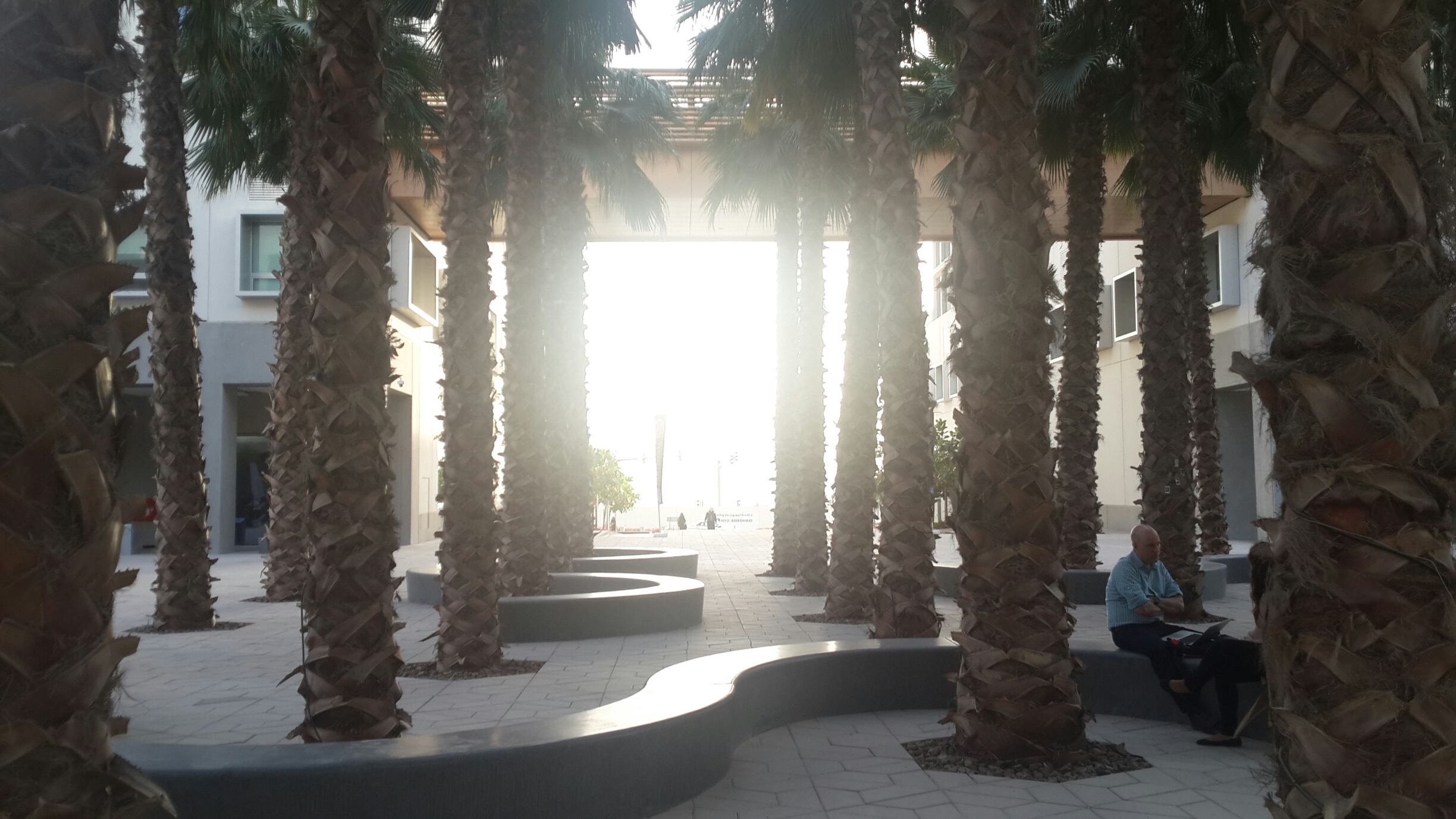
Students and faculty moved into the new permanent campus on Saadiyat island in 2014

Students and faculty moved into the new permanent campus on Saadiyat Island in 2014

A professor from New York University has been barred from travelling to the United Arab Emirates for his outspoken remarks against the country’s labour laws for migrant workers.

According to The New York Times, Andrew Ross, a professor at New York University specialised in teaching about labour issues, was in the airport on his way to spend his spring break at New York University Abu Dhabi conducting research into labour issues of migrant workers. He was stopped there and informed he is not allowed into the Gulf state.

New York University Abu Dhabi (NYUAD) is a satellite campus of the university in New York, which also has another similar campus in Shanghai, China. NYUAD has just recently moved into its new campus on Saadiyat Island in Abu Dhabi, a luxurious project that will also house offshoot branches of the Louvre and Guggenheim museums.

Ross has in the past been openly critical of the Emirates’ treatment of migrant workers, including those that worked on building New York University Abu Dhabi’s sprawling new campus in one of the most expensive areas of the emirate.

The UAE authorities have said Ross was not allowed to enter the country for security reasons. However, he suspects it is because of the stance he has taken against the country’s labour laws – sparking debates on academic freedom in offshore campuses of Western universities.

In an email sent to The Times, NYU spokesman John Beckman said that NYU faculty and students have had “zero infringements” on academic freedom and were allowed to travel freely between the campuses. But, he adds that “regardless of where NYU or any other university operates, it is the government that controls visa and immigration policy, and not the university.”

KAUST academics: Institution pushing the envelope through education, not protests

The King Abdullah University of Science and Technology (KAUST) is between a rock and a hard place – asked to condemn the flogging of a Saudi blogger, perhaps try to influence the sentence, in a country that doesn’t forgive opposition, and shuns dissenters.

Last month, a group of 18 Nobel laureates, “friends of KAUST” sent an open letter addressed to KAUST’s president Jean-Lou Chameau to urge the scientists of the world-class institution to speak up against the public flogging of Saudi blogger Raif Badawi. Badawi was sentenced to 10 years in prison and 1,000 lashes for starting a blog that criticized the Kingdom’s religious clerics and its politics. A Youtube video taken on a mobile phone showing the blogger receive the first 50 lashes shocked the international community, including said Nobel prizewinners who suggested that KAUST must decry the sentence or risk losing a measure of its credibility and world standing.

“The Badawi case once again highlights the responsibility of researchers and scientific institutions who collaborate with authoritarian and repressive regimes such as Saudi Arabia to denounce human-rights abuses,” reads a Nature editorial, in the magazine’s 5 February 2015 edition.

But KAUST leaders, it seems, are not faltering under peer pressure, and according to a new story published last week also in Nature, the scientists will continue their efforts to “quietly” attempt to impact Saudi Arabia – and perhaps the entire Arab and Muslim world – through scientific enlightenment, not confrontation.

“KAUST is built on values that I espouse as a scientist, and the impact of KAUST will be felt over time, in major part through the influence of its graduates,” Mark Tester, an Australian who is associate director of KAUST’s Center for Desert Agriculture, told Nature magazine.

“We are making a real contribution to the country through education, and through research advances,” he adds.

KAUST argues that its very presence challenges the status quo – and indeed, as the story notes, in “stark exception to strict Saudi society, [KAUST’s] campus in Thuwal, 90 kilo­metres north of Jeddah, imposes no discrimination on the basis of sex, religion or ethnicity. Unlike in the rest of the country, women and men mingle, and women can also drive.”

These freedoms were reportedly a condition of many of the Western scientists who backed KAUST’s development.

A researcher familiar with KAUST, who spoke to Nature on condition of anonymity because of the sensitivity of the issues, says that if KAUST researchers protest, “it would have little effect on the regime and would risk providing ammunition for the institution’s critics in Saudi Arabia,” who according to the researcher, already have KAUST under scrutiny.

“KAUST’s existence is evidence of the kingdom’s desire to develop,” Tester says. “It will take time, and I ask that people give us time.”

The Nature editorial from last week, insisting on the urgency of speaking out to defend freedoms while acknowledging the complexity of Saudi Arabia’s culture and society, says however that there’s no conflict between defending individual freedoms and having a broader reach.

“Campaigns for persecuted individuals whose plights otherwise risk going unnoticed can also, as in Badawi’s case, send the powerful message that the world is watching.

“Scientists at KAUST are perhaps not best placed to speak out, being at risk of potential retribution. But Saudi Arabia benefits hugely, not least in terms of its international image, from prominent collaborations with Western research organizations and universities, which have a duty to use that leverage to speak out on abuses, and to call for greater democratic reforms — both publicly and in their private dealings with their Saudi partners.”

2014 Year in Review: Nature Middle East highlights

In retrospect, 2014 was a mixed bag for the region – with some significant research produced on one hand, but on the other, in some countries, education, health and sectors in academia received some hard blows as a result of conflict and war.

In Syria for instance, the risk of infectious diseases is at its highest, warned a study published in PLOS Pathogens. The crisis was branded “a public health emergency of global concern” – with vaccine-preventable diseases not only reappearing in Syria but spreading to other countries with the outpouring of refugees, such as Lebanon and Iraq, which itself is reeling from years of damage to infrastructure and a myriad of health disasters.

Outbreaks of polio were reported – years after the Middle East was deemed “clean” – with WHO, UNICEF and ministries of health rushing to contain it. But even the largest vaccination campaign in the region’s history couldn’t reach its target as hundreds of thousands of children remain vaccinated, especially with access to hot zones barred.

Measles and rubella continue to be a burden in Syria, and in one instance, the vaccine killed instead of saved. At least 15 children died last September after being administered vaccines that were wrongly formulated, probably turning families away from seeking it and leaving many children unprotected.

Also in Syria, the lack of medical personnel is forcing untrained volunteers to tend to the injured and sick in hospitals.

Adding insult to injury, a study in The Lancet this year says that civilians aren’t even a priority for hospitals in a country like Syria, torn by civil wars. Fighters take up the majority of the available spots. In other hospitals, doctors risk their lives when they treat patients from the “opposite camps.”

In Iraq, the Islamic State (IS) is spreading its own brand of terror – taking over big universities and closing them down, including the historic University of Mosul. The education hubs are now used as makeshift camps for the militants. An independent Baghdad-based research tells Nature Middle East that soon conducting quality research in Iraq will be impossible. Skilled professors are already migrating in droves, in fear for their lives. “Many won’t come back even if the conflict ends,” says the researcher.

The International Center for Agricultural Research in the Dry Areas (ICARDA) conservation agriculture project that helps local farmers increase food production has been in jeopardy in Iraq since IS takeover. Insecurity, fuel shortages and lack of necessary equipment is breaking them, they decry.

Nearby, an estimated 3,900 schools in Syria had been destroyed or closed down during the first two years of the war. By April 2013, “22% of the country’s 22,000 schools [were] rendered unusable,” according to UNICEF.

The year 2014 also saw a comeback by Middle East respiratory syndrome coronavirus (MERS-CoV), which killed and inflected hundreds worldwide across 19 countries, with most of the infections concentrated in Saudi Arabia, where the virus was first discovered.

Nature Middle East was lucky to exclusively speak to the Egyptian virologist who first identified the virus, telling us the story of “patient zero” who died from an acute respiratory condition which was later revealed to be MERS itself. The mystery of MERS’ transmission was not lifted in 2014, but at least some countries are speeding up research into antiviral drugs that could contain it, or hinder its spread. Still, the fact remains, there are no anti-MERS drugs on the market so far.

In fact, overall things have been going south – health wise – for many in the region; not counting conflict victims and health complications due to war. A silent yet lethal predator, diabetes, has been preying upon the masses – with 35 million diagnosed with type 2 diabetes in the region.

Essentially, we have the  highest prevalence level of  in the world – with 1 in every 10 people living with it. Type 2 is tied to lifestyle, while type 1 has to do with genetics, autoimmune and environmental factors – and the incidence of the latter is rising sharply.

The highest rate of type 1 diabetes is in Saudi Arabia, with a shocking incidence of 14,900 children living with the disease, approximately a quarter of those in the Middle East and North Africa.

But in slightly better news, the region has managed (so far) to evade Ebola, which transmits through direct contact with bodily fluids and gains access to the body through skin abrasions and mucous membranes. The virus, however, has culled many in the central parts of Africa, and has fatality rates of up to 90%.

In terms of research, the region has been more prolific. Nature Middle East‘s chief editor Mohammed Yahia writes about the freshly released Nature Index, which was released in November and tracks where high impact research is being conducted around the world, and it shows many positive trends in the region – with Saudi Arabia leading with 358 papers, followed by Egypt.

Examples of prominent regional research includes one showing how Neolithic North Africans began exploiting cereal crops at least 500 years earlier than previously thought, published in PLOS ONE. The earliest evidence of cereal crop domestication in North Africa comes from the Fayum area of middle Egypt, and dates back to around 4350 BC.

In Lebanon, researchers from the American University of Beirut identified an algae species that can be a possible source of superfood and cheap renewable energy. In neighboring Syria, it turns out, two areas have the world’s highest concentration of wild-growing crops. The potential for these crops, distantly related to today’s agriculturally produced crops, lies in their gene pool, and adaptability – something that can provide breeders with genes that could enhance crop resistance to stresses such as climate change, pests, and disease.

Other breakthroughs include: In Sudan, a stunning discovery of a 3,000-year-old skeleton with metastatic carcinoma challenges the notion that cancer is a modern disease, opening new horizons for specialists to research cancer’s etiology and evolution. The ancient Nubian is probably the first cancer victim in archaeological record. As well, dinosaurs lived in Saudi Arabia, it seems. Fossilized remains identify specific dinosaur species from millions of years ago in the Arabian Peninsula when the area was covered by lush vegetation.

That being said, this year was not easy on the region, and infrastructures that provide the backbone of scientific endeavors have bore the brunt of political upheavals. In terms of progress – if we choose to compare notes with developed countries – we’re only barely inching forward.

Independent or university-backed research in the Arab world, collaborations with world-class institutions notwithstanding, is not enough to help Arab-affiliated researchers catch up with an incredibly prolific West. Governments must step in, opines Nobel laureate Ahmed Zewail and the academic president of Zewail City of Science and Technology Sherif Sedky.

“Renaissance in the Arab world will not be possible without genuine government recognition of the critical role of science in development and policies providing commensurate funding for basic research and reform of rigid bureaucracy which thwarts progress,” the experts say.

And considering it’s politics that seems to be setting the region back, Zewail and Sedky’s words ring true.

It is essentially a tug of war – between competent scientists and experts who’re aspiring to propel this region into the future, and governments staggering to make ends meet for their people, giving science a cold shoulder in the process. The next year may not tell us who wins, but it may very well give us indications – through statistics above all – of who is tugging harder.

In Egypt, religious texts may be used as science references

astrolabe

Meditations on the Quran may be taught as scientific “facts” in Egyptian schools

In Egypt, a new decision by Mahmoud El-Nasr, the minister of education, may very well see schools teaching its students about the “scientific miracles in the Quran,” as part of official curricula that both public and private schools will have to commit to.

Many Muslims believe that the Quran is not merely the word of God but a religious scripture that also predicts or describes scientific phenomena and theories, among other things.  An example supporting this view is a verse in the Quran that says that God “has constructed the heavens with might” and is “steadily expanding it.” Proponents of the theory that the Quran foretells scientific discoveries say that this is line with the modern observation that the universe is expanding at an accelerating rate.

Now, these meditations on the text, as per the new ministerial resolution, may be taught as scientific “facts” in Egyptian schools – an issue that some might regard as perturbing at best.

“This is not how science is done; looking in the Quran diverts students from the tried-and-true scientific method, i.e. the need to observe nature, study phenomena, formulate hypotheses, draw conclusions and predictions, test the hypotheses through experiments and more observations,” comments Nidhal Guessoum, renowned Algerian astrophysicist, and author of Islam’s Quantum Question: Reconciling Muslim Tradition and Modern Science.”

So far, the harshest backlash in Egypt came from a few media personalities, and two political groups that advocate secularism and separating religion from politics. The new move by the minister is, in his words, part of “promised progress” in the research and education sphere, according to circulating press reports.

Guessoum, however, says that none of the many examples that have been advanced to proof that scientific prophecies are hidden within the religious text stand up to scrutiny; “on the contrary, they simply betray basic and serious misunderstandings of the relevant science on the part of the claimers.”

A Muslim himself, he opines that the Quran never tells Muslims to dissect (and bend) its verses in search of scientific knowledge; “on the contrary it tells us: ‘Travel in the earth and see how creation (was) started…’ and, ‘We shall show them our signs in the horizons and in themselves…’, and hundreds of verses that exhort Muslims to observe, think, contemplate, etc. – never to look for natural facts in the Book.”

The scientist believes that the Quran considers natural phenomena as signs that point to a higher intelligence and a purpose, “but that’s at the interpretation stage, not at the exploration/research stage. The science part is done through the usual research methodology, then the interpretation, or theology is done after that to draw meaning from what’s been discovered.”

“Why would the Quran carry 20th to 21st century science in particular?”

During a press conference at Zewail City for Science and Technology, this editor ran the question by Nobel Prize winner and the “father of femtochemistry” Ahmed Zewail, who was appointed by President Abdel-Fatah El-Sisi to a presidential advisory council, typically consulted on education among other things.

Zewail avoided outright criticism of the move by the ministry, clarifying that he doesn’t personally “see a collision between science and religion,” specifically a version of religion that is “forgiving” and “which understands what scientific development and what science application mean.” Still, he affirmed that in places like Zewail City, a hub for scientific research and knowledge, this “mixing” between religious concepts and science will not be present.

University election law scrapped in Egypt

Cairo University

Cairo University

Egyptian President Abdel-Fattah El-Sisi has introduced amendments to the university law on Tuesday to mandate that university presidents, deans and heads would be directly appointed by the president.

Prior to the 2011 revolution, all the heads of universities were appointed by the president. But after mass protests from students and faculty members following the revolution the law was changed, introducing elections amount faculty members for these  top positions. The presidential decree, issues last Tuesday, is seen by many as a reversal to pre-2011 control of universities.

Now, the minister of higher education will form a committee to suggest three names for each position, and these will then be passed on to the president to make the final selection. The appointment will be for four years and is renewable, according to the Arabic language local Al-Ahram newspaper.

The president can also dismiss the heads of universities and faculties before their four-year period is over, following the advice of the Supreme Council of Universities.

The presidential decree has angered several faculty members, who see this as a return to autocratic control of universities and their campuses.

Hany El-Husseiny, a founding member a founding member of the 9 March Movement for the Independence of Universities, told Al-Ahram Online that the decree shows that the current regime is committed to adopt a dictatorship and reject democracy, adding that the faculty members will not accept it and will not be silenced.

The 9 March Movement was created in 2005 to fight for academic independence and an end to police interference on campus, and includes several prominent researchers and professors from different disciplines and different universities.

The past year has seen a sharp increase in violence in university campuses, leading to the death and arrest of several students. Ever since the popularly-backed coup in 30 June 2013 that deposed of then President Mohamed Morsi, students that oppose the coup have held protests on campuses that were often violently dispersed by police interference.

Some faculty members have welcomed the decree, hoping it will bring stability in universities and remove supports of the Muslim Brotherhood, which was recently deemed a terrorist organization by the Egyptian government, from top leadership positions in universities.

First ‘Falling Walls Lab’ held in Cairo

Guest post by Louise Sarant

The Middle East’s first ever ‘Falling Walls Lab,’ a fast-paced competition, attracted a reasonable crowd this week in the German Science Center Cairo (DWZ Cairo). One after the other, 13 candidates climbed on stage to present, in three minutes, their innovative idea, groundbreaking research or fresh business model in front of a jury from academia and research.

Established in 2009, two decades after the fall of the Berlin Wall, the Falling Walls is an annual conference that highlights breakthroughs in science and society.

At the beginning, the conference used to mostly host idea-makers and inventors from Germany, but starting 2013, it has been showcasing a growing number of young creative minds from across the globe.

Falling Walls 2

Members of the jury at Falling Walls Lab, Cairo.

Of the 22 international labs currently underway for the 2014 edition of the conference, the first Middle East one was held in Cairo, while the other regional lab will take place at King Abdullah University of Science and Technology (KAUST) some time in the coming months.

“The DWZ in Cairo received 70 applications, which is the most any lab has received to this point,” says Nåveed Syed from Falling Walls, who came especially for the Cairo Lab from Germany. “It shows a lot of interest for this type of format as well as an eagerness to show what they are working on.” Experts at the Cairo-based science center screened these applications and selected 13 bright minds under 35 from a various disciplines to present their innovations.

A young energetic engineer at the National Research Center, Ahmed Zakaria Hafez, sprung on stage, holding in his hand a cup filled with cold water topped by a miniature fan in motion. Filling the screen with a picture of his disabled friends sitting in wheelchairs, he told a story. “The energy contained in an electrical wheelchair only enables it to function 30 to 40 minutes. My project aspires to draw energy from three power sources:  heat created by the human energy, pressure and solar energy.”

Hafez ranked third in the competition, which results were announced after a 15 minute deliberation from the jury.

The top winner however was Hani el Khodary, a 28-year-old founder of the energy start-up ‘Biogas People’  and a composting expert. In his short exposé, entitled “Breaking the Walls of the Gas Crisis in Egypt,” he showcased his idea to partly solve two typically Egyptian problems: the insufficient energy supply and the rising amount of organic waste.

By attaching large biogas units to a chicken farm, he wants to create a closed, sustainable system in which chicken manure and organic waste would be fed to the biogas units, which would in turn provide heat for the chicks and compost for the land.

Falling Walls Cairo shortlisted candidates.

Falling Walls Lab Cairo shortlisted candidates.

“One chicken farm consumes diesel and 40 subsidized gas cylinders a day for the sole purpose of providing sufficient heat for the growing chicks,” says el Khodary, who is currently experimenting this system on a smaller scale on a chicken farm by the Ismailia road. “We are realizing that chicken manure has high ammonia levels that need to be neutralized by specific bacteria before this system can function.”

If he wins the Berlin competition, he says he will try and pursue a course on biogas in a German university.

Mohamed Salheen, Program Director of Ain Shams University’s Integrated Urbanism and Sustainable Design and a member of the jury seemed overall content with the performance of this first batch of applicants. He believes that the contenders were good at managing their time and presenting their projects, but that some of the ideas should have been more elaborated. He adds, however, “there is stamina, a momentum in Egypt right now: people want a change and a chance.”

Who knew? Popular teens are not immune to bullying either

Turns out being popular might not save you from sneering, jabbing and harassment in school yards, a new University of California study concludes – the persecution is certainly not exclusive to those who are poor or “physically vulnerable.” In fact, becoming popular increases the risk of getting bullied, and worsens the negative consequences of being victimized, according to the same study.

“In contrast to stereotypes of wallflowers as the sole targets of peer aggression, adolescents who are relatively popular are also at high risk of harassment, the invisible victims of school-based aggression,” says Robert Faris, associate professor of sociology at UC Davis and co-author of the study, “Casualties of Social Combat: School Networks of Peer Victimization and their Consequences.”

“Do aggressors attack the weak?,” the study asks. “According to our findings, the answer to this question is: not as often as they attack the strong. Aside from a few isolated students, the highest rates of victimization are observed among students of relatively high social standing.” The brunt of it decreases however as students rise to the pinnacle of the hierarchy of social standing.

Being “easier targets,” girls face much harassment too, but are not under-represented in studies on school violence and bullying. And what usually goes unchecked is their repertoire of retaliation, like using gossip in counter strikes for instance. Girls are not always physically aggressive, while guys are expected to “defend their honor with brute force.” It’s a play between social expectations and constraints, the study explains.

It’s worth noting however that “girls do not harass other girls generally, but focus their harassment on girls who date,” since they pose threats to other female students’ social standing, and “represent potential rivals when it comes to securing a boyfriend.” It’s also interesting that once a victim of bullying, you put your friends at higher risk of being victimized by proxy.

“It’s kind of a hidden pattern of victimization that is rooted in the competition for social status,” the author was quoted as saying in a press release.

“We view aggression as fundamentally rooted in status processes, and we identify an overlooked class of victims, who, by virtue of their relatively lofty social positions, experience at least as much distress—at the margin—as do those for whom victimization is routine,” reads the study, which used social network centrality as an indicator of status. The research sample was predominantly white and African American but roughly split between genders.

There isn’t a country or community that is absolutely immune to school victimization, it seems – in Egypt alone, statistics by the National Centre for Social and Criminal Research suggest that 30 per cent of students suffer from some type of harassment or bullying in schools, and across the Arab World, a 2012 study published in the Arab Journal of Psychiatry, confirmed that the phenomenon is prevalent, especially among middle-school adolescents. In the United Arab Emirates, 20 per cent of teens are bullied, in Morocco, 31.9 per cent are, in Lebanon the number rises to 33.6 per cent, as per the same study, and Oman and Jordan reportedly suffer from the highest prevalence of school bullying at 39.1 per cent and 44.2 per cent respectively.

During reporting on sectarian violence in several towns in Upper Egypt, this writer has personally come across several cases where Coptic Christian students complained they were specifically targeted –sometimes physically attacked– by their Muslim peers for their beliefs. But no official figures or studies that assess the extent or range of religious-based bullying –or bullying of minorities– in Egypt have yet been released. The same goes for studies that measure the relation between bullying and social status within school hierarchy.

Bullying –unlike school violence—usually happens in the absence of provocation, and is marked by a clear power imbalance between the bully and the bullied. Recent scholarship, according to Faris’ study, even points out traditional views that saw bullies as mentally troubled or socially marginalized seem to be outdated, and that students usually harass their peers, not to reenact their troubled home lives, but to gain status.

I showed Faris’ research to Melanie Hayden, a secondary school counselor based in Cairo, Egypt. She found the findings “interesting” adding that she has “occasionally been aware of a ‘popular’ student being targeted in some way by others who saw them as a threat (either to their own ‘popularity’ position or a jealousy issue).” And as a psychologist, she “can certainly understand where a student trying to ‘work their way up’ the hierarchy is also vulnerable to being bullied, certainly before they’ve ‘arrived’ and they’re becoming a threat to others’ status etc.”

“For those ‘at the top’ I can see how they’re much less vulnerable due to the ‘power’ of being very popular, or very successful – and likely better self-esteem, which I’d think is a key factor,” she says.

It’s not clear however whether the conclusions of this study can be used to generalize about bullying dynamics across cultures; and whether or not school structures in the United States, or the degree of competitiveness between students in certain schools, contribute to the instrumental factors that shape this brand of victimization. Then again, sample students from the research played sports, went on dates, and lived with parents, at least one of who attended college.

These factors may not be present in many Arab schools that are often gender-segregated, may not be as ripe with extra-curricular activities as U.S. schools are, may not place strong emphasis on sports as an indicator of student status and are certainly more conservative than their American counterparts in terms of tolerating “cross-gender” relationships.

Finally, the study mentions how such findings related to bullying are not merely theoretical and carry practical implications—as they should—on national discourse; the ranks of victims are not exclusively dominated by vulnerable, socially marginal students, but are also full of many students who relatively popular, and who seem well-adjusted, at least on the surface. “We hope these more central victims, hidden in plain sight, are acknowledged in the national dialogue,” says Faris. “And that the current focus on bullying expands to include more subtle forms of harassment and cruelty.”

Fellowship opportunity for researchers in the Middle East

This is a guest blogpost from Mohammed Jawad, an honorary clinical research fellow at Imperial College London who recently spent a month at the American University of Beirut, Lebanon, thanks to a grant from the Daniel Turnberg Travel Fellowship scheme. The scheme, led by the Academy of Medical Sciences, provides opportunities for biomedical researchers to travel from the Middle East to the UK, or vice versa, for up to four weeks at a time. This year, A small number of three-month fellowships will also be available.

mohammed JawadLate in 2012, as a recent graduate from Imperial College School of Medicine, I found myself developing a strong interest in academic public health medicine, and began to search for ways to enhance my research skills.

At the time, I was beginning to develop an expertise in waterpipe tobacco smoking (also known as narghile, or shisha), a traditional form of smoking originating from the Middle East that has seen a recent popularity surge in the West. I was making good progress in the field, taking every opportunity to conduct research and present my findings at conferences.

Amidst my busy working life as a junior doctor, I stumbled across the Daniel Turnberg UK/Middle East Travel Fellowship scheme. I was cautiously optimistic when I applied for a Fellowship in January 2013, but was delighted when I was selected and it became an important step in my career.

I visited the Faculty of Health Sciences at the American University of Beirut, Lebanon, in September 2013, where my supervisors would be leading experts in waterpipe tobacco smoking. I went with a bag full of enthusiasm and motivation, which was wholly reciprocated by my supervisors.

By liaising with several members of the Faculty and maintaining a strong work ethic, I was able to initiate no less than six research projects, and ended the Fellowship with three draft manuscripts to take away with me. During my time at the university, I was also given the opportunity to present my research to students and faculty staff on two occasions, the latter receiving local media attention, which was a new but very enjoyable experience.

For those thinking of applying to the Fellowship, I do have some advice to share. Match your area of research interest with a suitable colleague at your host institution, and start early discussions in order to show commitment to the Fellowship on your application form. This will also help generate potential project ideas that will make your visit more effective. Bear in mind that a month’s visit is not usually enough to time to complete a full research project, so use the time wisely to establish a healthy rapport with your team. Constructing a strong foundation during your stay will enable you to continue your project(s) when you return to your home institution.

Finally, be initiative-seeking and enjoy your time! Academics do work hard, but you have to show to your colleagues that you have a personality beyond the library. I joined the university football team, experienced the culture and lifestyle of a Middle Eastern city and made a host of friends on the way. It certainly was a new and uplifting experience that I wholeheartedly recommend to those wishing to expand their academic credentials. If you’re not successful in your application, don’t be disheartened, for the early discussions with your potential supervisor will certainly pave the way for continued future collaborations with that institution. Just keep hunting for opportunities, and eventually it will pay off.


Round 6 of the Daniel Turnberg UK/Middle-East Travel Fellowship Scheme is now open for applications. More details can be found on the Academy of Medical Sciences website. The deadline to submit applications is Wednesday 15 January 2014, 17:00 (GMT).

Applications are sought from clinical and non-clinical researchers from Egypt, Israel, Jordan, Lebanon, the Palestinian Territories and the UK, whose research falls within the broad scope of medical or bioscience research.