NME’s weekly science dose (August 23-29)

The diversity of microbial species living in your gut may serve as markers to identify your likelihood of becoming obese. Researchers, including Jun Wang from King Abdulazziz University, Saudi Arabia, found significant differences in the composition of gut microbes in 169 obese and 123 non-obese Danish individuals.

The research team reports that those with a low diversity of microbial species appear to have more metabolic abnormalities, making them more prone to increased body fat and insulin resistance. Find out more here.

Another research item we highlight this week shows the link between mutations in a specific gene and a group of childhood neurodegenerative disorders. The gene, which codes for the enzyme AMPD2, was found to be mutated in five patients suffering from pontocerebellar hypoplasia (PCH), a disorder characterized by a shrunken brainstem and lower parts of the brain, resulting in cerebral palsy and mental impairment. More details here.

Beyond the hood

It seems that a deficiency in a protein called RbAp48 in the hippocampus is a significant contributor to age-related memory loss. The study, conducted by a team of Columbia University Medical Center researchers, offers the strongest causal evidence yet that age-related memory loss is distinct from and Alzheimer’s disease.

The study entailed performing gene expression analyses of postmortem brain cells from the dentate gyrus (a subregion of the hippocampus) of eight people aged between 33 and 88. While they were free of brain disease, the analyses found a steady decline with ageing across the subjects in the expression of the gene that produces RbAp48.

The research team then genetically inhibited RbAp48 in the brain of healthy, young mice. The result was the same degree of memory loss as among aged mice. When RbAp48 inhibition was turned off, the mice’s memory returned to normal, suggesting that age-related memory loss may be reversible. You can read more about this study here.
Must science and religion be at odds?

Similar to most regions of the world, the Arabic-speaking Middle East is home to a rising ‘anti-science’ sentiment, as people are becoming increasingly distrustful of science and seeing it as a force in conflict with their religious beliefs. Poor educational systems and limited understanding of science and science procedures can make this even more profound in our corner of the world.

But while it may be becoming harder to convince the layperson to appreciate science, Nidhal Guessoum, an astrophysicist and associate dean of the college of arts and science in the American University of Sharjah, argues that it can be even harder to convince scientists to appreciate religion.

Science and religion are vastly different in many ways, as Guessoum points out. The first problem that arises is a problem of definition. While the definition of science is obvious to most, a process of rigorous analysis and discovery of the world, religion is far from it. People often confuse religion, faith and spirituality. These are all different and one may possess one and not the others.

Guessoum raises the issue of  our understanding of both science and religion, the boundaries between the two, and if they can/should coexist, in a lively discussion that attracted hundreds of posts. The discussion is over now, but it has raised some very interesting points and – while it is a long read due to the high interactivity – it is definitely worth the time to read.

You can read the Guessoum’s original article here, then follow the whole discussion with valuable insights here.

NME’s weekly science dose (August 16-22)

Aid organizations are failing to address urgent the health needs of Syrians, domestically and of those driven from home. This conclusion is based on an UNHCR report that highlights the lack of long-term strategies and poor coordination to explain the agencies’ shortfalls.

Already an estimated 70% of medical professionals have fled Syria and 60% of healthcare facilities in opposition-controlled areas have been damaged or destroyed. Facilities in Jordan and Lebanon are strained due to the influx of refugees. With health issues being identified as the most grave risk Syrians face, what’s to be done to minimize this crisis within a crisis? Read more about it here.

On the other hand, in the midst of the political unrest in Egypt, it’s heritage continues to be at risk as violence continues. Raiders broke into the Malawai National Museum and ransacked its collections on two consecutive nights, stealing or destroying almost all of its artefacts.

The museum, 300km south of Cairo in the Upper Egypt city of Minya, is a little-known cultural centre, but is home to a diverse collection that spans Egyptian history from Greco-Roman to the 18th Dynasty eras. Read more about what archeologists are doing to try and salvage what they can of the museum.

In other news, scientists have completed sequencing the genome of Phoenix dactylifera L, more commonly known as the date palm. A team of researchers from Saudi Arabia collaborating with colleagues in China have built on earlier work by a Qatari research team to sequence more than 90% of the genome of an important variety of P. dactylifera called Khalas. More details here.

Beyond the hood

A blood test can tell you all sorts of things about your health, but it does not reveal your deepest, darkest thoughts — unless those thought were about suicide, it now seems. New research from the Indiana University School of Medicine suggests that biomarkers in the bloodstream can indicate whether someone is contemplating killing themselves.

The researchers identified these biomarkers by comparing blood samples drawn when bipolar patients’ suicidal thoughts were low to blood samples drawn when suicidal thoughts were high. A significant increase in the amount of a protein associated with the activity of a gene called SAT1 was observed in those with suicidal thoughts.

The study also examined blood samples taken from nine suicide cases and found this protein to be unusually high–significantly higher than those with suicidal thoughts that didn’t actually kill themselves.

While the sample size used in the study is small, the researchers claim the results reflect a “proof of principle” for a suicide test. More about it here.

Homosexuality not a disease, says Lebanese Psychiatric Society

Last month the Lebanese Psychiatric Society (LPS) issued a statement declaring that homosexuality is not a mental disorder. The statement reads:

“Homosexuality is not a mental disorder and does not need to be treated.

Homosexuality in itself does not cause any defect in judgment, stability, reliability or social and professional abilities.

The assumption that homosexuality is a result of disturbances in the family dynamic or unbalanced psychological development is based on wrong information.”

The statement puts Lebanon in step with prevailing medical practices, which have largely not considered homosexuality a disorder since 1973.

The LPS also stated that “the assumption that homosexuality is a result of disturbances in the family dynamic or unbalanced psychological development is based on wrong information.”

Currently, the LPS is the only psychiatric association in the Arab world to explicitly state that it does not consider homosexuality as a treatable ailment.

Ramzy Haddad, a Lebanese psychiatrist speaking on behalf of the LPS, said that the statement was issued in response to a significant increase in the media classifying homosexuality as a disease that can and should be cured.

“So we decided to highlight and specify the scientific data concerning the issue,” Haddad says.

Asked whether he hopes other associations in the Middle East will follow suit, he said, “our statement is based on scientifically proven methods and treatments, so we only hope other societies will also highlight the scientific evidence on that issue.”

However, even within the Lebanese psychiatric community, there remains a division in attitudes towards homosexuality.

Salah Asfour, a clinical psychiatrist in Lebanon who considers homosexuality as “individually blurred sexual orientation triggered by a multifactorial etiology,” says that there is already a backlash triggered by some of his colleagues, who are against legalizing homosexuality.

Currently, male homosexual activity is illegal in a majority of Arab countries, with the death penalty applicable in Saudi Arabia, Sudan and Yemen.

NME’s weekly science dose (August 9-15)

The mystery of why the universe contains more matter than antimatter has long puzzled physicists. The standard model of physics predicts that an equal number of particles and antiparticles should have formed soon after the big bang, cancelling each other out and thereby stopping the “content” of the universe (galaxies, stars, planets, etc.) from forming.

Trying to explain this discrepancy, a group of physicists based in Egypt and Mexico have proposed the existence of a new type of particles, called “right-handed neutrinos”. This hypothesized particle is predicted to break down into particles, but not antiparticles — leaving behind more matter than antimatter. But the idea presents some challenges and presupposes an as yet hypothetical extension of the Standard Model: string theory. Read more about this interesting new research here.

In other news, the diodes that light up our streets and panels (LEDs) are apparently in for metamorphic upgrade: researchers—including Safae Aazou from Morocco—have made an ultra-thin, highly flexible and stretchable variety of them. These “polymeric” LEDs are engineered by sandwiching a thin layer of semiconductor photo-emitting material between a metal and a transparent organic electrode, all fixed on top of a thicker flexible polymeric substrate.

This allows the diode to be bent and stretched while still working properly. The entire setup does not exceed two micrometers in thickness. More details here.

Beyond the hood

Here’s a story that’s sure to let the “don’t play God” squad cringe: glow in the dark rabbits. They’ve been bred at the University of Istanbul. And no they don’t run on Energizer batteries.

Out of a litter of eight, the research team (from Turkey and Hawaii) have produced two rabbits that look like normal fluffy bunnies in the light, but glow an eerie green in the dark. The goal of the study was to demonstrate that a particular genetic manipulation technique works effectively—the hope being that it can then be used to develop new medicines.

To create the glowing effect, the researchers injected jellyfish DNA into a female rabbit’s embryos. These were then placed back into the mother, with the effect being that out of its eight offspring, two glow in the dark. Have a look at this extraordinary video of these rabbits.

Camels may be the MERS virus host

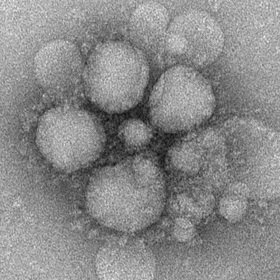
MERS-CoV particles as seen by negative stain electron microscopy.

MERS-CoV particles as seen by negative stain electron microscopy.{credit}Cynthia Goldsmith/Maureen Metcalfe/Azaibi Tamin/CDC{/credit}

As the Middle East Respiratory Syndrome coronavirus (MERS-CoV) continues spreading, scientists have been searching for the intermediate host that might carry this virus and transmit it to humans.

The MERS virus belongs to a family that is usually found in bats. Some scientists argue that there might not be an intermediate host, and that it probably makes its way to humans from food contaminated by bat dropping or saliva. However, a group of researchers have tested blood samples from several animals, including cattle, sheep, goats and race camels, and suggest the camels – which come from Oman – may be the elusive intermediate host.

The researchers tested the blood samples from these animals for the virus antibodies, which, if positive, is an indication the animal may have been infected with the virus in the past. All 50 of the race camels from Oman tested positive for the antibodies – as well as 14% of Spanish camels. The researchers suggest that, based on the results, either MERS or something very similar has infected camel populations, publishing their results in The Lancet Infectious Diseases. Given the Oman samples come from different locales, the virus is probably widespread across the country.

Other Middle Eastern countries that have had widespread MERS infections, such as  Saudi Arabia (where it was originally discovered) and Qatar, refused to cooperate with the researchers, reports Science.

Many Middle Eastern countries consume a lot of camel meat. The region often imports camels from Africa and Australia for local consumption. According to Science, the camels could have been infected by bats in Africa or Australia and carried the disease to the Middle East. Alternatively, they may have actually been infected in the Middle East. To be able to prove which scenario is true, the researchers suggest that the blood samples of imported camels needs to be tested at importation.

Until the actual virus is isolated from camels, the researchers cannot be 100% sure the infection is actually MERS-CoV and not something closely related. To start searching, they would ideally need to find herds of the camels where some of the animals have developed the antibodies and others did not. Those without the antibodies might still be carrying the virus, and would offer a conclusive answer to whether these race camels are, indeed, the intermediate host of the virus.

Meanwhile, however, the World Health Organization (WHO) have met twice last month and stated that the MERS-CoV outbreak does not yet meet the standards to label it a pandemic or an international public health emergency similar to the SARS virus in 2003.


NME’s weekly science dose (August 2-8)

When epidemiologist Diego Cuadros told fellow scientists that he was moving to Qatar, they looked at him in disbelief. What, they asked, did he hope to gain from doing research in a small Arab emirate, fabulously rich in oil and gas but with no noteworthy tradition in science?

Qatar, Saudi Arabia and UAE are all providing oases of postdoctoral opportunities for researchers from around the world, but can these institutes offer something on par with the West, or are they mere mirages? Read about the experiences of researchers who have relocated from the West to the Gulf. These centres may still not have the infrastructure of an MIT or the reputation of an Oxford, but with Qatar spending $1 billion on research and higher education each year, and with KAUST running on a $10 billion endowment, the lure of the Gulf for many researchers is starting to prove somewhat irresistible.

On a much smaller scale, exploratory attempts are being made at El-Gouna, an exclusive Egyptian resort by the Red Sea, to transform it into a scientific and research hub. The resort’s developer, Samih Sawiris, CEO of Orascom Development and one of Egypt’s richest businessmen, has single-handedly financed the establishment in El-Gouna of a branch of the prestigious German university, Technische Universität Berlin.

The campus is currently finishing up its first year now, having enrolled 29 students in October 2012 in its three applied technology postgraduate programmes: master’s degrees in water engineering, energy engineering, and urban planning. Read what Kester von Kuczkowski, its managing director, has to say about the campus’s ambitions and the challenges facing it.

Finally, in Morocco, a cigar-shaped fossil unearthed in 2012 is helping explain the origin of starfish and sea lilies. Belonging to a marine animal that lived 515 million years ago, the fossil has features that place it as a missing link between helicoplacoids, the oldest known echinoderms, and the ancestors of echinoderms such as sea lilies and starfish.

The fossil is being heralded as a discovery of exceeding importance in helping scientists understand a major transition in the history of life. Specifically: the development of pentaradial symmetry in echinoderms. More details here.

Beyond the hood

Fancy a €250,000 beef burger? No animal has been killed in the making of it. It’s not made of some vegetable-based substitute, but real beef with real muscles cells and all. Except these cell were grown in a lab, weaved together into fibres, and finally compressed into a burger.

Presenting the burger for the first time, a press conference drew curious journalists from around the world to London this week to witness this product of several years’ work being served up to taste. The two tasters seemed quite impressed with its texture and “mouth feel”, noting that it certainly felt like they were eating meat. But did it actually taste like meat?

Not so much. As the burger is made purely of muscles cells, the lack of any fat gave it a somewhat bland taste. But incorporating fat cells into the next burger is what Mark Post, the scientist behind the burger, is aiming for now. He expects that once mass produced, and presuming that the technology behind it did not advance, a kilogram of cultured beef would cost around $70.

However, the scientist hopes that cultured beef can make its way into supermarkets at a much lower price and with a much better taste in around 10 to 20 years. Currently, around 30% of the Earth’s usable surface is covered by grazing land for animals, while only 4% is being used to directly feed humans. As populations continue to grow towards 9.5 billion by 2060, this trend will become increasingly unsustainable. Beef grown in a lab, however, may provide a more environmentally viable, as well as far more humane, alternative.

You can watch the press conference and get more information here.

Why the Gulf is attracting young scientists

For many researchers around the world, Arab states in the Middle East do not sound like the place to move to for a career in science research. A recent boom in the quantity and quality of universities and research centres in the region, however, is turning many eyes.

The draw of generous funding, top-of-the-line laboratories and high salaries are attracting many researchers to leave their careers in the West for – at least a brief – stint in the Middle East. Countries like Qatar, the United Arab Emirates and to a lesser degree Saudi Arabia are becoming increasingly multicultural with a large expatriate community which helps these researchers override their biggest fear: the cultural shift of moving to more conservative countries.

This week’s Nature podcast explores what is pulling young researchers to the Middle East, and what they hope to gain from their time there. You can listen to it in the second section of the podcast, titled “The draw of the Gulf”, on the Nature podcast homepage here.

NME’s weekly science dose (July 26- August 1)

Hundreds of thousands of Muslims have been heading to Mecca in Saudi Arabia for Umrah during Ramadan and millions from around the world will converge on the city for Hajj in October. Could that be the fuel that the new coronavirus causing Middle East Respiratory Syndrome (MERS), which was first discovered in Saudi Arabia, needs to spread into a pandemic?

But health officials around the world are not too worried, since the virus has not shown much evolution to adapt to humans and become sustained in communities. This might change in the future, of course, but so far, pilgrims on their religious pilgrimage should be safe and just need to keep in mind they adopt common sense practices, such as washing their hands regularly and making sure their food is clean.

Not too far away from Mecca, researchers at KAUST have worked with their colleagues in Texas A&M University in the United States to produce a computer model to estimate the large number of reaction parameters involved in protein production from gene clusters, which are complex networks of genes that influence each other. There was no special model for these reaction parameters before and the new model, called PEDI, has produced better results than any other previously present models.

Finally, in the United Arab Emirates, researchers have managed to get crystals of a cobalt compound to jump huge distances that are up to hundreds of thousands their size. by exposing the crystals to ultraviolet light, the crystals underwent tiny minute structural changes causing strain energy to build up inside. When this energy was released, the crystals went hopping.

Lead researcher Panče Naumov from the New York University in Abu Dhabi suggests this can be a model to develop self-actuating devices – which are devices that can move without external forces – based on biological and chemical systems. This could, for example, help in the creation of artificial muscles.

Beyond the hood

Are you addicted to your cellphone? Then we might have some bad news for you. Researchers at Tel Aviv University have compared the saliva of heavy mobile phone users to non-users. They found that heavy users had indications of higher oxidative stress, which creates free radicals, can damage cell DNA and is considered a major risk factor for cancer.

The researchers studied saliva because when we hold cellphones up to our ears it is very close to the salivary glands. There is still a lot of research needed to reach more conclusive results, but meanwhile, it may be a good idea to use a hands free while talking on the phone for prolonged periods of time.

Finally, when it comes to love, men and women may not be so equal. According to new research, the hormone oxytocin, often called “the love hormone”, affected them differently. It helps men identify competitive relationships better, while it helps women identify kinship.

Interestingly, the so called love hormone did not help either of the sexes to identify intimate relationships better. The researchers suggest this proves that identifying intimate relationships is a more complex process formed of a combination of biological and cultural factors.