‘Volcanic’ nanotherapy

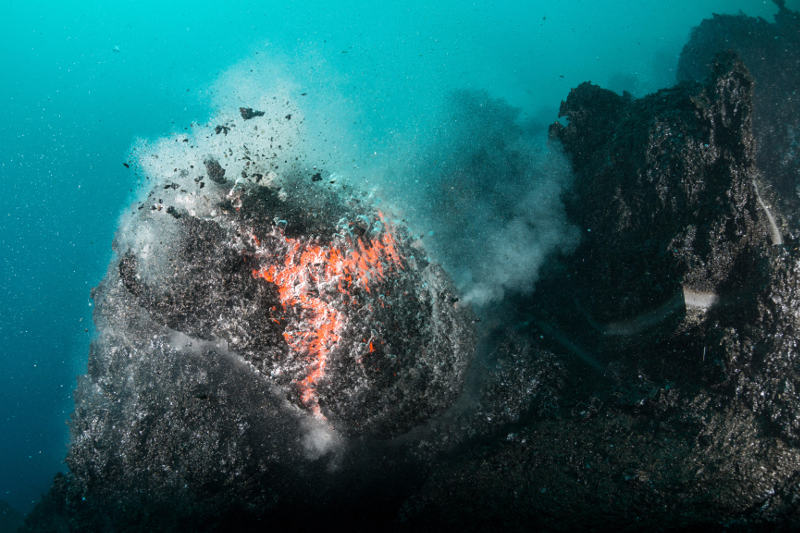
The research was inspired by the dynamic resulting from deep ocean volcanic eruptions.

The research was inspired by the dynamic resulting from deep ocean volcanic eruptions.{credit}Nature Picture Library / Alamy Stock Photo{/credit}

In order to stack nanoclusters of oxygen-rich zinc peroxide in a way that allows it to be used for cancer therapy, researchers simulate a natural phenomenon, which usually results from underwater volcanic eruptions, inside the lab.

Nature Middle East sits down with Mady Elbahri, one of the authors of this new research. Elbahri, an Egyptian scientist, is a professor of nanochemistry and nanoengineering at the school of chemical engineering, Aalto University, in Finland.

NME: You’ve come up with a new nanotherapy tool for cancer by simulating a process called the “Leidenfrost dynamic”. Can you explain it to me? Where did you draw inspiration for it?

Mady Elbahri: Well, we’re all familiar with the Leidenfrost phenomenon and [we may] have observed it while cooking in the kitchen, when a water drop touches a very hot pan’s surface. Instead of the expected rapid evaporation, the drop starts to move and dance on the hot surface. I observed this phenomenon in my kitchen a few years ago and contemplated its origin and the idea of employing it for nanosynthesis. Based on the knowledge I collected about this process, I introduced the new concept of “Leidenfrost nanochemistry”, which means synthesis of nanoparticles using the Leidenfrost effect.

NME: Can you walk me through your methods of creating nanoclusters of zinc peroxide using this new method?

ElBahri: In our latest study, we extend applicability of the phenomenon by mimicking the activity of the volcanos deep in the ocean. In this version of the Leidenfrost process, synthesis of nanoparticles starts at the bottom of a hot bath in an overheated zone at the vapor-liquid interface. Subsequently, the particles erupt towards the colder region of liquid-air interface for further growth. By such type of physical separation we are able to tailor the size of the particles.

NME: You mention in your paper that tailoring the size of the nanoparticles produced can selectively kill cancer cells. Can you elaborate more on this?

Elbahri: Tailoring the size can directly affect the oxygen release. Size plays an important role in this therapeutic process; to ensure a uniform effect, such particles should be equal in size. Also, the drug should not harm healthy cells and fibroblasts and so you need to adjust the size in a way that it can selectively destroy the cancer cells without affecting the others.

NME: How do you plan on building on this research in the future?

Elbahri: Further research can help us acquire the best therapeutic response with respect to size and dose of the nanoparticles. I also aim to transfer this knowledge to Egypt. … It will be my honor to support my motherland in getting its deserved scientific position in the world.

Interested in knowing how Elbahri and his colleauges drew their inspiration for this study? Listen to the new episode of Nature Middle East Podcast for the story behind the research.
Green antibody mimics

This is a guest blogpost by Youssef Mansour.

Scientists have devised a new method to create biocompatible, artificial molecular recognition systems with potential use in drug delivery, sensing and bioseparation –– they say it’s the “greenest” strategy described to date.

Over billions of years, biological systems have developed sophisticated strategies governing how a molecule recognizes another to elicit a target function, such as the recognition of an antigen by an antibody to deliver an immune response. Synthetic chemists, however, are faced with the challenge of designing similar systems in the span of a career. But the perk? These mimics, if achieved, can provide a cheap alternative for industrial and biomedical applications.

But building an analogue system that is compatible for use in a living system and sustainably produced proved tougher than previously thought.

That is until a team led by Karsten Haupt of Compiègne University of Technology and colleagues from the Lebanese University came up with a new strategy to synthesize artificial macromolecular polymers in a biocompatible and sustainable manner. Macromolecules are very large molecules, such as protein or lipids, and are typically constructed using smaller units.

The team used a generic approach of producing polymeric analogues called molecularly imprinted polymers (MIP) – bringing artificial molecular recognition systems a step closer to finding practical use in biomedical applications.

Helping women in research navigate career challenges

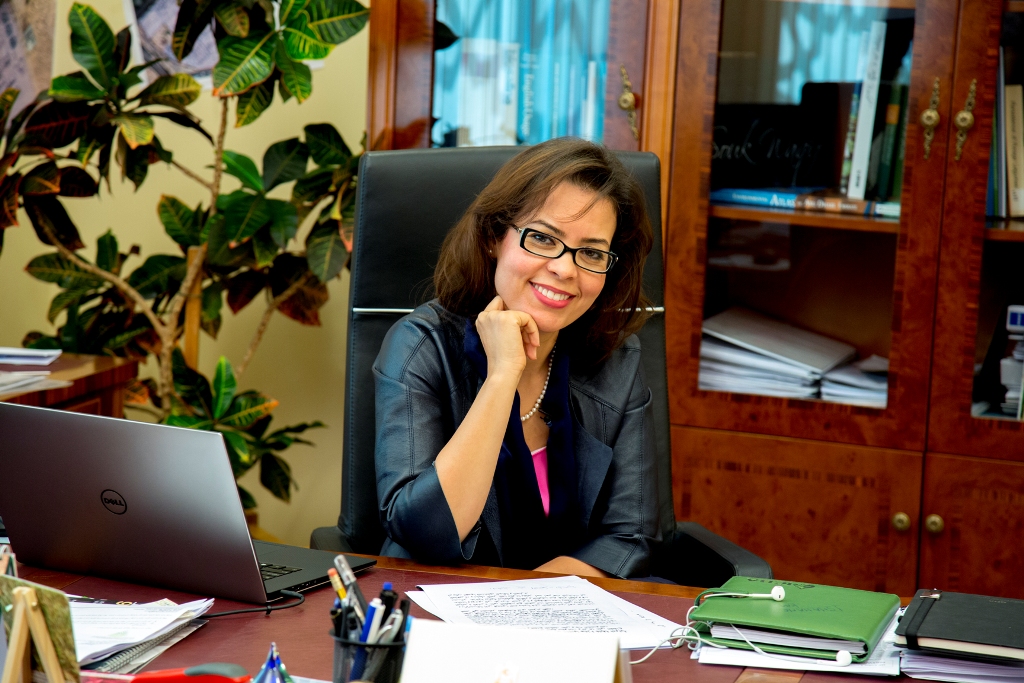
Ismahane Elouafi of ICBA

Ismahane Elouafi of ICBA{credit}ICBA{/credit}

This is a guest blogpost by Noha Atef.

Women scientists from nine different countries in the Arab world have gathered in the UAE to spotlight the major challenges and hurdles that they usually face working in different research fields. The gathering, which also included pointers on leadership, building and managing teams, self-confidence and communication workshops, and role playing sessions, was hosted by the Dubai-based agricultural research centre known as ICBA, Bill & Melinda Gates Foundation and the Islamic Development Bank.

The meeting marked Tamkeen’s first ever event – a women scientists’ empowerment programme masterminded by Ismahane Elouafi, director general of ICBA and, as per CEO-Middle East magazine, one of the Arab world’s 100 Most Powerful Women in science. Nature Middle East spoke to Elouafi about the landmark event.

NME: Tell us your impressions of Tamkeen’s first event? Was it up to your expectations?

Ismahane Elouafi: We were lucky to have women joining us from Morocco, Algeria, Tunisia, Egypt, Jordon, Lebanon, Oman, UAE and Kuwait. The young women’s enthusiasm was just impressive. Their feedback was overwhelmingly positive.

We are not starting from scratch, we are building on somebody else’s experience and that’s the AWARD program started by Bill and Melinda Gates Foundation. They helped us a lot despite the differences between the Arab world and African region.

NME: What was the common barrier that women scientists said they faced launching their careers?

IE: The cultural and biological pressure. As women, we have a biological clock. We have to get married, have children, take care of our family and make them a priority, which is normal. That’s what’s expected from our culture. Although that’s something [that is present in] other parts of the world, for Arabs it’s more intense.

NME: Would you care to give us glimpses into some of the participants’ discussions?

IE: One of the ladies said that she will start applying what she has learned first on her family. In her mind, the soft skills [that she learned at Tamkeen’s workshop] are tools that should be used every day and in every place, not just work. And that’s what we are truly looking for; give [these women scientists] the confidence to develop themselves in both the professional and personal [arenas]. … Our aim is to reach 20 to 30 women [per year] and see the impact on their families, communities and countries.

NME: How do you think those potential researchers will use the knowledge you’re providing to nourish their careers?

IE: If the course was successful, it [should] help each one of them to progress in her field. This can be measured through the number of publications they produce and through participation in conferences. It will also reflect on the way they present and communicate their work.

NME: How does this program affect you personally?

IE: Oh, I love young people. I always see myself in them. … I enjoy seeing ambitious women with so much potential. They are just looking for one single opportunity to fly. Helping them in the smallest way is a very big achievement and it’s a joy that I can’t even describe.