Helping women in research navigate career challenges

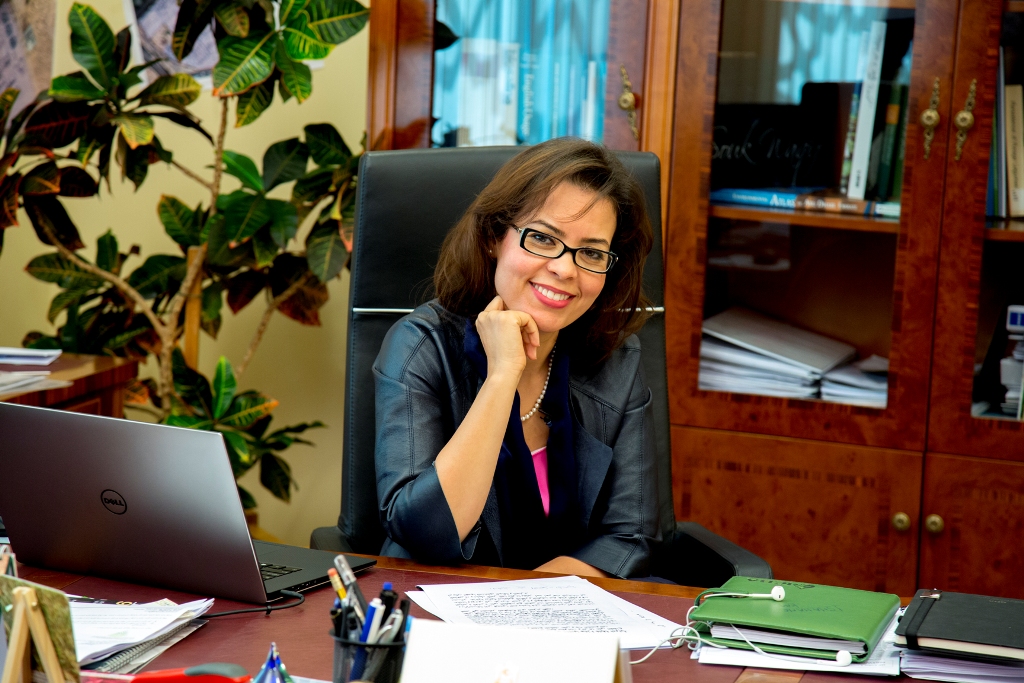
Ismahane Elouafi of ICBA

Ismahane Elouafi of ICBA{credit}ICBA{/credit}

This is a guest blogpost by Noha Atef.

Women scientists from nine different countries in the Arab world have gathered in the UAE to spotlight the major challenges and hurdles that they usually face working in different research fields. The gathering, which also included pointers on leadership, building and managing teams, self-confidence and communication workshops, and role playing sessions, was hosted by the Dubai-based agricultural research centre known as ICBA, Bill & Melinda Gates Foundation and the Islamic Development Bank.

The meeting marked Tamkeen’s first ever event – a women scientists’ empowerment programme masterminded by Ismahane Elouafi, director general of ICBA and, as per CEO-Middle East magazine, one of the Arab world’s 100 Most Powerful Women in science. Nature Middle East spoke to Elouafi about the landmark event.

NME: Tell us your impressions of Tamkeen’s first event? Was it up to your expectations?

Ismahane Elouafi: We were lucky to have women joining us from Morocco, Algeria, Tunisia, Egypt, Jordon, Lebanon, Oman, UAE and Kuwait. The young women’s enthusiasm was just impressive. Their feedback was overwhelmingly positive.

We are not starting from scratch, we are building on somebody else’s experience and that’s the AWARD program started by Bill and Melinda Gates Foundation. They helped us a lot despite the differences between the Arab world and African region.

NME: What was the common barrier that women scientists said they faced launching their careers?

IE: The cultural and biological pressure. As women, we have a biological clock. We have to get married, have children, take care of our family and make them a priority, which is normal. That’s what’s expected from our culture. Although that’s something [that is present in] other parts of the world, for Arabs it’s more intense.

NME: Would you care to give us glimpses into some of the participants’ discussions?

IE: One of the ladies said that she will start applying what she has learned first on her family. In her mind, the soft skills [that she learned at Tamkeen’s workshop] are tools that should be used every day and in every place, not just work. And that’s what we are truly looking for; give [these women scientists] the confidence to develop themselves in both the professional and personal [arenas]. … Our aim is to reach 20 to 30 women [per year] and see the impact on their families, communities and countries.

NME: How do you think those potential researchers will use the knowledge you’re providing to nourish their careers?

IE: If the course was successful, it [should] help each one of them to progress in her field. This can be measured through the number of publications they produce and through participation in conferences. It will also reflect on the way they present and communicate their work.

NME: How does this program affect you personally?

IE: Oh, I love young people. I always see myself in them. … I enjoy seeing ambitious women with so much potential. They are just looking for one single opportunity to fly. Helping them in the smallest way is a very big achievement and it’s a joy that I can’t even describe.

 

Empowering women scientists in MENA

Funded by the Islamic Development Bank and the Bill & Melinda Gates Foundation, an international center for agriculture is promising to lay the ground work for a women empowerment initiative aimed at scientists, reportedly the first of its kind in the Middle East and North Africa (MENA) region.

The International Center for Biosaline Agriculture (ICBA) launched the design phase of the Young Arab Women Scientists Leadership Programme, dubbed Tamkeen (literally meaning empowerment in Arabic) this month.

Nature Middle East speaks to Setta Tutundjian, director of partnerships and knowledge management at ICBA, about the potential of this gender-specific science programme.

NME: How will your programme empower women involved in scientific research across the Middle East?

Setta Tutundjian: The objective of the Tamkeen program is to encourage young Arab women scientists to pursue a life-long career within the field of scientific research and development. The programme also aims to help women scientists interested in pursuing leadership positions to acquire the skills necessary to assume such leadership position within research institutes across the region.

The programme will develop  leadership and soft skills among participants in key areas such as negotiation, human resource management, science writing, proposal writing, planning, presentation, mentoring, deeper understanding of self-esteem and so on.

We expect this to be achieved through a careful mix of classroom training, online training, coaching and mentoring.

NME: You’re still designing the programme, correct?

ST: Yes. And a critical part of this phase includes conducting focus group discussions and interviews with young women scientists to fully understand the challenges and opportunities they currently face within their careers, as well as to hear from them on the elements of an ideal leadership program that can help them address some of the challenges they face. We want to build a program primarily based around their needs and aspirations.

NME: By identifying the barriers and challenges, do you mean that you plan to launch country-specific investigations into how women are faring in the research and development field?

ST: Besides focus group discussions and interviews with the women, the design phase will also include an assessment of current academic programmes on offer in the region and whether these programmes cater to leadership development among graduates. There will also be an assessment of regional and international capacity building programmes to leverage learning and best practices.

During the coming months, a gender expert, a leadership expert and an expert in training activities will gather to prepare modules and produce a detailed framework of the leadership programme incorporating the results of the various assessments.

NME: I can imagine that women in a country like Egypt would be facing starkly different challenges than, say, the women of the United Arab Emirates …

ST: We do have a unique understanding of the region and the differences that exist between the different countries, specifically when it comes to research and development. Our focus group sessions will be divided among three sub-regions (the Gulf, the Levant and North Africa) in order to cater to the differences among the regions and target countries.

NME: How do you plan to measure progress?

ST: Measuring short-term results will include references to quantity and quality of workshops, participant feedback, network reach and similar metrics. Measuring long-terms results and impact will consider the number of women leaders over time in research institutions in the region, and the increase in number of scientific publications of women scientists.

Safekeeping Syria’s plant genetic heritage

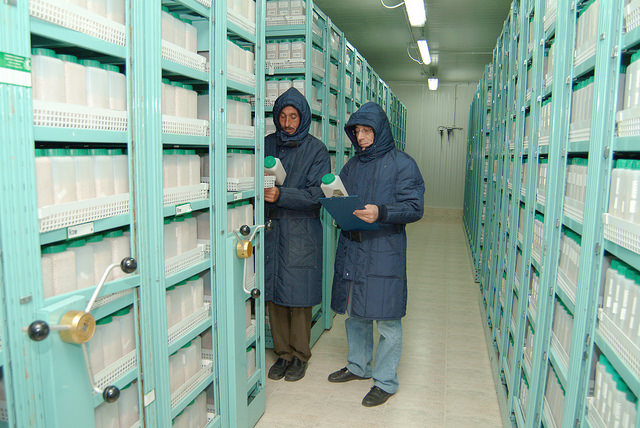
The gene bank in Tel Hadya, Syria

The gene bank in Tel Hadya, Syria{credit}ICARDA{/credit}

The war in Syria has left nothing untouched, including researchers unaffiliated to any of the fighting parties. In September 2012, the International Center for Agricultural Research in the Dry Areas (ICARDA) based in Aleppo, Syria, had to move all its international staff out of Syria as the fighting intensified. After looting and attacks on the premises, the research institute had to move a lot of sensitive equipment to hide them in rented houses, before they eventually had to evacuate and move all the operation to neighbouring Lebanon in the same year.

Before leaving the country, and to safe keep over 110,000 genetic samples for crops that were stored in ICARDA’s gene bank in Aleppo, the researchers started to send copies of all the gene accessions stored to the Svalbard gene bank in Norway, a secure ‘Doomsday’ gene bank near the North Pole designed to protect genetic material in case of a nuclear attack or devastating natural disaster. In March 2015, the organization received the Gregor Mendel Innovation Prize for managing this monumental task.

So far, genetic material has only ever gone into the vault. Last week marked the first time genetic material came out, when ICARDA requested copies of some of the samples they it had sent there for safekeeping, to fulfill requests from farmers and agricultural organizations that it works with.

“Until recently we were using and dispatching bulk seeds of these genetic materials to meet requests from Aleppo in spite of the tough security situation.” said Mahmoud Solh, ICARDA’s director general. “ICARDA requested some of its stored material in Svalbard in order to reconstitute the active collection in both Morocco and Lebanon in large bulks to meet requests for germplasm from the collections we have to meet the challenges facing dry areas globally.”

Since its formation, ICARDA has been working with developing countries, especially those in desert and arid areas, to help national programmes and individual farmers increase their yield by providing them with drought and pest resistant variants of staple crops like wheat, barley, lentil, chickpea, faba bean and peas.

Once we multiply these varieties, ICARDA will return part of it to Svalbard as another duplicated set,” adds Solh.

More bad news were reported for ICARDA yesterday, when news started to spread that Russian airstrikes near Aleppo may have destroyed the gene bank that the organization left behind in the war-torn country. However, the few ICARDA staff still in Syria confirmed that the bank was safe and unaffected.

The Middle East: most water stressed region in the world by 2040?


The Middle East could be the least water-secure worldwide

The Middle East region could possibly be the least water-secure worldwide

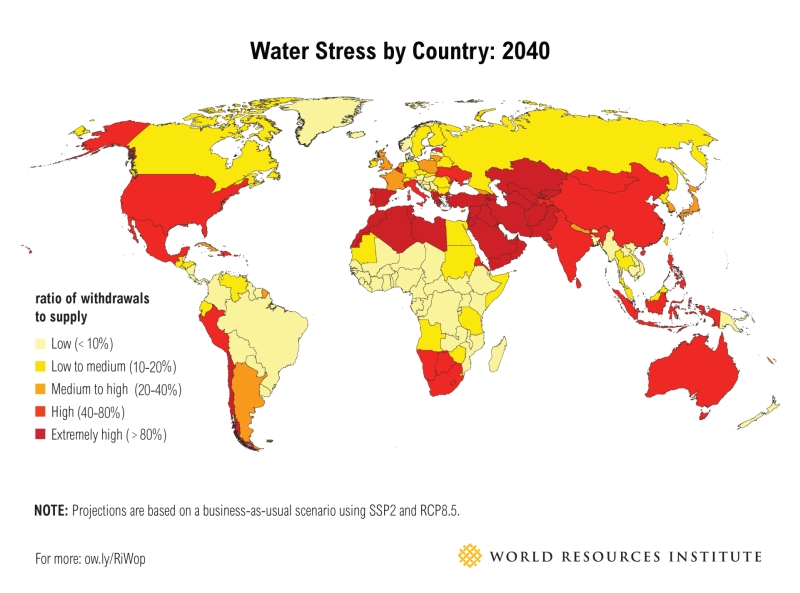
This region will suffer from acute water scarcity, as projected by dreary future scenarios for 2020, 2030 and 2040 – at least according to an August 2015 report by environmental think tank World Resources Institute (WRI).

The WRI report covers the globe, but the emphasis on the Middle East comes from the fact that it harbors 14 of the 33 likely most water stressed countries in 2040. The statistics include nine countries that are considered “extremely highly stressed”: Bahrain, Kuwait, Palestine, Qatar, United Arab Emirates, Israel, Saudi Arabia, Oman and Lebanon.

The region already lacks security, water-wise, above all else. The report cites examples such as heavy migration of farmers and herders in Syria, from the countryside to urban areas, as a result of dwindling water supplies. In Saudi Arabia, and in fear of water depletion, the kingdom will depend on grain imports, instead of growing them by 2016.

Only this month, Nature Middle East reported that more than 20 million Yemenis – 80 per cent of the country’s population – have limited access to clean water due to raging conflict. The water shortages have created cases of blood diarrhoea among children under five and an increase in other diseases such as malaria. As well, they have created a crisis among farmers. Experts have warned that in many areas it is too late and the groundwater is running out or has disappeared. Eventually, this will lead to a shrinking rural economy.

“Whatever the drivers, extremely high water stress creates an environment in which companies, farms and residents, are highly dependent on limited amounts of water and vulnerable to the slightest change in supplies,” says WRI. “Such situations severely threaten national water security and economic growth.”

The report drew projections under business-as-usual, optimistic, and pessimistic scenarios. The water stress scores for each scenario and year were weighted by overall water withdrawals, but the report also provides scores for individual sectors, like agricultural, domestic, and industrial ones.

Of the Arab countries that scored the highest on water stress, a 5.0 out of 5.0 risk score, are: Bahrain, Kuwait, Qatar, United Arab Emirates and Palestine, followed by Saudi Arabia with a score of 4.99. For a breakdown of these projections, read the full report here.

water_stress_world_map_webready

Click on the picture to enlarge it
{credit}Infograph courtesy of World Resources Institute{/credit}

ICARDA saves gene bank

The gene bank in Tel Hadya, Syria

The gene bank in Tel Hadya, Syria{credit}ICARDA{/credit}

Shortly after the uprising in Syria deteriorated into civil war, the International Center for Agricultural Research in the Dry Areas (ICARDA) started facing major problems that threatened the survival of the research centre. Looters repeatedly attacked the main facility in Aleppo and stole computers and equipment before staff had to be evacuated to other ICARDA facilities in neighbouring countries.

Last week, ICARDA received the Gregor Mendel Innovation Prize for managing to save all the samples that were stored in its gene bank, one of the most important agricultural gene banks in the world.

““Over the years, ICARDA had managed to safety-duplicate most of its gene bank collections outside Syria. When the conflict there escalated, we sped up the duplication and now have secured 100% of the germplasm collection outside Syria,” said Mahmoud Solh, the director of ICARDA, in a statement released.

The gene bank at ICARDA’s Syrian research centre were particularly important because they carried samples of wild relatives of many of the crops that are widely cultivated today, such as bread wheat, barley, lentil and faba beans. These wild crops carry important genes that have allowed them to adapt to different habitats and challenges, such as droughts, pests and diseases. Domesticated plants may have lost these genes throughout the years, so the gene banks acts as reservoirs that breeders can use to breed new strains to combat new challenges as they arise.

The Fertile Crescent, where agriculture is thought to have originated, is rich with these unique wild crops. Scientists are worried these may be lost in the conflicts across the region. ICARDA had previously rescued and safety-duplicated germplasm collections from Afghanistan and Iraq when the wars there erupted. Now, along with the samples collected in Syria, these are being duplicated elsewhere, with 80% of ICARDA’s collection already duplicated in Svalbard Seed Vault in Norway.

“The efforts of Mahmoud Solh and his teams are valuable not only for plant breeders who are highly dependent on diversity to improve agricultural varieties but also for following generations who benefit from drought tolerant and disease and pest resistant crops” justifies Peter Harry Carstensen, president of the Gregor Mendel Foundation.

Groundwater depletion is accelerating

ENERGY ISSUES

{credit}GETTY{/credit}

Global groundwater depletion is growing year by year, reaching 113,000 million cubic metres per year in the past decade – twice as high as the rate between 1960 and 2000.

Using a global water model system, hydrologist Petra Döll from the Goethe University Frankfurt and her colleagues calculated the most reliable estimate to date of the rate of groundwater depletion especially in dry regions of the world.

The bulk of that water is being used for crop irrigation. Only 10% is used for industry and drinking, with the rest going to farming. In dry areas in particular, the amount of water drained from underground reservoirs for use often exceeds the rate it is being replenished, which could eventually cause them to dry up.

In the Middle East, Saudi Arabia and Iran are the two countries with the highest rates of groundwater depletion.

In the Arabian Peninsula and Libya, Egypt, Israel, Mali, Mozambique and Mongolia, at least 30% of the underground water also came from non-renewable sources. This unsustainable use can further increase water scarcity in the future.

However, Döll points out that her estimates, while showing an increase in underground water depletion, are not as bad as was previously expected. She suggests this is because farmers in dry regions are using less water for irrigation than normal irrigation amounts.

“By comparing the modelled and measured values of groundwater depletion, we were able for the first time to show on a global scale that farmers irrigate more sparingly in regions where groundwater reservoirs are being depleted. They only use about 70% of the optimal irrigation amounts,” explained Döll.

But the researchers point out that model still contains several uncertainties. For example, the groundwater depletion in Saudi Arabia is equal to the independent estimate if optimal irrigation is assumed, while in the Nubian Sandstone Aquifer System the depletion fits best with the reduced irrigation scenario suggested.

New agricultural trends to feed the world

This is a guest blogpost by Youssef Mansour, a young researcher currently interning at Nature Middle East.

Scientists are struggling to come up with new technologies to feed ever increasing populations around the world.

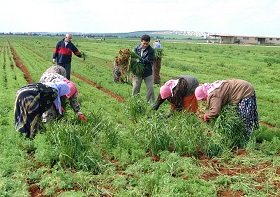
Scientists are struggling to come up with new technologies to feed ever increasing populations around the world.{credit}ICARDA{/credit}

The agriculture sector needs to double food production by 2050 to meet growing global populations – a tremendous feat considering the challenges posed by climate change, water shortage and how the increase in farming land is not catching up with demand. That’s why scientists are up to their ears looking for ways to sustainably increase production of crops capable of withstanding different environmental stresses.

At the BioVision Alexandria 2014 meeting last week, a group of leading agriculture scientists showcased new trends in agriculture that attempt to address the rising food needs of the next 100 years.

Classic approaches aimed at producing stress-resistant crops such as breeding programmes and genetic engineering “have not yielded the results that people had hoped over the years” says Rusty Rodriguez, CEO of Adaptive Symbiotic Technologies, a biotechnology company focused on agriculture research. These approaches are reductionist and focus on plants only, ignoring the fact that all plant and animal life partner with microorganisms for mutual benefit, he says.

Rodriguez introduced a new trend named symbiogenics, a technology that harnesses the impact that fungi that inhabit plants internally have on their ability to tolerate stresses.

In an experiment back in 2002, he found that symbiotic plants with a particular fungus close to a hot spring at Yellowstone National Park could tolerate temperatures up to 65°C. Neither the fungus nor the plant could withstand such high temperatures alone, but they developed a heat resistance when they partner up.

The Middle East is one of the most water insecure regions in the world, with water availability per person averaging 1,200m3 per person per year – less than a fifth of the global availability per person. Additionally, it is expected to heat up faster than most other regions, with an expected 6°C increase by the end of the century over the Levant region. The region faces numerous challenges for food security, such as the lack of investment in agricultural research and development, inadequate policies and the lack of social and economic stability in the region, points out Mahmoud Solh, director-general of ICARDA.

“We have seen people working on very important things but separate from one another. It seems to me that the problems are so severe [in the Middle East], that this is the perfect location to look at the convergence of these technologies,” says Rodriguez. “We [can] use engineering to get the plant to talk to us. Then we use microorganisms, maybe some genetic engineering, maybe some synthetic biology to modulate what’s going on inside the plant, so when it tells us something is wrong, we know how to fix it.”

Other approaches

A major goal of modern agriculture is to be able to bring across the symbiotic nitrogen fixing bacteria associated with legumes to cereals such as maize, wheat and rice.

This would optimize the use of nitrogen for increasing crop production while decreasing the exposure of the environment and humans to synthetic fertilizers.

Experiments conducted by Edward Cocking, director of the Centre for Crop Nitrogen Fixation at Nottingham University, have shown that introducing a low number of a non-nodulating nitrogen fixing bacteria called Gluconacetobacter diazotrophicus has been found to significantly inhabit the root meristem and exhibited “progressive systemic plant colonization”.

The bacteria, which localizes in vesicles in the cytoplasm of plant roots and shoots, were found to express nitrogenase genes that produce enzymes responsible for formation of ammonia from hydrogen and nitrogen gas. Presently, work is geared towards determining how far these non-nodular bacteria can fix nitrogen in cereals. Field studies run under various environmental conditions would then show how much synthetic nitrogen fertilizers could be lifted.

Separately, a different approach that was pieced together in the 1980s in Madagascar by Henri de Laulanié increases rice productivity by modifying farming techniques to decrease agrochemical inputs and increase yield from the same genetic variants, explains Norman Uphoff, professor of Government and International Agriculture at Cornell University

The System of rice intensification (SRI) is emerging as a new paradigm for sustainable intensification of various crops, and many farmers in developing countries are already spearheading a movement to apply the same practices to other crops.

In the Middle East, “there is no silver bullet that will be able to solve the problems of dry areas,” Solh says. He believes an integration of strategies that optimizes the use of natural resources and utilizes genetically-modified crops, as well as the implementation of policies that promote sustainable agriculture, is the way forward.