2016: Editor’s choice

Extracts from selected news and feature articles published this year.

Astrophysics

An international team of scientists, including from New York University Abu Dhabi (NYUAD), managed to directly observe structural components of one slowly rotating star, thanks to asteroseismology. This new technique, 10,000 times more precise than its predecessor, reveals a star’s flatter, rounder contours and different rotational speeds. It allows scientists to ‘see’ the nature of the stellar interior with very high precision.

Marine science

In an unprecedented study on non-model organisms in captivity, scientists from Saudi Arabia, Australia and Norway were able to create large sequence datasets on how reef fish and their offspring react to the phenomenon of decreasing pH levels, called ocean acidification, brought on by climate change. Acidification happens due the uptake of atmospheric carbon dioxide. “The amount of sequencing data we generated is unparalleled for a non-model organism,” says Timothy Ravasi, the senior author of the paper. Scientists discovered that the offspring of some reef fish can tolerate acidification by adjusting their circadian rhythm to night time function throughout the day.

Ecology and evolution

An international consortium of researchers analysed the coding portions of genes, or “exomes”, belonging to 1,794 nationals of Greater Middle Eastern (GME) countries, a region spanning from Morocco in the west to Pakistan in the east. “As expected for a region so rich in history and at the crossroads of many civilizations, the Middle East ‘variome’ [the set of genetic variations in a given population] suggests mixing with other populations, although the percentage varies greatly depending on which subpopulation you look at,” says geneticist Fowzan Alkuraya from Saudi Arabia’s King Faisal Specialist Hospital and Research Center. Northwest African genes were found in people across northern Africa, most likely representing the Berber genetic background. Arabian Peninsular genes were observed in nearly all GME peoples studied, possibly the result of the Arab conquests of the seventh century. Similarly, Persian expansion in the fifth century into the Turkish peninsula, the Syrian Desert region and parts of northeast Africa probably accounts for the Persian and Pakistan genetic signal present in the peoples of those regions. The peoples of the Syrian Desert and Turkish peninsular regions show the highest levels of mixing with European populations.

Geology

Shallow, dense magma reservoirs may be responsible for the most hazardous type of volcano on Earth, according to a new study. Ivan Koulakov and colleagues, including scientists from Saudi Arabia, present a fresh seismic model, based on studying magma paths beneath the Toba volcano in Indonesia, which last erupted some 74,000 years ago. The model explains why the magma system under Toba causes large, devastating eruptions, and how such large volumes of magma are generated.

Archaeology

“We always say it can’t get any worse, and then it does — and that’s the hardest part,” says Allison Cuneo, project manager for the American Schools of Oriental Research’s Cultural Heritage Initiative (CHI), which documents the loss of Syrian heritage. CHI reported 851 incidents of damage to cultural heritage between September 2015 and August 2016, mostly concentrated in areas of northern Syria controlled by forces opposed to President Bashar al-Assad. With such extensive damage, there “is so much data on destruction to report, it’s like holding the ocean back with a broom,” says Michael Danti, the academic director of CHI.

Environment

A world atlas of artificial night sky brightness, published earlier this year in Science Advances, captured the extent to which we are smothered in light. It reveals Kuwait, Qatar, United Arab Emirates and Saudi Arabia as the most light-polluted places to live on the planet, topped only by Singapore. More than half of people living in Israel and Libya live through extremely bright nights, and the widest connected twilight zone in the world is along the Nile Delta in Egypt. No more can people in Kuwait and Qatar see the glowing band of the Milky Way from their homes. For more than 97 per cent of people in the United Arab Emirates, Israel, and Egypt, this is also true. “The night sky is the beginning of our civilization. It leads to all religions, philosophy, science, literature and the arts. The cultural significance of a sky full of stars is huge. The new generations have lost this source of inspiration,” says Fabio Falchi, of the Italian Light Pollution Science and Technology Institute’s Fabio Falchi, who led the study.

Astronomy

The Qatar Exoplanet Survey (QES) has discovered three new “exoplanets” outside our solar system. The planets, named Qatar-3b, Qatar-4b and Qatar-5b, are hot Jupiters: they are similar in size to Jupiter (11 times the size of Earth) and orbit very closely to their respective suns. They are located some 1400 to 1800 light years away from Earth and can be seen in the same part of the sky as the Andromeda Constellation, best observed in autumn in the northern hemisphere.

Year in review: Under pressure

Conflict and wars have continued to bend the region out of shape in 2016, with health infrastructure in Syria and Yemen continuing to crumble and fall, and the exodus of people out of dangerous zones affecting neighboring populations. The following are some of the most critical situations borne out of the flow of people as a result of infighting in 2016.

Water

Besides the human cost of the war in Syria, the ecological and environmental impact has, no doubt, been huge. For example, earlier this month, researchers based in the US and Canada have shown how mass migrations are changing the country’s hydrological landscape.

The flight of Syrian refugees since 2013 has dramatically changed water-use patterns and led to an increased water flow into Jordan through the Yarmouk River. In the absence of direct measurement data from Syria, the scientists had turned to remote sensing techniques, combining spatial and statistical analyses of satellite imagery with water balance calculations to estimate the changes in irrigation patterns and reservoir usage in southwest Syria. While the end of a regional drought is partly responsible for the increased flow of the Yarmouk, the analysis showed that decreased water use in the Syrian part of the river basin accounts for roughly half of the 340% increase in transboundary flow.

In a way, the war in Syria carried some good for Jordan – at least in terms of water supply.

Health

War and migration had once led to outbreaks of infectious diseases, such as visceral leishmaniasis, across the region, originating from Sudan and South Sudan. And new research is warning that this could happen again. Visceral leishmaniasis is endemic in Sudan and South Sudan, where the climate allows sandflies to thrive, and poor health systems compound the problem.

Researchers from the US and Saudi Arabia have presented new evidence suggesting that conflict, and the chronic malnutrition and displacement that follow, interrupt the cycle of immunity and allow a disease like visceral leishmaniasis to flourish. Gloomily, the scientists say they expect another outbreak.

Not far off, in Aleppo, the scene of much violence and suffering, an outbreak of another form of leishmaniasis has taken place. The Aleppo boil, which is caused by a parasite in the bloodstream and transmitted through the bites of sandflies, has been reported to have infected hundreds of thousands across the Middle East, especially across refugee camps. The disease causes disfiguring lesions on the body and the numbers are bad, according to scientists.

Until recently, the disease was contained to areas around Aleppo and Damascus, but this changed with the continuous disruption of insecticide control, poor water and sanitation services in conflict zones.

Decoding bat talk

The Egyptian fruit bat is a highly social mammal roosting in crowded colonies.

The Egyptian fruit bat is a highly social mammal roosting in crowded colonies.{credit}Michal Samuni-Blank{/credit}

Bats are extremely social mammals, that live in colonies of thousands and sometimes millions, and they talk or “sing” to each other to communicate. Now, a group of scientists have studied vocalizations by Egyptian fruit bats and they found out that the calls contain information such as the identity of the caller as well as the context of the call.

The study published in Scientific Reports carries an analysis of almost 15,000 vocalizations of 22 Egyptian fruit bats, recorded over 75 days. The analysis paints a picture of some of the social interactions that the animals engage in.

“Bats spend many, up to 40 years, together with the same individuals around them and they live in the dark. All of these suggest that a sophisticated vocal communication might evolve in such animals and this is what we set to examine,” says Yossi Yovel of Tel Aviv University, corresponding author of the study.

The vocalizations the scientists recorded represented the full vocal repertoire the bats used during the experiment. And it turns out the cacophony of sounds that a person hears entering a bat cave is far from just noise, according to Yovel.

Although the calls sounds alike and were previously categorized under one category that boils down to “bat shouting”, the scientists showed it’s not the case.

“The vocalizations we looked at in this study were all categorized in the past as agonistic calls, that is, aggressive vocalizations emitted during fighting,” says Yovel. “We now show that there is information in this chaos. We demonstrate that a third individual listening to a fight between two bats can tell who is shouting, what is the context of shouting, for example fighting over food or over position or over mating, and even to some extent who is being shouted at.”

That said, the communication of the Egyptian bats described therein doesn’t include clearly distinct words, as human communication for instance does, or what linguists often call semantics. “We do not find a ‘word’ that mean ‘hello’ or ‘move’ or ‘eat’ in bat communication. We just show that the spectral content of the vocalizations or their frequencies contain information about the context.”

The scientists elaborates: “You could imagine this as something like this: when a bat shouts at another bat for taking its food, the vocalizations will always be higher in pitch than when they are fighting over a position in the cave. This is what this cannot be defined as language and yet, because we will probably never fully understand animal communication it is important to understand its complexity.”

The next step, which the scientists have already taken, is into learning whether or not these vocalizations are learned by the bats or whether they are born with their vocal repertoire. “Learning new vocalizations is a main factor characterizing human language and it is debated how much other mammals depend on learning to develop their communication,” comments Yovel.

Empowering ancient Egyptian queens

Queen 1

{credit}The National Museum of Antiquities{/credit}

If you find yourself near Leiden, home to Leiden University, the oldest university in the Netherlands, make sure to visit the Queens of the Nile exhibition at the National Museum of Antiquities, which promises to finally afford the wives of the pharoahs the attention they deserve. The exhibit of royal portraits, godly statues, lavish jewellery and accessories is curated by Leiden University students and PhD candidates, in addition to egyptologist Olaf Kaper.

“Too little attention has been paid to the wives of the pharoahs, both in science and in the museum world. I wanted to tell their history and show different aspects of life at court,” says Kaper.

According to Leiden University, the exhibition covers a period of 500 years and pays tribute to five queens of the era known as the “new empire”. Those queens were famed for their political prowess and divinity.

Among the showcase are two particularly valuable pieces, “the decorated granite cover of the sarcophagus of Queen Nefertari and a five-metre papyrus,” explains Kaper. “This enormous document is a legal text that describes the conspiracy against and the murder of Pharoah Ramses III by a group of ladies from the harem and a number of officials. It proves that women at that time were by no means happy to accept a subordinate role.”

This is the first major exhibit of its kind on the Egyptian queens in the Netherlands. It continues until 17 April 2017.

Bringing cinema magic to science

ISFAD17-ProgramStill-1

{credit}Imagine Science Film Festival{/credit}

In its third edition in Abu Dhabi, Imagine Science Film Festival, running from 2 to 4 March, 2017, is dedicated to light, reflecting on it through a multitude of films spanning documentary, fiction and experimental genres.

The film festival, which contemplates the intersection between science and art and which takes place at the Arts Centre in New York University Abu Dhabi (NYUAD), chooses a theme for its productions every year, and creates a conversation around it through talks, workshops, performances, and screenings of both local and international films.

In the past, the festival has collaborated with Zayed University, Petroleum Institute, Masdar in addition to NYUAD’s Arts Center in a keen effort to encourage local filmmakers to particpate in programming and filmmaking.

This year, the festival explores another fundemntal of life: light, and “how in multiple ways it has shaped how we see and understand the world providing us new insights, methods and understandings of how investigate our surroundings, and their scientific and artistic subtexts,” according to NYUAD professor and festival founder Alexis Gambis.

The festival is still accepting film submissions until December 5, 2016; works that, in the words of the festival founders, give viewers “a deep look into the natural, technological, and theoretical worlds, from the smallest molecule to the furthest reaches of space and everything in between”.

Many of the artists showcased are usually in attendance at the festival, which, in 2017, is expected to include panels on how we process and make sense of an overflow of media and information, a career talk with scientists, artists and filmmakers and how they navigate worlds that incorporate scientific and artistic dimensions, in addition to a retrospective of Larissa Sansour’s Space Triology: Nation Estate, Space Exodus, and In the Future They Ate from the Finest Porcelain (the latter featured in the second edition of Imagine Science).

Imagine Science will also exibit a revisited animation about Quantum mechanisms where data visualizations (inspired by CERN) will be projected on sand from Liwa desert.

According to Gambis, in 2017, the featured films will move from traditional documentaries to regional science fictions, experimental studies, and narratives inspired by essential science issues.

“We’re seeking new science films of all styles and subjects. Possible themes include technological shifts, neurological and cognitive functions from vision processing to memory and even dream, and the ecological and sociological studies of the Gulf and MENA landscape,” he elaborates.

To know more about the festival, how it began and what its creators have in store for it, listen to the latest edition of Nature Middle East‘s monthly podcast where this editor talks to Gambis about his brainchild and how it rose to prominence over the years.

Diagnosing diseases using a simple blood test

Researchers from Qatar have developed biomarkers for plasma volume and red cell mass, which are used to monitor numerous disease states, such as heart failure, kidney disease or sepsis. The markers provide an applicable method to measure absolute plasma or red cell volumes, via a simple blood test, in a clinical set-up.

In their initial investigation, the scientists observed 33 healthy males over a period of six months. They collected monthly blood samples and concurrently estimated vascular volume.

They then analysed the individual variations of 45 common chemistry markers, such as total protein, cholesterol, calcium, transferrin, and albumin. These observed variations were then matched to the observed plasma volume variability. “We identified two panels of biomarkers, composed of 8 and 15 chemistry variables, which explained approximately 67% of plasma volume variance,” says corresponding author Louisa M. Lobigs, from Aspetar Sports Medicine Hospital, Doha, Qatar.

The scientist explains that, currently, vascular volumes are estimated in hospitals by calculating the change in concentration-based blood markers, such as hemoglobin concentration or hematocrit. This common approach produces relative values and assumes uniform mixing of the blood constituent (often not the case in the critically ill); it is also dependent on factors like the patient’s hydration levels, posture, their fluid intake. Alternatively, absolute vascular volumes can be estimated with radio-active tracers, but it’s a cumbersome and time-consuming approach, according to Lobigs.

The new method measures absolute volumes, and requires only a simple blood test.

“This is extremely promising news for improved volume management in the clinic,” she says. Validation of the model’s stability will be required before it can be streamlined among hospital patients.

How changing sex helps “Nemo” survive and adapt

Laura Casas, House of Wisdom guest blogger and King Abdullah University of Science & Technology (KAUST) marine biologist, talks to us about the orange salt water fish and how it used a marvelous evolutionary mechanism to conquer the seas.

Clownfish_AlFahal

{credit}Fran Saborido-Rey{/credit}

How did a small, very bright, colorful fish that’s a poor swimmer become extensively distributed in tropical waters from the Indian to the western Pacific Oceans, including the Great Barrier Reef and the Red Sea?

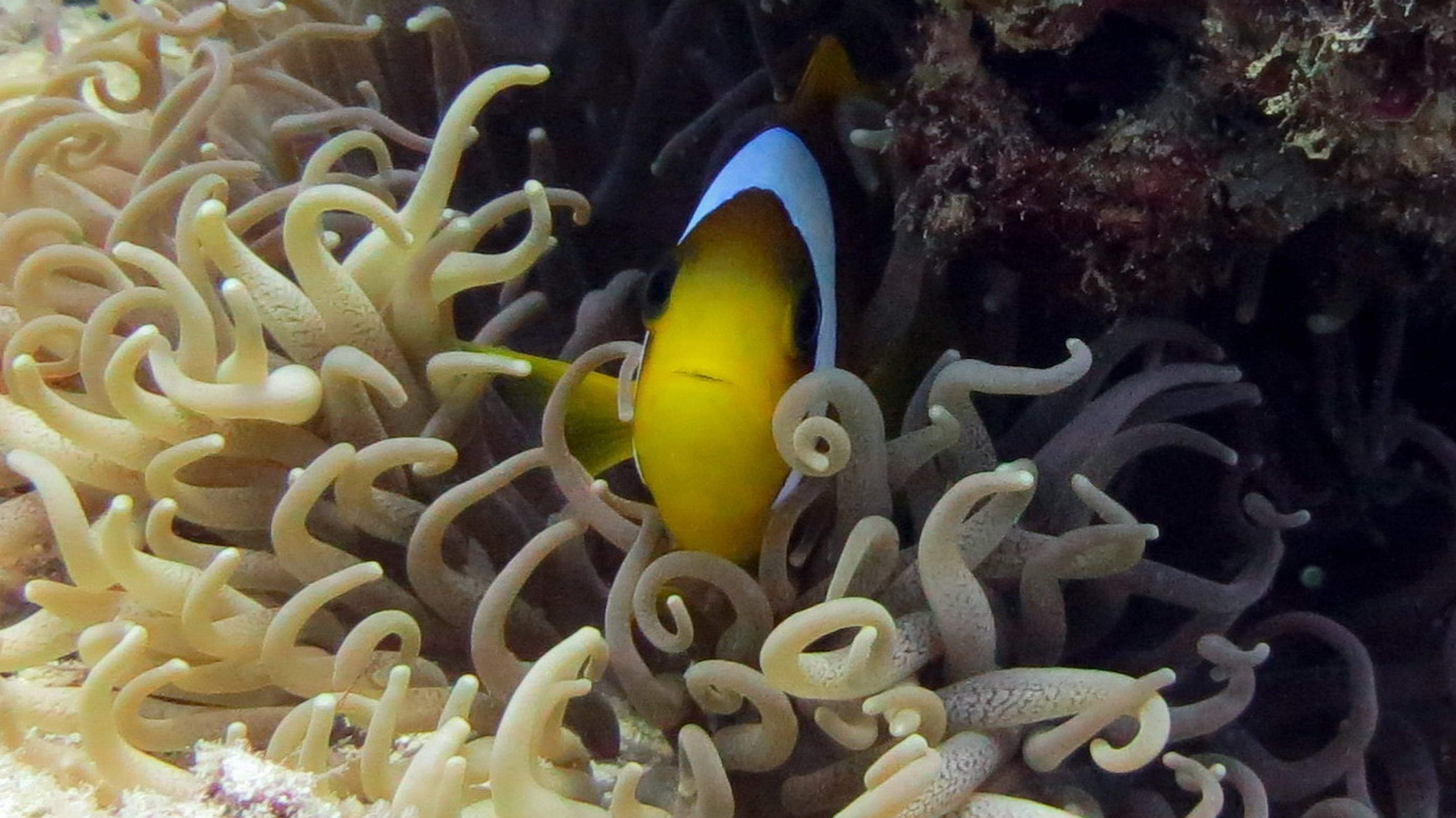
Two processes have potentially played a role in the successful evolutionary adaptation of clownfishes: a mutual relationship with anemones – flower-like marine animals and relatives to corals – which provides shelter and protection in exchange for nourishment, plus their capacity to change sex when their partner dies, preventing the need for dangerous travel across the reef.

While the different aspects of this mutual relationship have been unveiled in dozens of studies, very little has been known about the mechanisms that orchestrate sex change in fishes.

Our new study at KAUST provides insights into the genetic mechanism governing social sex change in fish, using the Red Sea endemic species of clownfish, Amphiprion bicinctus, as a model in its natural habitat.

Clownfishes are monogamous, living in social assemblages as pairs or social groups consisting of a dominant female, always the largest in size, surrounded by her male partner and a variable number of immature juveniles of smaller size. They display a strong social hierarchy based on size; these hierarchies function as queues for breeding, so when a dominant female of a social group dies, all subordinates seize the opportunity to ascend in rank.

This way, the male is always poised to become female and rapidly changes sex to assume the vacated position, while the biggest juvenile rapidly matures into a male ensuring the ability to produce new generations without abandoning the anemone.

ClownfishExperiments_Credit_ThamerSHabis (3)

{credit}Thamer S. Habis{/credit}

The confinement of an animal, however, is known to alter its normal behaviour but traditionally sex change has been studied using aquarium experiments. In our study, we localized sixteen families living on the exposed side of Al-Fahal reef, in the Central Red Sea and removed all the females to trigger the sex change process.

One sex-changing individual was sampled every five days for 1.5 months to cover the full time course of the sex change process and their transcriptional responses were assessed using RNA sequencing.

Our results show a response in the male´s brain which starts two weeks after the female’s disappearance and lasts for two additional weeks.

During this period, there is a marked down-regulation in deferentially expressed genes of sex-changing individuals, compared to mature males and females. We identify a large number of candidate genes, both well-known and novel potentially playing a role in sex change.

Based on our results, we propose a picture of the genetic mechanisms that take place during the sex shift: the aromatase gene known as cyp19a1 plays a central role by modulating the balance between estrogen and androgen signaling. Aromatase is involved in the production of estrogen.

The genes sox6 and foxp4 may play a role in regulating the expression of aromatase and/or other genes involved in steroid production at the brain level. The genes cyp19a1 and foxl2 play a pivotal role in the activation of the female pathway driving the sex gland transformation from testis to ovary during sex change, while Sox8, Dmrt1 and Amh are important for testis maintenance.

The results have not only provided important insight into the main genetic mechanism governing sex change and sex gland restructuring in hermaphrodite flowers or animals, but also detailed information on specific genes involved during every step of the process. Our study is the first genome-wide study in a social sex-changing species in its natural habitat and the dataset generated is a valuable genomic resource for a species with virtually no genetic information available in public datasets.

Future work would ideally explore whether the genetic processes underlying sex change in hermaphrodites is evolutionary conserved. We need to deepen our knowledge of the unexplored genetic mechanisms underlying such sex change.

As well, only a deep understanding of the genetic processes governing reproduction in hermaphrodites will allow us to anticipate how reproductive success might be affected by the temperature rise in coming years as a consequence of the climate change and give us a chance to conserve and protect the sea’s biodiversity.

Solar barques: Ritual vessels into the afterworld or real, functioning boats?

Khufu solar boat museum, King Cheops ship in the museum at the base of the Great Pyramid, Giza, Cairo, Egypt.

Khufu solar boat museum, King Cheops ship in the museum at the base of the Great Pyramid, Giza, Cairo, Egypt.{credit}Jack Sullivan / Alamy Stock Photo{/credit}

The exact functions of the Khufu “solar vessels” unearthed south of the Pyramids of Giza, have come into question again after a new revelation by archaeologists showed that ancient Egyptians used metal in their boats.

The most famous of the vessels, and the largest, is the Khufu vessel, preserved in the Giza solar boat museum. The typically human-propelled vessels were discovered in several boat pits around the pyramids.

Now, a fresh dig near the Great Pyramid of Giza unearthed circular and U-shaped metal hooks in a piece of wood–eight metres in length, 40 centimetres­ wide–that belonged to the frame of a boat discovered during the same year as Khufu’s vessel.

In all the boats discovered from this era, “we have not found the use of metals in their frames like in this boat,” Mohamed Mostafa Abdel-Megeed, an antiquities ministry official and expert in boat-making in ancient Egypt, tells AFP.

In ancient Egypt, funerary boats were used to ferry the dead, most commonly in funeral processions of kings. The wooden boats were believed to be “magically charged” after having been used. And it’s the reason why ancient Egypt would dispose of them after use, since they were “dangerous to the living,” explains Pearce Paul Creasman, associate professor of Dendrochronology and Egyptian Archaeology and director of the Egyptian Expedition at the University of Arizona.

In the Old and Middle Kingdoms, funerary boats were buried near royal chambers at the pyramid complexes. Now, as far as many archaeologists believe, “solar boats were a concept, not necessarily a construction,” says the scientist, “to be used by the god Ra in his travels across the sky, perpetuating neheh, the cyclical nature of the world.” In iconography, solar barques feature a specific set of accouterments associated with them, setting them apart from other types of boats.

Creasman chats to Nature Middle East about the possible nature of the boats, in light of of the new discovery, the first of its kind.

NME: How significant is this discovery?

PPC: The discovery of metal used in association with the ships of ancient Egypt is significant as it fills a logical hole in our understanding. The Egyptians had metal and were capable seafarers, why wouldn’t they use the metals to improve the durability or function of their boats? Until the recent discoveries, including the Khufu II vessel as well as ship remains from the Red Sea harbor of Wadi Gawasis (dating to the Middle Kingdom), we lacked archaeological evidence to demonstrate such a link. While the finds from the Khufu II work have not yet been scientifically published, from the press photos it appears that the metal was used precisely where we might expect: at stress points, such as oarlocks. The totality of the importance of these finds will have to wait for the scientific publications and analyses, but this is a great start.

NME: Was not this seen before in ancient Egyptian boats?

PPC: In only one instance prior to the Khufu II finds has metal been found in association with the structure and function of ancient Egyptian boats, that is, the disarticulated boat parts from Wadi Gawasis. The Khufu II finds are, by far, the oldest and appear to be used in the locomotive aspects of the boat. While we have seen metal in association with sails and their ropes, we have not previously seen it in the human-propelled aspects of boats.

NME: Why is this an important piece of information for archaeologists?

PPC: In the more than 3,000 years of intensive maritime history for the pharaonic Egyptians, there must have been tens-of-thousands of boats created to traverse the waters. Yet, today we have comparatively little archaeological remains to understand the the ships that facilitated this maritime life: whole or part of only some 30 boats. So, any new clue in unraveling the mysteries of the world’s first great maritime society is extremely valuable.

Check Nature Middle East’s sister magazine For Science for the full coverage in Arabic.

Empowering women scientists in MENA

Funded by the Islamic Development Bank and the Bill & Melinda Gates Foundation, an international center for agriculture is promising to lay the ground work for a women empowerment initiative aimed at scientists, reportedly the first of its kind in the Middle East and North Africa (MENA) region.

The International Center for Biosaline Agriculture (ICBA) launched the design phase of the Young Arab Women Scientists Leadership Programme, dubbed Tamkeen (literally meaning empowerment in Arabic) this month.

Nature Middle East speaks to Setta Tutundjian, director of partnerships and knowledge management at ICBA, about the potential of this gender-specific science programme.

NME: How will your programme empower women involved in scientific research across the Middle East?

Setta Tutundjian: The objective of the Tamkeen program is to encourage young Arab women scientists to pursue a life-long career within the field of scientific research and development. The programme also aims to help women scientists interested in pursuing leadership positions to acquire the skills necessary to assume such leadership position within research institutes across the region.

The programme will develop  leadership and soft skills among participants in key areas such as negotiation, human resource management, science writing, proposal writing, planning, presentation, mentoring, deeper understanding of self-esteem and so on.

We expect this to be achieved through a careful mix of classroom training, online training, coaching and mentoring.

NME: You’re still designing the programme, correct?

ST: Yes. And a critical part of this phase includes conducting focus group discussions and interviews with young women scientists to fully understand the challenges and opportunities they currently face within their careers, as well as to hear from them on the elements of an ideal leadership program that can help them address some of the challenges they face. We want to build a program primarily based around their needs and aspirations.

NME: By identifying the barriers and challenges, do you mean that you plan to launch country-specific investigations into how women are faring in the research and development field?

ST: Besides focus group discussions and interviews with the women, the design phase will also include an assessment of current academic programmes on offer in the region and whether these programmes cater to leadership development among graduates. There will also be an assessment of regional and international capacity building programmes to leverage learning and best practices.

During the coming months, a gender expert, a leadership expert and an expert in training activities will gather to prepare modules and produce a detailed framework of the leadership programme incorporating the results of the various assessments.

NME: I can imagine that women in a country like Egypt would be facing starkly different challenges than, say, the women of the United Arab Emirates …

ST: We do have a unique understanding of the region and the differences that exist between the different countries, specifically when it comes to research and development. Our focus group sessions will be divided among three sub-regions (the Gulf, the Levant and North Africa) in order to cater to the differences among the regions and target countries.

NME: How do you plan to measure progress?

ST: Measuring short-term results will include references to quantity and quality of workshops, participant feedback, network reach and similar metrics. Measuring long-terms results and impact will consider the number of women leaders over time in research institutions in the region, and the increase in number of scientific publications of women scientists.

Calgary Depression Scale for Schizophrenia, in Arabic

Scientists from Qatar and the United States have managed to validate an Arabic version of the Calgary Depression Scale for Schizophrenia (CDSS) among patients with schizophrenia.

Schizophrenics commonly show both depressive and negative symptoms that can affect the prognosis and course of their treatment. Negative symptoms are disabling symptoms that have a major impact on the quality of life of patients, more so than positive symptoms, which are thought patterns and behaviors that patients acquire after they become ill.

Tests such as CDSS are designed to distinguish between depression, and negative symptoms that are distinctive of schizophrenia.

These tests are not diagnostic per se, “but they are mainly there to asses the severity of psychotic symptoms in schizophrenia and the possible associated depressive symptoms (using CDSS),” explains Hassen Al-Amin, professor of psychiatry at Weill Cornell Medicine-Qatar and corresponding author of the study that validated the psychiatric test.

“They are significant because they can help us know how sick these patients are and also to monitor how they are responding to treatment with time,” he says.

These types of tests have been used worldwide and their validity is established.

In order to make them work for Arab populations, experts and researchers had to translate the material thoroughly and decide the appropriate cultural equivalents in Arabic. “We then test the Arabic versions with Arab patients with schizophrenia and compare them with those obtained internationally to make sure that we have a valid scale that is culturally acceptable also,” says Al-Amin.