Empowering women scientists in MENA

Funded by the Islamic Development Bank and the Bill & Melinda Gates Foundation, an international center for agriculture is promising to lay the ground work for a women empowerment initiative aimed at scientists, reportedly the first of its kind in the Middle East and North Africa (MENA) region.

The International Center for Biosaline Agriculture (ICBA) launched the design phase of the Young Arab Women Scientists Leadership Programme, dubbed Tamkeen (literally meaning empowerment in Arabic) this month.

Nature Middle East speaks to Setta Tutundjian, director of partnerships and knowledge management at ICBA, about the potential of this gender-specific science programme.

NME: How will your programme empower women involved in scientific research across the Middle East?

Setta Tutundjian: The objective of the Tamkeen program is to encourage young Arab women scientists to pursue a life-long career within the field of scientific research and development. The programme also aims to help women scientists interested in pursuing leadership positions to acquire the skills necessary to assume such leadership position within research institutes across the region.

The programme will develop  leadership and soft skills among participants in key areas such as negotiation, human resource management, science writing, proposal writing, planning, presentation, mentoring, deeper understanding of self-esteem and so on.

We expect this to be achieved through a careful mix of classroom training, online training, coaching and mentoring.

NME: You’re still designing the programme, correct?

ST: Yes. And a critical part of this phase includes conducting focus group discussions and interviews with young women scientists to fully understand the challenges and opportunities they currently face within their careers, as well as to hear from them on the elements of an ideal leadership program that can help them address some of the challenges they face. We want to build a program primarily based around their needs and aspirations.

NME: By identifying the barriers and challenges, do you mean that you plan to launch country-specific investigations into how women are faring in the research and development field?

ST: Besides focus group discussions and interviews with the women, the design phase will also include an assessment of current academic programmes on offer in the region and whether these programmes cater to leadership development among graduates. There will also be an assessment of regional and international capacity building programmes to leverage learning and best practices.

During the coming months, a gender expert, a leadership expert and an expert in training activities will gather to prepare modules and produce a detailed framework of the leadership programme incorporating the results of the various assessments.

NME: I can imagine that women in a country like Egypt would be facing starkly different challenges than, say, the women of the United Arab Emirates …

ST: We do have a unique understanding of the region and the differences that exist between the different countries, specifically when it comes to research and development. Our focus group sessions will be divided among three sub-regions (the Gulf, the Levant and North Africa) in order to cater to the differences among the regions and target countries.

NME: How do you plan to measure progress?

ST: Measuring short-term results will include references to quantity and quality of workshops, participant feedback, network reach and similar metrics. Measuring long-terms results and impact will consider the number of women leaders over time in research institutions in the region, and the increase in number of scientific publications of women scientists.
Safekeeping Syria’s plant genetic heritage

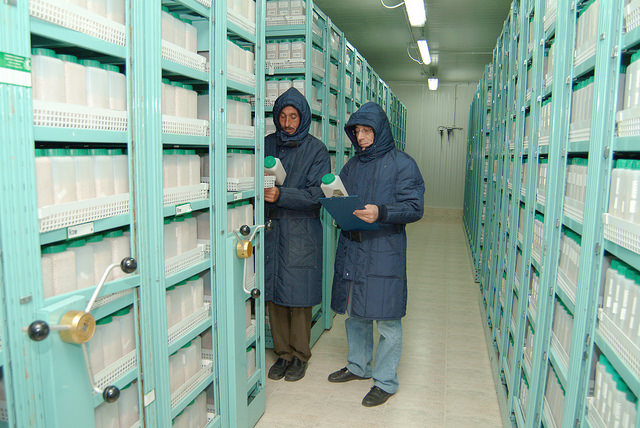
The gene bank in Tel Hadya, Syria

The gene bank in Tel Hadya, Syria{credit}ICARDA{/credit}

The war in Syria has left nothing untouched, including researchers unaffiliated to any of the fighting parties. In September 2012, the International Center for Agricultural Research in the Dry Areas (ICARDA) based in Aleppo, Syria, had to move all its international staff out of Syria as the fighting intensified. After looting and attacks on the premises, the research institute had to move a lot of sensitive equipment to hide them in rented houses, before they eventually had to evacuate and move all the operation to neighbouring Lebanon in the same year.

Before leaving the country, and to safe keep over 110,000 genetic samples for crops that were stored in ICARDA’s gene bank in Aleppo, the researchers started to send copies of all the gene accessions stored to the Svalbard gene bank in Norway, a secure ‘Doomsday’ gene bank near the North Pole designed to protect genetic material in case of a nuclear attack or devastating natural disaster. In March 2015, the organization received the Gregor Mendel Innovation Prize for managing this monumental task.

So far, genetic material has only ever gone into the vault. Last week marked the first time genetic material came out, when ICARDA requested copies of some of the samples they it had sent there for safekeeping, to fulfill requests from farmers and agricultural organizations that it works with.

“Until recently we were using and dispatching bulk seeds of these genetic materials to meet requests from Aleppo in spite of the tough security situation.” said Mahmoud Solh, ICARDA’s director general. “ICARDA requested some of its stored material in Svalbard in order to reconstitute the active collection in both Morocco and Lebanon in large bulks to meet requests for germplasm from the collections we have to meet the challenges facing dry areas globally.”

Since its formation, ICARDA has been working with developing countries, especially those in desert and arid areas, to help national programmes and individual farmers increase their yield by providing them with drought and pest resistant variants of staple crops like wheat, barley, lentil, chickpea, faba bean and peas.

Once we multiply these varieties, ICARDA will return part of it to Svalbard as another duplicated set,” adds Solh.

More bad news were reported for ICARDA yesterday, when news started to spread that Russian airstrikes near Aleppo may have destroyed the gene bank that the organization left behind in the war-torn country. However, the few ICARDA staff still in Syria confirmed that the bank was safe and unaffected.

New agricultural trends to feed the world

This is a guest blogpost by Youssef Mansour, a young researcher currently interning at Nature Middle East.

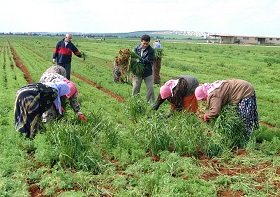
Scientists are struggling to come up with new technologies to feed ever increasing populations around the world.

Scientists are struggling to come up with new technologies to feed ever increasing populations around the world.{credit}ICARDA{/credit}

The agriculture sector needs to double food production by 2050 to meet growing global populations – a tremendous feat considering the challenges posed by climate change, water shortage and how the increase in farming land is not catching up with demand. That’s why scientists are up to their ears looking for ways to sustainably increase production of crops capable of withstanding different environmental stresses.

At the BioVision Alexandria 2014 meeting last week, a group of leading agriculture scientists showcased new trends in agriculture that attempt to address the rising food needs of the next 100 years.

Classic approaches aimed at producing stress-resistant crops such as breeding programmes and genetic engineering “have not yielded the results that people had hoped over the years” says Rusty Rodriguez, CEO of Adaptive Symbiotic Technologies, a biotechnology company focused on agriculture research. These approaches are reductionist and focus on plants only, ignoring the fact that all plant and animal life partner with microorganisms for mutual benefit, he says.

Rodriguez introduced a new trend named symbiogenics, a technology that harnesses the impact that fungi that inhabit plants internally have on their ability to tolerate stresses.

In an experiment back in 2002, he found that symbiotic plants with a particular fungus close to a hot spring at Yellowstone National Park could tolerate temperatures up to 65°C. Neither the fungus nor the plant could withstand such high temperatures alone, but they developed a heat resistance when they partner up.

The Middle East is one of the most water insecure regions in the world, with water availability per person averaging 1,200m3 per person per year – less than a fifth of the global availability per person. Additionally, it is expected to heat up faster than most other regions, with an expected 6°C increase by the end of the century over the Levant region. The region faces numerous challenges for food security, such as the lack of investment in agricultural research and development, inadequate policies and the lack of social and economic stability in the region, points out Mahmoud Solh, director-general of ICARDA.

“We have seen people working on very important things but separate from one another. It seems to me that the problems are so severe [in the Middle East], that this is the perfect location to look at the convergence of these technologies,” says Rodriguez. “We [can] use engineering to get the plant to talk to us. Then we use microorganisms, maybe some genetic engineering, maybe some synthetic biology to modulate what’s going on inside the plant, so when it tells us something is wrong, we know how to fix it.”

Other approaches

A major goal of modern agriculture is to be able to bring across the symbiotic nitrogen fixing bacteria associated with legumes to cereals such as maize, wheat and rice.

This would optimize the use of nitrogen for increasing crop production while decreasing the exposure of the environment and humans to synthetic fertilizers.

Experiments conducted by Edward Cocking, director of the Centre for Crop Nitrogen Fixation at Nottingham University, have shown that introducing a low number of a non-nodulating nitrogen fixing bacteria called Gluconacetobacter diazotrophicus has been found to significantly inhabit the root meristem and exhibited “progressive systemic plant colonization”.

The bacteria, which localizes in vesicles in the cytoplasm of plant roots and shoots, were found to express nitrogenase genes that produce enzymes responsible for formation of ammonia from hydrogen and nitrogen gas. Presently, work is geared towards determining how far these non-nodular bacteria can fix nitrogen in cereals. Field studies run under various environmental conditions would then show how much synthetic nitrogen fertilizers could be lifted.

Separately, a different approach that was pieced together in the 1980s in Madagascar by Henri de Laulanié increases rice productivity by modifying farming techniques to decrease agrochemical inputs and increase yield from the same genetic variants, explains Norman Uphoff, professor of Government and International Agriculture at Cornell University

The System of rice intensification (SRI) is emerging as a new paradigm for sustainable intensification of various crops, and many farmers in developing countries are already spearheading a movement to apply the same practices to other crops.

In the Middle East, “there is no silver bullet that will be able to solve the problems of dry areas,” Solh says. He believes an integration of strategies that optimizes the use of natural resources and utilizes genetically-modified crops, as well as the implementation of policies that promote sustainable agriculture, is the way forward.

Desert farming pilot yields positive results

Sahara Forest Project

{credit}Sahara Forest Project{/credit}

After two and a half years of research and testing, the Sahara Forest Project pilot in Qatar has started to yield results, and initial findings are showing good results for arid land agriculture.

The pilot project, built on one hectare of land, produced 75 kg/m2 in three crops annually, which is competitive with those obtained in commercial farms in Europe. The project, however, uses seawater instead of freshwater. The greenhouse, where the plants are grown, uses seawater and blowing winds to create a cooling effect which allows the plants to grow even under the scorching summer heats of Qatar, explains a news story in Science. Pipes with cold seawater passing in them causes some air moisture to condense, which is the source of freshwater plants use.

The cold moisture coming out of the greenhouse also allowed plants to grow outside the greenhouse, and the operators were able to use “evaporative hedges” which brought temperature down by a further 10°C, which allowed desert plants to grow quicker than normal and throughout the whole year. The final component of the pilot is a concentrated solar power plant which provides energy to run the project and any surplus is used in desalination of saltwater for extra freshwater. The salt end product was collected in large pools, and researchers are trying to grow salt-tolerant algae that can be used as animal fodder or grown for bioenergy production in the pools formed.

“The remarkable results demonstrated on the ground reveal the potential for enabling restorative growth and value creation in arid land,” Joakim Hauge, CEO of the Sahara Forest Project, told reporters. According to Hauge, scaling the project to 60 hectares can cover all of Qatar’s current  imports of  cucumbers, tomatoes, peppers, and egglants. The question is, however, is this commercially feasible? The reports don’t explain how much producing these food crops would cost.

The Sahara Forest Project will launch a new, 20 hectares pilot near Aqaba in Jordan to test the commercial feasibility of the project.