Life = matter + information. Or does it?

This is a guest post by Sarah Hiddleston 
{credit}Eileen Haring Woods{/credit}

“We are points of order in a disordered universe. This is an expression of how we feel about being ruled by physics in all our emotions and reactions. It’s how we interpret, describe and live our lives within this system.”

Artist or scientist? These are the words of curator Caroline Wiseman, whose brainchild “Alive in the Universe” found a home at the world’s longest standing contemporary art fair in Venice yesterday. It is a month-long exhibition that seeks to interpret what life is, and rather than reduce it to an equation, surround the viewer with an experience of what that means.

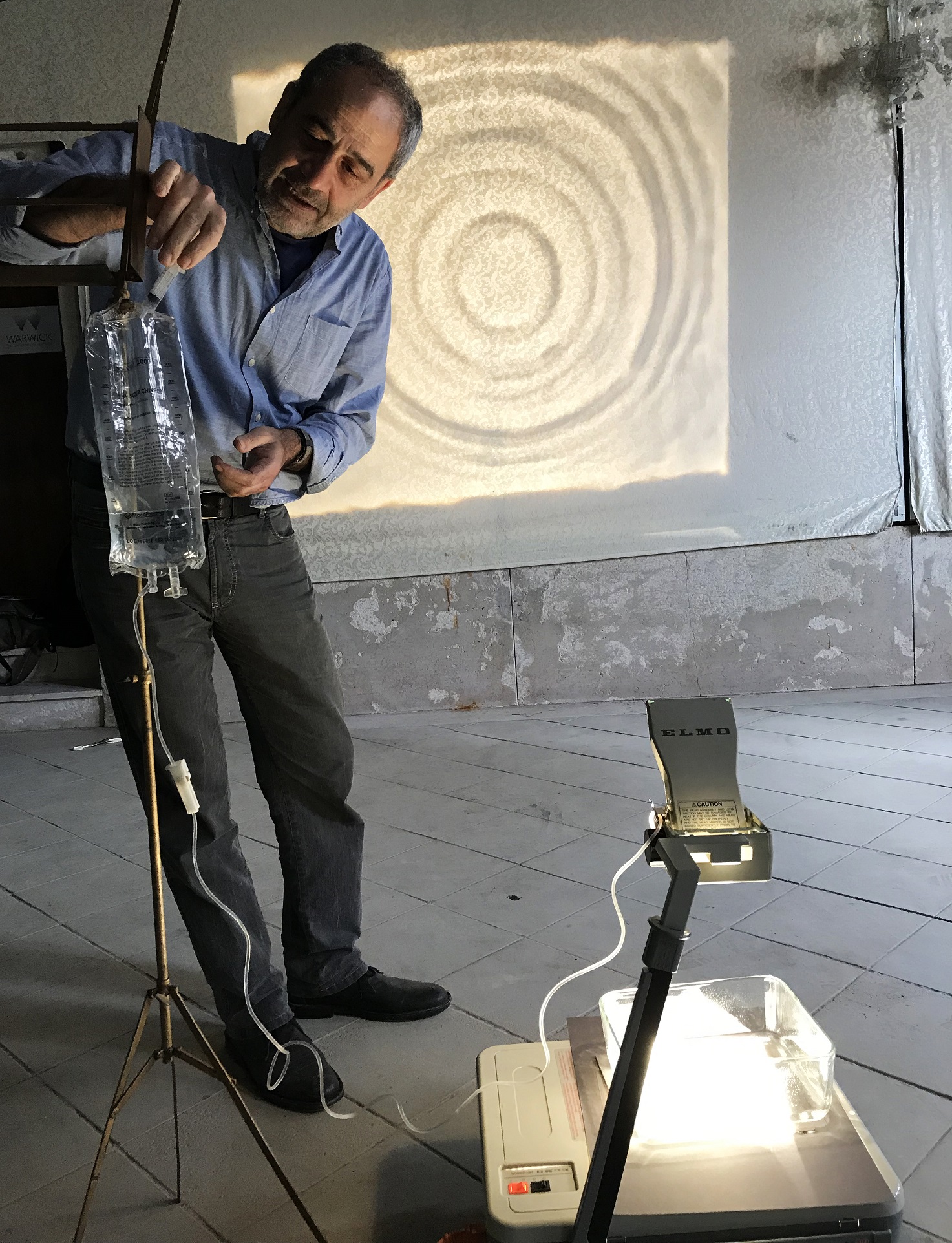
Opening the show is Syrian-born Issam Kourbaj. His three-piece installation is made up of a video of burnt matches, 98 boats made of recycled material and an IV drip. It juxtaposes the energies of fire and water, the flow of death and life, the struggle of a people between the two and the flow of time with the flow of migrants.

“Are we aware of the threads of our lives? I am putting the viewer in a place where many senses are being revisited. Each material sends new signals of information.”

Collaborating alongside him is Ruth Padel, a British poet whose book The Mara Crossing (2012) elucidates detailed comparisons in the way life organizes itself. Whether in cell biology, ornithology or human history, it is with the passage of migration that life begins, she says.

“There are two main reasons cells migrate in our bodies: One to create a new life, and two to defend the body –if we get a new cut the corpuscles and others rush to the site of trauma,” she explains. There’s an interesting parallel to be drawn with people migrating – a vigorous society is constantly replenished by the outside. Human civilization began with migration out of Africa. The first cell arrived on the planet, whether from the sea or outer space, and it colonized other places. The first great land migrants were trees. DNA from the oldest oak trees in Britain shows they came from the Spanish peninsula.”

Living things migrate because life becomes impossible or there’s a desire to make a better life. Birds in or near the Arctic get too cold and fly south. When the south becomes too crowded and they need to breed they return to the Arctic where there are lots of insects –  a protein-rich diet for their offspring. It’s a bit heartbreaking but if you overlay the maps of bird migration routes and human migration routes across the Mediterranean, it’s the same. They take the passages where water is smallest – the straits of Gibraltar, or through Sicily, Malta.

Venice, Ruth says, represents the wasp waist of information flow between north and south in history. Both she and Kourbaj will find new resonance for their work in the interconnectivity of the space around them. “My interest will be in the relationship of my work to the water, and to the tourist boats and the gondola boats,” says Kourbaj, “in scale and in meaning, and in contradictions, they will have a new charge.”

For Wiseman, this too is interesting: “What I am trying to do through creativity is put order into things. The more I thought about what this order could be, the more I found that it is the life force, it is evolution.”

Life seems coupled to flow, movement, change, transformation: information in whatever form – the passage of energy, the replication of DNA within biological cells, to animal migrations and the organization of human societies.


You can watch a video about Kourbaj’s work here: https://www.youtube.com/watch?v=vpUOx-wTUz4

Weird birds

Egyptian vultures exhibit strange mud-coloring rituals.

Egyptian vultures exhibit strange mud-coloring rituals.{credit}Manuel de la Riva{/credit}

Scientists have discovered that Egyptian vultures engage in a peculiar “mudding” ritual that is one among a set of unique behaviors that not only distinguish the vultures from other birds of prey, but also, quite frankly, make them look a little “weird” in comparison.

In a new research paper in the journal Ecology, scientists Thijs van Overveld, Manuel de la Riva and José Antonio Donázar of the Estación Biológica de Doñana, Sevilla, Spain, describe the coloring ritual in detail, opining that the behaviour, where the birds dip their heads, necks and even chest in red soil, essentially bathing their upper bodies in mud, might represent a complex communication technique through which the birds relay social information.

Nature Middle East chats with Overveld about the intriguing mud bathing ritual, and what it tells us about the North African birds.

NME: What does knowing about this coloring ritual add to the body of knowledge we have about the bird?

Overveld: The situation of Egyptian vulture is not very good, and currently classified as critically endangered, so few birds are left and we actually know very little about their behaviour. What we do know is that the Egyptian vultures are among the most peculiar birds worldwide. The vulture has a unique behavioural reportoire, such as stone throwing to open eggs; it also eats excrement of ungulates which turns their face into yellow.

Our work adds a new, and unusual behaviour to their behavioural reportoire, which so far has only been described in its close relative, the Bearded vulture.

NME: What are some of the observations that you have made about the birds?

Overveld: These birds have a far more complex social life than previously assumed. Since these birds are non-vocal, we don’t rule out that mud bathing may be used to signal certain social information.

The most intriguing part of the painting behavior is the amount of individual variation.

I have been repeating the experiments in the last week, and the interest in the mud (and disinterest) is striking. We are just at the beginning of our work, so it is difficult to give a clear answer. We can rule out some options like social status, for instance; sanitary benefits also seem unlikely because some birds don’t use mud when it’s in front of them, but we cannot give an answer to why they do it.

NME: Is it as strange as it sounds? Is it atypical in any way?

Overveld: The bird is clearly a special case among birds generally, but most interesting, it’s a vulture that is general regarded as a filthy animal. This has been quite different in the past, given that many societies treat them as sacred animals. As you know, they have been providing essential ecosystem services by eating dead animals and thereby avoiding the spread of diseases.

The significance of our work is two-fold, we decsribe a behaviour that may tell us more about how [the birds] live and their adaptations, while meanwhile, we show that a highly threatened bird – with remarkable behaviors unique among birds worldwide – is disappearing.

NME: How does the coloring happen? What do the birds do exactly?

Overveld: When birds notice red mud, something happens. Some birds can stare or gaze at the mud for 20 minutes, only to scratch the mud and leave. Others step in the bowl and start to scratch, look at it very carefully and then typically swipe both sides of the head and neck in the mud.

The most important thing of our experiment is that we show birds get dirty on purpose. Some start with a bath in clear water and then go all the way in red mud.

The questions is why do some birds want to become so dirty, and why is it as if some birds look [like they’re about] to take the most important decision in their life before swiping their head [in the mud].

Currently we are describing in more detail the behaviour during different parts of the year in combination with experimental work to figure out whether they may signal other social cues we yet don’t know. They have a more social complex life than previously acknowledged so we currently don’t rule out any option.

The world finally has recorded the strange mud bathing rituals of the Egyptian vultures.

Scientists have finally recorded the strange mud bathing rituals of Egyptian vultures.{credit}Thijs van Overveld{/credit}

If you’re curious about how Egyptian vultures bathe in mud, and would like to see the ritual in action, check out the following videos, courtesy of Overveld and colleagues: Video 1, Video 2, Video 3. According to the researchers, the videos are the first ever recordings of this specific mudding behavior.

Visual experiments straddling art and science

Filmmaker Markos Kay.

Filmmaker Markos Kay.{credit}courtesy of Eliza McNitt{/credit}

Digital artist and director Markos Kay pioneers at visualising the unvisualisable.

“Art and science are drivers of cultures,” says Kay, who visited the Middle East for the first time last month to exhibit a new film called ‘Quantum Fluctuations: Experiments in Flux’ at the Imagine Science Film Festival in Abu Dhabi. “I want to challenge our ideas of how our knowledge of reality is formed.”

He is perhaps best known for a generative short called The Flow (2011), which was featured in an episode of the TV hit series Breaking Bad.

The Flow takes its audience inside a proton, with the aid of simulation software and algorithms, to see a dramatically-visualised interplay of quarks and electrons, resulting in nuclei and atoms. “I was really frustrated that nobody is trying to visualise all this in a more accurate way, so I tried to make my own film. I wanted to show people how complex this stuff is,” he says.

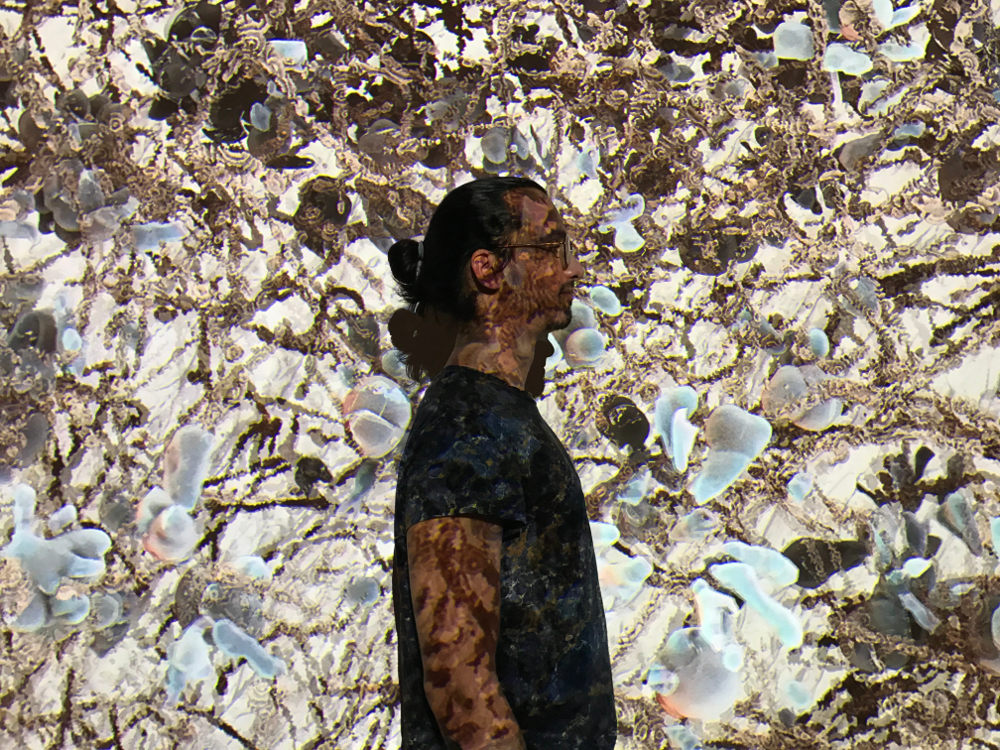
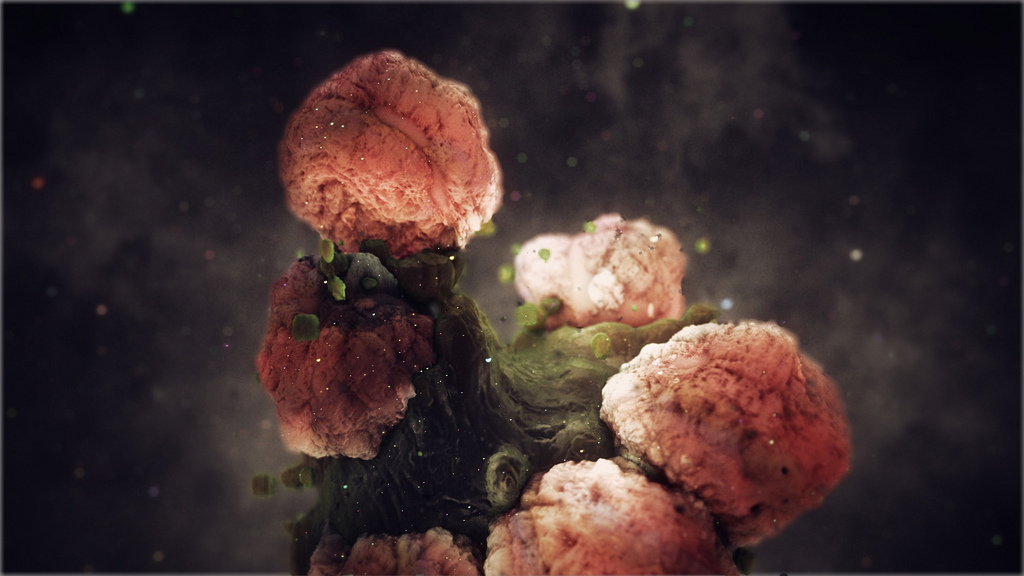
Kay’s work explores and abstracts the complex worlds of molecular biology and particle physics, be it through presenting a different way of observing cells or using the visual language of a microscope to give life to an organic process. “The desire of an artist to find ways to interpret and observe the world is similar to a scientist’s,” he says of his own experiments.

A still from Quantum Fluctuations.

A still from Quantum Fluctuations.{credit}Markos Kay{/credit}

His films are usually filled with detail and movement, and often feature scores of orchestral sounds or a generative, organic soundscape created by algorithm-based software.

His new film, ‘Quantum Fluctuations’, for instance, meditates on the transient nature of the quantum world which, he says, is impossible to observe directly. The film re-imagines the complex interactions of elementary particles as they collide inside the Large Hadron Collider at CERN –– and it’s all presented against a musical backdrop that is designed by Kay himself. Through striking computer-generated imagery, we can see interactions that occur in the background of a collision; for example, particle showers that erupt from proton beams colliding, giving birth to composite particles that eventually decay.

“Since the time of Heisenberg, it’s been almost impossible to visualise these events and simulations. It felt like a challenge,” Kay says. The film was produced by experimental design studio Epoche.io and will be part of an art and science documentary called “Sense of beauty” that focuses on CERN’s particle physics and that will be released later this year.

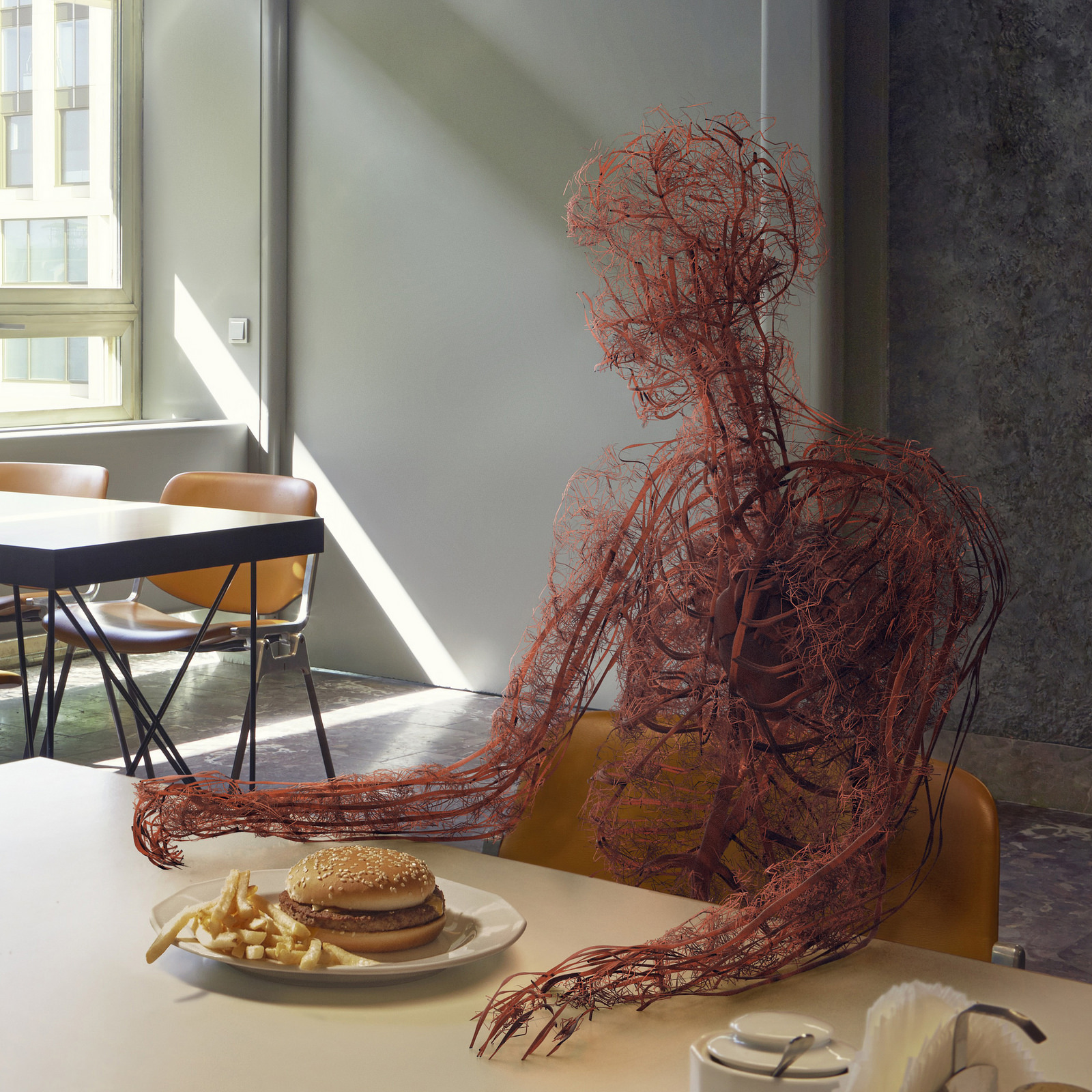
His latest project Humans After all, in collaboration with photographer Jan Kriwol depicts people in the context of everyday life through their circulatory systems. The project that showcases its subjects – humans stripped down to blood vessels and neural circuits – in an urban setting is meant to highlight the fragility and vitality of the human body.

“Through my work, I try to create immersive environments so that people can feel they’re entering a distant world.”

Humans Afterall.

Humans Afterall.{credit}Markos Kay / Jan Kriwol{/credit}

Bringing cinema magic to science

ISFAD17-ProgramStill-1

{credit}Imagine Science Film Festival{/credit}

In its third edition in Abu Dhabi, Imagine Science Film Festival, running from 2 to 4 March, 2017, is dedicated to light, reflecting on it through a multitude of films spanning documentary, fiction and experimental genres.

The film festival, which contemplates the intersection between science and art and which takes place at the Arts Centre in New York University Abu Dhabi (NYUAD), chooses a theme for its productions every year, and creates a conversation around it through talks, workshops, performances, and screenings of both local and international films.

In the past, the festival has collaborated with Zayed University, Petroleum Institute, Masdar in addition to NYUAD’s Arts Center in a keen effort to encourage local filmmakers to particpate in programming and filmmaking.

This year, the festival explores another fundemntal of life: light, and “how in multiple ways it has shaped how we see and understand the world providing us new insights, methods and understandings of how investigate our surroundings, and their scientific and artistic subtexts,” according to NYUAD professor and festival founder Alexis Gambis.

The festival is still accepting film submissions until December 5, 2016; works that, in the words of the festival founders, give viewers “a deep look into the natural, technological, and theoretical worlds, from the smallest molecule to the furthest reaches of space and everything in between”.

Many of the artists showcased are usually in attendance at the festival, which, in 2017, is expected to include panels on how we process and make sense of an overflow of media and information, a career talk with scientists, artists and filmmakers and how they navigate worlds that incorporate scientific and artistic dimensions, in addition to a retrospective of Larissa Sansour’s Space Triology: Nation Estate, Space Exodus, and In the Future They Ate from the Finest Porcelain (the latter featured in the second edition of Imagine Science).

Imagine Science will also exibit a revisited animation about Quantum mechanisms where data visualizations (inspired by CERN) will be projected on sand from Liwa desert.

According to Gambis, in 2017, the featured films will move from traditional documentaries to regional science fictions, experimental studies, and narratives inspired by essential science issues.

“We’re seeking new science films of all styles and subjects. Possible themes include technological shifts, neurological and cognitive functions from vision processing to memory and even dream, and the ecological and sociological studies of the Gulf and MENA landscape,” he elaborates.

To know more about the festival, how it began and what its creators have in store for it, listen to the latest edition of Nature Middle East‘s monthly podcast where this editor talks to Gambis about his brainchild and how it rose to prominence over the years.

Empowering women scientists in MENA

Funded by the Islamic Development Bank and the Bill & Melinda Gates Foundation, an international center for agriculture is promising to lay the ground work for a women empowerment initiative aimed at scientists, reportedly the first of its kind in the Middle East and North Africa (MENA) region.

The International Center for Biosaline Agriculture (ICBA) launched the design phase of the Young Arab Women Scientists Leadership Programme, dubbed Tamkeen (literally meaning empowerment in Arabic) this month.

Nature Middle East speaks to Setta Tutundjian, director of partnerships and knowledge management at ICBA, about the potential of this gender-specific science programme.

NME: How will your programme empower women involved in scientific research across the Middle East?

Setta Tutundjian: The objective of the Tamkeen program is to encourage young Arab women scientists to pursue a life-long career within the field of scientific research and development. The programme also aims to help women scientists interested in pursuing leadership positions to acquire the skills necessary to assume such leadership position within research institutes across the region.

The programme will develop  leadership and soft skills among participants in key areas such as negotiation, human resource management, science writing, proposal writing, planning, presentation, mentoring, deeper understanding of self-esteem and so on.

We expect this to be achieved through a careful mix of classroom training, online training, coaching and mentoring.

NME: You’re still designing the programme, correct?

ST: Yes. And a critical part of this phase includes conducting focus group discussions and interviews with young women scientists to fully understand the challenges and opportunities they currently face within their careers, as well as to hear from them on the elements of an ideal leadership program that can help them address some of the challenges they face. We want to build a program primarily based around their needs and aspirations.

NME: By identifying the barriers and challenges, do you mean that you plan to launch country-specific investigations into how women are faring in the research and development field?

ST: Besides focus group discussions and interviews with the women, the design phase will also include an assessment of current academic programmes on offer in the region and whether these programmes cater to leadership development among graduates. There will also be an assessment of regional and international capacity building programmes to leverage learning and best practices.

During the coming months, a gender expert, a leadership expert and an expert in training activities will gather to prepare modules and produce a detailed framework of the leadership programme incorporating the results of the various assessments.

NME: I can imagine that women in a country like Egypt would be facing starkly different challenges than, say, the women of the United Arab Emirates …

ST: We do have a unique understanding of the region and the differences that exist between the different countries, specifically when it comes to research and development. Our focus group sessions will be divided among three sub-regions (the Gulf, the Levant and North Africa) in order to cater to the differences among the regions and target countries.

NME: How do you plan to measure progress?

ST: Measuring short-term results will include references to quantity and quality of workshops, participant feedback, network reach and similar metrics. Measuring long-terms results and impact will consider the number of women leaders over time in research institutions in the region, and the increase in number of scientific publications of women scientists.

You’re as happy as your genes allow you to

Or so claims a new study in the Journal of Happiness Studies, by two researchers from the Varna University of Management in Bulgaria, and the Hong Kong Polytechnic University. The researchers believe they have established a link between genetic make-up and how happy certain populations are.

The happier nations are more likely to have within their DNA an allele, the A allele, involved in regulating sensory pleasure and in helping reduce pain.

For instance, the study finds that Arab nations like Iraq and Jordan, which had the lowest prevalence of this allele, were least likely to classify themselves as “very happy”.

The researchers used data from three waves of World Values Survey, in addition to population genetic data from an allele frequency database compiled by a geneticist from Yale, in addition to climate information, history of pathogenic prevalence, plus World Bank economic data on the nations under scrutiny.

The findings heavily factor in genetic data, but recognized from the onset that genetics may not be the only determinant to happiness. Politics, economics, laws governing nations, and disease patterns can affect how happy certain nations are, perhaps prevalence of the A allele in the genes notwithstanding. Testing this however, they conclude that, besides genes, climatic difference is one other thing that can very significantly affect happiness levels, more strongly than any of the other factors.

These measures however are not absolute, the researchers admit.

“We have not shown that a nation’s genetic and climatic heritage doom a particular country to a specific happiness score, but that it can still rise and fall because of situational factors,” says Hong Kong Polytechnic University professor and co-author Michael Bond.

Women’s gap from education to research

More women than ever before are pursuing education in science around the world, and the Arab world is no exception. However, the number of women who pursue research careers after education quickly trickles down, especially in the private sector. In the Arab world, this is mainly due to cultural norms that force women to forego time-consuming research careers for family-raising responsibilities.

The private sector is often not keen on hiring women due to stereotypes of poor commitment and the fact they may require long holidays due to pregnancy and labour, which are seen as “problems” not encountered when hiring men.

However, there are some positive signs in the region. According to UNESCO, 38% of researchers in the region are women – more than the North American and West European average of 32% and the world average of 30%.

Tunisia and Egypt topped the list of Arab states with the least disparity between the sexes in research, with 47% and 42% of researchers being women respectively. This comes in stark contrast to Saudi Arabia where only 1% of researchers are women, says UNESCO. Jordan, Libya, Oman and Palestine were all below 25% as well.

To mark International Women’s Day, the UNESCO Institute for Statistics (UIS) has produced a cool interactive infograph on the status of women in research broken down by region and countries, with information about the different fields of research as well as the different sectors they are employed in. You can visit it by clicking on the image below, then start exploring the petri dishes.

UNESCO - Women In Science Interactive

2013: Nature Middle East’s Special Editions

For Nature Middle East, 2013 has been an exciting year — with wider coverage of the latest in science and research from across the region, and the beta-launch of our monthly special editions earlier in the year, and regularly starting October.

Our specials section decided to go nuclear, in its experimental edition in April 2013, highlighting the four major players in the region on the this front. We explored the potential and ambitions of Jordan, Egypt, Saudi Arabia and the UAE in nuclear energy development. The overarching question was: What kind of progress these countries can generate as they muddle through complex politics and logistics?

Our debut in October produced multiple features and news pieces on one of the most feared diseases of the century: cancer, whose incidence is expected to increase in the Middle East more than any other part of the world. From cancer screening in Algeria, which sadly occurs too late for many patients, to a prevalence of advanced breast cancer in Jordan, Syria, Egypt and Sudan, and the presence of a uniquely vicious type of the malignant disease in the Arab world, our cancer special balanced statistics from the ground with eye-opening lab findings in this area.

In November, the spotlight has shone on stem cell research in the region — one that experienced a head-start when Muslim scholars green-lighted basic research using embryonic stem cells. Promising research, such as that carried out by a team of scientists in Egypt using stem cells to find a cure for diabetes, is juxtaposed against opinions by experts from the field on regional policies, and how to move forward, logistical problems and financing shortages notwithstanding.

Finally, in December, Nature Middle East decided to get closure by talking about the elephant in the room: the rising prevalence rate of the HIV and AIDS in the region, which remains to be one of the most pressing issues thus far considering how little information we have regarding its spread.

You can’t talk about HIV without tackling stigma, which, as it turns out, is a solid force in the region; thwarting proper assessment of the incidence of the virus in 10 countries, affecting the reach of treatment (and in turn its effectiveness), and putting up proverbial walls between risk groups and health workers trying to help.

It’s a mixed bag. Worrying trends persist in some countries; for example around 80% of people living with HIV/AIDS in the region are not aware they’re carriers of the virus. While in others, there’s a measure of progress, with countries like Lebanon, Morocco, Jordan, Syria and Tunisia, adopting a hard reduction approach to curb the virus.