Probing a new algae species for clues into plant adaptation

An investigation of the genome and phenome of a green alga called Chloroidium sp. UTEX 3007 has revealed, for the first time, certain adaptive traits that help algae acclimate to desert environments.

But what sets apart this new species, which scientists at the New York University Abu Dhabi (NYUAD) have discovered and sequenced, from other types of green algae?

Nature Middle East talks to Kourosh Salehi-Ashtiani, associate professor of biology and managing director at the Center for Genomics and Systems Biology at NYUAD, to find out.

Nature Middle East: What does your new study add to the body of knowledge that we have of green microalgae?

Kourosh Salehi-Ashtiani: Green microalgae or Chlorophyta live in myriad forms and are believed to be the progenitors of land plants. Many scientists around the globe are involved in active research programs to understand the ecological roles of these organisms as well as to utilize them for biotechnology. Despite the importance of micro-algae, relatively few species have been profiled at the genomic and phenomic levels.

These species are mostly from temperate zones, with very little information available on any alga from the subtropical geographies, such as the environment of the United Arab Emirates (UAE). Our study, however, sets a new standard for understanding the biology of micro-algae, and how Chloroidium has evolved to cope with the environmental challenges unique to the region.

NME: Was there anything particularly surprising about Chloroidium?

KSA: Yes. Its ability to thrive on both freshwater and high-salinity growth media and its ability to assimilate an array of uncommon carbon compounds for heterotrophic growth [which is growth through an energy pathway in which an organism that cannot manufacture its own food uses sunlight or inorganic compounds to produce carbohydrates, proteins and fats from carbon dioxide, in order to survive].

NME: Can you tell me more about your comparative study of Chloroidium and land plants?

KSA: Our phenomic and genomic data suggests that Chloroidium has a close relationship with higher plants and may live an intermittent epiphytic lifestyle, in other words, it may live on the surface of plants when such an opportunity arises. We show the Chloroidium is able to uptake many different sugars. Now, if you think where an alga is likely to find sources of sugar, plant and plant material become the most obvious candidates.

NME: In your paper you mention that Chloroidium harbors “unique protein families involved in osmotic stress tolerance and saccharide metabolism,” would you mind explaining this to our readers?

KSA: It is known that many organisms, when faced with increased osmolarity or typically high salt concentrations, they start to accumulate sugars internally. The Chloroidium’s genome contains unique genes implicated in the accumulation and breakdown of uncommon sugars. It hasn’t been previously known how organisms accumulate and break down these sugars; our study clarifies this.

NME: What are some of the future applications of your findings now that we have this new species, with a robust and flexible biology, especially with regards to conservation and understanding the effects of climate change?

KSA: In light of the environmental hazards befalling much of Southeast Asia that have been caused, at least partly, by razing high-biodiversity rainforests to cultivate oil palm, we chose to particularly emphasize Chloroidium’s ability to accumulate palm-like oil. The fatty acid profiles of oil palm or Elaies guiensis and Chloroidium are virtually identical.

NME: So this discovery may, in the future, help in providing an alternative to palm oil?

KSA: Definitely. Cultivation of oil palm has been associated with deforestation, if not devastation of rainforests in Southeast Asia. It’s why many European countries are banning the use of oil palm in their products. We think this alga may provide an environmentally-friendly alternative to cultivation of oil palms once further developed.

2016: Editor’s choice

Extracts from selected news and feature articles published this year.

Astrophysics

An international team of scientists, including from New York University Abu Dhabi (NYUAD), managed to directly observe structural components of one slowly rotating star, thanks to asteroseismology. This new technique, 10,000 times more precise than its predecessor, reveals a star’s flatter, rounder contours and different rotational speeds. It allows scientists to ‘see’ the nature of the stellar interior with very high precision.

Marine science

In an unprecedented study on non-model organisms in captivity, scientists from Saudi Arabia, Australia and Norway were able to create large sequence datasets on how reef fish and their offspring react to the phenomenon of decreasing pH levels, called ocean acidification, brought on by climate change. Acidification happens due the uptake of atmospheric carbon dioxide. “The amount of sequencing data we generated is unparalleled for a non-model organism,” says Timothy Ravasi, the senior author of the paper. Scientists discovered that the offspring of some reef fish can tolerate acidification by adjusting their circadian rhythm to night time function throughout the day.

Ecology and evolution

An international consortium of researchers analysed the coding portions of genes, or “exomes”, belonging to 1,794 nationals of Greater Middle Eastern (GME) countries, a region spanning from Morocco in the west to Pakistan in the east. “As expected for a region so rich in history and at the crossroads of many civilizations, the Middle East ‘variome’ [the set of genetic variations in a given population] suggests mixing with other populations, although the percentage varies greatly depending on which subpopulation you look at,” says geneticist Fowzan Alkuraya from Saudi Arabia’s King Faisal Specialist Hospital and Research Center. Northwest African genes were found in people across northern Africa, most likely representing the Berber genetic background. Arabian Peninsular genes were observed in nearly all GME peoples studied, possibly the result of the Arab conquests of the seventh century. Similarly, Persian expansion in the fifth century into the Turkish peninsula, the Syrian Desert region and parts of northeast Africa probably accounts for the Persian and Pakistan genetic signal present in the peoples of those regions. The peoples of the Syrian Desert and Turkish peninsular regions show the highest levels of mixing with European populations.

Geology

Shallow, dense magma reservoirs may be responsible for the most hazardous type of volcano on Earth, according to a new study. Ivan Koulakov and colleagues, including scientists from Saudi Arabia, present a fresh seismic model, based on studying magma paths beneath the Toba volcano in Indonesia, which last erupted some 74,000 years ago. The model explains why the magma system under Toba causes large, devastating eruptions, and how such large volumes of magma are generated.

Archaeology

“We always say it can’t get any worse, and then it does — and that’s the hardest part,” says Allison Cuneo, project manager for the American Schools of Oriental Research’s Cultural Heritage Initiative (CHI), which documents the loss of Syrian heritage. CHI reported 851 incidents of damage to cultural heritage between September 2015 and August 2016, mostly concentrated in areas of northern Syria controlled by forces opposed to President Bashar al-Assad. With such extensive damage, there “is so much data on destruction to report, it’s like holding the ocean back with a broom,” says Michael Danti, the academic director of CHI.

Environment

A world atlas of artificial night sky brightness, published earlier this year in Science Advances, captured the extent to which we are smothered in light. It reveals Kuwait, Qatar, United Arab Emirates and Saudi Arabia as the most light-polluted places to live on the planet, topped only by Singapore. More than half of people living in Israel and Libya live through extremely bright nights, and the widest connected twilight zone in the world is along the Nile Delta in Egypt. No more can people in Kuwait and Qatar see the glowing band of the Milky Way from their homes. For more than 97 per cent of people in the United Arab Emirates, Israel, and Egypt, this is also true. “The night sky is the beginning of our civilization. It leads to all religions, philosophy, science, literature and the arts. The cultural significance of a sky full of stars is huge. The new generations have lost this source of inspiration,” says Fabio Falchi, of the Italian Light Pollution Science and Technology Institute’s Fabio Falchi, who led the study.

Astronomy

The Qatar Exoplanet Survey (QES) has discovered three new “exoplanets” outside our solar system. The planets, named Qatar-3b, Qatar-4b and Qatar-5b, are hot Jupiters: they are similar in size to Jupiter (11 times the size of Earth) and orbit very closely to their respective suns. They are located some 1400 to 1800 light years away from Earth and can be seen in the same part of the sky as the Andromeda Constellation, best observed in autumn in the northern hemisphere.

Year in review: Under pressure

Conflict and wars have continued to bend the region out of shape in 2016, with health infrastructure in Syria and Yemen continuing to crumble and fall, and the exodus of people out of dangerous zones affecting neighboring populations. The following are some of the most critical situations borne out of the flow of people as a result of infighting in 2016.

Water

Besides the human cost of the war in Syria, the ecological and environmental impact has, no doubt, been huge. For example, earlier this month, researchers based in the US and Canada have shown how mass migrations are changing the country’s hydrological landscape.

The flight of Syrian refugees since 2013 has dramatically changed water-use patterns and led to an increased water flow into Jordan through the Yarmouk River. In the absence of direct measurement data from Syria, the scientists had turned to remote sensing techniques, combining spatial and statistical analyses of satellite imagery with water balance calculations to estimate the changes in irrigation patterns and reservoir usage in southwest Syria. While the end of a regional drought is partly responsible for the increased flow of the Yarmouk, the analysis showed that decreased water use in the Syrian part of the river basin accounts for roughly half of the 340% increase in transboundary flow.

In a way, the war in Syria carried some good for Jordan – at least in terms of water supply.

Health

War and migration had once led to outbreaks of infectious diseases, such as visceral leishmaniasis, across the region, originating from Sudan and South Sudan. And new research is warning that this could happen again. Visceral leishmaniasis is endemic in Sudan and South Sudan, where the climate allows sandflies to thrive, and poor health systems compound the problem.

Researchers from the US and Saudi Arabia have presented new evidence suggesting that conflict, and the chronic malnutrition and displacement that follow, interrupt the cycle of immunity and allow a disease like visceral leishmaniasis to flourish. Gloomily, the scientists say they expect another outbreak.

Not far off, in Aleppo, the scene of much violence and suffering, an outbreak of another form of leishmaniasis has taken place. The Aleppo boil, which is caused by a parasite in the bloodstream and transmitted through the bites of sandflies, has been reported to have infected hundreds of thousands across the Middle East, especially across refugee camps. The disease causes disfiguring lesions on the body and the numbers are bad, according to scientists.

Until recently, the disease was contained to areas around Aleppo and Damascus, but this changed with the continuous disruption of insecticide control, poor water and sanitation services in conflict zones.

Bringing cinema magic to science

ISFAD17-ProgramStill-1

{credit}Imagine Science Film Festival{/credit}

In its third edition in Abu Dhabi, Imagine Science Film Festival, running from 2 to 4 March, 2017, is dedicated to light, reflecting on it through a multitude of films spanning documentary, fiction and experimental genres.

The film festival, which contemplates the intersection between science and art and which takes place at the Arts Centre in New York University Abu Dhabi (NYUAD), chooses a theme for its productions every year, and creates a conversation around it through talks, workshops, performances, and screenings of both local and international films.

In the past, the festival has collaborated with Zayed University, Petroleum Institute, Masdar in addition to NYUAD’s Arts Center in a keen effort to encourage local filmmakers to particpate in programming and filmmaking.

This year, the festival explores another fundemntal of life: light, and “how in multiple ways it has shaped how we see and understand the world providing us new insights, methods and understandings of how investigate our surroundings, and their scientific and artistic subtexts,” according to NYUAD professor and festival founder Alexis Gambis.

The festival is still accepting film submissions until December 5, 2016; works that, in the words of the festival founders, give viewers “a deep look into the natural, technological, and theoretical worlds, from the smallest molecule to the furthest reaches of space and everything in between”.

Many of the artists showcased are usually in attendance at the festival, which, in 2017, is expected to include panels on how we process and make sense of an overflow of media and information, a career talk with scientists, artists and filmmakers and how they navigate worlds that incorporate scientific and artistic dimensions, in addition to a retrospective of Larissa Sansour’s Space Triology: Nation Estate, Space Exodus, and In the Future They Ate from the Finest Porcelain (the latter featured in the second edition of Imagine Science).

Imagine Science will also exibit a revisited animation about Quantum mechanisms where data visualizations (inspired by CERN) will be projected on sand from Liwa desert.

According to Gambis, in 2017, the featured films will move from traditional documentaries to regional science fictions, experimental studies, and narratives inspired by essential science issues.

“We’re seeking new science films of all styles and subjects. Possible themes include technological shifts, neurological and cognitive functions from vision processing to memory and even dream, and the ecological and sociological studies of the Gulf and MENA landscape,” he elaborates.

To know more about the festival, how it began and what its creators have in store for it, listen to the latest edition of Nature Middle East‘s monthly podcast where this editor talks to Gambis about his brainchild and how it rose to prominence over the years.

How changing sex helps “Nemo” survive and adapt

Laura Casas, House of Wisdom guest blogger and King Abdullah University of Science & Technology (KAUST) marine biologist, talks to us about the orange salt water fish and how it used a marvelous evolutionary mechanism to conquer the seas.

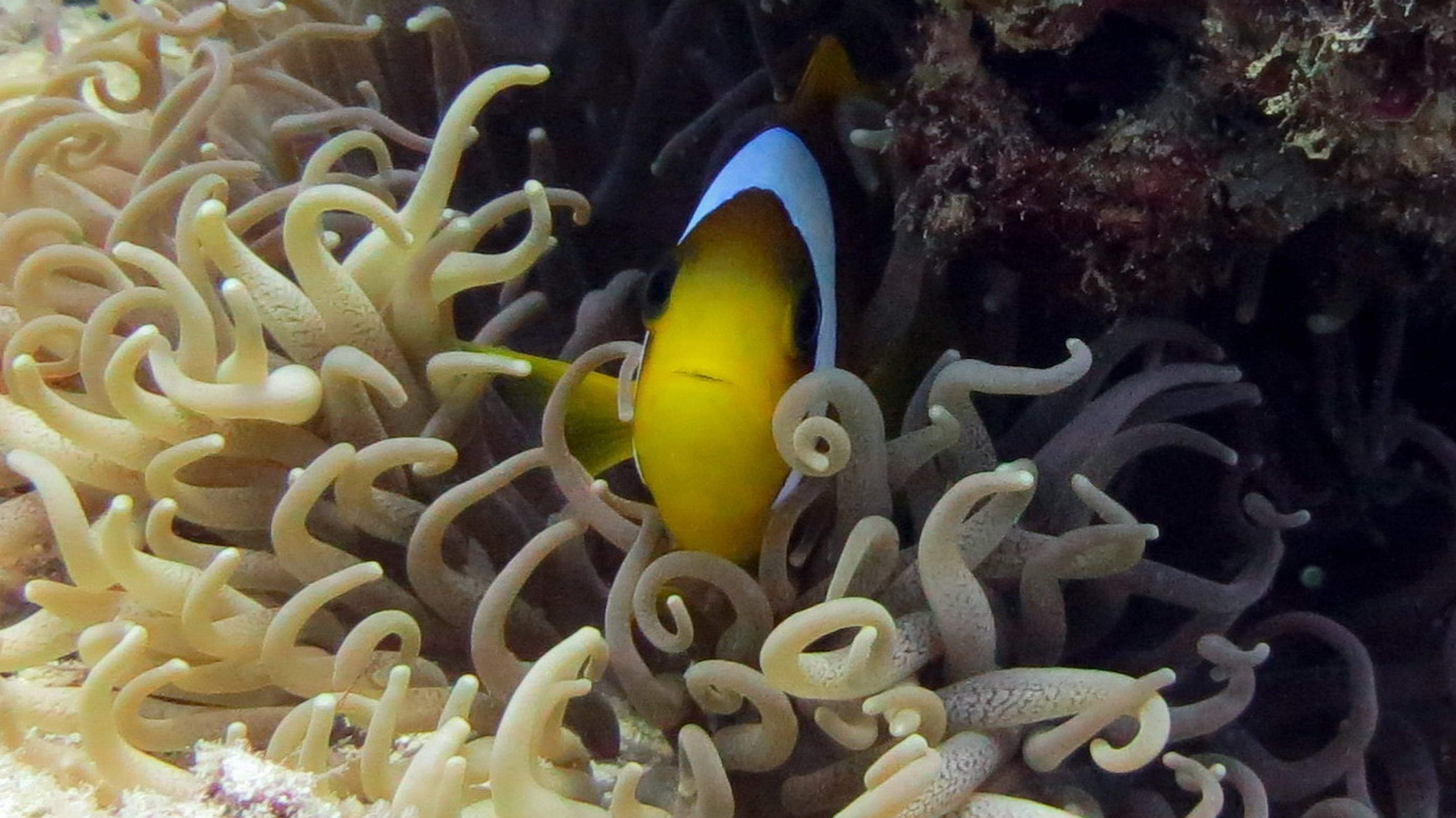
Clownfish_AlFahal

{credit}Fran Saborido-Rey{/credit}

How did a small, very bright, colorful fish that’s a poor swimmer become extensively distributed in tropical waters from the Indian to the western Pacific Oceans, including the Great Barrier Reef and the Red Sea?

Two processes have potentially played a role in the successful evolutionary adaptation of clownfishes: a mutual relationship with anemones – flower-like marine animals and relatives to corals – which provides shelter and protection in exchange for nourishment, plus their capacity to change sex when their partner dies, preventing the need for dangerous travel across the reef.

While the different aspects of this mutual relationship have been unveiled in dozens of studies, very little has been known about the mechanisms that orchestrate sex change in fishes.

Our new study at KAUST provides insights into the genetic mechanism governing social sex change in fish, using the Red Sea endemic species of clownfish, Amphiprion bicinctus, as a model in its natural habitat.

Clownfishes are monogamous, living in social assemblages as pairs or social groups consisting of a dominant female, always the largest in size, surrounded by her male partner and a variable number of immature juveniles of smaller size. They display a strong social hierarchy based on size; these hierarchies function as queues for breeding, so when a dominant female of a social group dies, all subordinates seize the opportunity to ascend in rank.

This way, the male is always poised to become female and rapidly changes sex to assume the vacated position, while the biggest juvenile rapidly matures into a male ensuring the ability to produce new generations without abandoning the anemone.

ClownfishExperiments_Credit_ThamerSHabis (3)

{credit}Thamer S. Habis{/credit}

The confinement of an animal, however, is known to alter its normal behaviour but traditionally sex change has been studied using aquarium experiments. In our study, we localized sixteen families living on the exposed side of Al-Fahal reef, in the Central Red Sea and removed all the females to trigger the sex change process.

One sex-changing individual was sampled every five days for 1.5 months to cover the full time course of the sex change process and their transcriptional responses were assessed using RNA sequencing.

Our results show a response in the male´s brain which starts two weeks after the female’s disappearance and lasts for two additional weeks.

During this period, there is a marked down-regulation in deferentially expressed genes of sex-changing individuals, compared to mature males and females. We identify a large number of candidate genes, both well-known and novel potentially playing a role in sex change.

Based on our results, we propose a picture of the genetic mechanisms that take place during the sex shift: the aromatase gene known as cyp19a1 plays a central role by modulating the balance between estrogen and androgen signaling. Aromatase is involved in the production of estrogen.

The genes sox6 and foxp4 may play a role in regulating the expression of aromatase and/or other genes involved in steroid production at the brain level. The genes cyp19a1 and foxl2 play a pivotal role in the activation of the female pathway driving the sex gland transformation from testis to ovary during sex change, while Sox8, Dmrt1 and Amh are important for testis maintenance.

The results have not only provided important insight into the main genetic mechanism governing sex change and sex gland restructuring in hermaphrodite flowers or animals, but also detailed information on specific genes involved during every step of the process. Our study is the first genome-wide study in a social sex-changing species in its natural habitat and the dataset generated is a valuable genomic resource for a species with virtually no genetic information available in public datasets.

Future work would ideally explore whether the genetic processes underlying sex change in hermaphrodites is evolutionary conserved. We need to deepen our knowledge of the unexplored genetic mechanisms underlying such sex change.

As well, only a deep understanding of the genetic processes governing reproduction in hermaphrodites will allow us to anticipate how reproductive success might be affected by the temperature rise in coming years as a consequence of the climate change and give us a chance to conserve and protect the sea’s biodiversity.

UAE’s green city grabs the attention of international researchers

Masdar city, in the heart of the Gulf desert, on the outskirts of Abu Dhabi, has no light switches or water taps. In Masdar, movement sensors control lighting and water in order to cut down electricity and water consumption by nearly half. The city is touted by the UAE as possibly “one of the world’s most sustainable eco-cities.”

And now University of Birmingham researchers are presenting it as a model to teach the UK and the world about saving energy and resources, contrasting it with energy systems in Birmingham, United Kingdom.

They analyzed the differences and similarities between Masdar, founded very recently in 2008 against an urban environment, and Birmingham, a well-established post-industrial city that has evolved over 400 years. “Masdar City benefits from starting from a blank slate, whereas Birmingham has existing processes, procedures and an ageing infrastructure to negotiate,” according to the researchers.

Masdar is primarily powered by Shams 1, one of the largest concentrated solar power plants in the Middle East, and it houses the Masdar Institute of Science and Technology, which carries out renewable energy research.

“We compared two very different cities – both aspiring to be ‘low-carbon’. Masdar has started well by building low-rise, energy-efficient buildings with smart metering,” says lead author Susan Lee, from the department of civil engineering. “Data from such buildings can help to change people’s behaviour and help develop more energy-efficient new and retrofitted UK buildings. The UAE is a hot and arid place; experience gained in Masdar will help us plan here in the UK for projected hotter summers, with more frequent heatwaves, particularly in cities, as the climate changes.”

Birmingham, says the researcher, has a few things to teach Masdar as well, including how the city adapted to new energy requirements. Lee believes that Masdar can also benefit from her university’s research into hydrogen fuel-cell cars.

Historic genetic ‘picture’ of Arabian camel revealed

Camels blogpost

{credit}PhotoDisc/Getty Images{/credit}

An analysis of the ancient and modern DNA of the single-humped ‘Arabian’ camel or dromedary reveals how human societies have influenced the animal’s genetic diversity.

Long-distance and back-and-forth movements in ancient camel caravan routes are one way this has happened.

The camels have long been a source of food and transport for desert communities, and a vital resource in trade and agriculture in hot, arid regions. That’s why the scientists responsible for this study believe that in the context of climate change and advancing desert landscapes, scrutinizing dromedary’s biology, reproduction and adaptation to hostile terrain has acquired a new level of importance.

“The dromedary has out-performed all other domesticated mammals, including the donkey, in arid environments and continues to provide essential commodities to millions of people living in marginal agro-ecological areas,” says lead author Faisal Almathen from the Department of Veterinary Health and Animal Husbandry at King Faisal University.

“There is very little defined population structure in modern dromedaries. We believe this is a consequence of cross-continental back and forth movements along historic trading routes,” he adds. “Our results point to extensive gene flow which affects all regions except East Africa where dromedary populations have remained relatively isolated.”

For this study, the researchers collected and analysed genetic information from a sample of 1,083 living dromedaries from 21 countries across the world. The team also examined ancient DNA sequences from bone samples from early-domesticated dromedaries from 400-1870 AD and wild ones from 5,000-1,000 BC.

The international team of scientists was led by geneticists from The University of Nottingham, the University of Veterinary Medicine in Vienna and King Faisal University in Saudi Arabia. The research itself is published in the Proceedings of the National Academy of Sciences of USA.

Future climate projections for MENA: A dark scenario

Heat waves expected to be long and intolerable in the region.

Heat waves expected to be long and intolerable in the region.{credit}GETTY{/credit}

A new study is warning against a climate scenario that could see large populations in the Middle East and North Africa region become forcibly displaced because of extreme weather conditions.

“Climate change will significantly worsen the living conditions in the Middle East and in North Africa,” says the study’s lead researcher Jos Lelieveld of the Max Planck Institute for Chemistry, Mainz, Germany. “Prolonged heat waves and desert dust storms can render some regions uninhabitable, which will surely contribute to the pressure to migrate.”

The hot desert climate [will] intensify and become more extreme if global greenhouse gas emissions continue to increase, states the study. The number of warm days and nights may increase sharply. And on average, the maximum temperature in the hottest days will rise from its current level of 43 °C to 50 °C by the end of the century.

Heat waves will occur more frequently, and last significantly longer, according to the study. At present day, it’s extremely hot for an average of 16 days. But by mid-century, the number of hot days will spike, reaching 80 per year. And by the century’s end, the region will go through an 118-day-long extreme heat wave, as per Lelieveld et al.

The extreme heat might also cause higher rates of premature mortality, and a range of cerebrovascular and heart diseases. Combined with increasing air pollution by windblown desert dust, “the environmental conditions could become intolerable,” says Lelieveld.

Last October, Lelieveld and colleagues proposed another chilling vision of the Gulf countries predicting a heat wave so extreme that it could render some major cities like Dubai and Doha uninhabitable by the turn of this century. They also recently published findings that showed that desert dust in the atmosphere over Saudi Arabia, Iraq and Syria has increased up to 70% since the beginning of this century, as a result of prolonged droughts and an increase in sand storms.

The new study, published in the Springer journal Climatic Change, is an extension of Lelieveld and colleagues’ work into how different regions are affected by climate warming.

In the Middle East, the unrelenting rise in global temperatures will “enhance the already hot and dry environmental conditions,” states the study, which followed efforts to improve data access and analyze climate indices in a region that has typically suffered from restricted availability of meteorological data sets.

The study considers two scenarios: one that saw greenhouse gas emissions decreasing and the other (a business as usual scenario) saw no change. Under both scenarios, the heat levels in the Middle East would increase; four folds and two folds respectively.

“Even if climate change in the 21st century will be limited to a global mean temperature increase of 2 °C relative to pre-industrial times, warming over land is typically stronger than over the oceans and extreme temperatures in many regions can increase well beyond 2 °C,” says the study.

Sooner or later, many people will have to leave, the researchers predict.

A vast ancient river is buried beneath the Sahara

Beneath the shifting sands of the Sahara lies a dried-up ancient river network, approximately 520 km in length, bearing witness to a time when the arid land was wetter, greener and flowing with life.

The river network, whose sediments and worn path lies beneath Mauritania, probably slithered for hundreds of kilometers across the Sahara roughly 5,000 to 11,700 years ago. The ancient river was reportedly sourced from the Hoggar Highlands and the southern Atlas mountains in Algeria. If it had managed to endure to this era, its river valley would’ve ranked twelfth among the top 50 largest drainage basins worldwide.

The new study, published this week in Nature Communications by Charlotte Skonieczny of University of Lille, France and her team, may change our understanding of the African continent under past and future climates.

No major rivers exist in the Western Sahara at present, but the recent findings provide the first direct evidence of the presence of a vast waterway and possibly lush vegetation in the currently inhospitable stretch of land.

There were already indications to point to the past existence of a major West African river system: the discovery of fine-grained, river-borne material in the deep ocean, and an extensive submarine channel – the Cap Timiris Canyon – carved into the continental shelf off the Western Sahara coast. The canyon was said to be possibly connected to this river.

Now the use of orbital radar satellite imagery, using an advanced Japanese remote-sensing instrument that has the ability to probe beneath sand dunes, have successfully geologically mapped what lies beneath, revealing a river that, according to the study, aligns perfectly with the submarine canyon previously observed.

The branch of the network identified in this study represents a fifth of the total length of the fossil river.


Last coral standing

This is a guest post by Nature Middle East writer Louise Sarant.

The Red Sea coral reefs are among the most resilient coral systems in the world.

The Red Sea coral reefs are among the most resilient coral systems in the world.

Some 70 million years ago, Africa and Arabia parted to give birth to the Red Sea valley – a thriving, yet highly stressful environment for the thousands species of corals, fish and macrophytes which inhabit its waters.

The Red Sea’s salinity is currently at 40 parts per thousand; in simple terms, that’s 40 Kg of salt for every 1000 litres of water, substantially higher than the Mediterranean Sea’s 35 parts per thousand.

The water temperature of the Red Sea also ranks among the highest in the world and is believed to warm faster than the world average, according to a study by the King Abdullah University of Science and Technology (KAUST) in 2011. The researchers found that the Red Sea waters have warmed by up by to 0.7°C since 1994, in contrast to the global ocean temperatures which rose by 0.5°C.

The water’s high salinity and temperature have created a difficult environment for its biota, particularly for its plentiful coral reefs. But against all odds, they seem to be faring better in light of climate change than other corals worldwide. They continue to build extensive reef systems up and down the Red Sea’s  coasts, somehow adapting to those harsh conditions.

“If you were to take a coral from the Great Barrier Reef today and drop it into the Red Sea, I would be surprised if that coral lasted a month,” says Michael Berumen, a marine biologist at KAUST.

This does not mean that the Red Sea corals are and will be immune to the various expected climate change impacts.

“While there is no such thing as an unimpacted ecosystem today, the Red Sea is still considered a thriving ecosystem,” says Gustav Paulay, marine invertebrate curator at the Florida Museum of Nature History. “There is bleaching and there is mortality, but when you dive in the Red Sea you don’t lament not being there a couple decades ago.”

Berumen is convinced the Red Sea will eventually bear the brunt of climate change, but it has a remarkable advantage. “What matters here is the starting point, the relative difference between the Red Sea and other reefs living in different conditions.”

Right now, marine biologists are trying to figure out what are the ecological or genetic mechanisms that allow Red Sea corals to survive in harsh conditions that corals in Australia, the Maldives or the Seychelles cannot withstand.

“Because the Red Sea is already so much warmer, it is possible that what we are looking at now are the conditions in which reefs in other parts of the world will have to deal with in the not too distant future,” says Berumen.

Understanding the adaptation mechanisms and higher tolerance of the Red Sea corals could change conservation mechanisms of corals worldwide.

Scientists have identified a few conditions which partly explain the resilience of Red Sea corals. “There are very little runoffs, coupled with a very low population density,” says Paulay, who adds that with the very few service runoffs, the pollution does not get very far into the sea.

Since the Red Sea is already warm, a small rise in temperature would be significant but manageable. The Red Sea is low on nutrients and offers little to sustain life. This has forced Red Sea species to find survival strategies, so they end up being sturdier and more resistant. Paulay also views the complex political situation in most coastal countries around the Red Sea as a protective measure. “If people are not letting other people go there, then nature is protected,” he says.

According to Paulay, corals can adapt to gradual change in temperature, but the problem with global warming is that the change is too fast.

Deep-sea corals in the Red Sea, which live in depths between 200 and 800 m, have adapted to warmer waters by reducing their living surface area which in turn limits their metabolic requirements.

Berumen explains that you can occasionally see similar responses with shallow water corals, which can sacrifice 90% of their colony and focus on a single small area, hoping to survive.

“These animals are far more complex and capable than most people give them credit for, and we have a lot left to learn,” concludes Berumen.

Check out Nature Middle East‘s special series on the curious case of Middle East’s coral reefs here

Image credit: Tane Sinclair-Taylor/ Red Sea Research Center/ KAUST