Under the microscope: Women & science

Pursuing a science career in the Arab world is challenging, but women embarking on this path may face more hurdles than their male peers.

Why are there very few models of women scientist that young researchers can aspire to? Why do women hardly ever land top managerial jobs in universities and research centres?

On 27 March, 2014, and as part of Egypt’s Science Month, Nature Middle East and Nature magazine’s Arabic Edition hosted a panel discussion with four prominent women researchers, at the American University in Cairo, to explore the issues women in the science industry face, and look at success stories.

The panel included Nagwa El-Badri, the department chair of biomedical sciences at Zewail University of Science and Technology, Rania Siam, the chair of the department of biology at the AUC, Rehab Abdallah, a research assistant at AUC and Sara Serag El Deen, an AUC graduate studying for her PhD in Harvard University.

You can watch the full event now on our YouTube channel, and join in the discussion in the comments below. Do you agree that women scientists in the Arab world face more obstacles than men? And if so, then how do you propose we solve this?

Bronze age weather report solves some ancient mysteries

A revised translation of a Bronze Age Egyptian stela corrects the timeline of Ahmose’s reign and offers a more precise geological and political map of the old region.

The world’s oldest weather report is here in Egypt – and it describes the devastation of the entire country due to an atypical “tempest”; a thorough and detailed description that finally helped scholars determine the precise timeline of Ahmose’s rule, and in turn shed light on the chronology of ancient events in this region.

The record of the sweeping rains and thunder described in the 3,500-year-old 6-foot block of stone, otherwise known as Tempest Stela, is not metaphor, explain the two scholars in their new translation of the record, published in the Journal of Near Eastern Studies. Robert K. Ritner and Nadine Moeller, of the Oriental Institute of the University of Chicago, wrote that the weather events described on the block appear to be the aftermath of a very real geological event: the famous volcano eruption at Thera (present-day Santorini, an island in the Mediterranean) whose effects reverberated across the region.

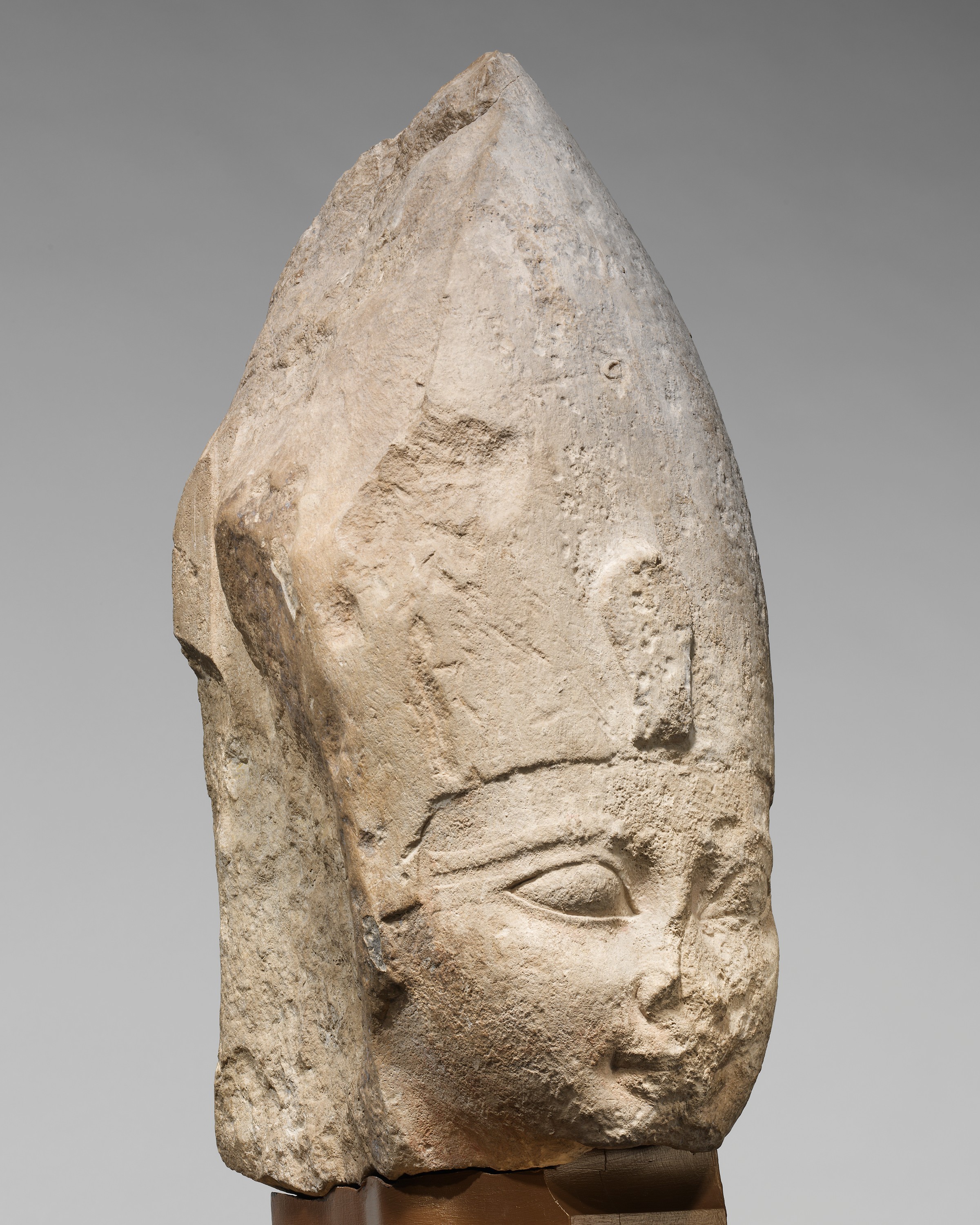
Ahmose I of Dynasty 18

Ahmose I of Dynasty 18{credit}The Metropolitan Museum of Art{/credit}

Ahmose I was the founder of the 18th dynasty and a pharaoh of ancient Egypt, famous for military campaigns that saw him drive the Hyksos out of Lower Egypt, clinch their stronghold in modern-day Gaza and take over lands in Syria and Nubia—heralding the birth of the New Kingdom. The stela was written down during his reign.

Scholars previously believed that the records of thunder and rain described on the stela were figurative –perhaps analogical references to Ahmose’s political conquests. But Ritner and Moeller beg to differ. The stela’s reports are not only literal, but are “further proof that the scholars under Ahmose paid close and particular attention to matters of weather,” they say.

The natural catastrophe lasted for an extended period, and was “unparalleled in intensity and extent,” as per the stela. Although the precise number of days is lost, the storm could have lasted for up to a month, according to some estimates, suggested the scholars.

The Egyptian stela mentions vivid imagery from the resulting chaos: “construction debris, household furnishings and […] human victims are washed by the driving rains into the river.” And it clearly states that the devastation extended into the “Two lands” a reference to north and south of Egypt.

“What Ahmose experienced and recorded was neither a typical storm, nor a masked reference to Hyksos destruction and royal defeat of primordial chaos,” say the researchers. “Whether the Tempest Stela records the actual events of Thera or later after-effects cannot be proved conclusively since the text cannot be expected to state that the storm ‘originated in Santorini’ or ‘among the Aegean islanders’.”

“The events described need not be testimony of the initial explosion, but rather of climactic after-effects that would have continued for some years,” the researchers added in their paper. “The Ahmose text’s further statement that those on the east and west lacked “clothing” … proves that this is a reference to the specific rain event, not a general metaphor for long term Hyksos domination.”

The researchers suggest that other scholars may have been reluctant to link the eruption at Thera to the Tempest Stela not because of the text itself, but because of chronological implications of such a link. “With newer and better dates for the eruption, there yet remains another possibility for reconciliation […] If Thera cannot be moved to Ahmose, it is becoming clearer that Ahmose might be moved toward Thera.”

The link between Ahmose’s reign plus the stela on one hand and Thera on the other has meant that scholars have now accurately placed his reign 30 to 50 years earlier than the previously recorded dating.

David Schloen, associate professor in the Oriental Institute and Near Eastern Languages & Civilizations on ancient cultures in the Middle East told EurekAlert!, science news agency, that Ritner and Moeller’s revised translation and their new conclusions helps “realign the dates of important events such as the fall of the power of the Canaanites and the collapse of the Babylonian Empire” in the ancient Near East, fitting the dates of other events more logically.

“This new information would provide a better understanding of the role of the environment in the development and destruction of empires in the ancient Middle East,” he said.

Egypt’s scientists want to redirect sunlight to narrow streets

A group of Egyptian scientists at Ain Shams University have come up with the idea for translucent panels that are specifically fitted to be able to divert natural sunlight into densely-crowded alleyways, and can get easily positioned over roof tops, on a lower budget.

The scientists argue that a variety of health problems in overcrowded spaces—as seen all across the Arab world, including Egypt—are a result of the lack of sun exposure.

The proposed panel improves illumination by 200% and 400% in autumn and winter as per research simulations – the corrugated “sine-wave-shaped” structure is to be ideally installed on building roofs, only one meter beyond the roof edge, facing the sun and directing its light downwards into the alleys by diverging it.

“We expect the device to provide illumination to perform everyday tasks, and improve the quality of light and health conditions in dark areas,” Amr Safwat, a professor of electronics and communications engineering at Ain Shams University in Cairo, Egypt, told Science Daily.

Safwat is one of the authors of the study proposing the panel, published in Optics Express this month.

Previous structures used redirecting panels or guiding tubes that are optimized for certain solar altitude ranges, and which were suited for Middle Europe specifically; they also only direct the light upwards into the depth of a room and not into the depth of narrow streets, the researchers wrote. But the suggested panel, an improved model, can be tilted and operates over a wider range of solar altitude. “The fan-out angle exceeds 80% for certain solar altitudes and the transmitted power percentage varies from 40% to 90% as the solar altitude varies from 10°C degrees to 80°C,” the study reads.

The idea was to still use a sustainable source of energy to replace a conventional one—saving energy and reducing carbon emissions—while maintaining cost-effectiveness. The researchers say they have done this; the panels are made from polymethyl methacrylate (PMMA), a type of thermoplastic material similar to synthetic glass available at low costs, and common press forming equipments are used in the panel’s manufacture.

Safwat and his team told the press they would eventually build a full-scale model 10 times bigger for validation and testing purposes, and they plan to market and commercialize their panels.

The Ain Shams university researchers were funded by the Science and Technology Development Fund (STDF).

New agricultural trends to feed the world

This is a guest blogpost by Youssef Mansour, a young researcher currently interning at Nature Middle East.

Scientists are struggling to come up with new technologies to feed ever increasing populations around the world.

Scientists are struggling to come up with new technologies to feed ever increasing populations around the world.{credit}ICARDA{/credit}

The agriculture sector needs to double food production by 2050 to meet growing global populations – a tremendous feat considering the challenges posed by climate change, water shortage and how the increase in farming land is not catching up with demand. That’s why scientists are up to their ears looking for ways to sustainably increase production of crops capable of withstanding different environmental stresses.

At the BioVision Alexandria 2014 meeting last week, a group of leading agriculture scientists showcased new trends in agriculture that attempt to address the rising food needs of the next 100 years.

Classic approaches aimed at producing stress-resistant crops such as breeding programmes and genetic engineering “have not yielded the results that people had hoped over the years” says Rusty Rodriguez, CEO of Adaptive Symbiotic Technologies, a biotechnology company focused on agriculture research. These approaches are reductionist and focus on plants only, ignoring the fact that all plant and animal life partner with microorganisms for mutual benefit, he says.

Rodriguez introduced a new trend named symbiogenics, a technology that harnesses the impact that fungi that inhabit plants internally have on their ability to tolerate stresses.

In an experiment back in 2002, he found that symbiotic plants with a particular fungus close to a hot spring at Yellowstone National Park could tolerate temperatures up to 65°C. Neither the fungus nor the plant could withstand such high temperatures alone, but they developed a heat resistance when they partner up.

The Middle East is one of the most water insecure regions in the world, with water availability per person averaging 1,200m3 per person per year – less than a fifth of the global availability per person. Additionally, it is expected to heat up faster than most other regions, with an expected 6°C increase by the end of the century over the Levant region. The region faces numerous challenges for food security, such as the lack of investment in agricultural research and development, inadequate policies and the lack of social and economic stability in the region, points out Mahmoud Solh, director-general of ICARDA.

“We have seen people working on very important things but separate from one another. It seems to me that the problems are so severe [in the Middle East], that this is the perfect location to look at the convergence of these technologies,” says Rodriguez. “We [can] use engineering to get the plant to talk to us. Then we use microorganisms, maybe some genetic engineering, maybe some synthetic biology to modulate what’s going on inside the plant, so when it tells us something is wrong, we know how to fix it.”

Other approaches

A major goal of modern agriculture is to be able to bring across the symbiotic nitrogen fixing bacteria associated with legumes to cereals such as maize, wheat and rice.

This would optimize the use of nitrogen for increasing crop production while decreasing the exposure of the environment and humans to synthetic fertilizers.

Experiments conducted by Edward Cocking, director of the Centre for Crop Nitrogen Fixation at Nottingham University, have shown that introducing a low number of a non-nodulating nitrogen fixing bacteria called Gluconacetobacter diazotrophicus has been found to significantly inhabit the root meristem and exhibited “progressive systemic plant colonization”.

The bacteria, which localizes in vesicles in the cytoplasm of plant roots and shoots, were found to express nitrogenase genes that produce enzymes responsible for formation of ammonia from hydrogen and nitrogen gas. Presently, work is geared towards determining how far these non-nodular bacteria can fix nitrogen in cereals. Field studies run under various environmental conditions would then show how much synthetic nitrogen fertilizers could be lifted.

Separately, a different approach that was pieced together in the 1980s in Madagascar by Henri de Laulanié increases rice productivity by modifying farming techniques to decrease agrochemical inputs and increase yield from the same genetic variants, explains Norman Uphoff, professor of Government and International Agriculture at Cornell University

The System of rice intensification (SRI) is emerging as a new paradigm for sustainable intensification of various crops, and many farmers in developing countries are already spearheading a movement to apply the same practices to other crops.

In the Middle East, “there is no silver bullet that will be able to solve the problems of dry areas,” Solh says. He believes an integration of strategies that optimizes the use of natural resources and utilizes genetically-modified crops, as well as the implementation of policies that promote sustainable agriculture, is the way forward.

Eyewire: Solving mysteries of the brain through gaming

Image courtesy of Eyewire.org

Image courtesy of Eyewire.org

While some may be familiar with the concept–made famous by Foldit, a pioneer online video puzzle where you “fold” protein as part of a University of Washington research project–the crowd at Bibliotheca Alexandria were blown away by a similar game model: Eyewire, neurology’s first ever computation game, open to laypeople.

“It’s fantastic because it builds a sense of community and makes science accessible,” project co-founder Amy Robinson, Creative Director of the Department of Brain & Cognitive Sciences, Massachusetts Institute of Technology (MIT), told the audience at this year’s Biovision conference during one of its seminars at Alexandria’s foremost knowledge hub.

Eyewire is a “cell mapping” game launched by MIT’s Seung Lab, where players reconstruct and map interconnected neurons in the retina–setting a precedent for neurologists everywhere, not just in using crowd-sourcing for research purposes, but in thinking outside of the proverbial box to get more work done in less time (and in this case, while entertaining the public).

The lab is working to generate translations of the application in other languages, including Arabic–which would make Eyewire the first game of this genre to be translated into Arabic.

EyeWire tweetAccording to recent estimates, there are 1.6 billion internet users worldwide who play games, across several portals, 38 per cent of which are in the Arab World. It would be interesting to see how such a large segment would respond to the prospect of Arabic-speaking citizen science gaming, if at all.

The prototype for the game application is based on–and is visually similar to–the real-life version of the lab software that MIT researchers use. The original software allows the scientists to “semi-automatically analyze neuro-image data, to see which cell is connected to which cell and this is important, because it allows us to understand how these circuits function,” Robinson explains in a chat with Nature Middle East.

“Even with the best software that currently exists it takes us 50 hours to map one neuron,” she says.

Currently, there are 120,000 players on Eyewire, which was officially launched in December 2012. It’s a relatively small but very active community, that spends a total of 1,200 hours per day tracing neurocircuits, starting with retinal neurons.

The game uses data from Max Plank Institute for Medical Research, but soon enough Seung Lab will be feeding in their own data as well.

“Essentially, gamers are helping labs make discoveries in science,” says Robinson. You don’t have to be a scientist, or to have studied science, to help MIT map a tangle of neurons, identify new cells or (literally) connect the dots in areas that the gaming app’s AI had missed. And unlike other viral video games, like CandyCrush, or Diamond Dash, one can solidly argue that this, along with others like Zooniverse or Foldit, serves a higher purpose.

“It’s a good example of citizen science,” Robinson says.

courtesy of Eyewire.org

courtesy of Eyewire.org

During the conference, one participant was concerned that as a field, science can be highly-exclusive, conservative and separated from popular audience, so naturally old hands might have a difficult time taking such citizen science ventures seriously. In response, MIT’s young and passionate creative director acknowledged that they were initially received with a degree of skepticism.

“But a lot of effort has gone into improving the effectiveness. improving accuracy and efficiency [of the application, and in turn the results],” explains Robinson. “And this is key to making citizen science work.”

This writer signed up for the game to get a glimpse of how it works–and all one needs to get started is a Facebook profile or an email address, and it’s on. Once you begin, you’re assigned a slice of the retina and you’re asked to start exploring a mystery cell, reconstructed in 3D on your screen–in what might be the most beautiful game imagery I have yet seen. Then again, neural structures are a work of art, and Eyewire gives non-scientists like myself a chance to appreciate their intricacies.

You’re requested to treat the cell’s 3D model as a coloring book; and along with the AI, you color the neurons, eventually forming a labyrinth that lab researchers, and now top players, inspect for accuracy. If you’re new, you have to build game credit before you can effectively “trailblaze a cube” or a section of the retina.

Pakinam Amer's own account of Eyewire.Org--she just signed up.

Pakinam Amer’s own account on Eyewire.Org–she just signed up.

The game is highly interactive; you can chat with other players, pitch ideas for improving the application, or even pose any question related to this specific branch of science. According to Robinson, they polled players, and many said that the game had inspired them to go out and read more on how the brain works.

Like Angry Birds or World of Warcraft, or any other viral or cult gaming portal, you keep scores, collect accolades as you level up, compete against other gamers, participate in gaming marathons (EyeWire held a gaming Olympics once, says Robinson, and sometimes they tailor “challenges” based on gamers’ requests), go on “cell hunts,” rise up the ranks to become a “grim reaper” (with the power to sever faulty cell branches or “mergers”) and even name neuron branches after yourself. And, hold the phone, these names go into the papers that the lab produces.

MIT’s Seung lab does have big plans for the evolution of the gameplay too. Besides improving the technology, the lab will introduce an alternative “action” version in a Science Fiction and Fantasy setting– with alternate universes, alien technology, warring factions, weapons and the whole shebang. It’s part of an effort to build a bigger, stronger (and fun) community for this gaming app. “Community is key if you want to inspire people to work together to build something,” says Robinson.

In my books, it’s another win for the nerds.


Talking “rubbish” with Egypt’s environment minister

laila iskandarSitting down with Minister of Environment Laila Iskandar at Alexandria’s ongoing Biovision conference, she talked to Nature Middle East about going back to the basics in terms of solid waste sorting and recycling–a thing that was overdue, according to her.

“We have tried everything else, and all has failed,” she says. Before becoming minister, Iskandar was consultant to the ministry on waste management issues in Egypt, and changing the current disposal system was what she’d been lobbying for ever since the government contracted Spanish, Italian and French waste management companies for rubbish disposal.

With Egypt’s tight budget, and rampant poverty, one would think that investing in an already-integrated community that does what big waste companies are doing, with lesser costs, instead of outsourcing the operation, is a no-brainer. However, in the minister’s words, the country chose to pool money into a “modern” management system that was practically set for failure, instead of re-organizing the work of informal garbage collectors–casually known as the “zabaleen”–who are already doing this without an extra fee from the government.

But she’s out to change that. Coordinating with municipalities, she’s bringing the “zabaleen,” whose number ranges from 80,000 to 150,000, under the jurisdiction of the ministry–giving them salaries, uniforms and all. The modern companies only moved the garbage from garbage collecting points to disposal facilities, she says, but “the ‘zabaleen’ have an invested interest in the materials because they want to recycle it.”

The informal garbage collectors usually haul the piles of refuse on donkey-pulled carts across Cairo to the seedbed of their operations, where they live and work, in Manshiyet Nasser, a squalid densely-populated settlement tucked away in Moqattam–at once experiencing the worst that the city has to offer (in terms of infrastructure) and creating a model for what an active strata of the urban poor can still contribute to the community despite living hand-to-mouth.

Like clockwork, the garbage is sorted by hand, and 80% of the organic waste gathered is reused or recycled, keeping the community’s carbon footprint to a minimum, before “sustainability” came into fashion.

“The [foreign] companies didn’t do a good job and they weren’t regular. They weren’t experts in managing so they fell apart,” she explains, labeling the contracts with multinationals, “a big disaster.” Giza has “disentangled itself” from these contracts, but Cairo is still caught up in their throes, she says.

Of course, it’s difficult–and extremely costly–to sever delicately-crafted multimillion-dollar contracts with international companies; they’re currently in arbitration. For now, Iskandar says that they’re re-introducing the work of the “zabaleen” on a limited scale, to areas not heavily covered by the companies. And let’s face it, for the “zabaleen” or rogue garbage collectors, it was business as usual, only now they’re happy to have garnered recognition by the government for a job they inherited from their fathers, and their forefathers, and had been doing for decades. Especially that until last year, it was illegal to employ garbage collectors.

Iskandar herself seems both sympathetic to their cause and impressed by the efficiency of their recycling operation. In her speech to the delegates of the conference, she described the collectors as the “honest poor,” pointing out to the audience that they’d been facing one blow after another; first the introduction of foreign companies that threatened to throw them out of business and forced them to be clandestine about it, and second, the 2009 culling of their swine population amidst the “pig influenza panic” that Egypt had experienced with the emergence of some H1N1 virus infections.

The utilization of this vast workforce, while working to better their living conditions, is a win for the ministry. But the over-powered institution still faces difficulties in other areas, especially that its environmental protection guidelines are more “advisory” than compulsory, with very few enforceable laws and a low-stake penalty code for violators. “How bad is the situation?” we asked, referring generally to conservation efforts, industrial pollution issues to name a few of the problems facing the ministry. “Pretty bad,” Iskandar shot back. “But I’m hopeful that things can get better,” she added as an afterthought.

Who knew? Popular teens are not immune to bullying either

Turns out being popular might not save you from sneering, jabbing and harassment in school yards, a new University of California study concludes – the persecution is certainly not exclusive to those who are poor or “physically vulnerable.” In fact, becoming popular increases the risk of getting bullied, and worsens the negative consequences of being victimized, according to the same study.

“In contrast to stereotypes of wallflowers as the sole targets of peer aggression, adolescents who are relatively popular are also at high risk of harassment, the invisible victims of school-based aggression,” says Robert Faris, associate professor of sociology at UC Davis and co-author of the study, “Casualties of Social Combat: School Networks of Peer Victimization and their Consequences.”

“Do aggressors attack the weak?,” the study asks. “According to our findings, the answer to this question is: not as often as they attack the strong. Aside from a few isolated students, the highest rates of victimization are observed among students of relatively high social standing.” The brunt of it decreases however as students rise to the pinnacle of the hierarchy of social standing.

Being “easier targets,” girls face much harassment too, but are not under-represented in studies on school violence and bullying. And what usually goes unchecked is their repertoire of retaliation, like using gossip in counter strikes for instance. Girls are not always physically aggressive, while guys are expected to “defend their honor with brute force.” It’s a play between social expectations and constraints, the study explains.

It’s worth noting however that “girls do not harass other girls generally, but focus their harassment on girls who date,” since they pose threats to other female students’ social standing, and “represent potential rivals when it comes to securing a boyfriend.” It’s also interesting that once a victim of bullying, you put your friends at higher risk of being victimized by proxy.

“It’s kind of a hidden pattern of victimization that is rooted in the competition for social status,” the author was quoted as saying in a press release.

“We view aggression as fundamentally rooted in status processes, and we identify an overlooked class of victims, who, by virtue of their relatively lofty social positions, experience at least as much distress—at the margin—as do those for whom victimization is routine,” reads the study, which used social network centrality as an indicator of status. The research sample was predominantly white and African American but roughly split between genders.

There isn’t a country or community that is absolutely immune to school victimization, it seems – in Egypt alone, statistics by the National Centre for Social and Criminal Research suggest that 30 per cent of students suffer from some type of harassment or bullying in schools, and across the Arab World, a 2012 study published in the Arab Journal of Psychiatry, confirmed that the phenomenon is prevalent, especially among middle-school adolescents. In the United Arab Emirates, 20 per cent of teens are bullied, in Morocco, 31.9 per cent are, in Lebanon the number rises to 33.6 per cent, as per the same study, and Oman and Jordan reportedly suffer from the highest prevalence of school bullying at 39.1 per cent and 44.2 per cent respectively.

During reporting on sectarian violence in several towns in Upper Egypt, this writer has personally come across several cases where Coptic Christian students complained they were specifically targeted –sometimes physically attacked– by their Muslim peers for their beliefs. But no official figures or studies that assess the extent or range of religious-based bullying –or bullying of minorities– in Egypt have yet been released. The same goes for studies that measure the relation between bullying and social status within school hierarchy.

Bullying –unlike school violence—usually happens in the absence of provocation, and is marked by a clear power imbalance between the bully and the bullied. Recent scholarship, according to Faris’ study, even points out traditional views that saw bullies as mentally troubled or socially marginalized seem to be outdated, and that students usually harass their peers, not to reenact their troubled home lives, but to gain status.

I showed Faris’ research to Melanie Hayden, a secondary school counselor based in Cairo, Egypt. She found the findings “interesting” adding that she has “occasionally been aware of a ‘popular’ student being targeted in some way by others who saw them as a threat (either to their own ‘popularity’ position or a jealousy issue).” And as a psychologist, she “can certainly understand where a student trying to ‘work their way up’ the hierarchy is also vulnerable to being bullied, certainly before they’ve ‘arrived’ and they’re becoming a threat to others’ status etc.”

“For those ‘at the top’ I can see how they’re much less vulnerable due to the ‘power’ of being very popular, or very successful – and likely better self-esteem, which I’d think is a key factor,” she says.

It’s not clear however whether the conclusions of this study can be used to generalize about bullying dynamics across cultures; and whether or not school structures in the United States, or the degree of competitiveness between students in certain schools, contribute to the instrumental factors that shape this brand of victimization. Then again, sample students from the research played sports, went on dates, and lived with parents, at least one of who attended college.

These factors may not be present in many Arab schools that are often gender-segregated, may not be as ripe with extra-curricular activities as U.S. schools are, may not place strong emphasis on sports as an indicator of student status and are certainly more conservative than their American counterparts in terms of tolerating “cross-gender” relationships.

Finally, the study mentions how such findings related to bullying are not merely theoretical and carry practical implications—as they should—on national discourse; the ranks of victims are not exclusively dominated by vulnerable, socially marginal students, but are also full of many students who relatively popular, and who seem well-adjusted, at least on the surface. “We hope these more central victims, hidden in plain sight, are acknowledged in the national dialogue,” says Faris. “And that the current focus on bullying expands to include more subtle forms of harassment and cruelty.”