Helping women in research navigate career challenges

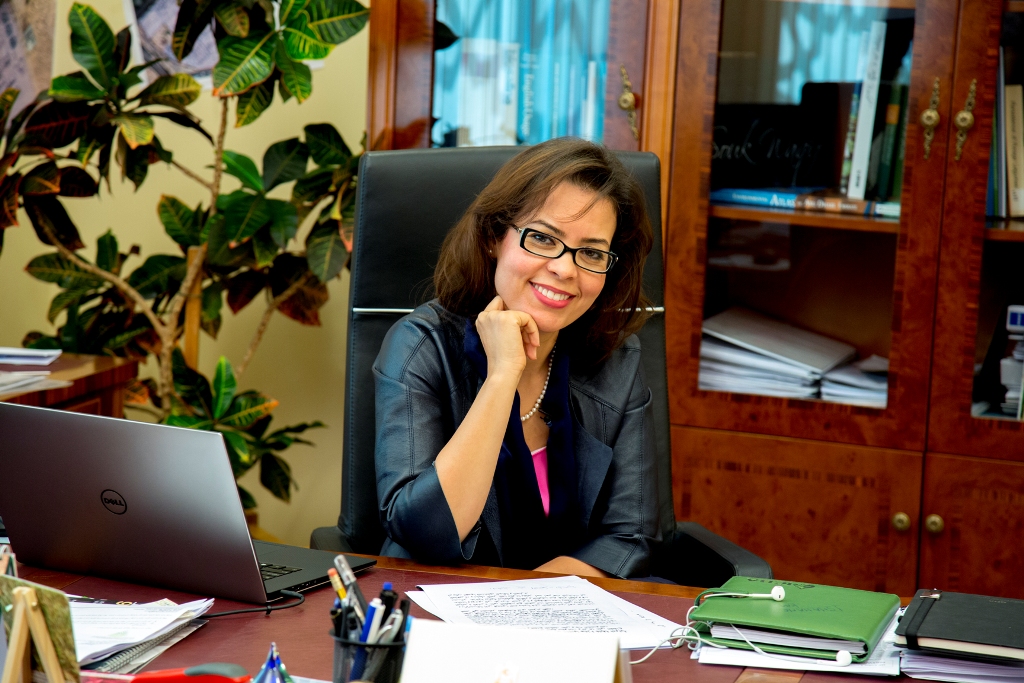
Ismahane Elouafi of ICBA

Ismahane Elouafi of ICBA{credit}ICBA{/credit}

This is a guest blogpost by Noha Atef.

Women scientists from nine different countries in the Arab world have gathered in the UAE to spotlight the major challenges and hurdles that they usually face working in different research fields. The gathering, which also included pointers on leadership, building and managing teams, self-confidence and communication workshops, and role playing sessions, was hosted by the Dubai-based agricultural research centre known as ICBA, Bill & Melinda Gates Foundation and the Islamic Development Bank.

The meeting marked Tamkeen’s first ever event – a women scientists’ empowerment programme masterminded by Ismahane Elouafi, director general of ICBA and, as per CEO-Middle East magazine, one of the Arab world’s 100 Most Powerful Women in science. Nature Middle East spoke to Elouafi about the landmark event.

NME: Tell us your impressions of Tamkeen’s first event? Was it up to your expectations?

Ismahane Elouafi: We were lucky to have women joining us from Morocco, Algeria, Tunisia, Egypt, Jordon, Lebanon, Oman, UAE and Kuwait. The young women’s enthusiasm was just impressive. Their feedback was overwhelmingly positive.

We are not starting from scratch, we are building on somebody else’s experience and that’s the AWARD program started by Bill and Melinda Gates Foundation. They helped us a lot despite the differences between the Arab world and African region.

NME: What was the common barrier that women scientists said they faced launching their careers?

IE: The cultural and biological pressure. As women, we have a biological clock. We have to get married, have children, take care of our family and make them a priority, which is normal. That’s what’s expected from our culture. Although that’s something [that is present in] other parts of the world, for Arabs it’s more intense.

NME: Would you care to give us glimpses into some of the participants’ discussions?

IE: One of the ladies said that she will start applying what she has learned first on her family. In her mind, the soft skills [that she learned at Tamkeen’s workshop] are tools that should be used every day and in every place, not just work. And that’s what we are truly looking for; give [these women scientists] the confidence to develop themselves in both the professional and personal [arenas]. … Our aim is to reach 20 to 30 women [per year] and see the impact on their families, communities and countries.

NME: How do you think those potential researchers will use the knowledge you’re providing to nourish their careers?

IE: If the course was successful, it [should] help each one of them to progress in her field. This can be measured through the number of publications they produce and through participation in conferences. It will also reflect on the way they present and communicate their work.

NME: How does this program affect you personally?

IE: Oh, I love young people. I always see myself in them. … I enjoy seeing ambitious women with so much potential. They are just looking for one single opportunity to fly. Helping them in the smallest way is a very big achievement and it’s a joy that I can’t even describe.


Empowering women scientists in MENA

Funded by the Islamic Development Bank and the Bill & Melinda Gates Foundation, an international center for agriculture is promising to lay the ground work for a women empowerment initiative aimed at scientists, reportedly the first of its kind in the Middle East and North Africa (MENA) region.

The International Center for Biosaline Agriculture (ICBA) launched the design phase of the Young Arab Women Scientists Leadership Programme, dubbed Tamkeen (literally meaning empowerment in Arabic) this month.

Nature Middle East speaks to Setta Tutundjian, director of partnerships and knowledge management at ICBA, about the potential of this gender-specific science programme.

NME: How will your programme empower women involved in scientific research across the Middle East?

Setta Tutundjian: The objective of the Tamkeen program is to encourage young Arab women scientists to pursue a life-long career within the field of scientific research and development. The programme also aims to help women scientists interested in pursuing leadership positions to acquire the skills necessary to assume such leadership position within research institutes across the region.

The programme will develop  leadership and soft skills among participants in key areas such as negotiation, human resource management, science writing, proposal writing, planning, presentation, mentoring, deeper understanding of self-esteem and so on.

We expect this to be achieved through a careful mix of classroom training, online training, coaching and mentoring.

NME: You’re still designing the programme, correct?

ST: Yes. And a critical part of this phase includes conducting focus group discussions and interviews with young women scientists to fully understand the challenges and opportunities they currently face within their careers, as well as to hear from them on the elements of an ideal leadership program that can help them address some of the challenges they face. We want to build a program primarily based around their needs and aspirations.

NME: By identifying the barriers and challenges, do you mean that you plan to launch country-specific investigations into how women are faring in the research and development field?

ST: Besides focus group discussions and interviews with the women, the design phase will also include an assessment of current academic programmes on offer in the region and whether these programmes cater to leadership development among graduates. There will also be an assessment of regional and international capacity building programmes to leverage learning and best practices.

During the coming months, a gender expert, a leadership expert and an expert in training activities will gather to prepare modules and produce a detailed framework of the leadership programme incorporating the results of the various assessments.

NME: I can imagine that women in a country like Egypt would be facing starkly different challenges than, say, the women of the United Arab Emirates …

ST: We do have a unique understanding of the region and the differences that exist between the different countries, specifically when it comes to research and development. Our focus group sessions will be divided among three sub-regions (the Gulf, the Levant and North Africa) in order to cater to the differences among the regions and target countries.

NME: How do you plan to measure progress?

ST: Measuring short-term results will include references to quantity and quality of workshops, participant feedback, network reach and similar metrics. Measuring long-terms results and impact will consider the number of women leaders over time in research institutions in the region, and the increase in number of scientific publications of women scientists.

Under the microscope: Women & science

Pursuing a science career in the Arab world is challenging, but women embarking on this path may face more hurdles than their male peers.

Why are there very few models of women scientist that young researchers can aspire to? Why do women hardly ever land top managerial jobs in universities and research centres?

On 27 March, 2014, and as part of Egypt’s Science Month, Nature Middle East and Nature magazine’s Arabic Edition hosted a panel discussion with four prominent women researchers, at the American University in Cairo, to explore the issues women in the science industry face, and look at success stories.

The panel included Nagwa El-Badri, the department chair of biomedical sciences at Zewail University of Science and Technology, Rania Siam, the chair of the department of biology at the AUC, Rehab Abdallah, a research assistant at AUC and Sara Serag El Deen, an AUC graduate studying for her PhD in Harvard University.

You can watch the full event now on our YouTube channel, and join in the discussion in the comments below. Do you agree that women scientists in the Arab world face more obstacles than men? And if so, then how do you propose we solve this?

Women’s gap from education to research

More women than ever before are pursuing education in science around the world, and the Arab world is no exception. However, the number of women who pursue research careers after education quickly trickles down, especially in the private sector. In the Arab world, this is mainly due to cultural norms that force women to forego time-consuming research careers for family-raising responsibilities.

The private sector is often not keen on hiring women due to stereotypes of poor commitment and the fact they may require long holidays due to pregnancy and labour, which are seen as “problems” not encountered when hiring men.

However, there are some positive signs in the region. According to UNESCO, 38% of researchers in the region are women – more than the North American and West European average of 32% and the world average of 30%.

Tunisia and Egypt topped the list of Arab states with the least disparity between the sexes in research, with 47% and 42% of researchers being women respectively. This comes in stark contrast to Saudi Arabia where only 1% of researchers are women, says UNESCO. Jordan, Libya, Oman and Palestine were all below 25% as well.

To mark International Women’s Day, the UNESCO Institute for Statistics (UIS) has produced a cool interactive infograph on the status of women in research broken down by region and countries, with information about the different fields of research as well as the different sectors they are employed in. You can visit it by clicking on the image below, then start exploring the petri dishes.

UNESCO - Women In Science Interactive