


Another research paper has confirmed that ice in the Arctic is thinning, while another report warns that polar bears are too.
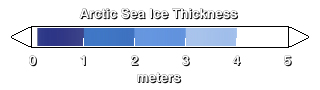
Using data from NASA’s ICE-Sat (Ice, Cloud, and land Elevation Satellite), Ron Kwok of the space agency’s Jet Propulsion Laboratory, and colleagues found overall Arctic sea ice thinned by 17 cm a year between 2004 and 2008.
The area of ice that survived the summer shrank by 42% says the team, which has published its work in the Journal of Geophysical Research.
The new results match findings from last year, published in Geophysical Research Letters. That paper, by Katharine Giles and colleagues from the UK’s National Centre for Earth Observation, also used satellite data to assess average sea ice thickness and found that, during the 2007/08 winter, thickness was 26 cm below the average thickness of the past six years. (See: Arctic ice is back, but only in the news – October 28, 2008.)
“The new analysis … is the latest of many findings supporting the idea that the region has shifted to a new state in which seasonal ice, which forms in winter and melts in the summer, dominates,” writes Andrew Revkin on the NY Times Dot Earth blog.
Meanwhile, a report from the IUCN says the polar bear is feeling the impact of changes in ice.
“They’ve been weighing and measuring polar bears and they’ve been able to demonstrate there is a clear downward trend in the body mass of adult females,” says Erik Born, chair of the IUCN Polar Bear Specialist Group (Canadian Press). “There is also evidence [of] decreased survival of very old bears and younger bears which can be linked to the change in sea ice.”
More
NASA data shows ‘dramatically thinned’ Arctic ice – AFP
Arctic ice thinned dramatically since 2004 – NASA – Reuters
Images: NASA Goddard’s Scientific Visualization Studio