Peru promises science spending

Posted on behalf of Elie Gardner.

Peru’s Prime Minister Juan Jimenez last week launched a US$100 million programme to boost scientific research, technological development and innovation.

Juan Rodriguez, the director of the General Institute of Investigation at the National University of Engineering in Lima, called the announcement a “magnificent sign”.

The Innovation Project for Competitiveness will be funded by the Peruvian government ($65 million) and the Inter-American Development Bank ($35-million loan). The money will be distributed through a public bidding process that targets emerging enterprises and service providers of technology.

During the announcement on 18 December, Jimenez said that the government is making
the “most important economic contribution to science, technology and innovation” in Peru’s history. Last week the government also announced that the country will reopen its research base in Antarctica after a five-year hiatus, and in late November, it created an organization (the National Service of Environmental Certification) to carry out environmental-impact assessments.

But Peru still has a long way to go to match the investment of its neighbours: it spends only 0.15% of its gross domestic product (GDP) on research and development, compared with 0.7% in Chile and 1.1% in Brazil. Before taking office in July 2011, president Ollanta Humala set the goal of increasing the investment to 0.7% in just three years.

But Rodriguez says that money alone won’t make a difference until all of the funds are more efficiently managed and used. Between 2004 and 2011, about $650 million designated for science and technology was not spent by public universities, for example. This money comes from mining royalties, and comes with specific constraints about where it can be spent and who can use it. Rodriguez says that many of the regions receiving the money lack the know-how and experience to conduct research or build up scientific infrastructure.

Rodriguez suggests that researchers and investigators from all over the country should be allowed to compete for the funds, by proposing projects that would benefit the region where the resources come from. He says that technology developed by these projects could potentially bring electricity to isolated communities in the Andes, find medicines in plants, develop proper water management for agriculture along the coast and allow Peru to refine its own minerals instead of having to send them abroad.


Spanish scientists take to the streets

Posted on behalf of Michele Catanzaro.

Are Spain's brains about to fly away like balloons? {credit}JULIAN REBOLLO/CCOO{/credit}

Researchers gathered in more than a dozen Spanish cities this morning to protest against drastic cuts to the country’s science budget. The demonstrations were organized by the Open Letter for Science group, a platform uniting the main scientific organizations in the country, including scientific societies, unions, university rectors and researchers’ associations.

In Madrid, the protesters met at the Campus of Complutense University and lofted dozens of balloons in to the air — supposedly a symbol of brains draining away from the country. With the same message in mind, scientists with suitcases queued in front of the train station in Valencia. Organizations of Spanish scientists working abroad gave support to the demonstrations from the United Kingdom and Germany.

The protesters read in public a joint document called ‘With R&D [research and development], we do have future’. The document asks for “a U-turn in the government’s science policy” and calls “all society to stop the dismantling of the research and development system”. If this policy does not change, “the damage … will be irreparable, destroying what has been built in decades of efforts, leaving thousands of young scientists without jobs … and seriously affecting the development of Spanish economy”, says the text. Representatives of Open Letter for Science delivered the document to the president of the government’s office in Madrid.

After a decade in which investments had more than doubled, the state’s budget for science has dropped by 39% since 2009 in Spain, going back to 2005 levels. The total amount of people working in R&D fell by 3.1% in 2011, according to the latest data from the National Institute of Statistics. The National Research Council experienced a liquidity crisis last July, and is now grappling with a deficit of €100 million (US$132 million). The Confederation of Spanish University Rectors issued a statement on the effects of budget cuts on universities on 10 December, the last of a series of open letters and declarations from scientific groups.

“Today, all the organizations representing science in Spain have joined to give the same message: without science, there is no future,” says Salce Elvira Gomez, secretary of research and development at the largest Spanish union, Comisiones Obreras. “In the past few years, we have tried to have a dialogue with politicians, but the government has not fulfilled its promise to have science as a priority,” says José Manuel Fernández, a postdoctoral researcher in agriculture and spokesperson for the Federation of Young Researchers. “So now we address the citizens directly: are they disposed to be disconnected from science?”


German court bars local-government interference with animal research

Andreas Kreiter

Posted on behalf of Alison Abbott.

A landmark court ruling this week has ended uncertainties in Germany about who may decide the permissible level of animal suffering in experiments. On 11 December, Bremen’s administrative court said that local health authorities had been wrong in 2008 to block a licence for neuroscience studies on macaque monkeys.

The authorities argued at the time that experiments carried out by Andreas Kreiter at the University of Bremen were not ethically justified because the animals suffered too much. But the court decided that the animals’ discomfort was “at most moderate”. It further ruled that it did not fall within the remit of local authorities to make decisions relating to level of animal suffering — formal expert committees, as outlined in Europe-wide laws, have this responsibility.

Kreiter studies the neuronal mechanisms involved in paying attention. Campaigns against his work by animal-rights advocates — which have included death threats against himself and his family — began soon after he joined the university in 1996. The campaigns gained increasing political support, and in 2007 Bremen’s Social Democrat–Green coalition decided not to renew his licence, which had been due to expire the following year.

The government carried out its threat, ignoring an expert committee of scientists and welfare organizations that had judged the work ethically justifiable. The university successfully challenged the case in court, which ruled in October 2009. The health authorities immediately appealed to the higher court, which gave its verdict this week — and disallowed further appeal. The authorities still have the right to ask a federal court to order the Bremen court to reconsider, but legal experts doubt such a request would be successful, given the thoroughness if the Bremen court’s 3,000-page report.

Kreiter has been allowed to continue his research throughout the legal challenges. “Fortunately — otherwise it would have been the end for my research,” he says.

European unitary patent approved

Posted on behalf of Michele Catanzaro.

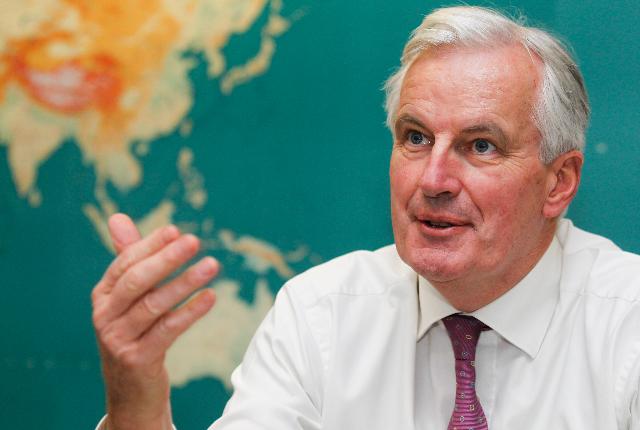
Michel Barnier, Europe's Commissioner for Internal Market and Services{credit}Michel Barnier{/credit}

The European Parliament yesterday ended decades of wrangling over how to streamline the European Union (EU) patent system. On 11 December it approved an ‘EU patent package’, an agreement among 25 member states to roll out a new unitary patent that will be valid in all signatory nations and will be overseen by a single patent court.

In a statement, Europe’s commissioner for internal market and services, Michel Barnier, defined the new framework as “a one-stop shop for obtaining a patent having immediate effect in most parts of the EU’s territory”, and said that the first unitary patents are expected to be granted in April 2014.

The European Commission hopes that a unified patent will make it cheaper to protect intellectual property in the EU. Companies wishing to patent their innovations in Europe must apply separately to each country, racking up an average cost of €36,000 (US$47,000) in taxes and fees, according to the commission. That compares with about €2,000 for a patent application in the United States and €600 in China. Under the new framework, a patent issued by the European Patent Office will be automatically valid in 25 countries, and its cost is expected to drop to an average €4,725. Europe has been trying to set up such a patenting framework since the mid-1970s.

But the unified patent is not pleasing everyone. Spain and Italy have refused to sign up, miffed that the patents will only be issued in English, French or German. And some intellectual property experts have criticized the system for being far too complex.

“The current regulation represents a significant step back in terms of patent law quality,” says Thomas Jaeger, a senior research fellow at the Max Plank Institute of Intellectual Property and Competition Law in Munich, Germany. Jaeger co-authored a paper in October raising concerns about the new regulation. “The validity of the patent and its infringement depend on an overlap of national, EU, and international laws — up to four levels of patent protection — that makes the new regulation extremely complex,” he says. “Moreover, the system is imbalanced in favour of the patent holder.” For example, the unitary patent does not include the option to issue compulsory licences, a common tool in patent law that allows companies to innovate by building on the technologies detailed in rivals’ patents.

On the day before the EU patent package was approved, the large technology companies Ericsson, Nokia and BAE Systems sent open letters to European Members of Parliament, defining the proposal as “bad for European business”. Their main concern is that the system could make it too easy for litigants to challenge patents, by “using threats of pan-European injunctions to extract money from legitimate European businesses”, as one of the letters points out.

Indeed, a Nature Comment piece in 2010 by Bruno van Pottelsberghe de la Potterie, an economist at the Free University Brussels and former chief economist at the European Patent Office, argued that:

Most alarmingly, the proposed EU patent would be a third layer atop the current European and national patents. Keeping the current patent systems in parallel with the new EU patent is likely to pave the way for yet more of the abusive legal behaviour practiced by some companies. For instance, a company could file for a national patent on minor improvements to an invention, made by itself or by another firm, that has already been granted a EU patent. The extra layer could lead to a greater amount of litigation in parallel, which would hold back small technology firms and universities even more.

Jaeger and his colleagues are also concerned about the unified patent court, which will have bases in Paris, London and Munich. In March 2011, the European Court of Justice dictated that the proposed court was incompatible with Union treaties, and some believe that the unified patent court would effectively sideline the court of justice in patent disputes (see ‘Single-patent legislation hits another roadblock‘).

Italian particle physics facility scuttled by funding woes

Posted on behalf of Nicola Nosengo.

An Italian project aiming to build a new particle accelerator near Rome, called SuperB, will either have to be abandoned or drastically scaled back for lack of funding. The project has failed to attract enough international partners to pay its full cost, and the Italian government yesterday made it clear that it will not cover the gap.

The SuperB project was officially launched by Italy’s National Institute for Nuclear Physics (INFN) in October 2011. It is supposed to build a ‘B factory’ — a particle accelerator in which electrons and positrons collide to produce heavy particles called B mesons, whose decay could enable researchers to explore beyond the standard model of particle physics.

The B factory would have featured an underground, 1.3-kilometre-long ring in the south-east part of Rome, close to the city’s Tor Vergata University. Its cost was initially estimated at €600 million (US$780 million), and the Italian Ministry for Research contributed an initial investment of €250 million. The rest of the budget was supposed to come from international partners that the INFN hoped to bring on board after the project was launched. “That didn’t happen,” says INFN president Fernando Ferroni, “and frankly it couldn’t happen, not on that scale at least. Normally the main partner is expected to cover at least 60 or 70% of the budget in this kind of projects.” Ferroni became INFN president when the project was being launched, and was not involved in its proposal.

In the meantime, an international study group tasked with reviewing the project’s budget has raised the price tag up to almost €1 billion. “We met with the minister, and he told us that the government will not contribute more than €250 million,” says Ferroni. “And once you look out of the window and see the situation in Italy, it is not surprising.”

According to an INFN press release, the institute will now consider various options. It may scale down the project or divert the government’s funding to some other proposal. Ferroni says that he still hopes to build a scaled-back accelerator, with a budget of around €350 million. “One way to make it more affordable would be to reduce the energy level” at which the accelerator operates, says Ferroni. “We definitely won’t be able to build a machine that works at 10 GeV [gigaelectronvolts] as originally planned, but we may build a 4-GeV one”. Such an accelerator could still produce interesting science, Ferroni hopes, in particular by studying lepton flavour violation, a phenomenon that would open new windows on dark matter, supersymmetry and extra dimensions. “But this is now up to the scientific community to evaluate.” The INFN will propose a new plan in a few months.

Timing remains a crucial issue though. Another powerful B factory called Belle II is now being built in Japan, and is expected to start taking data in 2016. To be competitive, the Italian project would have to be completed no later than that. “My hope is that a scaled-down machine would also be quicker to build,” says Ferroni.

Amazon deforestation drops to record low

Posted on behalf of  Claudio Angelo.

The rate of deforestation in the Brazilian Amazon has fallen to yet another record low this year. The new figure, a staggering 27% drop from 2011, exceeded the expectations of the Brazilian government and puts the country on the verge of fulfilling the promise it made at the COP 15 climate meeting in Copenhagen in 2009: to slash the rate of destruction of the world’s largest tropical forest by 80% by 2020.

According to preliminary calculations released on Tuesday, 27 November, by Inpe (National Institute for Space Research), 4,656 square kilometres of forest were clear-cut in the Amazon over the 12 months from August 2011 to July 2012, compared to 6,418 km2 from August 2010 to July 2011. The estimate was based on fine-resolution satellite images that capture nearly all the deforestation hotspots. The figures are always reviewed in the following year, but the final number never strays too much from the December estimate.

The 2012 rate is only about 4% higher than the 2020 target of 3,907 km2 that Brazil volunteered as part of its commitment to the 2009 Copenhagen Accord. It was also a rare piece of good news as diplomats from 194 nations gathered in Doha, Qatar, for yet another attempt to salvage multilateral climate talks and negotiate the terms of an extension of the Kyoto Protocol. Ambassador André Corrêa do Lago, Brazil’s chief negotiator at COP 18, was applauded upon announcing the figure at the plenary.

“Once again, the good news on the climate agenda comes from Brazil,” said Brazilian environment minister, Izabella Teixeira, in an interview with Nature after releasing the Inpe data. “What we need now is that developed countries also deliver on their promises, so that the planet can effectively cope with the challenge of climate change,” she said.

Nailing down the remaining 4% of the target will be no easy task for Brazil, however. High prices of grain and gold in the international market, combined with a weakened Forest Code by the Congress, have caused clear-cutting to go up by 220% in August, the first month of the 2013 data series. Teixeira says that the picture for September and October is much brighter, but Imazon, an environmental think tank that uses a different methodology to independently calculate deforestation rates, has seen a 125% increase from August to October compared to August–October 2011.

Money for fighting climate change is also due to vanish in the South American nation. Earlier this month, the Congress passed a law that redistributes royalties from the country’s booming oil industry that were used to feed the national Climate Fund.  The new law, now awaiting sanction by president Dilma Rousseff, has the potential to eliminate up to US$500 million a year in funds that should finance climate adaptation and mitigation.

ORCID launches to give researchers unique identity codes

Posted on behalf of Brendan Maher.

A registry that will grant researchers a unique identifying number — helping readers of the literature to distinguish between authors with similar names — launches today. ORCID, the Open Researcher and Contributor ID, is supported by funds and input from member institutions, publishers (including Nature Publishing Group) and scientific societies. It should integrate with existing researcher identification systems and make it easier for universities and funding agencies to track scientists’ output (see ‘Scientists: your number is up‘). Researchers can register at www.orcid.org and add information about their publications to their ORCID records.

European Food Safety Authority slams GM maize study

“Of insufficient scientific quality to be considered as valid for risk assessment.”

“The design, reporting and analysis of the study, as outlined in the paper, are inadequate.”

“Presently unable to regard the authors’ conclusions as scientifically sound.”

These are the conclusions of an initial review by the European Food Safety Authority (EFSA) of a paper published late last month, which claimed that rats fed on Monsanto’s NK 603 maize or its companion glyphosate-based herbicide, Round-Up, showed higher incidences of cancer.

The EFSA’s 9-page review reiterates many of the criticisms of the research already voiced by researchers (see ‘Rat study sparks GM furore‘). The EFSA also complained that insufficient data from the experiments were presented in the paper, and called on the authors to share more of the data with it “in the name of openness and transparency”.

Germany’s Federal Institute for Risk Assessment (BfR) earlier this week also published an initial assessment of the paper that reached similar conclusions.

Spain plans fourth consecutive year of cuts to research budget

Posted on behalf of Michele Catanzaro.

An analysis of Spain’s draft research and development (R&D) budget for 2013 has shown that the government plans to cut its investment in science by 7.21%. This is the fourth annual cut to science funding in a row: support was reduced by 4% in 2010, 7% in 2011 and 25.5% in 2012.

The draft budget was presented to Spain’s parliament on Saturday, 29 September, and allocated €5.9 billion (US$7.9 billion) to science, a €461-million reduction on the previous year’s tally. The majority of the cut (€394 million) is absorbed by military research, with civil research being reduced by just 1.2%, according to preliminary accounting by the Confederation of Spanish Scientific Societies (COSCE).

But “these figures are the result of an accounting trick”, says COSCE president Carlos Andradas, a mathematician at the Complutense University of Madrid. The small reduction to civil research funding hides a 14% cut to research grants, balanced in part by an 8.5% increase to loans offered to companies that engage in R&D.

COSCE showed in a study last week, however, that almost half of last year’s loan funds remained unspent.

The budget is set to be debated by parliament, and its final form should be approved before the end of the year. However, given that the governing right-wing People’s Party has an outright majority, it is probable that — as in 2012 — the final budget will be almost identical to the draft.

Europe improves oversight of medicines

Posted on behalf of Barbara Casassus.

The European Union (EU) has tightened oversight rules for drugs, in response to the scandal over the anti-diabetic medicine Mediator that erupted in France two years ago (press release).

The European Parliament and EU council of ministers yesterday agreed amendments to a regulation and directive making evaluation and possible market withdrawal of a drug automatic throughout the EU if a safety alert is issued in one of the 27 member states.

The move follows France’s withdrawal of Servier’s Mediator, or benfluorex, from the French market in November 2009, 33 years after it was launched and several years after it was pulled from Portugal, Luxembourg, Greece, Italy and Spain. Authorized to help treat type 2 diabetes, the drug was widely prescribed as an appetite suppressant to non-diabetics and is estimated to have caused 500 to 2,000 deaths from heart valve disease.

The new monitoring rules, which will come into force in 2013, will also apply to non-renewal of authorization for safety reasons. Pharmaceutical companies will have to declare why they are withdrawing a drug, because they are sometimes suspected of citing commercial reasons to mask possible health risks. EU pharmacovigilance rules were upgraded in 2010, but subsequent ‘stress tests’ revealed more potential loopholes.

“It’s a shame that it often takes a scandal to bring about higher standards in legislation,” says rapporteur Linda McAvan, British Socialist and Democrat Member of the European Parliament. The updated rules “will have no impact on the initial authorization process, but regulators will be able to ask for a post-marketing study and until that is done, the drug will remain on the additional monitoring list,” she told Nature. The European Medicines Agency (EMA) will have to create a black symbol to appear on the packaging of any drugs with ongoing safety concerns.

Drug regulators have been accused of dragging their heels over Mediator. The Italian Medicines Agency warned in 2000 that the drug was possibly dangerous, but the EMA did not complete its report on the question until 2006.

The affair is far from over. Legal hurdles have been cleared for victims to bring the first of two cases against Servier to the courts. The trial is scheduled to open next April in the Paris suburb of Nanterre.